 James Wolfe
Damariscotta is a small brick Main Street town on a tidal river in Maine’s midcoast, and the weekend that does it justice is organised by the river itself: oysters farmed in its cold, fast water, a shell midden that records a thousand years of Indigenous oyster feasts, and the alewife run that still pours up the fish ladder at Damariscotta Mills each spring. The town pairs across a bridge with Newcastle, its twin village, and the Pemaquid peninsula runs south from its doorstep to Pemaquid Point Lighthouse, about 12 miles down Route 130. Plan it as a slow weekend: a river morning, a lighthouse morning, and long, unhurried meals in between. Damariscotta calls itself the oyster capital of New England, and unusually for such titles, the river outside the restaurant windows makes the case.
Quick Facts
- Where: Damariscotta, Lincoln County, on Maine’s midcoast, on the Damariscotta River just off US Route 1, twinned with Newcastle across the bridge.
- The river: a tidal river about 19 miles long, running from Damariscotta Lake to the Atlantic, and one of Maine’s great oyster growing waters.
- The ancient site: Whaleback Shell Midden State Historic Site, where Native Americans built an enormous oyster shell heap over about a thousand years, between 2,200 and 1,000 years ago, per Maine’s state parks service.
- The lighthouse: Pemaquid Point Lighthouse Park in Bristol, open 9 am to 5 pm daily from mid May to mid or late October; entry is 4 dollars for ages 12 and over, 1 dollar for ages 5 to 11 and free for 4 and under, per the Town of Bristol.
- The spring spectacle: the alewife run at the Damariscotta Mills fish ladder, built in 1807 and restored between 2007 and 2013, climbing 42 feet to Damariscotta Lake.
- The season marker: the Damariscotta Pumpkinfest and Regatta each October, when giant pumpkins line Main Street and hollowed pumpkins race in the harbour.
Why does the Damariscotta River explain the whole town?
Because everything here is downstream of its oysters. The river’s strong tides flush the estuary twice a day, and the mix of cold ocean water and the lake fed freshwater at its head has grown oysters famous enough to support a cluster of farms whose names appear on menus across New England. The modern farms, among them Pemaquid Oyster Company and Glidden Point, work leases along the river, and several offer the defining Damariscotta experience: a boat tour or a farm visit that ends with oysters shucked at the water’s edge, eaten within sight of the beds they grew in. In town, the raw bars and the Schooner Landing waterfront decks serve the same oysters with less ceremony. Order them plain first. The river’s flavour, cold, briny and clean, is the argument, and it needs no garnish. Then walk Main Street, a compact run of brick blocks holding a bookshop run by the public library, the 1937 Lincoln Theater and the kind of hardware and provision shops that signal a town still serving its own people.
Whaleback Shell Midden: what are you actually looking at?
The oldest restaurant review in Maine. The Whaleback midden, on the east bank of the upper river and now a State Historic Site managed with the Coastal Rivers Conservation Trust, is the surviving fragment of a shell heap that once ran some 400 feet uphill from the riverbank and up to 15 feet deep, built by the Penobscot’s ancestors from oysters harvested between about 2,200 and 1,000 years ago. Maine’s state parks service records the rest of the story with unusual honesty: in 1886 most of the heap was mined and ground into chicken feed, an operation that shipped more than 200 tons of shell in its first months and destroyed the grandeur of the site before burning out in 1891. What remains is a shaded riverside walk with interpretive panels, a smaller shell bank under the trees, and the knowledge that some of the oyster shells excavated here were more than a foot long. It is a quiet, affecting stop, best paired with the smaller Glidden midden across the river, and it reframes every oyster you eat for the rest of the weekend.
Pemaquid Point in the morning: how do you do the lighthouse properly?
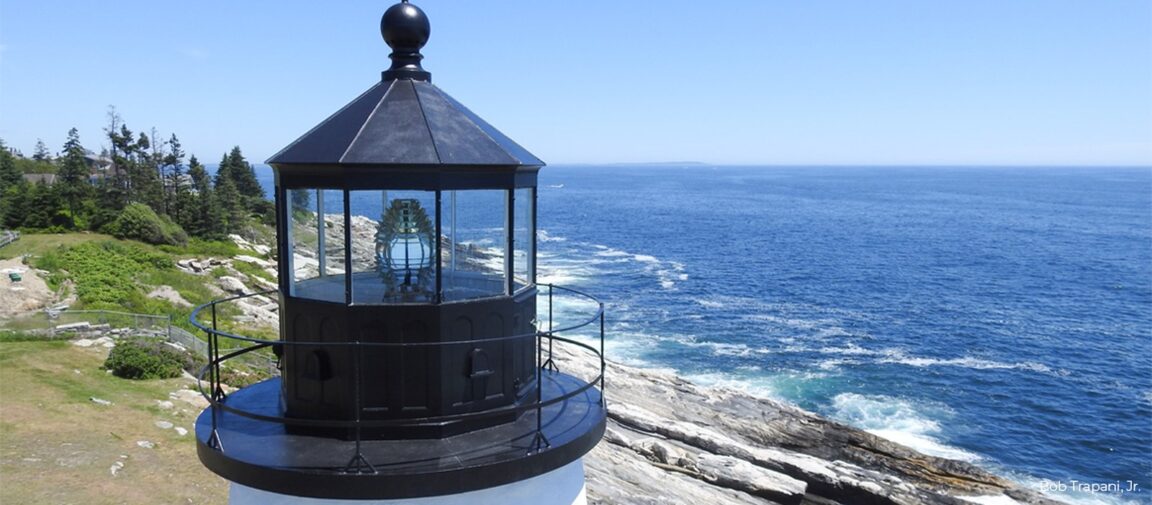
Go early, go on a weekday if you can, and give it two hours rather than twenty minutes. The lighthouse, an active aid to navigation since 1827, stands at the end of Route 130 in Bristol, about 12 miles south of Damariscotta, on a point of folded, striped metamorphic rock that is as much the attraction as the tower. The park, run by the Town of Bristol, opens from 9 am to 5 pm from mid May into the autumn, with entry at 4 dollars for adults and older children. The tower itself is opened by the Friends of Pemaquid Point Lighthouse: climbing costs a suggested donation of 1 dollar, runs from Memorial Day weekend into early October, weather permitting, and involves 30 steps and a short ladder to the lantern room and its fourth order Fresnel lens. Children must be at least 46 inches tall to climb, a rule the town states will not be waived. The keeper’s house holds the Fishermen’s Museum, and the ledges below the tower, with their tide pools and long views toward Monhegan Island, are where the morning goes. On the drive back, stop at Colonial Pemaquid and Fort William Henry, and at New Harbor, a working fishing village where the lobster boats, not the visitors, set the timetable. Travellers who plan coastal weekends around a lighthouse and a working harbour may also enjoy our guide to Sitka, Alaska, its Russian domes and rainforest totem park.
The alewives run: when does the river run silver?
In May and into June, when the alewives, river herring that spend most of their lives at sea, return to climb from Great Salt Bay to their spawning water in Damariscotta Lake. The place to watch is the fish ladder at Damariscotta Mills, the village on the Newcastle and Nobleboro line a few minutes north of town, where a stone ladder first built in 1807 carries the fish up a 42 foot rise through a staircase of pools in the middle of the village. A community restoration rebuilt the ladder between 2007 and 2013, and the run now draws crowds, ospreys and bald eagles to the same few hundred yards of stream, celebrated each spring by the village’s alewife festival. Outside the run, the ladder is still worth the short drive: a handsome piece of working heritage in a mill village of white houses, and a reminder that this river has been managed for fish for more than two centuries. The name Damariscotta itself is usually translated from the Abenaki as a place of many fish, and in May the translation needs no footnote.
How should you sequence the weekend?
Arrive Friday in time for a raw bar supper on the river. Saturday belongs to the peninsula: Pemaquid Point at opening, the museum and ledges through the morning, lunch in New Harbor, then back to town for the Whaleback midden walk in the late afternoon light and a slow Main Street evening. Sunday takes the river’s other direction: the fish ladder at Damariscotta Mills, a farm tour or a riverside shucking session if the season offers one, and a final lunch before Route 1. In October, rebuild the same weekend around Pumpkinfest, when the town carves, weighs and races pumpkins with complete seriousness. For another American small town where a river and a main street carry the whole visit, see our Fredericksburg, Texas guide to its German stone houses and Hill Country mornings.
Frequently asked questions about Damariscotta
When is the best time to visit Damariscotta?
Late May and June bring the alewife run and the start of the full season; September and early October bring harvest flavour, thinner crowds and Pumpkinfest. The lighthouse park and tower are seasonal, running from mid May into October, so winter visits centre on the town, the river and the midden walk.
How far is Pemaquid Point Lighthouse from Damariscotta?
About 12 miles south on Route 130, roughly a 20 to 25 minute drive. The Friends of Pemaquid Point Lighthouse give the route as Route 129 from town to the junction, then left onto Route 130 to its end at the park.
Can you tour an oyster farm in Damariscotta?
Yes, in season. Farms on the river run boat tours and waterside tastings, and Glidden Point, across the river in Edgecomb, is known for its shuck your own setup at picnic tables by the water. Book ahead in summer, since boats and tables are small.
Is the Whaleback midden worth a stop?
Yes, for anyone who eats the oysters. It is a short, shaded, free riverside walk with good interpretive panels, and it gives the weekend its depth: the modern farms are the latest chapter of a food story the site shows is at least 2,000 years old.