 River Callahan
On the Isle of Eigg, the ferry timetable is the itinerary: the CalMac boat from Mallaig decides when you arrive, whether a day trip is even possible, and when you leave, and everything else on this small, community owned Hebridean island arranges itself around that. Eigg has no visitor cars, no public transport and one main road about four and a half miles long, so a visit runs on foot and by hired bike between the pier at Galmisdale, the community hub beside it, and the Singing Sands at the island’s northwest end. Plan the sailing first, book it the day before at the latest, and keep a weather eye on CalMac’s service status: on Eigg, a cancelled boat is not an inconvenience to route around, it is an extra night on the island.
Quick Facts
- Ferries: CalMac from Mallaig on the Mallaig to Small Isles route, serving Eigg with Rum, Muck and Canna. The winter timetable runs 19 October 2026 to 25 March 2027; check the current timetable and service status on calmac.co.uk before travelling.
- Booking rule: Bookings for this route are essential and must be made no later than 4:00 pm on the previous working day, per CalMac. Foot passenger check in closes 20 minutes before departure.
- Day trips: Day returns are not always possible on this service, because of the timetable pattern and check in requirements. Check the sailing times for your date before assuming one works.
- Summer alternative: The MV Sheerwater, operated by Arisaig Marine from Arisaig, runs roughly April to September and must be booked ahead.
- Cars: Visitors cannot bring cars, campervans or motorbikes. Island residents only, with an exception for registered disabled visitors. Vehicle travel also needs an island permit arranged through the Mallaig office.
- On the island: No public transport. The main road is about four and a half miles end to end, a walk of roughly one and a half to two hours. Bikes are hired from Eigg Adventures at the pier hub.
- Ownership: Eigg has been owned by its community through the Isle of Eigg Heritage Trust since the buyout of 12 June 1997, and generates its own renewable electricity through Eigg Electric.
The Mallaig ferry, treated properly
Mallaig, at the end of the West Highland Line from Glasgow and Fort William, is the mainland gateway, and the Small Isles ferry is a lifeline service rather than a tourist boat: it threads Eigg, Muck, Rum and Canna in patterns that change by day of the week, so the sailing that reaches Eigg in the morning on one day may not exist the next. That is why this guide refuses to print a fixed timetable: the honest instruction is to read the current CalMac timetable for the Mallaig to Small Isles route for your exact date, note that winter and summer patterns differ, and build the island plan only after the boat is fixed. Bookings must be made by 4:00 pm on the previous working day at the latest, and CalMac directs vehicle and booking queries for the route to the Mallaig port office. Foot passengers should still book ahead, and check in closes 20 minutes before departure.
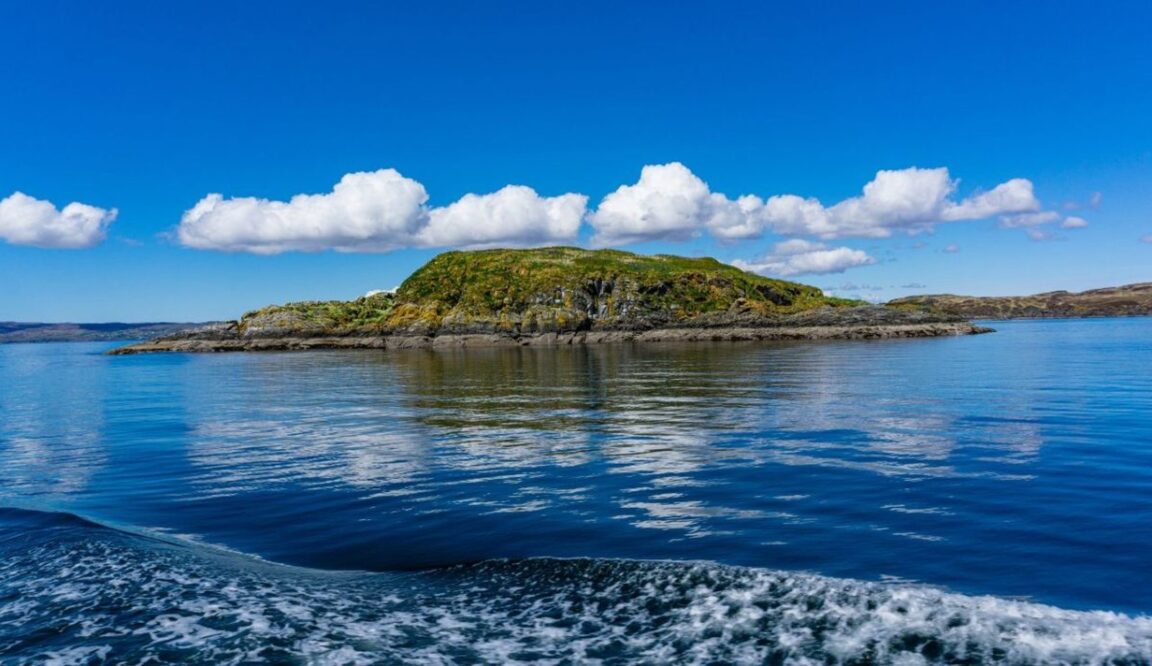
The crossing itself is part of the visit: the boat works out past the Sleat peninsula of Skye with the Small Isles rising in sequence, and Eigg announces itself by An Sgurr, the great pitchstone ridge that forms the island’s spine and its most recognisable silhouette, the remnant of a lava flow that ran down an ancient valley and resisted while everything around it eroded.
Arriving at Galmisdale: the hub at the pier
The ferry lands at Galmisdale Bay, and the island sensibly puts everything a visitor needs first within sight of the ramp. An Laimhrig, the community hub at the head of the piers, holds the Isle of Eigg Shop, the Galmisdale Bay Cafe and Bar, the craft shop and Eigg Adventures, which hires bikes and kayaks. The island’s own visitor information puts a desk in the hub at 20 pounds a day including wifi for anyone working while they wait, and next door the wash house, Taigh Nighe, has toilets, showers at 3 pounds for five minutes and a laundry, open around the clock. The community camping pods sit just above the hub, and their income supports the Heritage Trust.
Do three things before walking anywhere: check the return sailing time and the service status board, buy what you need from the shop, since it is the island’s only one, and decide honestly how far you are walking. Eigg’s distances are small on a map and longer on a single track road with the weather coming off the sea.
Walking and biking the island
The main road runs about four and a half miles from Galmisdale across to Cleadale on the northwest coast, passing the island’s scattered settlements. Walking it end to end takes an hour and a half to two hours at a steady pace; a hired bike from Eigg Adventures cuts that to a comfortable ride and leaves time for the detours. There is a local taxi contact listed in the island’s visitor information for those who need it, but no bus and no schedule to fall back on, so every plan needs a walk back built into it.
The Singing Sands and Laig Bay
At Cleadale, the Bay of Laig and the Singing Sands, Camas Sgiotaig, are the island’s celebrated shore: a white shell sand beach that can squeak underfoot when dry, facing Rum across the water, whose mountains fill the whole northern view. The geology between Laig and the sands is among the richest on Scotland’s west coast, with fossil bearing rocks and the shore where dinosaur era remains, including a plesiosaur, have been found. Give the bay the best light of the day if the ferry allows it, and respect the tides and the working croft land around it.
An Sgurr and the south
An Sgurr, the pitchstone ridge, is the island’s landmark climb, a there and back walk from the Galmisdale side that rewards a clear day with views to Rum, Muck, Skye and the mainland. The south of the island holds the darker history: the caves near the shore associated with the island’s clan past, and the old settlements. Walkers should follow the Scottish Outdoor Access Code, close gates behind them, and, between October and April, plan around the short days, as the island’s own guidance stresses.
The islanders’ own power grid
Eigg’s second fame, after its landscape, is how it is run. The community buyout of 12 June 1997 transferred the island to the Isle of Eigg Heritage Trust, owned on behalf of the residents in partnership with the Highland Council and the Scottish Wildlife Trust, ending centuries of landlord ownership. In 2008 the island switched on Eigg Electric, its own grid powered by hydro, wind and solar with battery storage and backup, giving residents renewable electricity around the clock in a place the national grid never reached. For visitors the practical meaning is modest and real: power is a managed island resource, accommodation may ask you to be sensible with it, and the island you are enjoying exists because its roughly one hundred residents decided to own and run it themselves. Small island systems that a traveller has to learn rather than assume are a theme of our guide to Bayfield, Wisconsin in winter, and travellers who like their islands reached by boat and walked end to end will find the same pleasures at larger scale in Olympic National Park in three days.
When the weather cancels the sailing
It happens, more in winter than summer, and the island’s advice is plain: keep an eye on CalMac’s service status page, and do not build an unforgiving mainland connection on the far side of an Eigg sailing. If the boat is cancelled, you stay: accommodation on a small island in high season is finite, which is one more reason to travel with a day’s flexibility at the end of an Eigg trip, food bought, and a mainland plan that can move. Travellers who cannot risk the extra night should day trip only on a sailing pattern that genuinely returns the same day, and accept that on this route, on some days of the week, it simply does not.
Frequently asked questions
How do I get to the Isle of Eigg?
By ferry. CalMac sails from Mallaig to Eigg on the Small Isles route, and in summer the MV Sheerwater also runs from Arisaig. Mallaig is reached by the West Highland Line train from Glasgow via Fort William, or by road in about three and a half hours from Glasgow.
Do I need to book the Eigg ferry?
Yes. CalMac states that bookings on this route are essential and must be made no later than 4:00 pm on the previous working day, and foot passenger check in closes 20 minutes before departure. Read the current timetable on calmac.co.uk for your date.
Can I take a car to Eigg?
No. Visitor cars, campervans and motorbikes are not permitted; cars are for island residents, with an exception for registered disabled visitors, and vehicle travel requires an island permit arranged in advance. Eigg is a walking and cycling island.
Can I visit Eigg as a day trip?
Sometimes, but not always. CalMac warns that day returns are not always possible on this service because of the timetable pattern. Check the outward and return sailings for your specific date before planning one.
What is there at the pier?
An Laimhrig, the community hub at Galmisdale, holds the island shop, a cafe and bar, the craft shop and bike and kayak hire, with showers and a laundry next door, all a few steps from the ferry ramp.
What happens if my ferry is cancelled?
You remain on Eigg until the next sailing. Cancellations are more common in winter. Keep a flexible mainland plan, watch CalMac’s service status page, and carry a day’s margin if the connection matters.
Featured image: A Small Isles view from the ferry in the Eigg crossing waters. Photo by Elyas Khorasani, via Unsplash (Unsplash License), hosted copy via Backroad Planet.