 Priya Nair
A historic Istanbul hammam visit runs in a fixed order that has barely changed in five centuries: you change and wrap up in a cotton pestemal, warm through in a marble room, lie on a heated central stone while your skin softens, submit to a vigorous kese scrub that rolls away dead skin, disappear under a cloud of soap foam, rinse with bowls of water, and then cool down slowly with tea. Knowing that sequence before you arrive is the difference between a calm first visit and a confused one, because attendants guide you with gestures and routine rather than long explanations. Istanbul still has working Ottoman baths from the sixteenth century, several of them designed by Mimar Sinan, the imperial architect behind the Suleymaniye Mosque, and they divide neatly by century, neighbourhood and price.
Quick Facts
Oldest working names: Cemberlitas Hamami (1584) and the Ayasofya Hurrem Sultan Hamami (1556 to 1557), both designed by Mimar Sinan
The ritual order: changing hall, warm room, hot room, heated stone, kese scrub, foam wash, rinse, cool-down room
Hurrem Sultan hours: daily 08:00 to 22:00, by appointment, packages listed from 45 to 110 minutes
Hurrem Sultan listed prices: from 110 euros for the 45 minute Pir-u Pak ritual to 300 euros for the 110 minute Ab-i Hayat, on the operator’s own menu
What to bring: swimwear if you prefer it under the wrap, a hair tie, and cash for tipping attendants
Time to allow: 90 minutes to 2 hours for a full ritual with rest time afterwards
The Baths, Separated by Century
The sixteenth century produced Istanbul’s monumental baths, and three of them still take bathers every day. The Ayasofya Hurrem Sultan Hamami stands on the square between Hagia Sophia and the Blue Mosque, commissioned by Hurrem Sultan, wife of Suleiman the Magnificent, and built by Sinan in 1556 to 1557 on the site of older baths. It works today as the city’s most polished historic hammam, with separate sections for women and men following the original twin plan, marble interiors restored to a high shine, and a set menu of named rituals rather than a simple entry ticket.
Cemberlitas Hamami, built in 1584 for Nurbanu Sultan and also attributed to Sinan, sits near the Grand Bazaar on Divan Yolu, the old ceremonial avenue. It keeps a more traditional, less spa-like character, with a vast domed hot room held up by columns and a steady local and visitor trade. Kilic Ali Pasa Hamami in Tophane, completed around 1580 for an Ottoman admiral, was restored in the last decade and runs timed sessions, traditionally with mornings for women and afternoons and evenings for men, in a single soaring domed space near the Karakoy waterfront.
Later centuries added neighbourhood baths rather than monuments. The eighteenth and nineteenth century hammams of Uskudar, Kadikoy and the side streets of Beyoglu are smaller, cheaper and plainer, and many Istanbul residents use them as their regular bath rather than as an occasion. For a first visit, the monumental sixteenth century houses are the easiest choice: their staff handle first-timers all day, their booking systems are clear, and the architecture is half the experience. Travellers who enjoy the ritual can then try a neighbourhood bath later in the trip, where English may be limited and the etiquette is learned by watching.
The Ritual Order, Room by Room
You start in the camekan, the changing and resting hall, where you are given a locker, a pestemal wrap, slippers and, at the historic houses, a personal kit with a kese mitt and olive oil soap. Leave phones and valuables in the locker. The photography that fills social media stops at this door, and interiors are phone-free working spaces.
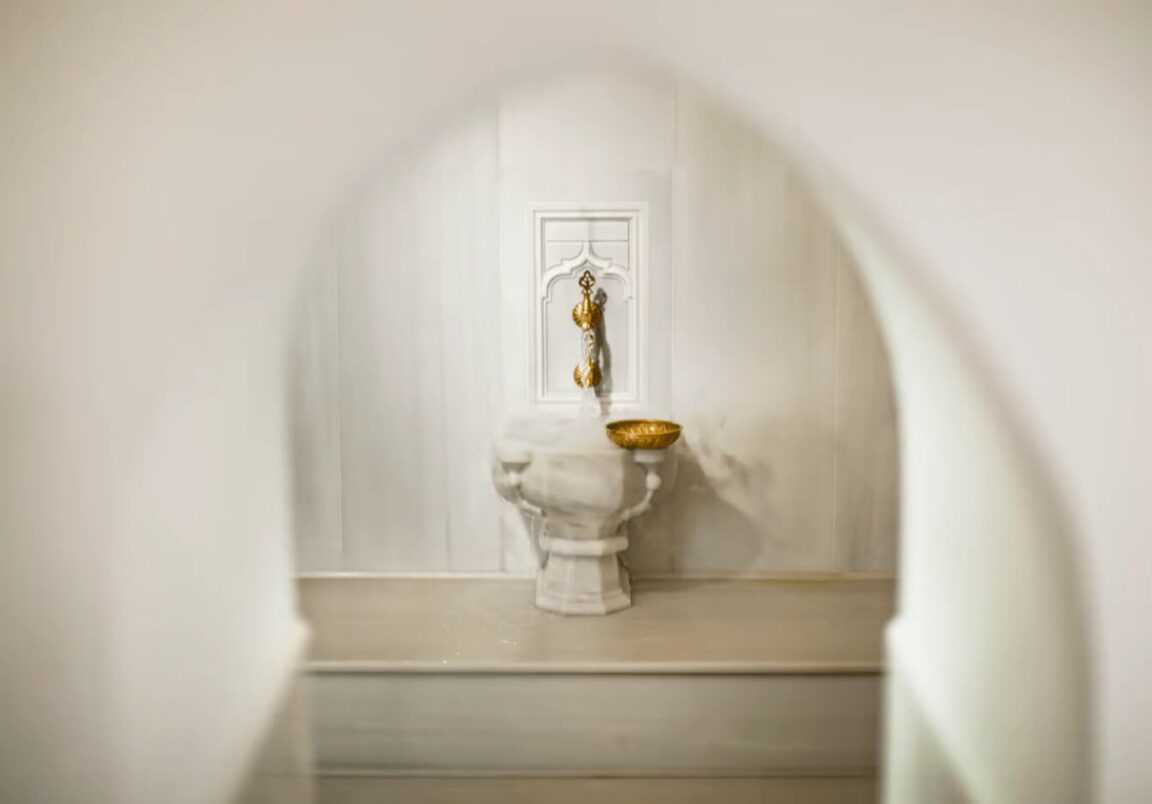
From there you pass through a warm room, the iliklik, into the hararet, the hot room. At its centre sits the gobektasi, the heated marble platform, warmed from below as it has been for centuries. Lie on it on your pestemal for 15 to 20 minutes. The heat is dry-to-steamy rather than sauna-hot, and the point is patience: skin softens, pores open, and the scrub that follows works properly only on warmed skin. Around the edges of the room are marble basins, the kurna, each with hot and cold taps and a copper bowl for pouring water over yourself while you wait.
Your attendant, a tellak for men or a natir for women, then takes over. The kese scrub is thorough and brisk: a coarse mitt, firm strokes, and a surprising quantity of grey rolled skin. It should feel vigorous, never painful, and a word or a gesture will ease the pressure. After a rinse comes the foam wash, where the attendant works olive oil soap into a great pillow of bubbles through a cloth bag and washes and massages you under it, finishing with a hair wash in most full packages. A final rinse, sometimes a plunge or a cold pour for contrast, ends the hot part of the visit.
The last room matters as much as the first. In the cool-down space you are wrapped in dry towels, served tea or sherbet, and left alone for as long as you like. Rushing out into the street straight from the hot room wastes the point of the ritual, which is the slow return. The hammam tradition sits inside a wider Turkish and Moroccan bathing culture; readers planning both regions can compare it with the slower public-bath rhythm described in our guide to Chefchaouen’s hammams and the etiquette set out in our explainer on Moroccan hammam culture.
What It Costs, Honestly
The operator of the Hurrem Sultan Hamami lists four core rituals on its own site: Pir-u Pak at 45 minutes, Keyf-i Hammam at 60 minutes, Zevk-i Sefa at 80 minutes and Ab-i Hayat at 110 minutes, priced in euros from 110 to 300 at the time of writing, with longer packages adding clay masks, longer massage and extras. Those are premium prices, well above neighbourhood baths, and what they buy is the building, the location and the polish. Prices in Istanbul move with the lira and with operators’ euro pricing, so treat any figure, including these, as a check-before-booking figure on the bath’s own site rather than a promise.
Cemberlitas and the mid-range historic baths price in lira and sit well below the Hurrem Sultan level for a traditional scrub and foam package, while small neighbourhood hammams charge the least, sometimes for self-service entry with the scrub as an add-on. When comparing, check three things: whether the kese and foam are included or sold separately, whether massage is part of the package or an extra, and whether the quoted price is per person in a shared hot room, which is the historic norm, rather than a private suite.
Tipping is customary and is not usually included. Attendants are commonly tipped in cash at the end, roughly in line with a restaurant tip for the service, and at the larger houses you may tip both your attendant and the staff who bring drinks in the rest hall. Carry small notes, because card machines and tip jars do not reach every corner of a marble building.
Etiquette That Keeps a First Visit Smooth
Book ahead at the famous houses, especially on weekends, and arrive a little before your slot. Men and women bathe in separate sections or at separate hours everywhere in this guide, and staff will direct you without fuss. Under the pestemal, some visitors wear swimwear and some do not; both are accepted in the tourist-facing historic baths, and nobody is watching. Keep your voice low in the hot room, do not take photographs, and let the attendant set the order of the ritual. If you are pregnant, have a heart condition or struggle with heat, say so at booking, because the gobektasi stage is genuinely hot and long. Finally, plan nothing strenuous for the hour after: a hammam leaves most people pleasantly drowsy, and Istanbul will still be there after tea.
Frequently Asked Questions
How long does a full hammam ritual take?
Allow 90 minutes to 2 hours door to door. The listed package time, 45 to 110 minutes at the Hurrem Sultan Hamami, covers the treatment itself, and the changing, warming and cool-down stages sit around it.
What is a kese, and does it hurt?
A kese is a coarse exfoliating mitt. In trained hands it is firm and brisk rather than painful, and it works on skin that has softened on the heated stone. You can always signal for less pressure.
Do men and women bathe together?
No. The historic baths run separate sections, as at the twin-plan Hurrem Sultan Hamami, or separate hours for women and men, as at Kilic Ali Pasa. Your booking confirmation states which applies.
What should I wear inside?
You are given a pestemal wrap and slippers. Swimwear underneath is accepted at the major historic baths; the wrap stays on in shared spaces throughout the ritual.
Which bath suits a first visit?
The Hurrem Sultan Hamami is the most guided and polished, Cemberlitas the most traditional of the famous names, and Kilic Ali Pasa the calmest single space. Any of the three teaches the ritual properly.
When is the quietest time to go?
Weekday mornings are the calmest at the central baths. Evenings and weekends fill with both visitors and local regulars, which is atmospheric but slower.
Image: A marble washing basin with a gold bowl inside the Ayasofya Hurrem Sultan Hamami, Istanbul. Photo: Ayasofya Hurrem Sultan Hamami, via the bath’s official website (hurremsultanhamami.com).