 Wei Chen
National Gallery Singapore is two courthouses wearing one museum, and the first timer’s job is to admit its scale before the building admits you. The Gallery joins the former Supreme Court and the former City Hall across a six storey atrium in Singapore’s Civic District, holds the world’s largest public collection of Singapore and Southeast Asian modern art, and cannot be seen in one pass. Divide the visit by wing: the City Hall Wing for Singapore’s own art story, the Supreme Court Wing for the building’s judicial bones and the Southeast Asian narrative, and finish on the Level 6 rooftop decks above the Padang as the light goes. One important update shapes every visit now: the UOB Southeast Asia Gallery is temporarily closed and reopens in late 2027, with National Collection works rehung across the rest of the building in the meantime.
Quick Facts
- Address: 1 St Andrew’s Road, Singapore 178957, in the Civic District facing the Padang
- Hours: Daily 10:00 a.m. to 7:00 p.m., last admission 6:30 p.m., checked on nationalgallery.sg on 25 November 2026
- General admission: Free for Singapore citizens and permanent residents; 20 Singapore dollars for other nationalities, with 5 dollars off for concession categories including children aged 7 to 12 and seniors aged 60 and over
- All Access ticket: 15 Singapore dollars local, 30 Singapore dollars standard, covering all exhibitions
- Ticket life: Admission tickets are valid for 180 days from purchase, so a visit can be split across days
- Closure to know: The UOB Southeast Asia Gallery is temporarily closed until late 2027; National Collection works remain on display elsewhere in the Gallery
- Nearest MRT: City Hall station, Exit B, about a 7 minute walk via the Art Connector
- Free areas: The rooftop decks on Level 6, the Keppel Centre for Art Education and several concourse galleries need no ticket
How do the two wings divide the visit?
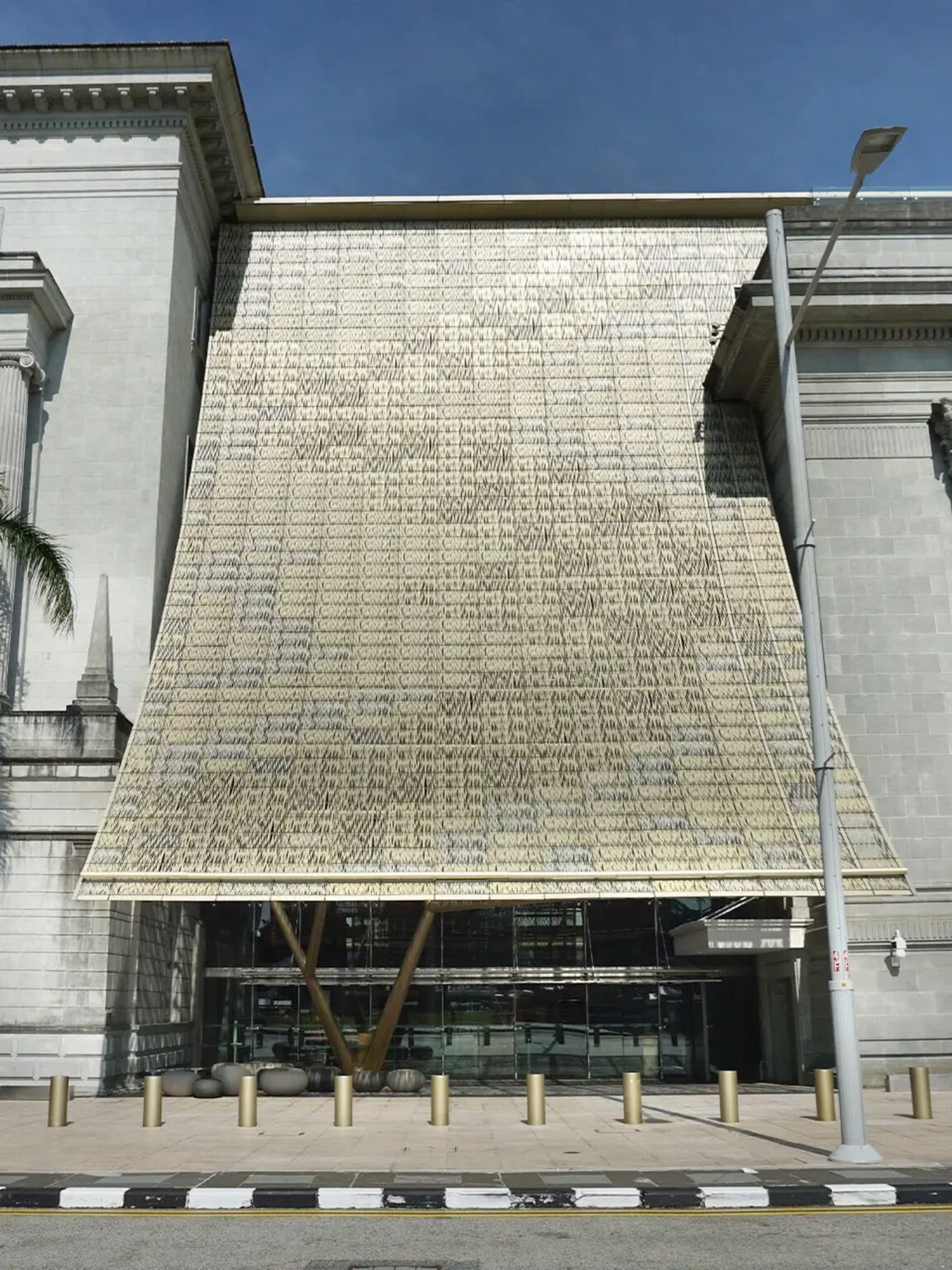
The building is the first exhibit. The former City Hall, completed in 1929, is where Singapore’s postwar history turned: it hosted the surrender ceremonies of 1945 and the swearing in of the first fully elected government, and its chamber survives inside the Gallery. The former Supreme Court, completed in 1939, brings the dome, the Corinthian portico and the preserved courtrooms, including the Chief Justice’s chamber. A modern atrium with a distinctive woven canopy roof links the two across what was once the street between them.
Divide your energy the same way. Give the City Hall Wing the Singapore story: the DBS Singapore Gallery on Level 2, where the long running Singapore Stories exhibition traces the island’s art from the 19th century to now, and the Wu Guanzhong Gallery on Level 4. Give the Supreme Court Wing the architecture and the regional story: the historic courtrooms and holding spaces on Level 3, and the Southeast Asian art that the Gallery exists to champion. Travellers who enjoy pairing two museums in one culture day can borrow the discipline from our Seoul Leeum and National Museum day, and the floor by floor focus of our Guggenheim one ramp guide.
What changes while the UOB Southeast Asia Gallery is closed?
The UOB Southeast Asia Gallery, the Gallery’s core regional display in the Supreme Court Wing, is temporarily closed and is scheduled to reopen in late 2027. That is a significant absence, and any guide that sends you to its rooms without mentioning the closure is out of date. The Gallery’s own visitor information is explicit that works from the National Collection remain exhibited across the building in the meantime, so the Southeast Asian story is dispersed rather than cancelled: you will meet it in the Level 4 Gallery’s Southeast Asia programming, in the DBS Singapore Gallery’s regional context, and in the special exhibitions.
Practically, the closure argues for the split visit the ticket already allows. Because admission tickets stay valid for 180 days, a traveller staying a week in Singapore can do the City Hall Wing on one day and return for the Supreme Court Wing and a special exhibition on another, at no extra cost. First timers on a single day should lower the target: two wings walked, one gallery studied, the building itself read carefully. That is a full and honest visit.
Which rooms should a first timer not miss?
Start with the DBS Singapore Gallery, the clearest narrative thread in the building, then walk the Level 3 historic spaces in the Supreme Court Wing, where the preserved courtrooms and the Chief Justice’s chamber explain what this building did before it held paintings. The ArchiGallery on Level 4 tells the story of the conversion itself, how two national monuments became one museum, and it is the room that makes the rest of the architecture legible. Families should know the Keppel Centre for Art Education on Level 1 is free and built for children, and the Level 5 Ng Teng Fong Roof Garden Gallery pairs a garden setting with rotating installations.
Guided tours, including highlights tours of the building and the DBS Singapore Gallery, are free with an admission ticket, subject to schedule and availability, and the building highlights tour, offered in English from Thursday to Sunday at 10:30 a.m. at the time of checking, is the fastest way to understand the two wings before walking them alone.
Why is the rooftop the right ending?
Because the Gallery’s last gallery is the city. The Level 6 Padang Deck and Coleman Deck sit above the former Supreme Court, looking straight across the Padang, the historic cricket ground and rally field at the building’s feet, toward Marina Bay. The view explains the site: this was the ceremonial front porch of colonial and then independent Singapore, and the museum keeps the porch open. The decks are in the non ticketed area, so the rooftop hour costs nothing, and late afternoon, as the day’s heat breaks and the light turns across the Padang, is when to take it. Arrive at the roof by about 6:00 p.m. at the latest; last admission to the Gallery is 6:30 p.m. and the building closes at 7:00 p.m.
Frequently Asked Questions
How much does National Gallery Singapore cost?
General admission is free for Singapore citizens and permanent residents and 20 Singapore dollars for other nationalities, with concessions 5 dollars off. An All Access ticket covering every exhibition costs 15 Singapore dollars local and 30 Singapore dollars standard. Prices checked on the Gallery’s official site on 25 November 2026.
What are the opening hours?
The Gallery opens daily from 10:00 a.m. to 7:00 p.m., with last admission and ticket sales ending at 6:30 p.m.
Is the UOB Southeast Asia Gallery open?
No. It is temporarily closed and scheduled to reopen in late 2027. Works from the National Collection remain on display in other galleries across the building in the meantime.
How long does a first visit take?
The Gallery itself suggests visitors typically spend about 3 hours. A first timer following the two wing plan in this guide should allow three to four hours, or split the visit across two days, which the 180 day ticket validity makes free to do.
How do I get to National Gallery Singapore?
The nearest MRT station is City Hall, Exit B, about a 7 minute walk via the Art Connector. Clarke Quay and Raffles Place stations are each about a 10 minute walk.
Image credit: The Padang Atrium entrance facade of National Gallery Singapore, the woven canopy front between the former Supreme Court and City Hall wings. Photo: National Gallery Singapore, via nationalgallery.sg, the Gallery’s official website, used with credit.