 Aiko Tanaka
A ryokan stay in Nikko works best when the inn, not the sightseeing list, sets the clock. Stay overnight in Nikko town or Kinugawa Onsen, be at Nikko Toshogu Shrine when its gates open at 9:00 a.m., walk the shrine grounds before the day trip crowds build, and be back at the inn in time for the two rituals that structure every ryokan evening: the bath you reserve in advance, and a kaiseki dinner that is usually served early, often around 6:00 p.m. Plan the day backwards from that dinner hour and the whole trip falls into place.
Quick Facts
- Anchor sight: Nikko Toshogu Shrine, the mausoleum shrine of Tokugawa Ieyasu, first Tokugawa shogun
- Shrine hours: 9:00 a.m. to 5:00 p.m. from April to October, 9:00 a.m. to 4:00 p.m. from November to March, with admission closing 30 minutes before closing time
- Shrine admission: 1,600 yen for adults, 550 yen for elementary and junior high school students, cash only at the ticket counter, checked on the shrine and Nikko official guide sites on 25 November 2026
- Combined ticket: Shrine plus Toshogu Museum, 2,400 yen for adults
- Complex size: 55 buildings, including eight National Treasures, among them the Yomeimon Gate
- Ryokan rhythm: Check in mid afternoon, bath before dinner, kaiseki dinner early in the evening, second bath before bed, breakfast before the shrine run
- Base areas: Nikko town near the World Heritage shrines, or Kinugawa Onsen, the hot spring resort town a short train ride away
Why does the shrine morning decide the whole stay?
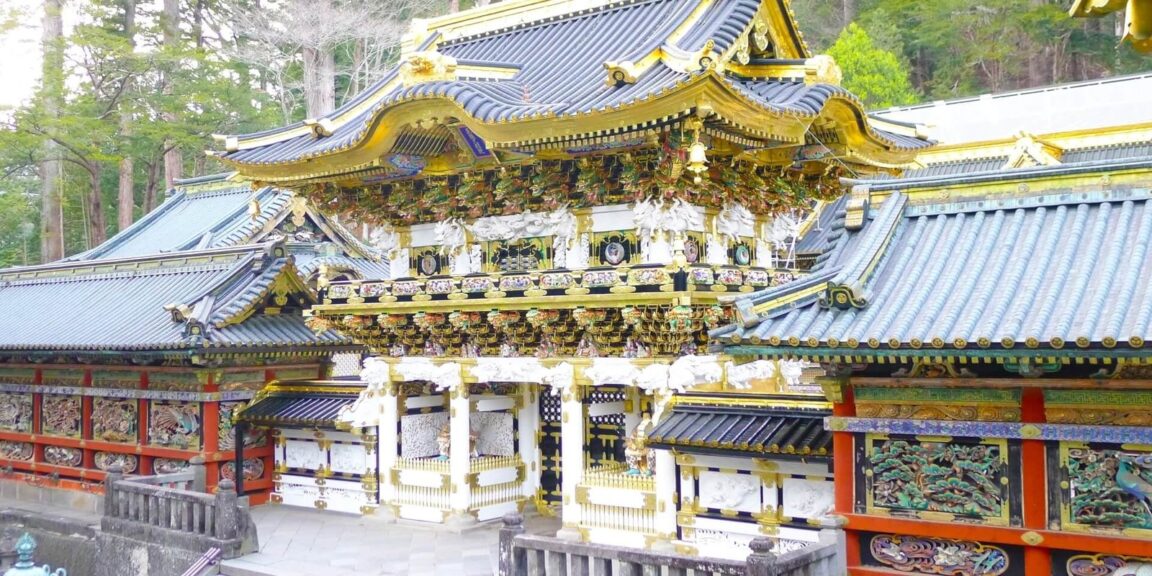
Toshogu is the reason most travellers come to Nikko, and it is a fundamentally different place at opening time. The shrine enshrines Tokugawa Ieyasu, who died in 1616, and the complex visitors see today was built by his grandson Iemitsu, the third shogun, twenty years later. Its 55 buildings sit in a cedar forest above the town, and the decoration is deliberately overwhelming: gold leaf, bright lacquer and hundreds of carvings, including the famous three monkeys on the Sacred Stable, the Sleeping Cat, and the Yomeimon Gate with its 508 carvings.
None of that reads well in a crowd. From mid morning, tour groups and day trippers arriving from Tokyo fill the gravel paths, and the carvings that reward a slow look get a few seconds each. At 9:00 a.m., by contrast, a guest who slept in Nikko can walk up through the stone torii, past the five storey pagoda and into the main grounds with space to actually stop. That single advantage is the strongest argument for the ryokan stay itself: the inn buys you the first hour of the day, which no day trip can match.
What is the right order inside Toshogu?
Work the complex in the order it was designed to be read. Start at the Omotemon gate and the Sacred Stable, where the three monkeys panel is one of eight carvings tracing stages of life. Continue to the Yomeimon Gate and give it real time; its nickname, the gate you could look at all day, is earned by the density of its carving. Pass through to the main hall, then look up for the small Sleeping Cat carving above the corridor on the way to the Okumiya, the inner shrine where Ieyasu’s tomb stands at the top of a long stone stair through the cedars.
Save the Toshogu Museum, just outside the complex, for after the grounds. It explains the first shogun and the building of the shrine, and it is a better use of the late morning than queueing for a second look at the gate. If you bought the combined ticket, the museum is already paid for. Travellers building a wider Japan trip can pair this rhythm with our Tokyo in 5 days district by district itinerary, using the capital as the before and after, and with our guide to Japan’s city accommodation taxes, which explains the local levies that now appear on many ryokan bills.
How does a ryokan day actually run?
A ryokan is a Japanese inn built around bathing and seasonal cooking, and its day has a fixed shape that guests are expected to fit. Arrival is in the mid afternoon. You change into the yukata robe provided, take tea and a sweet in your room, and settle the two bookings that matter: your private bath slot, if the inn offers reservable baths, and your dinner time, which the inn usually sets within a narrow early window.
Dinner is kaiseki, a sequence of small seasonal courses served either in your room or in a dining hall, and it is the centrepiece of the stay rather than a meal fitted around sightseeing. After dinner there is time for a second soak, and the evening ends early. Breakfast the next morning is a full Japanese set meal, and it is served early enough that a guest can eat, check out or leave luggage, and still reach Toshogu for opening. Treat the inn’s timings as the itinerary, not as an inconvenience: the early dinner is what makes the early shrine morning possible.
What is the etiquette for a private or shared bath?
Ryokan baths, whether a reservable private bath or the inn’s shared indoor and open air baths, follow the same rules. Wash thoroughly at the washing stations before entering the water, keep towels out of the bath, and tie up long hair. The water is for soaking, not swimming, and the room should be left as you found it. For a private bath, the etiquette is about the booking rather than the water: reserve your slot when you check in, because the popular early evening hour before dinner goes first, arrive at the start of your slot rather than the middle, and do not overrun, since another guest’s name is on the hour after yours.
Tattoos remain a genuine variable. Some inns admit tattooed guests to private baths without issue while restricting the shared baths, and policies differ by property. If it applies to you, ask the inn directly before booking rather than discovering the rule at check in. The private bath is often the practical answer, which is one more reason to reserve it early.
Where should you base yourself, Nikko town or Kinugawa?
Nikko town puts you closest to the shrines. Inns and hotels near the World Heritage area make the 9:00 a.m. start a short walk or bus ride, and the town itself has the Shinkyo Bridge, the sacred red bridge at the entrance to the shrine grounds, as an evening sight once the day visitors leave. Kinugawa Onsen, the hot spring town along the Kinugawa River, has the larger resort ryokan, including properties with extensive open air baths, and works well if the bathing matters as much as the shrine. The trade is distance: Kinugawa guests need to build the train or bus ride into the morning, so the first hour at Toshogu requires an earlier start.
Either base rewards the same discipline. Eat the inn’s breakfast, be at the shrine for opening, spend the middle of the day on the museum and the neighbouring Rinnoji Temple and Futarasan Shrine, and keep the late afternoon free for the bath. Nikko’s other famous sights, Lake Chuzenji and Kegon Falls in Okunikko, are a separate half day by bus and should not be squeezed into the shrine morning.
Frequently Asked Questions
How much does Nikko Toshogu Shrine cost to enter?
Admission is 1,600 yen for adults and 550 yen for elementary and junior high school students. A combined ticket including the Toshogu Museum costs 2,400 yen for adults. The ticket counter takes cash only, so carry yen.
What time does Toshogu open?
The shrine opens at 9:00 a.m. year round. It closes at 5:00 p.m. from April to October and at 4:00 p.m. from November to March, and admission ends 30 minutes before closing.
Why do ryokan serve dinner so early?
Kaiseki dinner is the centrepiece of a ryokan stay and is traditionally served early in the evening, often around 6:00 p.m., so guests can bathe before and after the meal and the inn’s kitchen can serve a long sequence of courses to every room. Confirm your sitting time at check in.
Can I buy shrine tickets online?
Online vouchers are sold through booking partners, but they must be exchanged for a physical ticket at the Tobu Nikko Station Tourist Center. They cannot be exchanged at the shrine entrance, so collect your ticket at the station if you buy one.
Is one night in Nikko enough?
One night is enough for the shrine morning, the museum and the ryokan rhythm described here. Add a second night if you want the Okunikko day for Lake Chuzenji and Kegon Falls without rushing the shrine visit.
Image credit: The Yomeimon Gate at Nikko Toshogu Shrine, its gold leaf and carved panels above the shrine’s tiled roofs. Photo: Nikko Toshogu Shrine, via toshogu.jp, the shrine’s official website, used with credit.