 LeVar Thomas
Driving a car into Manhattan below 60th Street now costs money before parking, fuel or anything else enters the calculation. New York’s Congestion Relief Zone toll charges most cars 9 dollars at peak times with an E-ZPass, and the charge is levied once a day rather than once per entry, which makes it manageable for a planned visit and quietly expensive for an unplanned one. The trap for visitors is rarely the toll itself. It is the rental car version of the bill, where a car hired without an E-ZPass is tolled by mail at 13.50 dollars and the rental company then adds its own administration or convenience fee on top, so a single drive across Midtown can land on a credit card weeks later at several times the headline rate. This guide sets out the charged hours, the vehicle rules, the crossing credits, the exemptions that actually exist, and how to drive into the zone as a visitor without overpaying.
Quick Facts
- The zone: Manhattan below 60th Street, tolled as the Congestion Relief Zone, with the MTA as operator
- Peak toll for cars with E-ZPass: 9 dollars, charged once per day
- Overnight toll with E-ZPass: 2.25 dollars
- Without E-ZPass: 13.50 dollars at peak and 3.30 dollars overnight, billed by mail to the registered owner
- Peak hours: 5 a.m. to 9 p.m. on weekdays and 9 a.m. to 9 p.m. on weekends
- Crossing credits: Up to 3 dollars for cars using the tolled tunnels into the zone at peak times with E-ZPass
- Taxis and ride-hail: Passengers pay a per trip charge of 0.75 dollars in taxis and 1.50 dollars in app-based cars
- Planned rises: The car toll is scheduled to phase up to 12 dollars in 2028 and 15 dollars in 2031
What exactly is charged, and when?
The toll applies to vehicles entering the part of Manhattan at and below 60th Street, the area the MTA calls the Congestion Relief Zone. For a standard car the price depends on two things: the time of day and how the toll is collected. With an E-ZPass transponder the peak rate is 9 dollars and the overnight rate is 2.25 dollars. Without one, cameras read the plate and the bill goes by mail to the registered owner at 13.50 dollars peak or 3.30 dollars overnight. Peak hours run from 5 a.m. to 9 p.m. on weekdays and from 9 a.m. to 9 p.m. on weekends, so a Saturday morning arrival is charged at the peak rate while a late evening arrival after 9 p.m. is not.
One feature works strongly in the visitor’s favour. Cars are charged only once per day, no matter how many times they enter the zone in that day. A driver who crosses in for a hotel, leaves for an outer borough excursion and returns the same evening pays a single daily toll, not three. That makes the economics of a one day drive-in visit predictable, and it means the worst strategy is the casual one of drifting in and out across several days without realising each new day starts a new charge.
How do crossing credits and the tunnel tolls interact?
Many visitor routes into the zone end with a tolled tunnel, and the scheme recognises that. Cars entering through the Lincoln Tunnel, Holland Tunnel, Queens-Midtown Tunnel or Hugh L. Carey Tunnel at peak times with an E-ZPass receive a crossing credit of up to 3 dollars against the congestion toll, so the two charges are not simply stacked at full price. The credit is tied to E-ZPass use, which is one more reason the transponder matters: the same crossing made on a plate billed by mail does not earn it. Drivers coming over the untolled East River bridges or down through the top of the zone at 60th Street pay the congestion toll alone, with no tunnel bill and no credit to set against it.
Why does the rental car version cost so much more?
The rental trap has three layers. First, a rental car without an active E-ZPass is tolled by mail at the higher rate, 13.50 dollars instead of 9 at peak. Second, the bill goes to the rental company as registered owner, and the company charges the renter for passing it on, typically through a toll programme fee, a per day convenience charge for its transponder service, or an administration fee per toll, depending on the brand and the rental agreement signed at the counter. Third, the charge often appears weeks after the trip, detached from the holiday it belonged to, which is why visitors so often dispute a fee they genuinely incurred. The MTA figures quoted by rental desks are real; the uplift is the rental company’s own, and it is set by the contract, not by New York.
There are three practical defences. The cheapest is to use a personal E-ZPass if you have one, mounted correctly so the plate is not read instead. The second is to read the rental company’s toll programme terms before driving off: some charge a flat daily fee for the days the transponder is used, others charge per toll, and the difference over a week is significant. The third is simply to price the alternative. Manhattan’s garages are expensive, but a car that stays outside the zone, paired with the subway, often beats a car that pays the toll, the rental toll fees and Midtown parking on the same day. For ideas once you are on foot, our guide to New York in 3 days beyond Times Square builds whole days around neighbourhoods where a car adds nothing.
What about taxis, ride-hail and exemptions?
Passengers rather than drivers pay in for-hire vehicles. A trip in a yellow taxi, green cab or black car carries a 0.75 dollar per trip charge, and an app-based ride carries 1.50 dollars, added to the fare for journeys to, from, within or through the zone. Visitors comparing a taxi against driving themselves should count those amounts as part of the ride price, though they remain small next to the cost of parking a private car in Midtown.
Exemptions are narrower than many drivers assume, and none of them is applied by asking at a gantry. They run through MTA plans arranged in advance, including exemption arrangements for vehicles transporting people with disabilities and a low income discount plan under which enrolled drivers pay half price once they have paid the toll ten times in a calendar month. A visitor in a standard rental car qualifies for none of these and should budget for the full toll. Larger vehicles pay more than cars, and the schedule is not static: the MTA’s approved phase-in takes the standard car toll to 12 dollars in 2028 and 15 dollars in 2031, so prices quoted in older guides will drift out of date on a published timetable rather than by surprise.
How should a visitor plan a drive into the zone?
Decide the day, not the hour. Because cars pay once daily, clustering everything that needs the car into one day, a hotel arrival, a supply run, a departure, is cheaper than spreading crossings across a long weekend. Time the entry if you can: arriving after 9 p.m. drops the E-ZPass toll to 2.25 dollars, and an early Sunday departure before the 9 a.m. weekend peak start is charged at the overnight rate too. Keep the E-ZPass question settled before the trip rather than at the rental counter, where the toll programme is one more upsell in a queue. And if the car is really only for leaving the city, collect it on departure day from a location that keeps you out of the zone entirely. Drivers pairing the city with a neighbourhood food day can start with our Greenwich Village food walk, which sits inside the zone and is best done entirely on foot.
Frequently Asked Questions
How much is the New York congestion toll for a visitor in a car?
With an E-ZPass, 9 dollars at peak times and 2.25 dollars overnight, charged once per day. Without E-ZPass the toll is billed by mail at 13.50 dollars peak or 3.30 dollars overnight, and a rental company will add its own fees on top of that.
What are the peak hours for congestion pricing in Manhattan?
Peak pricing runs from 5 a.m. to 9 p.m. on weekdays and from 9 a.m. to 9 p.m. on weekends. Outside those hours the overnight rate applies.
Do I pay the toll every time I enter below 60th Street?
No. Cars are charged once per day regardless of how many times they enter the Congestion Relief Zone that day. A new day starts a new charge.
Why did my rental car toll bill arrive weeks later and cost more than 9 dollars?
Because the car was tolled by mail at the higher plate rate and the rental company added its own administration or toll programme fee under the rental agreement. The MTA toll and the rental company’s charge are two separate items.
Is there a discount if I come through a tunnel?
Yes, at peak times. Cars entering through the Lincoln, Holland, Queens-Midtown or Hugh L. Carey tunnels with an E-ZPass receive a crossing credit of up to 3 dollars against the congestion toll.
Will the toll go up in future?
Yes, on a published schedule. The standard car toll is set to rise to 12 dollars in 2028 and 15 dollars in 2031 under the MTA phase-in.
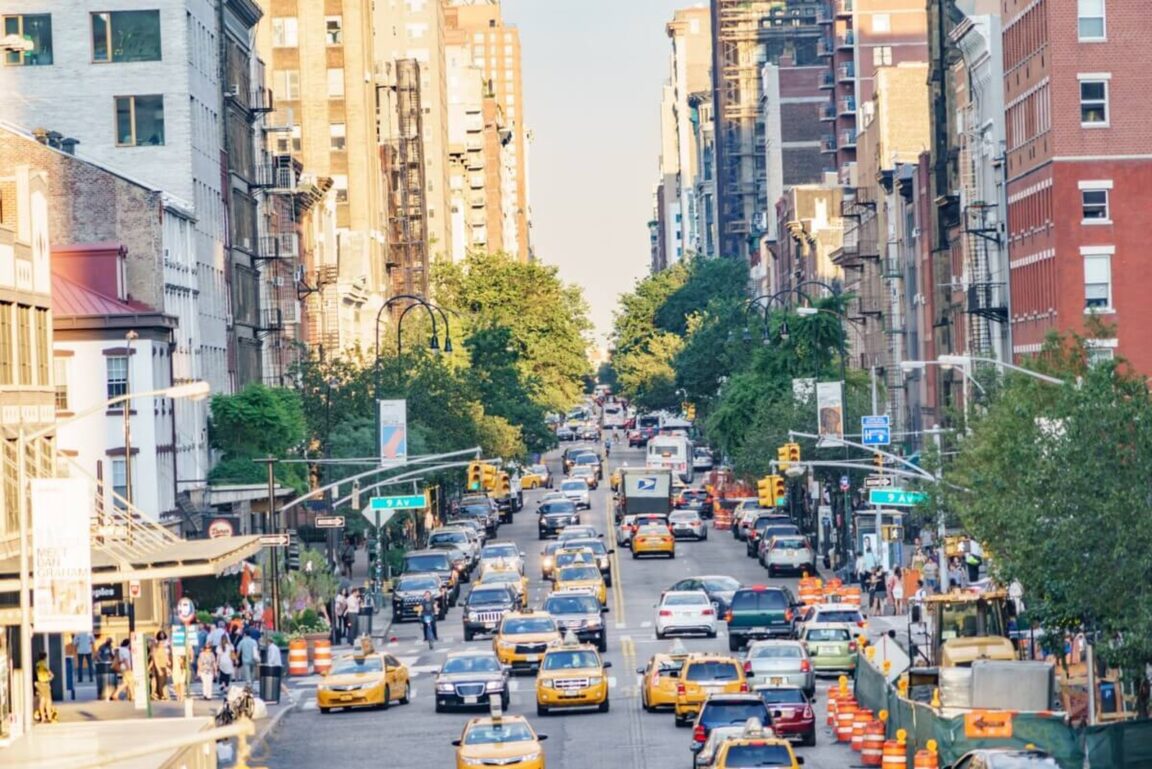
Image credit: Traffic on a Manhattan avenue, New York City. Photo by Carlos Felipe Ramírez Mesa, via Unsplash, Unsplash License. Tolls and hours checked against the MTA on 25 November 2026.