 Lucas Meyer
In winter, New York rewards travellers who choose transport by the weather in front of them rather than by habit. On a clear, cold day the subway wins almost everything: tap in with OMNY, ride under the slush, and save the walking for the good blocks. On a day of wet snow, the calculus flips for short hops, the ferry becomes the scenic and civilised way to cross between boroughs, and a cab for the last slippery half mile stops being an extravagance and becomes the sensible line in the budget. This guide sets out the three systems as they stand now, with the fares verified today, so a first trip in winter runs on decisions instead of surprises.
Quick Facts
- Subway and local bus fare: $2.90 a ride, paid by tapping a contactless card, phone, watch or OMNY card. MetroCard sales end on 31 December 2025, per the MTA, though cards already bought will be accepted into 2026.
- OMNY fare cap: Tap the same card or device for every ride and your fares are capped at $34 in any seven day period that starts with your first tap. After 12 paid rides the rest of that period is free. The Reduced-Fare cap is $17.
- NYC Ferry fare: $5.00 for a single ride and $30.00 for a 10 trip pass, per NYC311, with free transfers between NYC Ferry routes for 120 minutes from the start of the trip. The Ferry Discount Program fare is $1.50.
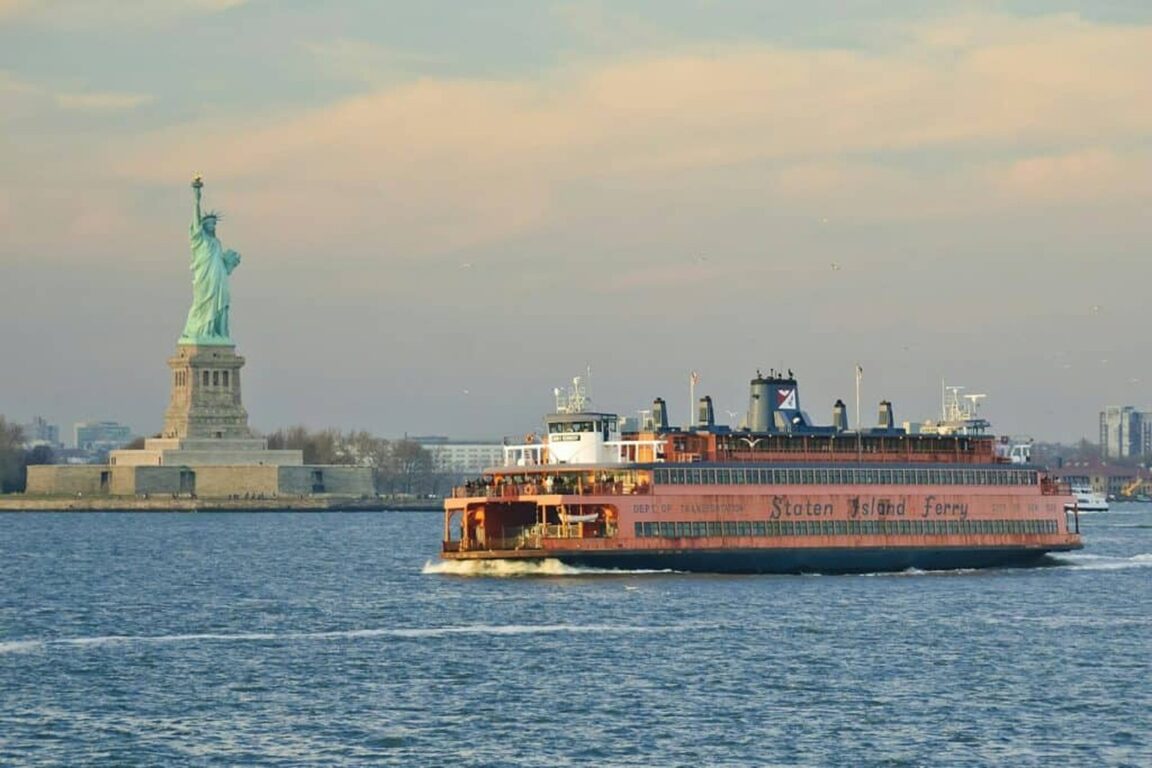
- The free crossing: The Staten Island Ferry, run separately by the city, charges no fare and gives the harbour, the Statue of Liberty and the Lower Manhattan skyline in one crossing.
- The winter rule: Underground for distance, ferry for the river crossings and the view, cab for short hops when the pavements are at their worst.
OMNY and the fare cap, explained for a one week trip
OMNY is the MTA’s tap and go system, and for a visitor it has removed the old first day problem of guessing which pass to buy. You tap the card or device you already carry, the reader charges $2.90, and the system keeps count. There is nothing to register and nothing to activate for the cap to work, but there is one discipline that decides everything: use the same card or device for every single ride. The cap is tracked per card and per device, so a physical card and the same card inside a phone wallet count as two different purses, and splitting rides between them splits the count and delays the free rides.
The arithmetic suits a sightseeing week. Twelve paid rides come to $34, the twelfth ride is charged at the lower amount that lands exactly on the cap, and every ride after that within the seven days costs nothing. A first timer riding twice a day hits the cap on day six and rides the last day free; a heavy day of cross town hops can bring it forward. Express buses, group taps and transfers do not count toward the cap, and if you tap for a companion, only the first tap in that window counts toward your own total, so companions who ride a lot should tap their own card.
Two practical notes for winter. First, keep the tapping card somewhere it can be reached with gloves on: the small misery of a New York winter trip is fumbling at a turnstile with a queue behind you. Second, the seven day period starts with your first tap, not on Monday, so a Thursday arrival caps through the following Wednesday. The MTA’s announcement that MetroCard sales end on 31 December 2025 makes OMNY the default for any trip from 2026 onward in any case.
The ferry system as sightseeing that happens to move you
NYC Ferry runs a network of routes across the East River, the Hudson and the harbour, and in winter it earns its fare twice: once as transport between landings in Brooklyn, Queens, the Bronx, Staten Island and Manhattan, and once as the cheapest skyline viewing platform in the city. The boats are warm inside, the top deck is there for the brave, and a crossing under the Brooklyn Bridge in low winter light is a better use of $5.00 than most paid viewpoints.
The routes a first timer will actually use are these. The East River route threads Hunters Point South, East 34th Street, Greenpoint, the Williamsburg landings, the Brooklyn Navy Yard and DUMBO down to Wall Street Pier 11. The Astoria route runs from East 90th Street through Astoria, Roosevelt Island and Long Island City to the same Pier 11 hub, about 49 minutes end to end. The Rockaway-Soundview route is the long scenic run, linking Ferry Point in the Bronx and Soundview down through East 90th and East 34th to Pier 11 and on to Sunset Park and Rockaway. The South Brooklyn route serves Red Hook, Atlantic Avenue at Brooklyn Bridge Park and Corlears Hook, and the St. George route crosses to Staten Island by way of Battery Park City and Midtown West, extended east to Bay Ridge and Pier 11 under the optimised routes that took effect on 8 December 2025. A Governors Island shuttle completes the pattern in season, and our winter guide to Governors Island in winter covers that trip in full.
Tickets live in the NYC Ferry app or at machines on the landings, transfers between routes are free within 120 minutes, and bikes ride at no extra charge. In winter, check the app before walking to a landing: the optimised winter schedules are thinner than the summer ones, and a landing in an icy wind is a poor place to discover a 40 minute gap. Sit on the skyline side, which on most East River runs means the Manhattan facing side, and treat the crossing as the day’s viewpoint rather than as dead time between sights.
Separate from NYC Ferry, and free, the Staten Island Ferry crosses the harbour between Whitehall Terminal and St. George around the clock. It is a commuter boat, not a tour, which is part of its charm: stand on the Statue of Liberty side outbound, ride back facing the downtown towers, and you have had the classic New York harbour view for nothing. Allow time to disembark and reboard at St. George, because through riding is not permitted.
When a cab beats the subway, honestly assessed
New York’s yellow cabs and app cars are the expensive option per mile, and in winter they are also, in specific situations, the right one. The case is strongest for short hops in active snow or freezing rain, when the journey is mostly pavement: two or three avenues of slush, a subway staircase like a ski slope at each end, and a walk that costs more in misery and soaked shoes than the fare costs in money. Late at night in bitter cold, with a long wait on an exposed elevated platform, the same logic applies.
The case is weakest cross town at rush hour and anywhere in Midtown in the gridlock before a holiday, when the subway’s slowness is at least predictable and the cab’s is not. A useful first timer’s rule: if the trip is under about a mile, the weather is doing its worst, and there are two or more of you splitting the fare, take the cab without guilt. If it is over two miles or crosses a bridge, go underground or on the water. Our long layover guide to JFK applies the same weather first logic to the airport run.
Putting the winter day together
Start the trip on one tapping card and keep it in an outside pocket. Use the subway as the spine, the ferry as the treat that also relocates you between waterfront neighbourhoods, and cabs as the surgical tool for the worst half miles. On a snow day, invert the sightseeing order: ferry and viewpoints in the clear morning, museums in the afternoon storm, and no heroic cross town walking in between. New York in winter is not a test. With the cap quietly limiting what the subway can cost and the ferries priced like a coffee, it is one of the easier big cities in the world to move through in the cold, provided the choices are made by the sky rather than by habit.
Frequently Asked Questions
How does the OMNY fare cap work?
Tap the same card or device for every subway and local bus ride. Your first tap starts a seven day period, rides cost $2.90, and once you have paid $34, the equivalent of 12 rides, every further ride in that period is free. The Reduced-Fare cap is $17. Express buses, group taps and transfers do not count.
How much is NYC Ferry in 2026?
Per NYC311, a single ride is $5.00, a 10 trip pass is $30.00, and Ferry Discount Program riders pay $1.50. Transfers between NYC Ferry routes are free for 120 minutes from the start of a one way trip, and tickets expire 90 days after purchase.
Is the Staten Island Ferry the same as NYC Ferry?
No. The Staten Island Ferry is a separate, fare free city service between Whitehall Terminal in Manhattan and St. George on Staten Island. NYC Ferry is the paid network of East River, Astoria, Rockaway-Soundview, South Brooklyn, St. George and Governors Island routes.
Can I still buy a MetroCard?
The MTA has announced that MetroCard sales and distribution end on 31 December 2025, as OMNY fully replaces the swipe system. Cards already in circulation will be accepted into 2026, with a final acceptance date to be announced.
When is a cab worth it in New York winter?
For short hops, roughly under a mile, in active snow or freezing rain, especially with two or more people splitting the fare or late at night from an exposed elevated station. For longer trips and bridge crossings, the subway and the ferry are faster and far cheaper.
Image: The Staten Island Ferry crossing New York Harbor in front of the Statue of Liberty. Photo by Supradoc, via Unsplash (unsplash.com/photos/gYz6Zb9PmhA), Unsplash License, used with credit.