 Rafael Santos
Bogota eats for altitude and appetite: a steaming bowl of ajiaco built on three potatoes and the herb guascas, a tamal with hot chocolate for breakfast, a fruit education at Paloquemao market that rewires what you think Colombia grows, and, up in Chapinero, tasting menus that have put the capital at the top of Latin America’s restaurant lists. At 2,640 metres, this is a soup and slow cooking city, and the order matters. Start at the market in the morning, eat the classics at lunch, and save Zona G and Chapinero Alto for the night. One honest note before the food: Colombia has no MICHELIN Guide, so the quality signals here are Latin America’s 50 Best and the city’s own institutions, and this guide uses those instead.
Quick Facts
- The signature bowl: Ajiaco santafereño, chicken, three potatoes including the small yellow papa criolla, corn, guascas, served with capers, cream, avocado and rice on the side.
- Market anchor: Plaza de Mercado de Paloquemao, Avenida Ciudad de Lima 25-04, Bogota, with nearly 900 stalls by the market’s own count, busiest from early morning.
- Breakfast circuit: Tamal santafereño with hot chocolate, and changua, the milk and egg soup, for the brave and the local.
- Fine dining quarter: Chapinero and Zona G, home to Leo and El Chato, named Latin America’s Best Restaurant 2025 by Latin America’s 50 Best.
- The hormiga debate: Hormigas culonas, the big bottomed ants of Santander, eaten toasted as a snack. Bogota argues about them so you do not have to decide quietly.
- Altitude rule: Bogota sits at about 2,640 metres. Eat soup, drink water, and let the first day be gentler than your appetite wants.
- Prices checked: 14 November 2026. Market and classic restaurant prices move often, so dishes are described rather than priced, except where a venue publishes its own figures.
What makes a real ajiaco?
Three potatoes, and the differences between them are the whole dish. Papa criolla, small and yellow, dissolves and thickens the broth. Papa sabanera gives body. Papa pastusa holds its shape. Into that base go chicken, a whole corn cob section, and guascas, the herb that gives ajiaco its unmistakable green, almost musty depth and without which, Bogotanos will tell you flatly, it is chicken soup. The bowl arrives with its garnishes as separate decisions: capers, a spoon of cream, avocado, and white rice, which many diners stir in and just as many keep apart. Both camps are certain.
Eat it at a classic house in La Candelaria for the full ritual. La Puerta Falsa, on Calle 11 by Plaza de Bolivar and serving since 1816, is the city’s reference point for ajiaco, tamales and chocolate completo, in a room small enough that the queue is part of the institution. Portions are generous in the way altitude cooking is generous, because the city runs cool all year and lunch is the main meal. Order ajiaco once here before you order it anywhere else, so the comparisons that follow have a benchmark. For another high altitude food capital working the same soup and market logic, our Lima food guide covers the Peruvian version of the argument.
What is the Paloquemao breakfast circuit?
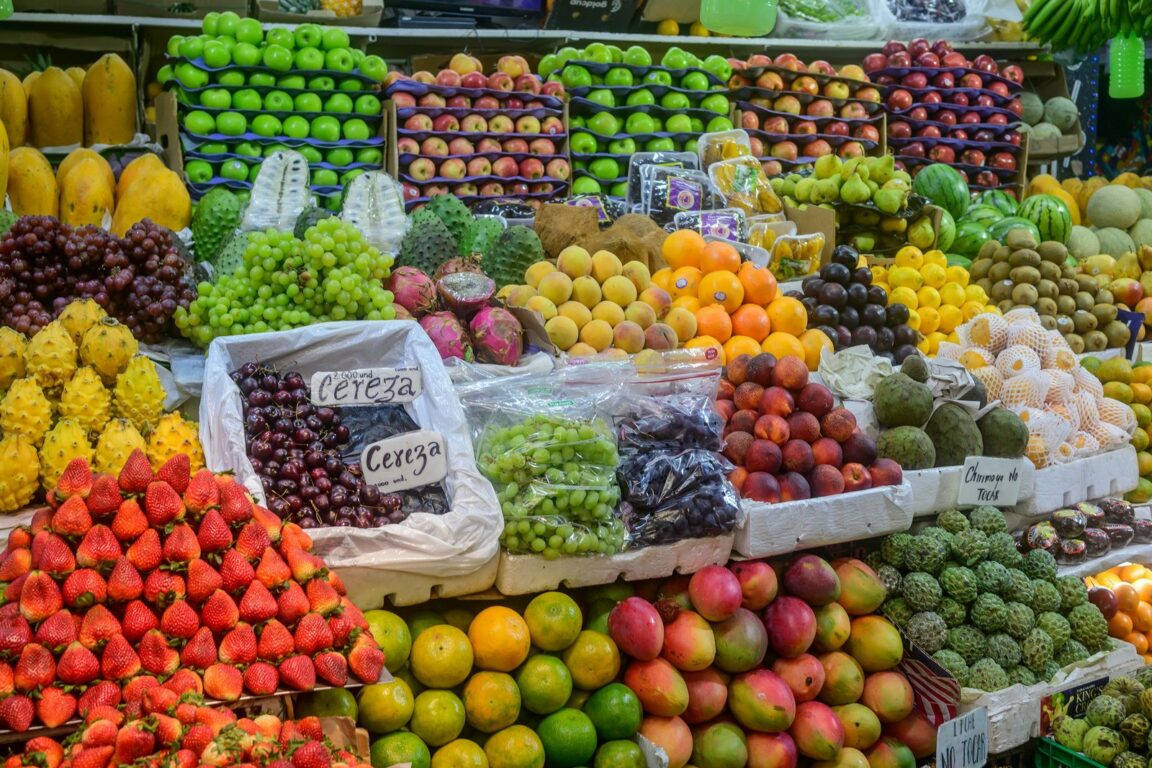
Paloquemao is Bogota’s great working market, and the correct visit is early, hungry and unhurried. Come for the flower aisles first, at their dawn peak, when the market’s other famous trade fills whole corridors with colour. Then eat breakfast the market way: a tamal santafereño, pork, chicken, chickpeas and vegetables steamed in plantain leaf, with a cup of thick hot chocolate, the combination market workers have started with for generations. Add a fresh juice from the fruit rows, where vendors blend lulo, maracuya, guanabana and fruits you will be meeting for the first time.
Then do the fruit education properly. Colombia grows an absurd range, and Paloquemao is where chefs and grandmothers buy it side by side: feijoa, granadilla, uchuva golden berries, curuba, mangosteen in season, and lulo, the sour green orange that becomes the country’s favourite juice. Vendors will cut and hand over tastes if you show interest and buy something. Graze slowly, ask names, and keep your bag in front of you in the crowds. The market rewards a guided visit for first timers, not for safety theatre but because the introductions to vendors and the tasting order genuinely improve the morning. Nearly 900 stalls, by the market’s own accounting, is a lot of ground to read alone.
What is the hormiga debate?
Hormigas culonas are leafcutter ant queens, harvested in the Santander region, toasted with salt and eaten as a crunchy, earthy snack with a reputation as an aphrodisiac that Santanderenos repeat with a straight face. In Bogota you meet them in market stalls, speciality shops and daring tasting menus rather than on every corner, and the city splits into camps: heritage delicacy, or a dare dressed as tradition. The honest visitor protocol is simple. Try one. It tastes of toasted nuts and smoke and the crunch is the point. Then form an opinion loudly, because that, more than the ant, is the Bogota tradition. Every food city has one dish that functions as a conversation. This is Bogota’s, served in a small paper cone.
Where does the Chapinero circuit go at night?
North, and up the hill. Chapinero, and the Zona G gourmet zone inside it, hold the kitchens that remade Bogota’s reputation. El Chato, chef Alvaro Clavijo’s contemporary bistro in Chapinero Alto, was named Latin America’s Best Restaurant 2025 by Latin America’s 50 Best Restaurants, the first time a Colombian restaurant has taken the top spot, built on Colombian ingredients handled with French technique and an a la carte format that keeps it a neighbourhood restaurant at heart. Leo, chef Leonor Espinosa’s flagship, works through Colombia’s biocultural regions in tasting menu form, with fermented drinks and ingredients sourced through her foundation’s work with rural communities. Both book out well ahead; reserve when you reserve your flights.
Below that tier, Chapinero Alto and Zona G are dense with the bistros, wine bars and bakeries that make the quarter the default dinner answer for visitors staying in the north. The pattern to copy: market breakfast, classic lunch in the centre, one serious dinner in Chapinero, and arepas, grilled, cheese filled, from a street stand on the walk home, because Bogota at night runs on them. For the Mexican parallel, a capital where market mornings feed fine dining nights, see our Mexico City food guide.
What else belongs on a first Bogota table?
Changua at breakfast, the milk soup with egg, spring onion and coriander, usually with bread to dunk, which divides visitors exactly as hormigas do. Empanadas with aji, small, crisp and ordered by the handful from stands with a queue. Lechona on weekends, slow roasted pork with rice and pea stuffing, sold at markets and speciality counters. And coffee, seriously: Bogota’s speciality cafe scene pours Colombian beans at a standard the export market rarely leaves at home, and a slow afternoon in a Chapinero cafe is part of the food education, not a break from it.
Budget a full morning for the market and a full evening for Chapinero, and keep the hours between them for the classic lunch and a slow coffee, because Bogota food is a three act day and rushing the middle act is how visitors end up eating well but understanding little.
Frequently Asked Questions
Does Bogota have MICHELIN starred restaurants?
No. The MICHELIN Guide does not cover Colombia. The city’s top kitchens are ranked instead by Latin America’s 50 Best Restaurants, where El Chato took the number one spot for 2025 and Leo has ranked for years. Judge Bogota fine dining by that list and by local reputation.
When should you visit Paloquemao market?
Early morning, ideally between 7 and 9, when the flower trade is at its peak, the produce is freshest and the breakfast stalls are serving the market workforce. The market opens in the small hours and winds down by mid afternoon.
What is guascas, and can you substitute it?
Guascas is the herb that defines ajiaco, giving the soup its distinctive green depth. Outside Colombia it is sold dried in Latin American shops. Bogotanos will tell you there is no true substitute, and after one proper bowl you will understand why they insist.
Are hormigas culonas available all year?
The ants are seasonal in Santander, harvested around the rainy months, but toasted hormigas keep well and are sold year round in Bogota markets and speciality food shops. Fresh season is roughly March to May.
Is it safe to eat at Paloquemao?
Yes, with normal market sense. Eat where turnover is high and locals are eating, drink juices from busy stalls, and keep valuables in front of you in the crowds. A guided market tour is a good first visit format.
How does altitude affect eating in Bogota?
At about 2,640 metres, alcohol hits faster, dehydration creeps up, and rich food sits heavier on day one. The local pattern, soup at lunch, lighter first evening, lots of water and juice, is altitude wisdom disguised as habit.