 Priya Nair
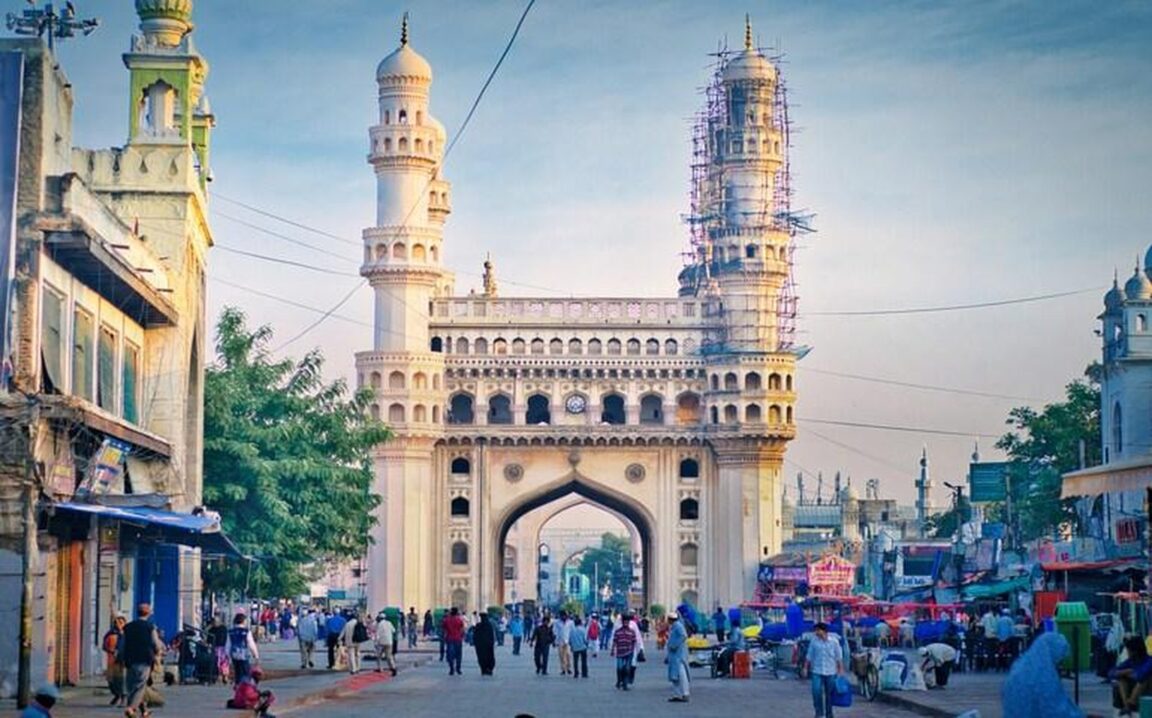
Hyderabad runs on a strict and delicious hierarchy: dum biryani first and argued about forever, Irani cafe chai with Osmania biscuits at set hours of the day, haleem when Ramadan turns the Old City into an all night kitchen, and the Charminar street circuit after dark for kebabs, faluda and whatever is frying. Eat out of order and locals will correct you kindly and at length. This guide follows the hierarchy properly: the biryani rules and how to judge a handi, the Irani cafe ritual, and the Old City circuit around the Charminar, built in 1591, where the city’s oldest flavours still live. One guidebook note: India has no MICHELIN Guide, so reputations here are built the older way, by decades of queues.
Quick Facts
- The biryani rule: Real Hyderabadi dum biryani is kacchi style, raw marinated meat layered with par cooked basmati and sealed, cooked on dum. The lid seal and the aroma on opening are the test.
- The pairing: Biryani arrives with mirchi ka salan, the chilli and peanut curry, and raita. Both are part of the dish, not optional extras.
- Irani cafe ritual: Strong sweet chai, Osmania biscuits for dunking, marble tables, and no rushing anyone, including yourself.
- Old City anchor: The Charminar, built in 1591 by Muhammad Quli Qutb Shah, with Laad Bazaar and the street food lanes at its feet.
- Legacy names: Paradise, founded in 1953 in Secunderabad, and Hotel Shadab by the Charminar are the two poles of the biryani argument.
- Ramadan rule: Haleem season transforms the Old City after sunset. Outside Ramadan, haleem is a special, not a staple.
- Prices checked: 14 November 2026. This guide describes dishes and houses rather than rupee figures, except where a venue publishes its own menu.
What are the biryani rules?
Rule one: it must be dum. In the kacchi method that defines Hyderabad, raw meat marinated in yoghurt and spices is layered with basmati rice cooked only part way, then the pot, the handi, is sealed with dough and cooked slowly so the meat steams in its own juices and finishes the rice from below. Saffron milk, fried onions, mint and ghee go between the layers. When the seal breaks, the aroma should arrive as an event. A biryani assembled from separately cooked rice and a curry, however tasty, is a different dish wearing the name, and Hyderabad will say so.
Rule two: judge the rice. Grains should be long, separate and stained in a gradient, white, gold and deep saffron, never uniformly orange and never broken into mush. Rule three: respect the salan. Mirchi ka salan, made from big green chillies in a peanut, sesame and coconut curry, is the biryani’s designed partner, its tang and richness cutting the rice. Eat the first mouthfuls plain, then alternate. Rule four: mutton is the classic, chicken the everyday, and the egg on top is garnish, not a course. Rule five: the bottom of the handi, where the masala concentrates, is the prize portion. Regulars know. Now you do too.
Where do you eat it, Paradise or Shadab?
Both, on different days, and then you join the argument with evidence. Paradise, in Secunderabad since 1953, is the name the world knows, a multi floor institution whose biryani has carried the city’s flag across India. Its version is polished, consistent and built for scale. Hotel Shadab, in the Old City near the Charminar, is the traditionalist counter claim: a busy, no frills dining room where the biryani lands with a deeper, darker masala and the kebabs and marag soup around it are half the reason to go. Shadab has traded by the Charminar for nearly four decades and recently carried the format to a second, larger outpost, which the Old City regulars discuss the way football fans discuss a transferred striker.
The honest verdict is that the argument is the attraction. Hyderabad’s biryani standard is set by competition between houses like these and dozens of smaller ones in Tolichowki, Mehdipatnam and the Old City lanes, each with a loyal mohalla behind it. Eat two, preferably three, versions across a stay. Take notes. Pick a side before you leave, because the city will ask, at chai, the next morning. For the other great Irani cafe city of India, our Mumbai food guide covers the same chai and bun maska culture where it began.
What happens in an Irani cafe?
A pause, conducted properly. Hyderabad’s Irani cafes, built by Persian immigrants across the last century and a half, serve a strong, sweet, milky chai that arrives in a small cup and saucer and is not to be hurried. The Osmania biscuit, named for Mir Osman Ali Khan, the last Nizam, is its designed partner: short, salty sweet, crumbly at the edges, built to be dunked for exactly two seconds. Around those two fixed points the cafes serve bun maska, samosas, lukhmi mince pastries and, at the older houses, a full Hyderabadi menu behind the tea counter.
Nimrah Cafe and Bakery, right by the Charminar, is the pilgrimage stop: chai and biscuits with the monument filling the window. The etiquette is minimal and firm. Order at the counter, take your table, do not ask for the chai less sweet on a first visit, and let the marble topped room set the pace. These cafes are disappearing across India as rents rise, and Hyderabad has kept more of the culture alive than most cities. An hour in one is not a break from the food tour. It is one of its oldest chapters.
How does the Charminar street circuit work?
After dark, in the lanes around the Charminar and along the roads feeding it. Start savoury: kebabs from the grill stalls, pathar ka gosht, meat cooked on a heated stone slab, a Deccan speciality with no real equivalent elsewhere, and chicken 65, the fiery red fry whose origin story Chennai and Hyderabad contest. Add a lukhmi or two from a bakery counter. Then go sweet: faluda, the tall glass of vermicelli, basil seeds, rose milk and ice cream; double ka meetha, the bread pudding with rabri that closes Hyderabadi weddings; and qubani ka meetha, stewed apricots with cream, the Nizam era dessert that deserves its quiet fame.
Work the circuit hungry and in company, because everything is portioned for sharing and argument. Laad Bazaar’s bangle lanes run alongside the food streets, so the evening mixes shopping and grazing in the proportions the Old City has always preferred. During Ramadan the whole circuit intensifies and haleem, the slow pounded wheat, lentil and meat porridge crowned with fried onions, ghee and lemon, becomes the headline dish at stalls and institutions across the city, eaten after the fast breaks. Time a visit for it once if you can. For another city where a monument anchors a night food circuit, our Istanbul food guide works the same geography of faith, markets and grills.
How should you pace two days of eating in Hyderabad?
Day one, the canon: biryani at lunch at one legacy house, chai and Osmania biscuits at Nimrah in the late afternoon, the Charminar circuit after dark. Day two, the rematch: the rival biryani house at lunch, an Irani cafe breakfast to start, and the bakery run, Karachi Bakery’s fruit biscuits above all, for the suitcase. Drink water constantly, because Deccan heat and biryani spice are a combined event, and never schedule biryani twice in one day unless you are prepared to nap like it is your job. The city respects the nap. Build it in.
Frequently Asked Questions
What does dum mean in dum biryani?
Dum is the sealed, slow steam cooking method: the handi is closed, traditionally with a dough seal, and cooked on low heat so the meat and rice finish together in their own steam and spice. It is the defining technique of the Hyderabadi style.
What is mirchi ka salan and do you have to eat it?
It is the chilli, peanut and sesame curry served with Hyderabadi biryani, designed to cut the richness of the rice with tang and heat. You do not have to eat it, but the dish was built around the pairing, and one alternating mouthful usually settles the question.
Are the Irani cafes open all day?
Most trade from early morning to late evening, with chai served throughout. Nimrah by the Charminar keeps long hours for the monument crowds. Go in the morning or late afternoon for the full ritual at its calmest.
When can you eat haleem in Hyderabad?
Haleem is a Ramadan dish in Hyderabad, served across the city through the fasting month, especially after sunset. A few houses offer it at other times as a special, but the full haleem season, with its dedicated stalls and queues, is Ramadan only.
Is Hyderabad biryani very spicy?
It is aromatic first and hot second. The heat sits in the masala and the salan rather than in chilli burn, and raita is always on the table. If you eat Indian food comfortably at medium heat elsewhere, you will be fine.
What food should you take home from Hyderabad?
Osmania biscuits and Karachi Bakery fruit biscuits travel best and carry the city’s name across India for a reason. Buy them on the last day, pack them in hand luggage, and expect neither box to survive the week.