 Elena Vasquez
Thalassotherapy in Brittany is not a spa weekend with a sea view, and understanding that difference is the key to booking it well. A true Breton thalasso cure is a structured programme of seawater treatments, built around freshly pumped and heated Atlantic seawater, marine mud and algae, delivered in a centre that must sit by the sea, usually over several days and classically over six. Brittany is where the model was invented: the first thalassotherapy institute opened at Roscoff in 1899 under Dr Louis Eugene Bagot, and the region still holds France’s densest line up of serious centres, from Saint Malo and Dinard on the north coast to Quiberon, Carnac and La Baule facing south. This guide explains how the sea cure actually works, what a treatment day looks like, how the centres differ, and who benefits most, without repeating brochure promises as medical fact.
Quick Facts
- What it is: A preventive and restorative cure using seawater, marine mud, algae, sea air and marine climate, by the sea
- Where it began: Roscoff, Brittany, where the first institute opened in 1899; the word itself was coined in France in 1865 from the Greek thalassa, meaning sea
- Defining rules: A thalasso centre must be at the seaside, use natural seawater and marine substances, and work to the standards overseen in France by France Thalasso, the profession’s national body
- Classic cure length: Six days is the traditional full cure; shorter formats of one to five days are widely sold and useful, but they are tasters by the model’s own logic
- Core treatments: Heated seawater pools and hydrotherapy circuits, jet showers, affusion showers, seaweed and marine mud wraps, algae baths and supervised pool exercise
- Anchor centres: Thermes Marins de Saint Malo (founded in its modern form in 1963), Sofitel Quiberon Thalassa (origins 1964), plus Dinard, Carnac, Perros Guirec and Roscoff itself
- Medical note: Programmes are positioned for rest, recovery support, joint and back discomfort, circulation and stress. They are not a substitute for medical treatment, and centres screen for contraindications
Where did thalassotherapy come from?
Seawater bathing for health is ancient, but thalassotherapy as a named, organised practice is Breton and surprisingly recent. Dr Joseph La Bonnardiere coined the word in 1865, joining thalassa, the Greek for sea, to therapy. In 1899 Dr Louis Eugene Bagot opened the Marine Institute at Roscoff, on Brittany’s north coast, and the modern centre was born: a medicalised institute at the shoreline, using the sea itself as the treatment medium. Through the twentieth century the model widened from rehabilitation toward prevention and general restoration, and in the 1960s the Saint Malo centre was reborn under Dr Pierre Heger, growing into today’s Thermes Marins de Saint Malo, while cyclist Louison Bobet, convinced seawater treatment had aided his recovery from a career ending car crash, founded the Quiberon institute in 1964. In 1986 the profession organised nationally, in the lineage of today’s France Thalasso, which codifies what may call itself thalassotherapy at all.
That codification matters to a buyer, because the word spa is unregulated and the word thalasso, in France, is not. A centre using the label must be beside the sea it draws from, must use natural seawater rather than reconstituted salt water in a landlocked basement, and must build programmes from marine resources: the water, the mud, the algae and the climate together. An inland hotel with a salt water pool can offer a pleasant weekend. Under the French definition, it cannot offer thalassotherapy.
What actually happens inside the seawater circuit?
The seawater itself is the first treatment. Centres pump it from offshore, filter and warm it, and route it through the building at different temperatures for different jobs. Research cited by the profession since the 1960s holds that immersion in seawater heated to roughly body temperature and above, in the region of 37 degrees, opens the skin to the water’s mineral salts and trace elements, which is why the heated pool, not the cold sea, is the cure’s engine, bracing Channel dips notwithstanding.
Around that engine, a classic day assembles three or four treatments. Hydrotherapy comes first in most programmes: baths with underwater jets, jet showers aimed at the back and legs, affusion showers that rain warm seawater over a massage table, and pool sessions led by a physiotherapist or hydrotherapist, where buoyancy lets stiff joints move through a range they resist on land. Then come the marine substance treatments: wraps in warm algae or marine mud, which hold heat against the body, and algae baths that combine both ideas. Movement and air complete the prescription in the traditional model, with supervised exercise, coastal walking and rest built into the schedule rather than left to chance. At Saint Malo, the Aquatonic circuit gives a flavour of the scale involved: a seawater course of successive stations, hundreds of massage jets, whirlpools and bubble areas, used by cure guests as one element inside the wider programme.
A cure is measured in days, not appointments
The structural difference from a spa weekend is rhythm and accumulation. A spa day is a menu: choose a massage, use the pool, go home. A thalasso cure is a sequence prescribed as a whole, traditionally across six days, with treatments timed morning and afternoon, meals and rest aligned to them, and a progression the team adjusts as the days pass. Centres sell the full grammar of options, from one day discovery formulas to four and five day themed programmes, such as the health focused cures at Saint Malo addressing back pain, heavy legs, joint and muscle problems and postural work, through to the full six day formats with around four treatments a day. The honest guidance is not that short formats are worthless; a two or three day programme teaches the method, rests most people deeply, and suits a first test. It is that the model’s claimed benefits were always framed around the longer cure, so a traveller chasing a specific outcome, rather than a restorative break, should buy the length the outcome is attached to.
Practically, expect to live inside the centre’s timetable. Treatment blocks anchor the day, swim caps and centre issued kit are normal, phones disappear, and the sea air walks between sessions are part of the prescription rather than sightseeing. Build the trip accordingly: stay at the centre’s own hotel or within a short walk, as most guests do at Saint Malo’s Grande Plage du Sillon address or on the Quiberon peninsula tip, and do not stack a cure on top of an ambitious Brittany touring itinerary. Pair it instead with slow coastal time, in the spirit of our guide to three slow days in Bordeaux and Saint Emilion for travellers who like France at walking pace, and contrast the whole seawater idea with Japan’s volcanic version in our explainer on Beppu’s hells, sand baths and onsen streets.
Choosing a Breton centre: north coast or south?
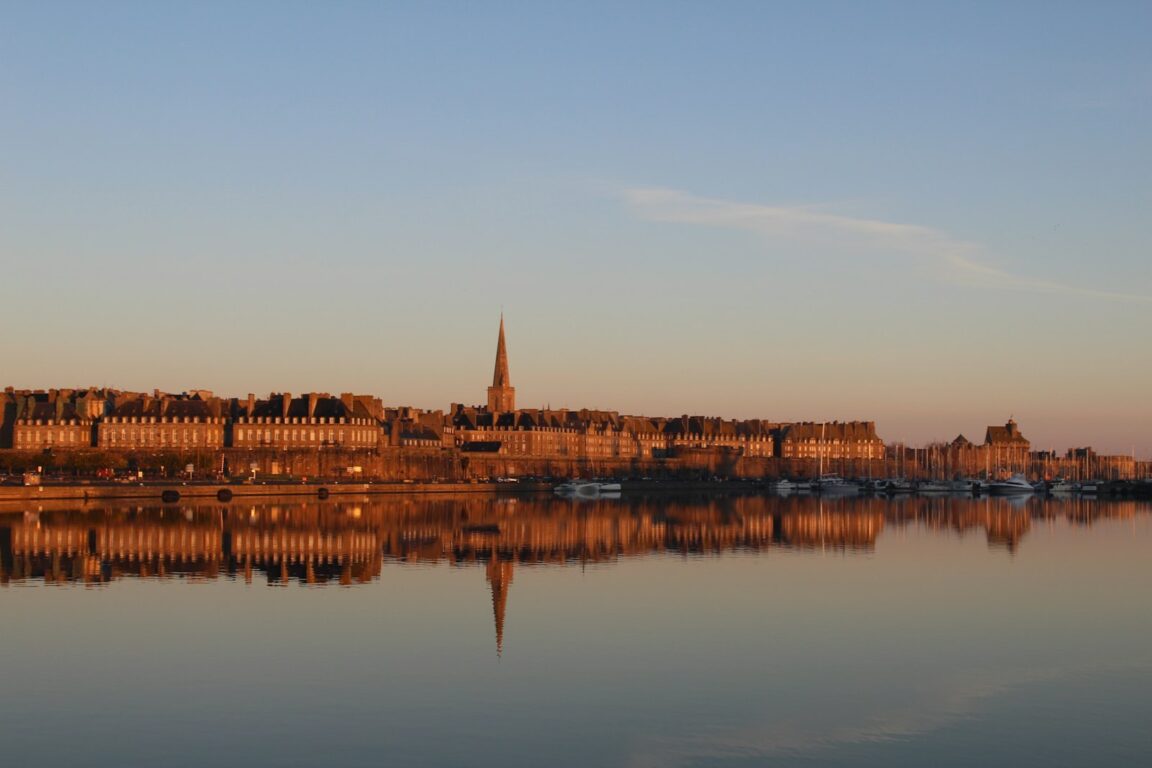
The north coast is the historic heartland. Roscoff offers the founding story and a working port town calm. Saint Malo is the heavyweight: the largest scale, the widest programme menu, a five star hotel on a three kilometre sandy beach, and a walled old town for evening walks, two and a quarter hours from Paris by TGV. Dinard, facing Saint Malo across the Rance estuary, trades on Belle Epoque elegance and a quieter register. Perros Guirec, on the Pink Granite Coast, suits travellers who want the cure wrapped in serious coastal scenery.
The south coast runs milder and more resort like. Quiberon, at the end of its long peninsula and facing Belle Ile, is the other historic giant, founded in 1964 and rebuilt across decades into a large sea and spa institute with a 25 metre heated seawater pool and an outdoor marine course. Carnac pairs its centre with standing stones and a vast natural park setting, and markets organic certified cure programmes. La Baule, at Brittany’s southern edge by most modern regional definitions, adds a grand resort promenade. Choose north for heritage and drama, south for softness and light, and in both cases choose by programme first and hotel thread count second, because the treatment team and the cure structure are the product.
Who should go, and who should ask questions first?
The classic cure guest is not chasing luxury. They are tired in a way sleep has not fixed, carrying a stiff back, heavy legs, creaking joints or the tail end of a demanding year, and willing to give a structured week to feeling measurably better. Centres also build programmes for new mothers, for athletes in recovery, for menopause support and for sleep and stress, and the better ones assess before they prescribe. Just as clearly, thalassotherapy has contraindications, and reputable centres screen for them: certain cardiac, circulatory, thyroid and skin conditions, iodine sensitivity, pregnancy stages and recent surgery can all change or bar a programme. Declare everything on the pre cure health questionnaire, take the centre’s medical consultation seriously where one is offered, and treat any centre that promises to cure a diagnosed condition, rather than to support rest and recovery, as having failed the honesty test this guide has applied throughout.
Frequently Asked Questions
What is the difference between thalassotherapy and a spa?
Setting, substance and structure. A thalasso centre must sit by the sea and use natural seawater and marine substances such as algae and marine mud, under the standards of France Thalasso. Its programmes run as multi day cures of sequenced treatments. A spa can be anywhere, use any products, and sells individual appointments.
How many days do I need for a thalasso cure?
Six days is the classic full cure and the length the traditional model is built around. Four and five day programmes are a sound middle ground. One to three day formats work well as an introduction and a restorative break, but should not be expected to deliver the full cure’s aims.
Where in Brittany should a first timer go?
Saint Malo for scale, choice and the easiest rail access from Paris, in about two and a quarter hours by TGV. Quiberon for the other historic flagship in a softer southern setting. Roscoff for the founding institute and a quieter, more local trip.
Is thalassotherapy a medical treatment?
It is a supervised wellbeing and recovery support tradition with medical roots, positioned for rest, circulation, joint and muscle discomfort and stress. It is not a substitute for diagnosis or treatment of a condition. Centres screen for contraindications, and guests should declare health conditions in advance.
What does a treatment day actually feel like?
Structured and unhurried. Expect three or four treatments split across morning and afternoon, centred on heated seawater pools, jet and affusion showers, and algae or marine mud wraps, with rest, centre meals and coastal walks in between. You follow the centre’s timetable rather than your own.
When is the best time of year for a Breton thalasso trip?
Centres run year round and the cure is an indoor centred programme, so winter is genuinely viable and often quieter and better value. Late spring to early autumn adds comfortable sea air walking and beach time between treatments. Book themed and holiday period cures well ahead.