 Aiko Tanaka
Beppu works in two halves: first walk the Hells, seven geothermal pools so hot you only look at them, cobalt blue, blood red, bubbling mud and a geyser, then go and soak properly in the city’s real baths, a sand bath, a steam bath or a neighbourhood onsen. That order, spectacle in the morning and soaking after, is how Japan’s steamiest city makes sense for a first visit. Beppu, on the east coast of Oita Prefecture in Kyushu, produces more hot spring water than anywhere else in Japan, across eight districts collectively called the Beppu Hatto, and steam rises from its drains, rooftops and hillsides as part of ordinary street scenery.
Quick Facts About Beppu’s Hells and Baths
- The Hells: Seven sites on the Jigoku Meguri circuit, five in the Kannawa district and two in Kamegawa, all for viewing only. Water temperatures run from about 78 to 99 degrees Celsius.
- Hours: The seven Hells open 08:00 to 17:00 daily, per the Beppu Jigoku Association.
- Combined ticket: 2,400 yen for adults and 1,200 yen for elementary and junior high school students, valid for two days, one entry per Hell, sold at any of the seven. Single entry is 500 yen per Hell. Prices from the association’s fee list dated 1 February 2025, checked November 2026.
- Time needed: Two and a half to three hours for all seven Hells, plus half a day at a relaxed pace for bathing afterwards.
- Sand baths: Being buried in naturally heated sand is a Beppu signature, offered at the historic Takegawara Onsen in the centre and at the seaside sand bath in Kamegawa, among other facilities.
- Getting there: Kamenoi Bus routes from JR Beppu Station’s west exit reach the Kannawa Hells in roughly 20 minutes. The two Kamegawa Hells are a short bus ride from Kannawa.
- Etiquette basics: Wash before entering any bath, bathe naked in gender separated public baths, keep towels out of the water, and check tattoo policies at the specific facility before you go.
What are the Hells, and why can you not bathe in them?
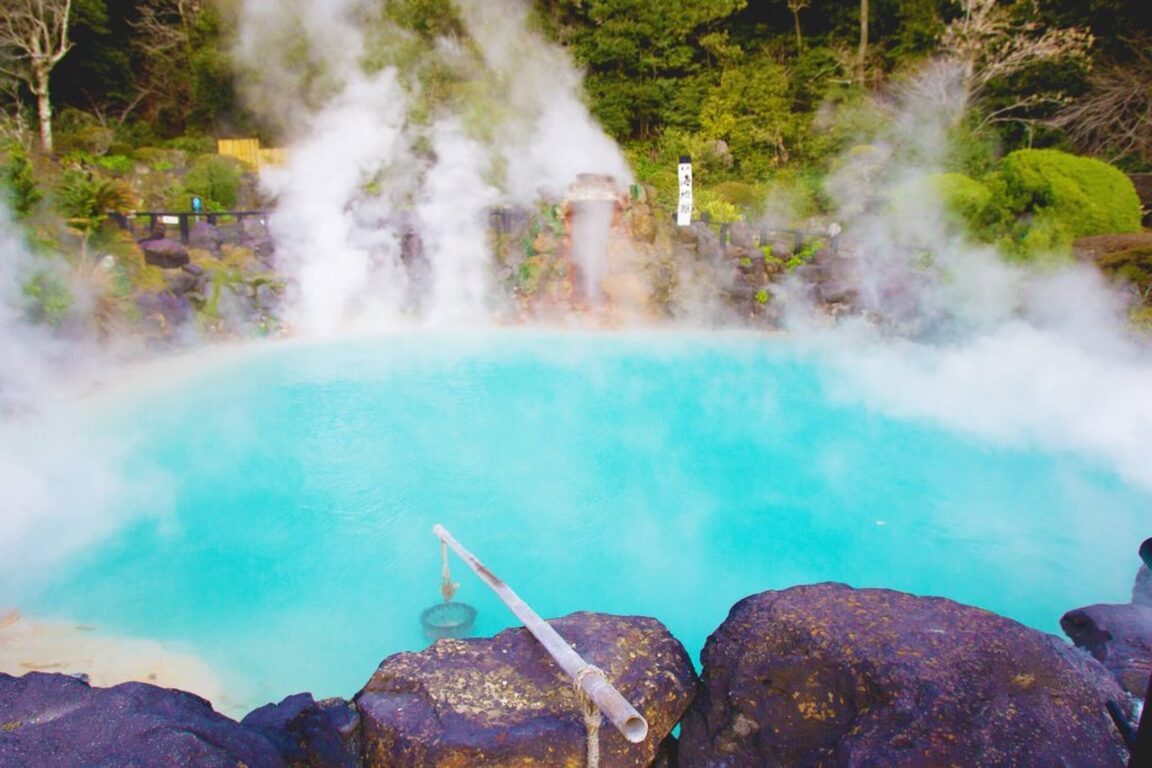
A jigoku, literally a hell, is a hot spring vent too extreme for people. The ground in Beppu’s Kannawa and Kamegawa districts has spat steam, hot mud and boiling water for well over a thousand years; an eighth century record already described this as land nobody could approach, and the name stuck. The Beppu Jigoku Association runs seven of these vents as viewing sites, four of them, Umi, Chinoike, Tatsumaki and Shiraike, designated National Places of Scenic Beauty. The colours are chemistry, not lighting: iron sulfate turns Umi Jigoku blue, iron oxide turns Chinoike Jigoku red, and grey mud at Oniishibozu Jigoku boils up in smooth domes said to resemble monks’ shaved heads.
Umi Jigoku, the Sea Hell, is the largest and the usual first stop: a wide cobalt pond at about 98 degrees Celsius, its vent some 200 metres below the surface, set in gardens with a greenhouse growing tropical water lilies in geothermal heat and a free foot bath for ticket holders. Chinoike, the Blood Pond Hell, is the oldest natural hell in Japan, a 78 degree pond coloured by red clay. Tatsumaki is a geyser that erupts at intervals under a stone roof built to contain it, and the association warned in January 2026 that eruptions have become less predictable, so patience or a return visit the next day, which your two day ticket allows, is part of the plan.
How should you walk the Jigoku Meguri circuit?
Start at Umi Jigoku at the 08:00 opening, before the tour coaches reach Kannawa, and walk the five Kannawa Hells in a loose loop: Umi, then Oniishibozu next door for the bubbling mud, Kamado with its several coloured pools and steam demonstrations, Oniyama, where geothermal heat has kept crocodiles since 1923, and quiet Shiraike, a milky pond in a Japanese garden. Then ride the bus a few minutes north to the Kamegawa pair, Chinoike and Tatsumaki, which stand side by side, so a wait for the geyser is easily spent at the red pond.
Buy the combined ticket if you plan five or more Hells, since five single entries already cost more, and remember it runs over two days, which suits anyone staying in Kannawa who would rather split the circuit. Foot baths at Umi, Oniishibozu, Kamado and Chinoike are free with admission, so carry a small towel for your feet. Our Kanazawa travel guide covers another Japanese city built around slow looking, and Beppu rewards the same pace: the Hells are close together, and rushing them wastes the steam, the gardens and the strange calm between crowds.
Where do you actually soak, the sand baths and beyond?
The sand bath, sunayu, is Beppu’s most distinctive real bath. You change into a cotton yukata, lie in a shallow trench, and an attendant covers you, up to the neck, in sand heated naturally by hot spring water. The weight and warmth build for around ten to fifteen minutes before you rinse off and, at most facilities, take a regular bath as well. Takegawara Onsen, the wooden landmark bathhouse a short walk from Beppu Station that dates to the Meiji era, is the classic central address for both a sand bath and an inexpensive public soak. In Kamegawa, the seaside sand bath lets you be buried within sound of Beppu Bay. Sand bath sessions are popular and can sell out or pause in bad weather, so go early in the day and treat the posted fee and last entry time at your chosen facility as the final word.
Beyond the sand, Kannawa adds two more signatures. Jigoku mushi, hell steaming, cooks seafood, vegetables, eggs and buns in pure geothermal steam, at restaurants where you pick ingredients and steam them yourself, and at Kamado Jigoku and Umi Jigoku in snack form, including custard puddings steamed in the heat. The Kannawa steam bath, mushiyu, has bathers rest on beds of medicinal herbs over volcanic steam. Add the ordinary public baths, some grand, some a handful of regulars and a single perfect tub, and the pattern of a Beppu stay emerges: look in the morning, steam your lunch, soak in the afternoon, and repeat the soak after dinner in your inn’s own bath.
What etiquette does a first time bather need?
Japanese public bathing runs on a short, learnable script. Leave shoes at the entrance, undress in the changing room, and wash thoroughly at the seated showers before entering the tub, with hair tied up and your small towel kept on the edge or your head, never in the water. Baths are gender separated and used naked at public facilities; private and family baths, which several Beppu facilities offer, suit anyone who prefers otherwise. Tattoo policies vary by facility in Japan and have been softening, but they remain a house decision, so a traveller with tattoos should check the specific bath’s current policy or choose a private bath. Photographs are not taken in bathing areas. Keep voices low, move slowly on wet stone, and the regulars will treat you as one of their own.
Reaching Beppu is straightforward: limited express trains link it with Oita, Fukuoka and the Yufuin resort area, and travellers crossing Japan by rail can test their pass maths in our Japan Rail Pass guide before deciding how the Kyushu leg is ticketed.
How long should you stay in Beppu?
A day trip can hold the Hells and one bath, and many visitors do exactly that from Oita or Yufuin. One night is better. It lets you split the Hells across the ticket’s two days if the weather or the geyser demands it, eat a steam cooked dinner in Kannawa as the vents light the evening, and take a second, slower soak in the morning before the crowds arrive. Stay in Kannawa to be inside the steam district itself, or near the station for transport and the Takegawara sand bath. Either way, Beppu is not a stopover between other places. It is the place.
Frequently Asked Questions About Beppu
Can you bathe in the Hells of Beppu?
No. The seven Hells are viewing attractions, with water far too hot for bathing. Four have free foot baths for ticket holders, and the city’s real bathing happens at its public onsen, sand baths and steam baths, several of them minutes from the Hells.
Is the combined Hells ticket worth it?
If you will visit five or more Hells, yes: at 500 yen per single entry, five visits already exceed the 2,400 yen combined ticket, which also spreads the circuit over two days. For one or two Hells, pay at the gate instead.
What does a sand bath feel like and how long does it take?
Expect heavy, even warmth and gentle pressure as the heated sand is piled over you in a yukata, for roughly ten to fifteen minutes in the sand, plus changing, rinsing and a regular bath afterwards. Allow about an hour in total, and arrive early because sessions are first come at popular facilities.
When is the best time to do the Hell circuit?
Start at the 08:00 opening on a weekday for the quietest visit and the thickest morning steam. The two day ticket means a late start is never wasted: finish the circuit the following morning.
Is Beppu suitable for travellers who cannot use shared naked baths?
Yes. Several facilities offer private or family baths that can be reserved or hired by the hour, and the Hells, foot baths, steam cooking and steam baths need no shared bathing at all. Check the current arrangements at your chosen facility before you go.
Last updated November 2026. Hells hours and ticket prices checked against the Beppu Jigoku Association and the City of Beppu’s official onsen guide at the time of writing. Facility fees, sand bath sessions and tattoo policies vary, so confirm your chosen bath before a special trip. Featured image: Umi Jigoku, the Sea Hell, in Beppu. Photo from the City of Beppu official onsen site, used with credit.