 Priya Nair
Forest bathing in Kyoto works best in Arashiyama and Sagano, on the western edge of the city, where a free bamboo grove path, the World Heritage garden of Tenryu-ji and a string of quiet moss and maple temples sit within one slow walk of each other. The method is the point. Shinrin-yoku, the Japanese practice of forest bathing developed in Japan in the 1980s, asks for unhurried sensory attention rather than distance covered: walk slowly, stop often, listen, and let one district fill a whole day instead of racing across the city between famous names.
Quick Facts
- Where: Arashiyama and Sagano, western Kyoto, reached by the JR Sagano Line from Kyoto Station in about 15 minutes.
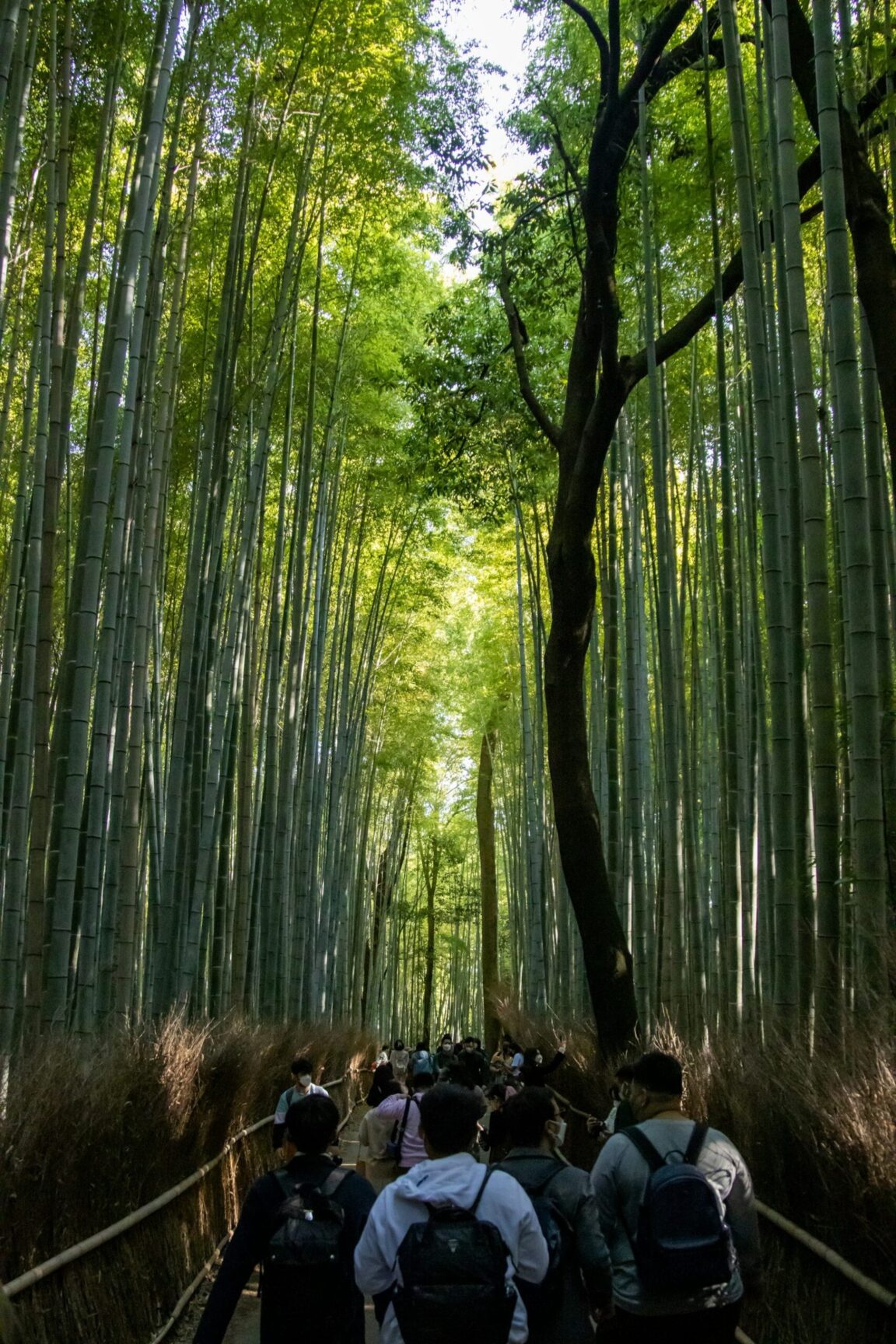
- The grove: The Sagano Bamboo Grove is a public path of roughly 500 metres, free to enter, with no gate and no set hours.
- Anchor garden: Tenryu-ji, a UNESCO World Heritage Zen temple founded in 1339. Garden entry 500 yen, halls 300 yen extra, open 8:30 to 17:00, last entry 16:50.
- Seasonal bonus: Tenryu-ji opens its garden early, from 7:30, during the autumn colour period from 14 to 30 November 2026.
- Quiet garden: Okochi Sanso, the villa garden at the top of the bamboo path, entry 1,000 yen including matcha and a sweet, open 9:00 to 17:00.
- Timing rule: Walk the bamboo path before 8:00 or late in the day. Between 10:00 and 15:00 it can be shoulder to shoulder.
- Fares: JR Kyoto Station to Saga-Arashiyama about 240 yen. Randen tram from Shijo-Omiya 250 yen. Hankyu via Katsura about 240 yen.
What is forest bathing, and why does Kyoto suit it?
Forest bathing is not hiking and it is not sightseeing with trees in the background. The practice, formalised in Japan in the 1980s and now studied worldwide, is deliberately slow exposure to a forest atmosphere: a pace of a kilometre an hour or less, phones away, attention on sound, scent, light and air on skin. Kyoto suits it unusually well because its western hills hold working temple forests rather than ornamental parks. The bamboo of Sagano, the moss garden of Gio-ji, the maple slopes below Jojakko-ji and the borrowed scenery of Tenryu-ji, where the garden design pulls the wooded hills of Arashiyama and Kameyama into the frame, are all planted, tended landscapes that have been walked contemplatively for centuries. The Zen garden was a forest bathing space long before the term existed.
The sound is part of the design. Wind moving through the Sagano bamboo produces a rustling and creaking distinctive enough that the Japanese Ministry of the Environment included it among its 100 Soundscapes of Japan, a list of sounds worth preserving. Hearing it requires the one thing the grove rarely offers at midday: quiet. That single fact should set the alarm clock for the whole day.
How should the slow day be sequenced?
Start at JR Saga-Arashiyama station and walk to the northern, quiet end of the bamboo grove first, against the flow of visitors who enter from the main street end. Before 8:00 the path is close to empty, the light comes through the culms at a low angle, and the soundscape the ministry listed is actually audible. Walk it twice if the mood takes you. It is only about 500 metres, and a forest bathing pace turns it into half an hour of standing, listening and looking up rather than a ten minute photo stop.
Be at Tenryu-ji when the garden opens at 8:30, or at 7:30 during the special early opening that runs from 14 to 30 November 2026 for the autumn colour. The garden ticket, 500 yen, is the essential one: the Sogenchi pond garden, laid out by the Zen master Muso Soseki in the 14th century, is one of the oldest surviving gardens of its kind in Japan, and the temple is the head temple of its branch of Rinzai Zen and part of the Historic Monuments of Ancient Kyoto World Heritage listing. Add the halls for 300 yen if the day is young. The Cloud Dragon ceiling painting in the Dharma Hall is a separate 500 yen ticket and opens on weekends, holidays and set spring and autumn periods. Leave the garden by the north gate, which delivers you straight into the middle of the bamboo path, skipping its busiest stretch entirely.
Midday belongs to the quieter temples of Sagano, north of the grove, while the main street fills. Okochi Sanso, the villa of the samurai film actor Okochi Denjiro, sits at the top of the bamboo path: 1,000 yen including matcha and a monaka sweet, four buildings registered as tangible cultural properties, and a garden most grove visitors never reach. Further north along the preserved street of Saga Toriimoto, Gio-ji pairs a thatched hall with a moss garden under maples, Nison-in holds a long maple approach, and Jojakko-ji climbs a wooded hillside to a pagoda looking over the city. Finish across the Katsura River at Togetsukyo Bridge in late afternoon, when the tour groups have gone and the light turns on the Arashiyama slopes, and leave from Hankyu Arashiyama station on the south bank. Readers planning the wider trip should pair this day with our itinerary for a first time in Tokyo and our guide to Kanazawa, the other great garden city on the same rail arc.
Where else in Kyoto does forest bathing work?
Two extensions reward a second slow day. The mountain path between Kurama and Kibune, north of the city, walks through mature cedar forest between two villages, with shrine gates in the trees and a riverside dining street at the Kibune end in summer. It is a genuine forest walk rather than a garden visit, steeper than anything in Sagano, and it should be treated as a half day in its own right. Inside the city, the approach to Fushimi Inari through its wooded upper mountain, walked early and continued past the famous lower gates to the quieter upper loops, applies the same principle: the forest is the attraction, the shrine path is the structure, and the crowd thins with every minute of climbing.
What to carry is deliberately little. Forest bathing fails with a daypack full of objectives. Bring water, a small towel, and layers for still air under trees, and plan the season from our guide to what to pack for Japan in spring, which adapts directly to Kyoto in autumn. Temple etiquette is simple and strict: quiet voices, no photography where halls are signed against it, stay on paths and never step into the bamboo stands or moss, and bow once at gates if you wish to, without treating worshippers as scenery.
Frequently Asked Questions
Is the Arashiyama Bamboo Grove free, and when is it open?
Yes. The grove is a public path with no gate, no ticket and no official hours, so it can be walked at dawn. That openness is the whole strategy: arrive before 8:00 for the quiet the grove is famous for, or come late in the day. Between about 10:00 and 15:00 the same path can be shoulder to shoulder.
How much does Tenryu-ji cost, and which ticket matters?
The garden costs 500 yen for high school age and above and 300 yen for elementary and junior high students. The main halls add 300 yen. The Cloud Dragon ceiling in the Dharma Hall is a separate 500 yen and opens on weekends, holidays and set seasonal periods. If time is short, the garden alone is the visit: it is the 14th century Sogenchi pond garden the temple is known for.
What is the best way to reach Arashiyama from Kyoto Station?
The JR Sagano Line runs from Kyoto Station to Saga-Arashiyama in about 15 minutes for about 240 yen, and that station serves the quiet northern end of the grove, which suits an early start. The Randen tram from Shijo-Omiya costs 250 yen and lands on the main street. Hankyu trains via Katsura, about 240 yen, arrive south of the river near Togetsukyo Bridge and suit the end of the day.
How long do you need for a slow day in Arashiyama and Sagano?
A full day, taken slowly. The bamboo path deserves 30 to 45 minutes at a forest bathing pace, Tenryu-ji an hour or more, Okochi Sanso 45 minutes with its included matcha, and the Sagano temples two unhurried hours. Compressing the district into a two hour stop produces exactly the crowded, rushed experience the slow plan exists to avoid.
When is the best season for forest bathing in Kyoto?
Late November for maple colour, when Tenryu-ji also runs its early garden opening from 7:30, from 14 to 30 November in 2026, and spring for fresh green bamboo and cherry blossom in the temple gardens. Summer is lush but humid, and the early start matters most then. The grove itself is green in every season, so the choice turns on the temple gardens around it.