 Jordan Ellis
Quebec City in summer is a different trip from the winter one, and it should be planned as its own visit: the walled Old Town in full green season, with cafe terraces open, the Terrasse Dufferin boardwalk busy until late, Montmorency Falls running hard with meltwater and farm stalls open across Ile d’Orleans. The structure that works is two days in the city, Upper Town first, then Lower Town, the Plains of Abraham and the Citadelle, plus one day out of it, pairing the 83 metre falls with a slow circuit of the island’s villages, farms and viewpoints. Summer also brings the city’s festival season and its longest evenings, so this plan keeps afternoons loose and lets the old town’s streets, not a checklist, set the pace.
Quick Facts
- Base: Old Quebec, a UNESCO World Heritage Site, the only walled city in North America north of Mexico
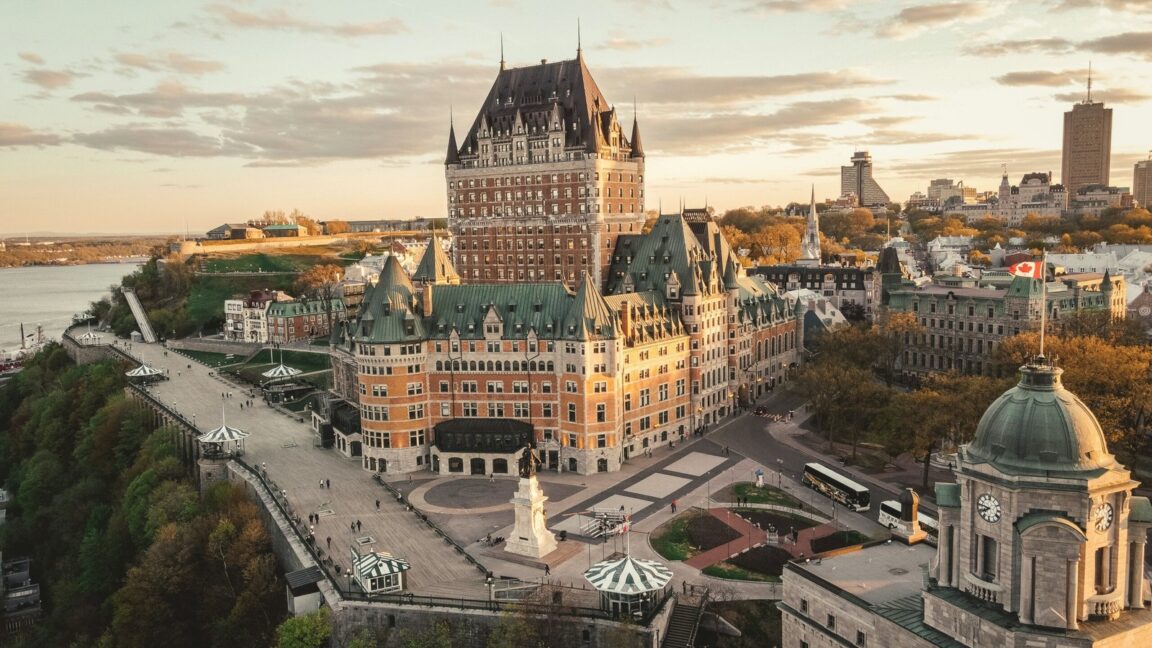
- Landmark: Chateau Frontenac, the railway hotel opened in 1893 above the St Lawrence River
- Boardwalk: Terrasse Dufferin, built in 1879, running from the Chateau along the cliff edge
- Link: The Old Quebec Funicular connects Upper Town with Rue du Petit Champlain in Lower Town
- Day trip: Montmorency Falls, 83 metres high, about 1.5 times the height of Niagara Falls
- Island: Ile d’Orleans, reached by bridge, a circuit of six villages, farms and river viewpoints
- Season: Summer highs around 25 degrees Celsius in July, with the Festival d’ete filling the city with outdoor music
- Contrast read: The winter version of this city is a separate trip with its own itinerary
How summer changes the city
Winter Quebec is a fortress against the cold; summer Quebec is a city outdoors. The same streets that funnel freezing winds in February hold flower baskets, buskers and full terraces from June to September. The ramparts become a walking circuit rather than a backdrop, the St Lawrence fills with boats, and the Plains of Abraham turn into the city’s green living room, with picnics, festivals and long grass evenings. Planning a summer visit with a winter mindset, all interiors and early dinners, wastes the season. The days below are built the other way: sights in the morning, streets and shade at midday, and the river light in the evening, when the boardwalk and the Lower Town are at their best.
Anyone who knows the city only from the cold months should read our Quebec City in Winter itinerary alongside this one, because the two trips share almost no daily rhythm despite sharing every street.
Day 1: Upper Town, the walls and the Terrasse
Start in Upper Town, inside the walls. Place d’Armes is the natural first square, with the Chateau Frontenac above it and the old seminary and cathedral streets around it. The Chateau, opened in 1893 as a Canadian Pacific railway hotel, is a landmark to walk around and through rather than simply photograph: its public spaces are open to visitors, and the building organises the whole city’s sense of itself. From its terrace level, the Terrasse Dufferin boardwalk runs along the cliff, built in 1879 and still the city’s front porch, with views down the St Lawrence toward Ile d’Orleans and the Levis shore. Under the boardwalk’s eastern end, the excavated remains of the Forts et Chateaux Saint Louis show where the governors of New France actually lived.
Give the middle of the day to the walls themselves. Quebec’s fortifications run for kilometres around the old city, with gates, bastions and the star shaped Citadelle at their southern end, an active military base whose guided tours and changing of the guard are a summer staple. Beside it, the Plains of Abraham, where the 1759 battle between French and British forces reshaped North America, are now a vast urban park and museum ground. In July the plains also host the big outdoor stages of the Festival d’ete, which is either a highlight or a reason to book dinner early, depending on taste. End the day back on the Terrasse, where summer evenings run late and the river does the entertaining.
Day 2: Lower Town, the old port and the museum
Ride the funicular down, or walk the Breakneck Steps, into Lower Town. Rue du Petit Champlain is the street everyone comes for, one of the oldest commercial streets in North America, and in summer its flower boxes, galleries and cafe tables justify the reputation, provided it is walked early or late rather than at the midday peak. Place Royale, a few steps away, is where the city began in 1608, with the small stone church of Notre Dame des Victoires, built in 1688, standing on the square. The Old Port Market and the Musee de la civilisation fill the rest of the day comfortably: the museum is the city’s best wet weather and hot weather insurance, and the market is the place to taste what Ile d’Orleans grows before going there.
Summer packing for this city is its own small art: layers for river evenings, shoes for cobbles, and none of the deep winter kit. Our guide to what to pack for Quebec City in December shows the winter end of the wardrobe; the summer version keeps the walking shoes and drops almost everything else.
Day 3: Montmorency Falls and Ile d’Orleans
The day out of the city pairs two sights that face each other across the river. Montmorency Falls drops 83 metres, about one and a half times the height of Niagara, roughly 12 kilometres from the old town and reachable by city bus, tour or car. The park around it offers the full grammar of a great waterfall: a cable car from the base, a suspension bridge across the crest, staircases down the cliff side and viewpoints where the spray does the talking. In summer the flow is strong, the stairs are open and the base paths are at their best. Give the falls a full morning rather than a photo stop, because the bridge and the staircase circuit are the experience, not the car park view.
Cross the bridge to Ile d’Orleans for the afternoon. The island is a single loop road through six villages, past strawberry fields, orchards, vineyards, cheese makers and bakeries, with the city skyline across the water as the return view. It is the city’s farm basket and has been since the 17th century. Stop by appetite rather than itinerary: berries in season, bread and cheese for the viewpoint stops, and a slow pace on a road that was never built for hurrying. Back in the city by evening, the loop closes with dinner in the old town and one last boardwalk pass, the summer trip’s signature ending.
Where to stay and eat in summer
Stay inside or beside the walls if the budget allows, because summer Quebec rewards walking home through lit streets after dinner. Upper Town suits first timers who want the Chateau and the Terrasse at the door; Lower Town and the old port suit travellers who prefer the market, the museum and the Petit Champlain mornings. For food, summer is terrace season: French Canadian bistros in the old town, the Old Port Market for local produce, and farm stands on Ile d’Orleans for the day trip. Book dinner in July, when festival crowds fill the city, and treat lunch as the flexible meal the day trip days need.
Getting there and getting around in summer
Quebec City’s Jean Lesage airport sits a short drive west of the old town, and the city is also an easy rail and road trip from Montreal, which makes it a natural second stop on an eastern Canada route. Once there, the old town itself is a walking city in summer: Upper and Lower Town are linked by the funicular and the staircases, the walls and gates orient every walk, and the only wheels the plan really needs are the bus, tour or car for the falls and island day. Staying inside the walls removes parking and transit from the trip entirely, which is one more reason the summer version rewards a central base. Cyclists will find the river paths and the run toward the falls a genuine alternative on a fine day, with rental bikes available near the old port.
Frequently asked questions
How is the summer trip different from the winter trip?
Almost everything except the streets. Summer swaps skating and the Winter Carnival for terraces, festivals, the falls in full flow and farm season on Ile d’Orleans, and the days run longer and later. The two seasons deserve separate itineraries.
How tall is Montmorency Falls?
83 metres, about one and a half times the height of Niagara Falls. The park has a cable car, a suspension bridge over the crest and staircases down the cliff, and the falls sit about 12 kilometres from Old Quebec.
Do I need a car for Ile d’Orleans?
A car makes the island loop easiest, but tours from the city pair the falls and the island in a single day, and the falls alone are reachable by city bus. The island itself is one loop road through six villages.
When is the Festival d’ete and does it affect a visit?
The festival fills the city with outdoor music in July, with big stages on the Plains of Abraham. It adds energy and crowds in equal measure: book hotels and dinners early for festival dates, or choose June or August for a calmer old town.
What should I pack for Quebec City in summer?
Walking shoes for cobbles, light layers for river evenings, and rain cover for summer showers. July highs sit around 25 degrees Celsius, but the Terrasse Dufferin breeze makes evenings cooler than the forecast suggests.