 Lucas Meyer
Pack for a Sahara tour as a small overnight bag, not a suitcase: sand-proof clothing and footwear for the dunes by day, a properly wrapped headscarf system against sun and blowing sand, and a genuine warm layer for the night, when desert temperatures crash far below the daytime reading. Most Merzouga and Agafay tours carry only an overnight bag into the camp while the main luggage stays with the vehicle or at the departure hotel, so everything on this list has to earn its place in one bag. Build the bag around three problems, heat and sand, wind and sun, and cold after dark, and the classic desert tour becomes comfortable instead of endured.
Quick Facts
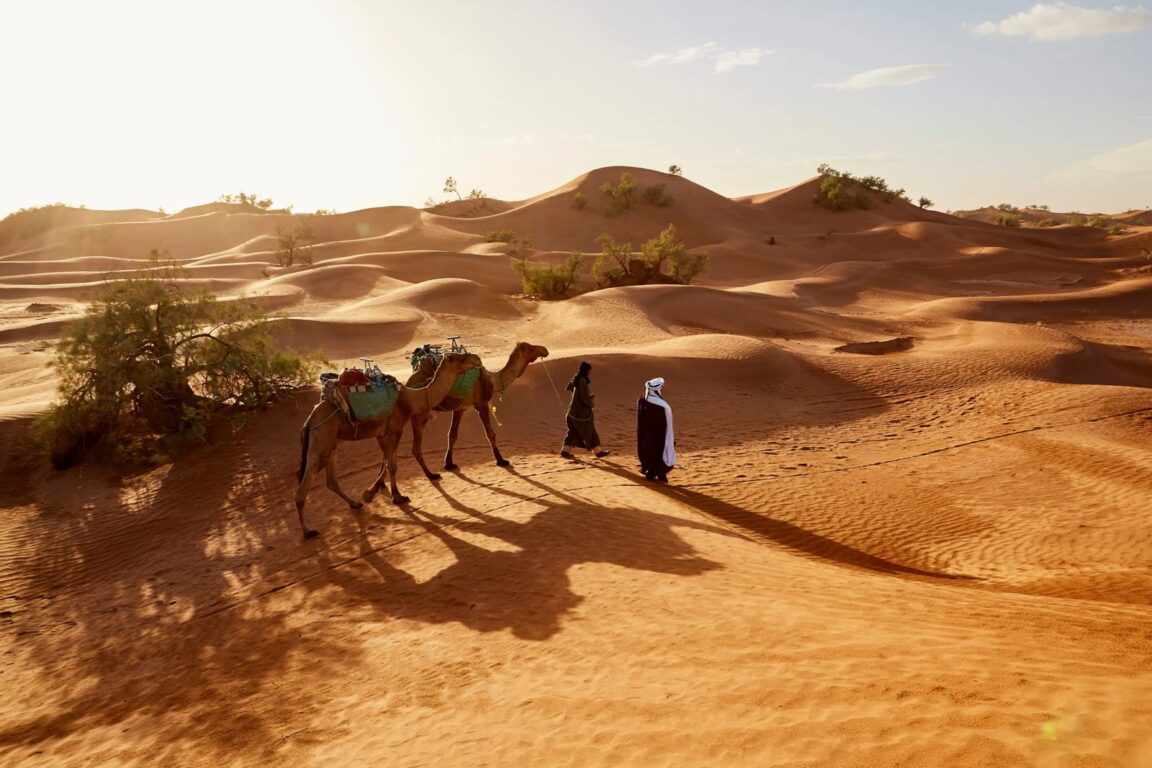
- The two landscapes: Merzouga sits beside Erg Chebbi, a true sand sea whose dunes rise to about 150 metres. Agafay, about an hour from Marrakech, is a stony desert of pale hills and dry plateaus, scenic and atmospheric but with no big dunes. The packing logic is the same, the footwear emphasis differs.
- The one-bag rule: On standard tours you take an overnight bag to the camp and leave the main suitcase behind in the vehicle or hotel. Pack the overnight bag as if it were the whole trip.
- The temperature crash: The desert cools sharply after sunset in every season. Summer days often pass 40 degrees Celsius while nights feel mild, and winter days sit near 20 degrees while nights can approach freezing. The swing, not the headline temperature, is what to pack for.
- The scarf system: A long cotton or linen scarf, locally called a cheche or tagelmust, wrapped to cover the head, neck and lower face. It handles sun, wind and blowing sand in one item and can be bought cheaply in any medina or at the tour departure point.
- Sand and electronics: Fine dune sand gets into zips, lens threads and charging ports. Sealable bags and a dry pouch are desert essentials, not overkill.
- Facts checked: Dune heights, distances and seasonal temperature patterns verified on 14 November 2026 against Moroccan tourism guidance and Merzouga tour operator information.
What is the difference between a Merzouga tour and an Agafay tour, and does it change the bag?
Merzouga is the deep desert option: a long drive of roughly 550 to 600 kilometres from Marrakech, usually spread over two or three days with Atlas and gorge stops, ending at the edge of Erg Chebbi where a camel trek carries you into a camp among dunes up to about 150 metres high. Agafay is the short option: a stony, moon-like desert close enough to Marrakech for a sunset dinner, a camel ride and an overnight in a luxury tent without the long transfer days. Both involve camels, camps, cold nights and dust. Merzouga adds deep soft sand, which is why footwear and sand-proofing matter more there, while Agafay adds rocky ground, which rewards shoes with a real sole. If your itinerary includes both the Atlas foothills and the dunes, the same overnight bag works, with the warm layer doing double duty at altitude on the drive days. For the city end of the same trip, our guide to what to pack for Morocco in winter covers the medina and mountain layers that sit either side of the desert nights.
How does the scarf system actually work?
The long desert scarf is the single hardest-working item in the bag, and it works because of how it is wrapped, not just because you own one. Choose a scarf at least two metres long in cotton or a cotton and linen blend, in a light colour that reflects the sun. Wrapped as a turban with a tail drawn across the nose and mouth, it shades the scalp and neck, keeps wind-blown sand out of your airways and ears, and traps a layer of still air that takes the edge off both heat and cold. Guides on Merzouga tours routinely demonstrate the wrap at the first stop, and scarves are sold at departure points and in the medinas of Marrakech and Fes for a few euros, so buying one on the ground is a legitimate plan rather than a failure of preparation.
Wear it three ways across one tour day. Loose around the neck during the morning drive, it is a light layer against air conditioning. Wrapped fully for the sunset camel trek, it is sun and sand protection when the wind picks up on the dune crests. Pulled up over the ears and chin after dark, it becomes part of the cold-night system around the campfire. One scarf, three jobs, almost no weight: that is the standard every other item in this bag has to meet. A wide-brimmed hat is a reasonable backup for travellers who dislike head wraps, but a hat alone does nothing against blowing sand, which is why the scarf stays the primary system.
What clothing handles heat, sand and a cold night in one bag?
Build the clothing kit as loose layers in breathable fabrics, with the warm layer treated as seriously as the sun layer.
- Day layers: Two loose shirts or tops in linen, cotton or light technical fabric, with sleeves you can roll down. Sleeves are sun protection you never have to reapply, and loose cuts move air in a way fitted synthetics do not.
- Trousers: One pair of loose, full-length trousers. Full length matters on camels, where the saddle and the animal’s coat punish bare legs, and in the evening, when biting insects find ankles first.
- The warm layer: A fleece or insulated jacket, plus a warm hat in winter. This is the item first-time desert travellers most often leave behind, because the departure city felt hot at noon. Camps supply blankets, but the hours around the fire and the pre-dawn dune climb happen outdoors.
- Sleep layer: A dedicated top and leggings or pyjamas. Tents hold the day’s dust, and sleeping in clean clothes is a small luxury that costs a few hundred grams.
- Underwear and socks: Two changes, plus one extra pair of socks. Sand inside socks is the desert’s most reliable discomfort, and a fresh pair for the morning trek back is morale in textile form.
Colour is a practical choice here, not a style one. Pale colours reflect heat and show less dust, and they photograph honestly against orange sand. Black absorbs heat all day and shows every grain of pale dust by evening.
What footwear works on dunes and in camp?
For Merzouga, the honest answer is two pairs: closed shoes for the journey and the rocky ground at the dune edge, and sandals for inside the camp. Walking in deep sand is easiest barefoot or in sandals on the soft crests, since boots fill with sand within minutes on a steep face, but the approach ground is stony and the midday sand surface can be hot enough to punish bare feet, so neither pair works alone. Closed trainers with a decent sole handle the drive days, the gorge stops and the scramble up the first dune. Sandals handle camp life, the walk to the tents and the sunrise climb in cool sand.
For Agafay, reverse the emphasis: the ground is stone and gravel throughout, so the closed shoe with a real sole is the main event and sandals are optional. Whichever desert you choose, shake shoes out every morning before putting them on. It is a standard desert habit, it takes five seconds, and it deals with both overnight sand and anything small that wandered in during the night.
How do you keep sand out of everything else?
Sand-proofing is a system of cheap barriers, applied before the sand gets in rather than cleaned up afterwards.
- Sealable bags: Four or five large zip-seal bags. One for the phone and power bank, one for the camera, one for clean clothes, one for the sandy clothes coming home. Dune sand is far finer than beach sand and migrates through ordinary zips.
- A dry pouch or small dry bag: For the camel trek itself, when your bag may sit on sand at the photo stops. It also keeps the overnight essentials together when the main bag stays in the tent.
- Lens discipline: Change lenses, if you must, inside the tent or inside the vehicle, never on a windy crest. A single cleaning cloth, kept in its own sealed bag, does more than a full cleaning kit left open in a pocket.
- Zip care: Brush sand out of bag zips before forcing them. Grit destroys zip teeth, and a failed zip on the bag that has to survive a 600 kilometre drive home is a genuine problem.
What else belongs in the overnight bag?
A short list of small items separates a comfortable camp night from a long one. A head torch keeps your hands free on unlit paths between tents and makes the pre-dawn start civilised, since camps run on generators or solar and pathways are dark. Sunscreen and lip balm with sun protection cover the two places the scarf does not. Sunglasses with a strap survive both the camel’s gait and the wind on the crests. A one litre reusable water bottle matters because tours supply water at stops and camp, and refilling beats accumulating plastic in a landscape where everything discarded stays visible. Any personal medication, plus a small supply of rehydration sachets and blister plasters, covers the realistic mishaps of heat, new footwear and rich camp food. Finally, a small amount of cash in dirhams covers tips, drinks and the scarf itself, because card payment is rare to nonexistent once you leave the paved road. Travellers combining the desert with a longer self-guided loop will find the same small-bag discipline in our Egypt winter packing guide, where the Nile and desert legs make identical demands.
Frequently Asked Questions
Can I take my full suitcase into the desert camp?
On most standard tours, no. The routine is an overnight bag to the camp while the main luggage stays locked in the tour vehicle or at the departure hotel, and the camel trek itself cannot carry suitcases. Luxury camps reached by 4×4 sometimes transfer full luggage, but confirm it in writing before relying on it, and pack the overnight bag anyway as insurance.
How cold does it really get at night in the Sahara?
Cold enough to be the main packing decision. The desert loses heat fast after sunset in every season: winter nights around Merzouga can approach freezing, and even summer nights call for a light jacket around the fire. A fleece or insulated jacket, warm socks and, in winter, a warm hat turn the famous temperature crash into a pleasure rather than a shock.
Should I buy the headscarf before the trip or in Morocco?
Either works, and buying in Morocco is often better: medina shops and tour departure points sell long cotton cheche scarves cheaply, in colours you can match to your other layers, and guides will show you the wrap. If you prefer to arrive equipped, buy a cotton or linen scarf of at least two metres before you travel.
Are shorts acceptable on a Sahara tour?
Shorts are fine around a resort pool but a poor choice for the tour itself. Camel saddles chafe bare legs, dune sand at midday can be hot, evenings bring biting insects, and loose full-length trousers are more comfortable and more in keeping with local norms in the villages along the route. Most travellers who pack shorts end up wearing the trousers.
What is the difference between Merzouga and Agafay for packing?
The temperature and scarf logic is identical, but the ground differs. Merzouga is deep soft sand, where sandals or bare feet work on the dunes and sand-proofing matters most. Agafay is stony desert, where a closed shoe with a sturdy sole is the essential item and deep-sand tactics do not apply. Check which desert your tour actually visits before you pack, because the two are often marketed with the same photographs.
How do I protect my camera and phone from dune sand?
Keep each device in its own zip-seal bag whenever it is not in your hand, carry a cleaning cloth in a separate sealed bag, and never change lenses or open ports on a windy dune crest. Fine sand damages lens threads and charging ports, and the damage usually shows up days later, so prevention on the day is the whole game.
Facts checked on 14 November 2026 against Moroccan tourism guidance on Erg Chebbi and Merzouga and Agafay tour operator information. Camp facilities, luggage handling and inclusions vary by operator and govern your booking.