 Maya Chen
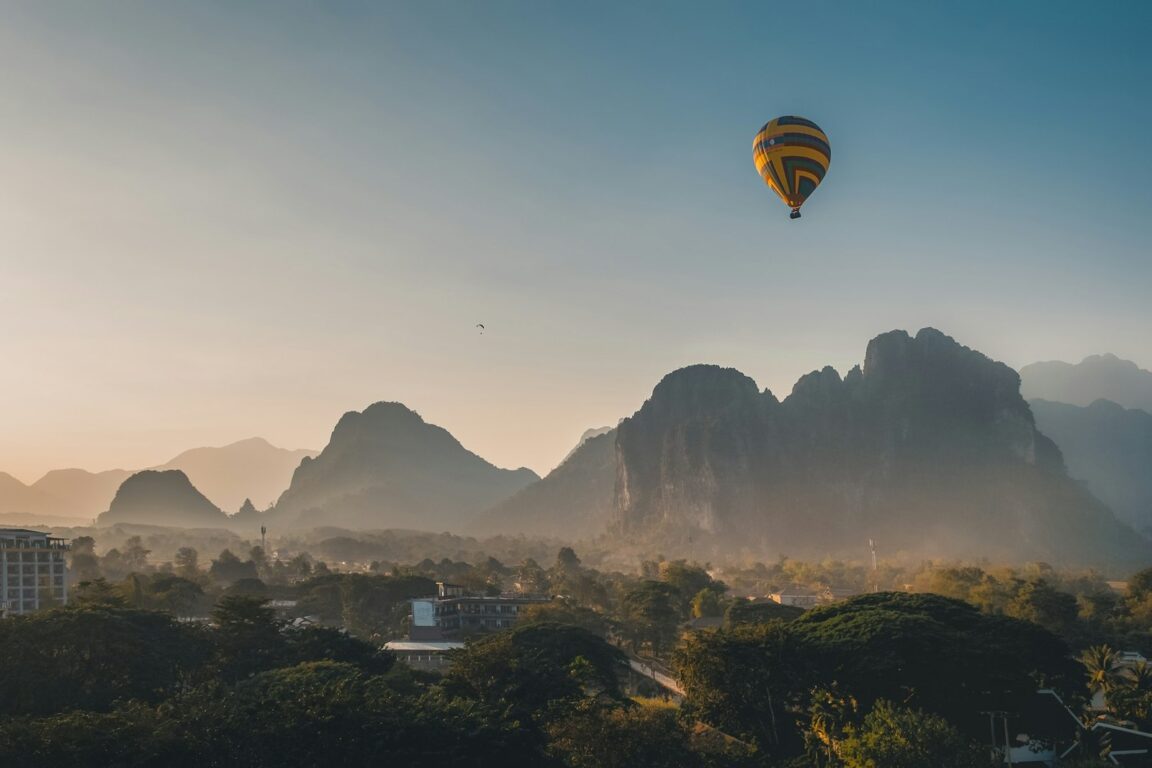
Vang Vieng today is a limestone valley town on the Nam Song River in central Laos where the headline activities are blue lagoons, cave exploring, viewpoint climbs and dawn balloon flights, and that sentence would have been unrecognisable fifteen years ago. In the 2000s Vang Vieng became notorious for tubing: travellers floated the river between makeshift bars, rope swings and slides, and people died every year. In 2012 the Lao authorities shut the riverside bars down, and the town has spent the years since rebuilding itself around the landscape that was there all along, an amphitheatre of jungle covered karst towers, spring fed pools and rice paddies. This guide explains what replaced the tubing era, how to choose between the lagoons, which viewpoints and caves to prioritise, and how to visit safely, including the river and drink risks that still deserve respect.
Quick Facts
- Where: Vang Vieng, Vientiane Province, Laos, on the Nam Song River, about 130 km north of Vientiane
- Landscape: Limestone karst towers around a river valley of rice paddies and villages
- The reset: Riverside tubing bars closed by the authorities in 2012 after a series of traveller deaths
- Blue Lagoons: A numbered set of spring fed swimming pools west of the river; Lagoon 1 pairs with Tham Phu Kham cave, Lagoon 3 is the quieter favourite
- Viewpoints: Nam Xay, with a motorbike on its summit, and the longer Pha Ngeun climb, both west of the river
- Caves: Tham Chang near town, Tham Phu Kham above Lagoon 1, and Tham Nam, the water cave entered by tube
- Access: Laos China Railway station near town, about an hour from both Vientiane and Luang Prabang
- Time needed: Two to three nights for a viewpoint, a lagoon day and a river day
What actually happened to the tubing era?
The honest history matters, because Vang Vieng’s reinvention only makes sense against it. Tubing began innocently in the late 1990s, when inner tubes used by local workers to float the Nam Song after work became a traveller activity. Through the 2000s the float grew bars along the banks selling alcohol in buckets, with rope swings, zip lines and concrete slides built over shallow, rocky water. The combination of strong drink, deep sections, hidden rocks and no supervision produced a grim record: the town’s hospital recorded 27 traveller deaths in 2011 alone from drowning and injuries, and the true toll including transfers was likely higher.
In 2012, under international pressure and ahead of a regional summit hosted in Laos, the government closed the riverside bars, dismantled the slides and swings, and banned tubing outright for a period. Visitor numbers fell sharply. What followed was a deliberate repositioning: the town promoted its caves, lagoons, climbing and kayaking, larger and better regulated hotels opened along the river, and the visitor mix shifted toward families, Lao weekenders and regional tour groups. Tubing returned in a regulated, far calmer form, a float with a handful of stops rather than a bar crawl, sharing the river with kayaks and longtail boats. The karsts, ignored in the party years, became the brand.
How do you choose a Blue Lagoon?
The Blue Lagoons are spring fed pools at the foot of the karsts on the west bank of the Nam Song, their blue green colour coming from the mineral content of the spring water against the limestone. They are numbered roughly in the order they opened, each charges its own small entry fee, and each has the same basic kit: swimming area, swings or platforms, changing space and a simple restaurant. The choice between them is about crowds and combinations.
Blue Lagoon 1, about 7 km from town, is the original and the busiest, with tour groups arriving by late morning for the jumping tree and rope swing. Its trump card is above it: the steep climb to Tham Phu Kham cave, a large chamber holding a bronze reclining Buddha lit by a shaft of daylight, usually included in the same ticket area. Blue Lagoon 3, further out on rougher roads, is the connoisseur’s pick: deeper colour, a prettier cliff setting, zip lines and space to spread out, and far fewer people if you arrive early. Lagoons 2 and the higher numbers trade facilities for quiet. One honest caveat applies to all of them: after heavy rain the springs run cloudy and the famous blue fades, so in the wet season check recent conditions before building a day around a lagoon. In the dry season, go early, swim first, and let the crowds have the midday session.
Which viewpoints are worth the sweat?
Two climbs dominate the west bank. Nam Xay is the famous one, a steep, rough path of under an hour, with rocky sections and fixed ropes in places, rising about 130 metres of elevation gain to a summit platform. Its gimmick is genuine and photogenic: a rusting motorbike sits on the peak, hauled up years ago, and the queue to sit on it for a photo is now part of the ritual. The view justifies the gimmick anyway, a full sweep of paddies, river bends and karst towers. The viewpoint opens early, around 6am, so a sunrise climb in the cool of the day is the smart play.
Pha Ngeun, sometimes written Pha Ngern, is the longer, higher and quieter alternative, a more demanding climb rewarded with a wider, emptier panorama over the whole valley. Both viewpoints charge a small ticket at the trailhead, both are west of the river and reached by scooter, bicycle or tuk tuk, and both punish the wrong footwear and midday heat. Wear shoes with grip, carry more water than seems necessary, and treat wet season rock with suspicion. For travellers building a Laos route around the railway, our explainer on Laos eVisa entry points covers which borders the online visa actually works at, a detail that catches out overland travellers.
What does the cave circuit include?
The karst around Vang Vieng is hollow, and caves layer naturally into lagoon and river days. Tham Chang is the accessible starter: just south of town across a bridge, reached by a long stairway, a big illuminated cave with formations and a viewing point over the valley, with a spring pool at its base for a swim afterwards. Tham Phu Kham, above Blue Lagoon 1, is the atmospheric one, a scramble rather than a stroll, where the reclining Buddha lies in a vast chamber; bring a torch and watch your footing on the wet rock.
Tham Nam, the water cave, is the playful one: visitors sit in a tube at the cave mouth and pull themselves inside along a fixed rope, floating through the dark with head torches as the passage runs hundreds of metres into the hill. It is usually bundled into kayaking day trips that paddle the Nam Song and stop at caves and a lagoon on the way down, which is the most efficient way to sample the whole circuit in one day. Tham Xang, the elephant cave, named for a formation said to resemble an elephant, often appears on the same itineraries. Do not push deep into unlit caves without a guide, and expect cave visits to pause or change in high water.
How do you visit the new Vang Vieng well, and safely?
Logistics changed with the landscape. The Laos China Railway, opened in 2021, put Vang Vieng about an hour by train from both Vientiane and Luang Prabang, with the station a few kilometres outside town and shared vans meeting arrivals; the Vientiane expressway also cut the road trip to about two hours. In town, the west bank is the day trip zone: rent a bicycle for the near lagoons, a scooter for Lagoon 3 and Pha Ngeun, or hire tuk tuks and buggies by the half day. Stay by the river or on the west bank for the karst view from your window, and give the town two or three nights rather than a single transit stop.
Safety deserves the same plainness as the history. The Nam Song’s current is stronger than it looks, especially from July to October, and drowning remains the river’s real risk: wear a life jacket, do not drink and float, and stay out of high water entirely. On drinks generally, Laos carries severe penalties for drugs, and in late 2024 several foreign travellers died in Vang Vieng after consuming methanol contaminated spirits, a tragedy that drew formal warnings from governments including the United Kingdom. Stick to sealed bottled drinks, avoid free shots and unlabelled spirits, and seek urgent medical help for symptoms such as blurred vision or confusion after drinking. None of this cancels the town’s appeal; it is the price of enjoying a wilder landscape with open eyes. Travellers continuing to Vietnam afterwards can plan the hop with our itinerary for two days in Hoi An.
Frequently Asked Questions
Is tubing still allowed in Vang Vieng?
Yes, in a regulated and much calmer form. Tubing runs from a launch point north of town with a few stops, life jackets are standard, and the riverside bar strip of the 2000s is gone. The river is shared with kayaks and boats, and the current still demands respect.
Which Blue Lagoon is best?
Blue Lagoon 1 is best combined with the Tham Phu Kham cave and is the easiest to reach, but it is the most crowded. Blue Lagoon 3 is the favourite for colour, setting and space. Go early to any of them, and expect cloudier water after heavy rain.
How hard is the Nam Xay viewpoint climb?
It is a steep, rough climb of under an hour with about 130 m of elevation gain, rocky sections and ropes in places. It is manageable in proper shoes with water, ideally at sunrise. Pha Ngeun is longer and more demanding, and quieter at the top.
How do you get to Vang Vieng?
By Laos China Railway train, about an hour from Vientiane or Luang Prabang, then a shared van from the station into town. By road, the expressway from Vientiane takes about two hours. The old mountain road from Luang Prabang is scenic but slow.
When is the best time to visit Vang Vieng?
The cool dry season from about November to February offers the clearest lagoon colour, the safest river levels and the best balloon and viewpoint conditions. The rainy season from about May or June to October is greener and quieter but brings muddy roads and stronger currents.
Is Vang Vieng safe now?
It is far safer than in the tubing bar era, and most visits are trouble free, but the risks are specific: river currents, steep wet viewpoint paths, scooter riding, and contaminated spirits. Wear life jackets, avoid unlabelled alcohol, and treat methanol symptoms as a medical emergency.