 Wei Chen
Bagan is a dry plain on the east bank of the Ayeyarwady River in central Myanmar where more than 2,000 Buddhist temples, stupas and monasteries survive from the 11th to 13th centuries, when this was the capital of the first kingdom to unify the country. The honest way to visit is slowly, by e-bike, over at least two full days, using the official viewing mounds for sunrise because climbing the temples themselves has been banned for years. Bagan was inscribed on the UNESCO World Heritage List in 2019. It is also a destination that demands a clear eyed check of current travel advice before any booking, because Myanmar has been in conflict since 2021 and several governments advise against travel to parts of the country, including, in the United Kingdom case, all but essential travel to Mandalay Region, which includes Bagan. This guide explains the plain as it is organised today, so that a heritage traveller can judge both the place and the timing.
Quick Facts
- Location: East bank of the Ayeyarwady River, Mandalay Region, central Myanmar
- UNESCO status: World Heritage Site, inscribed in 2019
- Surviving monuments: More than 2,000 temples, stupas and monasteries, from more than 10,000 built in the Bagan era
- Main bases: Nyaung U for budget stays and transport, Old Bagan inside the zone, New Bagan to the south
- Archaeological zone fee: 30,000 kyat for foreign visitors, valid for three days, since 1 October 2023, according to the Department of Archaeology and National Museum Bagan branch as reported in current guides
- Temple climbing: Banned. Use the official viewing mounds and designated viewpoints for sunrise and sunset
- Getting around: E-bike by the day, plus bicycle, horse cart and car with driver. Petrol motorbikes are not rented to visitors
- Best season: The cooler, drier months, roughly November to February. Balloon flights operate in the cooler season, roughly October to March or April depending on the operator
- Access note: Check your own government travel advice immediately before planning. The United States rates Myanmar at its highest do not travel level and the United Kingdom advises against all but essential travel to Mandalay Region
How is the temple plain organised?
Bagan is not a single walled site with one gate. It is a lived in archaeological zone spread across a plain, with villages, farms, hotels and roads woven between the monuments. Understanding its three bases makes the rest fall into place. Nyaung U, in the north east, is the working town: it holds the airport, the bus station, the market, most budget guesthouses and most e-bike rental shops. Old Bagan, to the south west along the river, sits inside the densest part of the old city, near the Tharabar Gate and several of the greatest temples, and holds a small number of higher end hotels. New Bagan, further south, is a planned settlement with mid range hotels and restaurants, quieter at night and a little further from the northern temples.
Between and around those bases, the plain divides naturally into clusters. The Old Bagan cluster holds Ananda, Thatbyinnyu and Shwesandaw. The northern plain around Nyaung U holds the gilded Shwezigon Pagoda, Htilominlo and Upali Thein. The central plain, the area most riders cross on sandy tracks, holds Sulamani, Dhammayangyi and dozens of smaller brick temples that reward unplanned stops. The southern cluster around Myinkaba and Minnanthu is quieter, with Manuha, Nanpaya and some of the finest mural painting at Gubyaukgyi. A slow visit treats those clusters as separate half days rather than as one frantic circuit.
Which temples deserve your limited time?
With more than 2,000 monuments, selection is the whole skill. Ananda Temple, completed in 1105 under King Kyanzittha, is widely considered the finest surviving temple on the plain, a cruciform plan in pale stucco with four standing Buddha images facing the cardinal directions. Shwezigon, begun under King Anawrahta in the 11th century, is the great gilded stupa near Nyaung U and remains an active place of worship, which changes the atmosphere completely: this is a living shrine first and a monument second. Thatbyinnyu, built in the mid 12th century, is the tallest temple on the plain at about 61 metres, and is best appreciated from the ground, where its two storey mass rises over everything around it.
Dhammayangyi is the largest temple by mass, a huge brick pyramid like structure with famously fine brickwork and blocked inner corridors, associated with King Narathu. Sulamani, built in 1183 under King Narapatisithu, combines elegant proportions with surviving plaster and painting. Htilominlo, from 1211, carries ornate stucco decoration. None of that list should become a checklist to race. The Bagan effect, the plain stretching to the horizon with spires in every direction, lands hardest when a rider stops at a small unnamed temple, sits in its shade, and looks outward. Travellers who enjoyed the slow temple town pacing in our guide to Laos entry rules and Luang Prabang planning will recognise the same principle: one great monument understood well beats six photographed at speed.
What should you know about behaviour inside the temples?
Shoes and socks come off at every temple and pagoda precinct, without exception, and the ground can be hot in the middle of the day, which is one more reason to tour early and late. Shoulders and knees should be covered. Several major temples remain active religious sites, so voices stay low, photography of people at prayer is a matter of permission, and climbing, sitting or leaning on ancient brickwork is both prohibited and genuinely damaging. The plain was damaged by earthquakes in 1975 and again in 2016, and a further major earthquake struck central Myanmar in March 2025, cracking some monuments. Fragile is not a metaphor here.
How do sunrise and sunset work after the climbing bans?
The old Bagan ritual, climbing Shwesandaw or another terraced temple at dawn, is over. Restrictions began in 2016, tightened after earthquake damage and a fatal fall, and climbing the monuments has been banned since the late 2010s, enforced at the major sites. Any guide, blog or video that still sends you up a temple for sunrise is out of date, and following it risks both a fine and the brickwork.
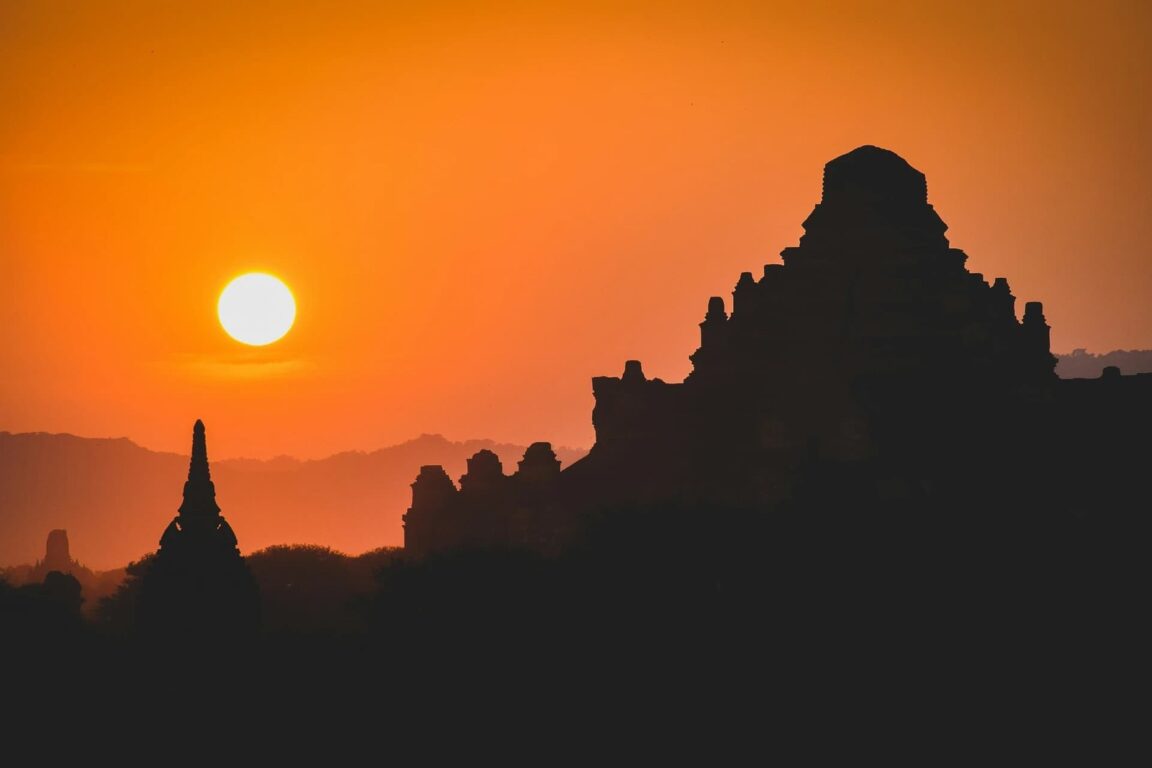
The replacement system is purpose built viewing mounds, earthen hills placed around the plain, including mounds near Sulamani and near the village of Pwasaw, plus designated open viewpoints and the riverside. From a mound at dawn, the view is in some ways better than the old temple top version: balloons drift over the plain in season at eye level, mist sits between the spires, and the sun rises behind hundreds of silhouettes rather than beneath your feet. Arrive in the dark, in the cool season by about 6 in the morning, claim a spot on the leeward side, and stay at least half an hour after sunrise, when the light turns from orange to gold and most of the crowd leaves. Sunset works the same way in reverse, and the river bank near Lawkananda and Bupaya gives a different, water backed version.
How does the e-bike system actually work?
The e-bike, a quiet electric scooter rented by the day from shops and hotels in Nyaung U and New Bagan, is the standard way to move on the plain, because petrol motorbikes are not rented to foreign visitors. The practical routine matters more than the price, which changes too often to print responsibly. Collect the bike the afternoon before a sunrise start and check the charge indicator, the brakes, the lights and the tyres in daylight. Confirm the rental shop phone number and what happens if the battery fades far from town, because sandy tracks drain charge faster than paved roads and a flat battery on the central plain at midday is the classic Bagan mishap.
Ride slowly. The tracks between temples are sand over hard earth, front wheels wash out easily, and falls on sand are the most common injury on the plain. Wear the helmet if one is offered. Carry water, a hat and a phone torch for mural temples, keep the zone ticket on you, because it is checked at major temples, and plan a midday break: between about 11 and 3 in the hot season the plain is punishing and the interiors are at their darkest. Two clusters a day, one after dawn and one before dusk, is the sustainable rhythm for three days. Readers planning other slow, self propelled days in South East Asia may also like our riverfront guide to Kuching in Malaysian Borneo, which rewards the same early start habit.
What is the honest position on going at all?
This section cannot be skipped or softened. Myanmar has been in armed conflict since the military coup of 2021. As of late 2026, the United States Department of State advises its citizens not to travel to Myanmar because of armed conflict, civil unrest, arbitrary detention and landmines. The United Kingdom Foreign, Commonwealth and Development Office advises against all but essential travel to Mandalay Region, which includes Bagan, and against all travel to neighbouring areas including Magway Region across the river. Other governments publish comparable warnings in their own wording. Visitor numbers have fallen sharply since 2021, some services run reduced schedules, banking and card payment can be unreliable, and conditions can change quickly.
None of that erases Bagan, and this guide is written so the knowledge is ready when a traveller, having read their own government advice in full and weighed it, judges a visit defensible, or for the many readers who are planning in hope for a calmer year. What it does mean is that no one should book on the strength of a temple guide alone. Check the advisory for your nationality on the day you book and again before you travel, confirm that domestic flights to Nyaung U are operating, carry cash, and build an exit plan that does not depend on a single route. Going slowly, in Bagan, starts with the decision itself.
Frequently Asked Questions
Can you still climb the temples in Bagan for sunrise?
No. Climbing temples and stupas has been banned since the late 2010s, following earthquake damage and safety concerns, and the ban is enforced at major sites. Watch sunrise from the official viewing mounds, designated viewpoints, the river bank or a balloon in season.
How many days do you need in Bagan?
Three days matches the zone ticket validity and the geography: one day for the Old Bagan and northern clusters, one for the central plain, and one for the southern villages and a slower repeat of favourite temples. Two days works if one cluster is dropped entirely rather than rushed.
How much is the Bagan archaeological zone fee?
Current guides citing the Department of Archaeology and National Museum Bagan branch list 30,000 kyat for foreign visitors, valid for three days, in force since 1 October 2023. Keep the ticket with you, as it is checked at major temples, and confirm the amount on arrival because fees change.
What is the best way to get around the plain?
An e-bike rented by the day is the standard choice: quiet, cheap and able to use the sandy tracks cars cannot. Ride slowly on sand, check the battery before a sunrise start, and keep the rental shop number. Bicycles, horse carts and cars with drivers are the alternatives.
When is the best time of year to visit Bagan?
The cooler, drier months from about November to February bring the most comfortable touring temperatures and the balloon season. March to May is very hot at midday. The rainy months are greener and quieter but tracks can be muddy.
Is Bagan safe to visit right now?
Read your own government advice before deciding. The United States advises against all travel to Myanmar and the United Kingdom advises against all but essential travel to Mandalay Region, which includes Bagan, both because of the conflict since 2021. Conditions change, so check again immediately before any trip.