 Maya Chen
Most Jajce mistakes are timing mistakes, not effort mistakes. The Pliva waterfall drops about 22 metres through the middle of town where the Pliva river meets the Vrbas, and it is at its best in the early morning and late afternoon, yet most visitors arrive with the midday day tours from Sarajevo and Banja Luka and see it at its most crowded. The second trap is the calendar: in December, January and February the waterfall viewing plateau is closed to visitors, so a winter trip built around standing in front of the falls is built around a sight you cannot reach. Pay for the sights together rather than one by one, carry convertible marks in cash, and give the watermill lakes west of town their own half day instead of bolting them onto the fortress climb. Get those four decisions right and Jajce is an easy, compact and genuinely unusual town.
Quick Facts
- The waterfall: Pliva waterfall, about 22 metres high, in the centre of Jajce where the Pliva meets the Vrbas; it was about 30 metres before the 1990s war
- Waterfall ticket: 5 KM in low season and 10 KM in high season on the Visit Jajce 2026 price list; high season is 1 May to 30 September
- Fortress ticket: 2 KM in low season and 5 KM in high season; waterfall, fortress and catacombs together come to 20 KM per person in high season and 9 KM in low season
- Children: Under 7s enter free on the 2026 price list
- Hours, high season: 8am to 7pm from 1 May to 30 September; 10am to 5pm from 1 October to 30 November; 9am to 3pm from 1 December to 28 February, with the waterfall plateau closed in that winter period
- Spring warning: Hours for 1 March to 30 April are not fixed on the list; check visitjajce.ba or call +387 30 658 268 before setting off
- The watermills: The Mlincici watermills, about 20 wooden mills between the Great and Small Pliva lakes, roughly 5 km from the town centre; viewing from the banks and boardwalks is free
- Money: Carry convertible marks (KM) in cash; smaller sites and cafes do not always take cards
Mistake one: arriving at the waterfall at midday
Jajce sits on the road between Sarajevo and Banja Luka, and organised day trips from both cities reach the waterfall around the middle of the day. That is when the viewing platform is busiest, the light is flattest and the fortress climb above town is hottest. The fix costs nothing: see the waterfall first thing in the morning, when the platform is close to empty, or in the last hour before closing, when the low sun lights the falling water and the tour groups have gone. The falls are visible free of charge from the road bridge and several viewpoints, and many travellers find the classic postcard angle, the falls with the old town and fortress above them, from across the Vrbas. Pay for the platform when you want to feel the spray and stand opposite the full drop; do not pay at noon simply because that is when you happened to arrive.
The same logic applies in reverse to the fortress. The climb through the old town to Jajce Fortress is short but exposed, and the reward is the view down over the rooftops, the waterfall and the river bend. Do it in the morning or late afternoon, carry water, and look for the royal coat of arms over the entrance gate on your way in. A midday summer ascent is the version of Jajce people describe as underwhelming, and it is entirely self inflicted.
Mistake two: ignoring the season before you book
The 2026 Visit Jajce price list splits the year sharply, and the split changes what a trip can include. From 1 May to 30 September the monuments are open 8am to 7pm and the waterfall costs 10 KM. From 1 October to 30 November hours shorten to 10am to 5pm and the price drops to 5 KM, which makes autumn, with colour on the hillsides and the crowds gone, arguably the smartest time to come. From 1 December to 28 February the fortress and catacombs open 9am to 3pm but the waterfall plateau is closed to visitors, so winter visitors see the falls only from the free viewpoints. Travellers who book a December trip expecting the platform photograph are the ones who leave disappointed. For March and April the price list itself tells you to check the hours before travelling, because they are not fixed; a two minute check on visitjajce.ba saves a wasted drive.
Water levels are the other seasonal variable. Spring, when snowmelt feeds the Pliva, gives the most powerful waterfall. Late summer flow is gentler, which suits the lakes and swimming better than it suits waterfall drama. Neither is a reason to cancel; both are reasons to set expectations before you arrive rather than after.
Mistake three: buying tickets the expensive way, or without cash
Bought separately in high season, the waterfall at 10 KM, the fortress at 5 KM and the catacombs make a noticeably larger bill than the 20 KM the three come to together on the 2026 list, and in low season the combined total is just 9 KM. Ask about the combined arrangement at the first ticket point rather than paying at each door and discovering the arithmetic afterwards. Children under seven are free, which changes the maths again for families. Tickets can also be bought online through links on the Visit Jajce portal, which is worth doing in high season to skip the platform queue.
Cash is the second half of this mistake. Jajce is a small town, entry points and lakeside cafes are not reliably card friendly, and the watermill area in particular runs on small notes. Arrive with convertible marks in hand, including coins for parking, rather than assuming the card that worked in Sarajevo will work at a millpond 5 kilometres out of town. For context on the wider region and how Jajce pairs with the south, see our guide to eating in Trebinje, and for the classic Bosnia pairing, our Mostar travel guide.
Mistake four: treating the watermill lakes as an afterthought
The Pliva lakes lie about 5 kilometres west of the centre, and between the Great and Small lakes stands the Mlincici, a cluster of roughly 20 small wooden watermills on stilts over the cascading water between the two lakes. They were built for local farmers in the Ottoman period and are protected as a national monument. Viewing them from the banks and wooden boardwalks is free, there is no ticket office and no fixed opening hours, and the honest expectation is a 20 to 30 minute photographic stop rather than a museum visit: a handful of mill interiors open inconsistently, and planning your day around getting inside one is a reliable way to be let down.
The mistake is sequencing. Travellers who drive out at midday, walk the boardwalks in hard light and drive straight back describe the mills as a minor sight. The same mills in the last two hours before sunset, when the light rakes across the water and the day crowds have left the lakes, are the photograph most people came to Bosnia hoping for. Pair the lakes with a swim or a lakeside coffee in summer, keep the fortress and waterfall for the morning, and Jajce resolves into a natural order: town sights early, lakes late, dinner in the old town.
What about the catacombs and the old town?
The Jajce catacombs, an underground church carved from rock in the old town, are the sight visitors most often skip because they run out of time, and they are the sight that most changes how the town reads: Jajce was a seat of the last Bosnian kings, and the fortress, walls and catacombs are one medieval royal town, not three separate attractions. They sit inside the same combined ticket maths above and take well under an hour. Give the old town streets the leftover time instead of adding a same day dash to Travnik; Travnik, with its own fortress and painted mosque, deserves its own stop on a Bosnia road trip rather than a rushed hour bolted onto Jajce.
Frequently Asked Questions
How much does it cost to see the Jajce waterfall?
On the Visit Jajce 2026 price list, entry to the waterfall viewing plateau is 5 KM in low season and 10 KM in high season, which runs from 1 May to 30 September. The falls themselves can be seen free from the road bridge and viewpoints. Waterfall, fortress and catacombs together come to 20 KM per person in high season and 9 KM in low season, and children under seven enter free.
Is the Jajce waterfall open in winter?
Partly. From 1 December to 28 February the monuments open 9am to 3pm, but the waterfall plateau is closed to visitors in that period, so you can see the falls from the free viewpoints but cannot buy a platform ticket. The fortress and catacombs remain open and cost 4 KM in total in low season.
What are the opening hours for Jajce fortress and the waterfall?
From 1 May to 30 September, 8am to 7pm. From 1 October to 30 November, 10am to 5pm. From 1 December to 28 February, 9am to 3pm. For 1 March to 30 April the hours are not fixed on the 2026 price list; check visitjajce.ba or call +387 30 658 268 before you travel.
Are the Pliva watermills free to visit?
Yes. Viewing the Mlincici watermills from the banks and boardwalks between the Great and Small Pliva lakes, about 5 km from the town centre, is free and has no fixed hours. Individual mill interiors open only inconsistently, so treat any open mill as a bonus rather than the plan.
When is the best time of day to visit the Pliva waterfall?
Early morning or the last hour before closing. Day tours from Sarajevo and Banja Luka arrive around midday, which is when the platform is busiest. The watermills and lakes are best in the late afternoon, in the final two hours before sunset.
How long do you need in Jajce?
A full day covers the waterfall, fortress, catacombs and old town in the morning and the Pliva lakes and watermills in the late afternoon without rushing. An overnight stay makes that order easy and lets you see the falls before the day trips arrive.
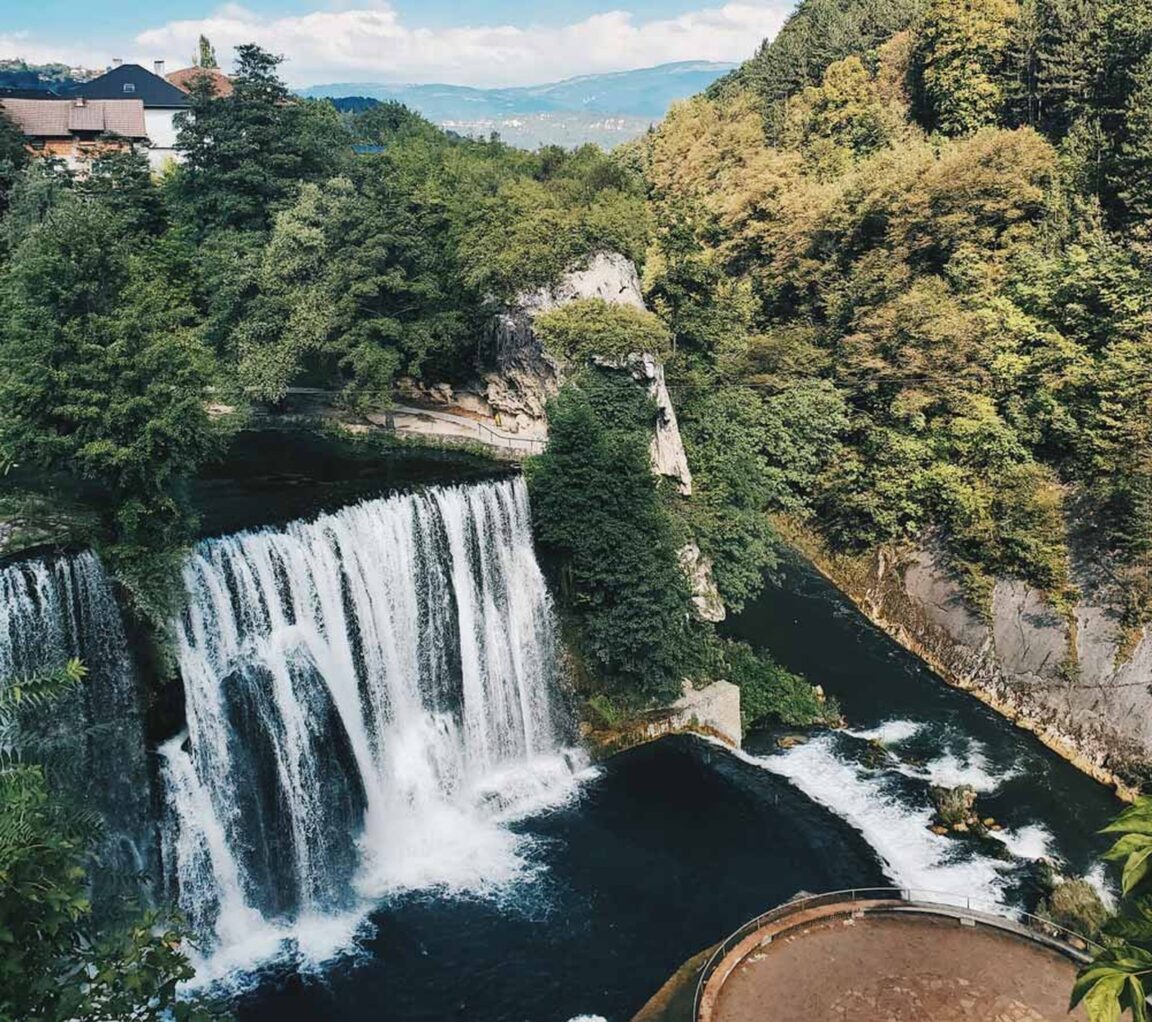
Facts checked 16 November 2026 against the Visit Jajce 2026 price list and opening hours as summarised from the official portal, and watermill guidance from regional visitor sources. Prices and hours change; confirm on visitjajce.ba before travelling. Featured image: the Pliva waterfall in the centre of Jajce, with the viewing plateau below. Photo by Damien Dan on Unsplash, Unsplash License, via a captioned hosted copy on Vacations and Travel.