 Aiko Tanaka
Mozambique replaced its entry system on 11 February 2026, and the headline change catches out travellers who remember the old rules: the border visa era is over for most visitors, and almost everyone now files online before departure. The single official platform is evisa.gov.mz. It sorts travellers into three lanes. Nationals of 29 visa exempt countries, including the United States, the United Kingdom and most of the European Union, no longer buy a visa, but they must obtain an Electronic Travel Authorisation, the eTA, before they travel, at least 48 hours before departure. A smaller group of African nationalities is fully exempt and needs no formality at all. Everyone else applies for an eVisa in 30, 60 or 90 day versions. This guide gives the filing sequence in order, the fee figures published for the tourist eVisa, and the arrival day checks at Maputo that still apply whichever lane you are in.
Quick Facts
- Official platform: evisa.gov.mz, relaunched 11 February 2026 and operated with VFS Global support
- Visa exempt lane: 29 countries get up to 30 days without a visa, but an eTA on the platform is required before departure; file at least 48 hours ahead
- Full exemption lane: Botswana, Kenya, Rwanda and Tanzania up to 90 days, and Angola, Cape Verde, Eswatini, Lesotho, Malawi, Mauritius, Namibia, Sao Tome and Principe, Seychelles, South Africa, Uganda, Zambia and Zimbabwe up to 30 days, with no formality
- eVisa lane: Tourist eVisas for 30, 60 and 90 days for nationalities on neither exemption list
- Tourist eVisa prices published for the platform: 6,250 meticais for 30 days, 12,504 meticais for 60 days and 18,756 meticais for 90 days
- Visa on arrival: Still described for most non exempt nationalities at border posts at 50 US dollars for up to 30 days, but the official direction of travel is pre departure filing; do not rely on the border counter without checking the platform first
- Passport: Valid for six months on arrival, with a return or onward ticket and proof of funds and purpose
- Main gateway: Maputo International Airport (MPM)
Which of the three lanes applies to you?
Start with the exemption lists, because they decide everything else. The 29 country visa exempt list covers the passports most long haul visitors to Maputo actually carry: Belgium, Canada, China, Cote d’Ivoire, Denmark, Finland, France, Germany, Ghana, Indonesia, Ireland, Israel, Italy, Japan, the Netherlands, Norway, Portugal, Russia, Saudi Arabia, Senegal, Singapore, South Korea, Spain, Sweden, Switzerland, Ukraine, the United Arab Emirates, the United Kingdom and the United States. Holders of those passports do not need a visa for tourism or business stays of up to 30 days. Since the February 2026 relaunch, however, exemption from the visa is not exemption from the paperwork: the platform directs all 29 nationalities to the eTA pathway, and Mozambique’s official position, echoed by advisories including the United Kingdom’s, treats the eTA as mandatory before travel. File it at least 48 hours before departure and carry the approval, because an airline check in agent applying the official position will ask for it.
The second lane is narrower and simpler. Under SADC and bilateral agreements, nationals of Botswana, Kenya, Rwanda and Tanzania may stay up to 90 days with no visa and no eTA, and nationals of Angola, Cape Verde, Eswatini, Lesotho, Malawi, Mauritius, Namibia, Sao Tome and Principe, Seychelles, South Africa, Uganda, Zambia and Zimbabwe may stay up to 30 days on the passport alone. If your passport is on neither list, you are in the third lane: the eVisa, open through the same platform to more than 183 nationalities in 30, 60 and 90 day tourist versions. One group sits outside the platform entirely: nationals of Bangladesh, Ethiopia, Nepal, Nigeria, Pakistan and Somalia cannot use the eVisa and must apply at a Mozambican embassy, so their filing sequence starts with the nearest mission, not the website.
What is the filing sequence on evisa.gov.mz?
The sequence is the same shape for the eTA and the eVisa, and it is entirely online. Open evisa.gov.mz and select the pathway your nationality dictates; the platform is designed to route exempt passports to the eTA and visa required passports to the eVisa, so follow its direction rather than choosing the cheaper looking option. Complete the application with passport, travel and accommodation details that match your documents and bookings exactly. Upload the supporting scans the form requests. Submit and pay the applicable fee where the pathway carries one, then wait for the decision document by email and in your account. Print the approval and carry it with the passport you applied on; the authorisation is tied to that passport number, so travelling on a renewed or second passport invalidates the match.
Timing is the discipline that makes the system work. The eTA guidance is at least 48 hours before departure, and that is a floor, not a target: file several days ahead so a rejected scan or a name mismatch can be corrected. eVisa applicants should allow a wider margin again, because a 60 or 90 day application is a real visa decision, not a registration. The old habit of deciding at the border is what the February 2026 platform was built to end, and travellers who arrive in Maputo with no filing at all are relying on the discretion of the arrival officers and the survival of the old border counter, neither of which is a plan.
What does the Mozambique eVisa cost?
The published tourist eVisa prices on the official system are 6,250 meticais for a 30 day stay, 12,504 meticais for 60 days and 18,756 meticais for 90 days. Those are the figures to budget against for the eVisa lane, and the platform will confirm the amount in its own currency presentation before you pay. The eTA lane for the 29 exempt nationalities is an authorisation rather than a visa; earlier versions of the exemption scheme charged a tax fee, so read the amount the relaunched platform presents for your application rather than assuming it is free, and keep the payment confirmation with the approval.
For comparison, the visa on arrival that most non exempt nationalities used for years was priced at 50 US dollars for up to 30 days at border posts, conditional on a passport valid for six months, a return or onward ticket, proof of sufficient funds and proof of the purpose of the visit. That counter has not been formally mourned, and some border posts may still process arrivals, but the February 2026 platform is the government’s stated route, fees and conditions change without a press release, and the only figure that counts is the one evisa.gov.mz shows for your nationality on the day you file. Travellers comparing regional systems will find the same pre departure pattern in our guide to Kenya’s eTA, which replaced a visa with an authorisation in a similar way.
What happens on arrival in Maputo?
At Maputo International Airport, the arrival checks follow the filing. Present the passport you applied on, the printed eTA or eVisa approval, and be ready to show the return or onward ticket, accommodation details and evidence of funds if asked. The officer records the entry and the permitted stay; check the stamp or the recorded dates before you leave the counter, because the stay you are actually given is the one in the system, not the one you expected. Visa exempt visitors receive up to 30 days. That period can usually be extended once, by 30 days, at immigration offices inside Mozambique, with your passport, accommodation proof and evidence of funds, and the application must be made before the first period expires; the extension is discretionary, so treat it as a request, not an entitlement.
Two arrival day traps deserve naming. The first is the passport switch: arriving on a different passport from the application breaks the authorisation match and can void an otherwise perfect filing. The second is the side trip problem. A common itinerary hops from Maputo to Eswatini or South Africa and back; each entry into Mozambique is a new admission, so confirm whether your authorisation covers the return or file again, rather than discovering at the Ressano Garcia border that the first entry consumed the document. For the mainland leg of such a trip, our itinerary for 2 days in Cape Town pairs naturally with a Maputo start or finish.
Frequently Asked Questions
Do US and UK citizens need a visa for Mozambique?
No visa, but yes paperwork. Both passports are on the 29 country exemption list for stays up to 30 days, and since the February 2026 platform relaunch those nationalities must obtain an eTA on evisa.gov.mz before departure, filing at least 48 hours ahead.
What is the difference between the Mozambique eTA and the eVisa?
The eTA is an authorisation for nationals who do not need a visa: it registers the trip without being a visa. The eVisa is an actual visa for nationalities on neither exemption list, issued in 30, 60 and 90 day tourist versions through the same platform.
How much does a Mozambique tourist eVisa cost?
The published prices are 6,250 meticais for 30 days, 12,504 meticais for 60 days and 18,756 meticais for 90 days. Confirm the amount on evisa.gov.mz when you file, as the platform presents the current charge for your application.
Can I still get a visa on arrival in Mozambique?
Most non exempt nationalities were long able to buy a 30 day visa at border posts for 50 US dollars with a six month passport, a return ticket, funds and purpose proof. The February 2026 system moves filing online before departure, so treat the border counter as a fallback to verify on the platform, never as the plan.
Who cannot use the Mozambique eVisa platform?
Nationals of Bangladesh, Ethiopia, Nepal, Nigeria, Pakistan and Somalia cannot apply through the eVisa and must use a Mozambican embassy. Fully exempt SADC and bilateral nationalities, including South Africans for 30 days, need neither the eVisa nor the eTA.
Can I extend a 30 day stay in Mozambique?
Usually once, by 30 days, at an immigration office inside the country, with your passport, proof of accommodation and evidence of funds. Apply before the first period expires and treat the extension as discretionary.
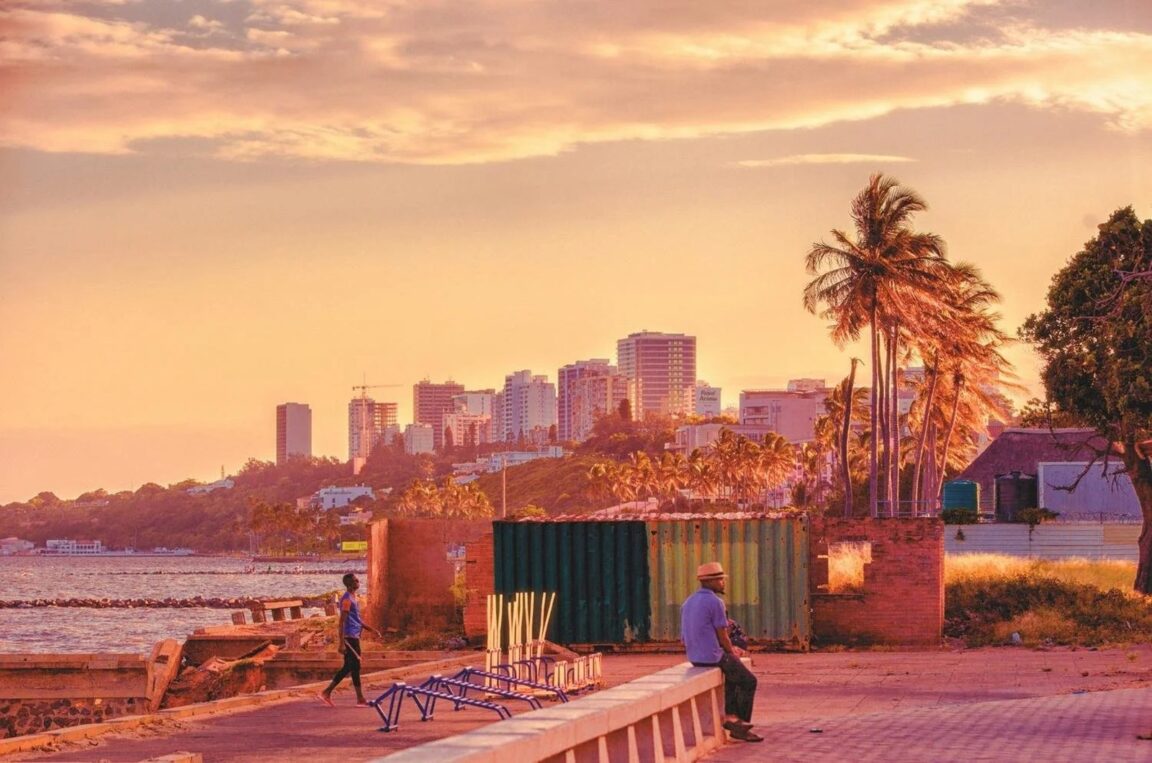
Photo: The Maputo waterfront and skyline at sunset, Mozambique. Photo by Rohan Reddy on Unsplash, Unsplash License. Facts checked 16 November 2026 against the relaunched evisa.gov.mz platform summaries, IATA Timatic reporting and current government advisories; confirm your lane and fee on the official platform before paying.