 LeVar Thomas
Pack for northern Vietnam in January for a genuine winter that surprises most visitors to Southeast Asia: Hanoi damp cold at around 13 to 20 degrees Celsius, and a Ha Giang plateau that runs far colder, roughly 2 to 12 degrees on the Dong Van plateau with fog, frost and occasional ice. One bag can do it, if it is built as a layer system for motorbike days: a warm insulated jacket under a windproof and waterproof shell, thermal base layers, proper gloves, and a dry bag inside the pack, because everything you own will ride on the back of a bike or in a bus hold between Hanoi, Ha Giang town and the loop. This list is specific to January, the coldest, driest and foggiest month on the loop, not a generic Vietnam list.
Quick Facts
- Destination: Northern Vietnam in January: Hanoi, then Ha Giang town and the Ha Giang Loop through Quan Ba, Yen Minh, Dong Van and Meo Vac.
- January temperatures, Ha Giang town: Average high about 19.5 degrees Celsius and average low about 13.3 degrees, from the official long run building climate code figures for the town station at 118 metres, checked today.
- January temperatures, the plateau: Dong Van, at about 1,200 metres, runs roughly 2 to 12 degrees in winter, with mornings at 3 to 5 degrees in highland areas, frost, and dated reports of 0 degrees in Dong Van in a January cold spell.
- Rain: January is dry season, about 40 millimetres in Ha Giang town across the month, falling often as drizzle and fog rather than downpours.
- Bag strategy: One bag of 40 litres or less, soft sided, with a waterproof liner. It must be strap friendly for a motorbike and easy to carry into homestays.
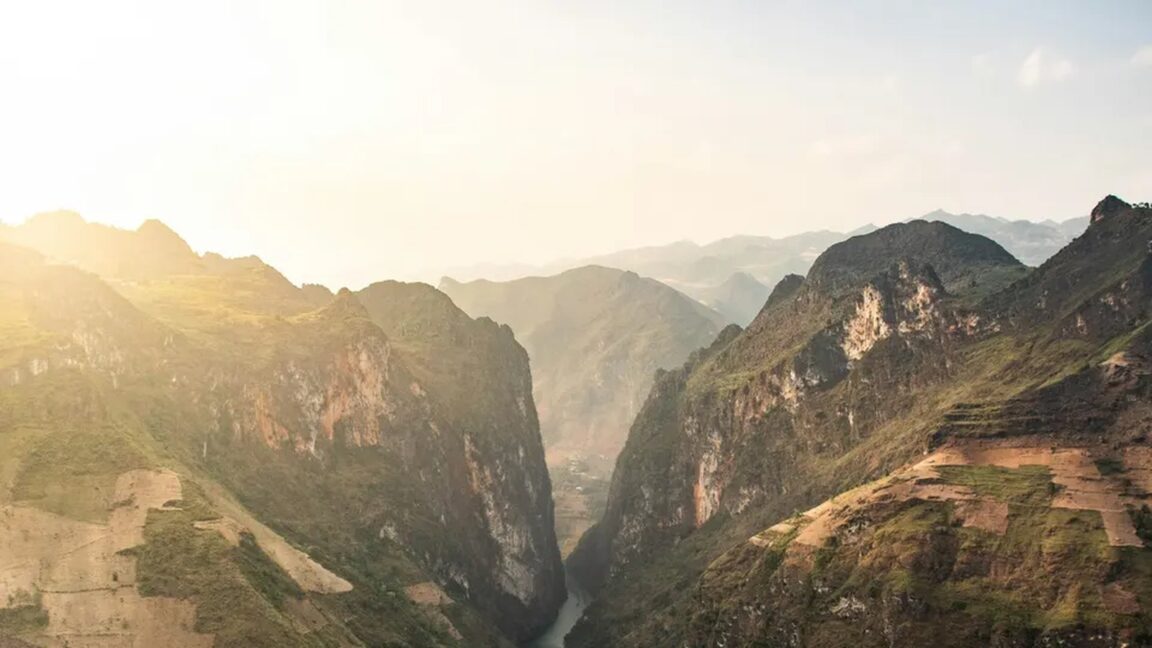
- Photo credit: Photo by Ryan Le on Unsplash, Unsplash License. The featured image shows the Nho Que river in Tu San canyon, Ha Giang, below the Ma Pi Leng pass.
Why is January in the far north a winter packing problem?
Because altitude rewrites the forecast. Ha Giang town sits low, at about 118 metres, and its January averages look mild on paper. The loop, however, sleeps and rides high: Dong Van at about 1,200 metres, passes above that, and valleys that funnel cold air at night. Sources that separate the two put highland January mornings at 3 to 5 degrees Celsius while valleys sit at 8 to 12 degrees, and the plateau range across December to February at roughly 2 to 12 degrees, with fog that can hide the viewpoints, frost and occasional ice. Add motorbike wind chill at 30 to 40 kilometres an hour on the Ma Pi Leng pass and a 10 degree morning feels below freezing on your hands and chest. Hanoi adds a different discomfort: damp, grey, penetrating cold in unheated buildings, where 15 degrees indoors feels colder than a dry 10 degrees outside.
January is also, in compensation, dry. Roads are usually in good condition, rain is light, and the loop is quiet. The packing trade is therefore clear: swap the rain gear weight of summer for real warmth, keep a waterproof shell for drizzle and fog, and plan every riding day as a cold day, whatever the town forecast says. Entry formalities first, though: our guide to Vietnam’s 90 day e-Visa, who qualifies and how to apply covers the paperwork that must be right before any of this matters.
What is the one bag layer system for the Ha Giang Loop?
Four layers on riding days, because you cannot go back for the one you left. The base is a merino or synthetic thermal top and leggings, worn under riding trousers. The mid layer is a fleece. The insulation is a packable insulated or down jacket, the warmest single item in the bag. The shell is a waterproof, windproof jacket, and ideally waterproof over trousers, worn over everything on the bike: on a January pass, windproofing is worth more than another jumper, because the wind is the cold. At night in Dong Van or Meo Vac, the same layers recombine as town clothes, with the shell left off and the insulated jacket over the fleece for the walk to dinner.
- Base: 2 thermal tops, 1 to 2 thermal leggings, merino socks, 4 pairs.
- Mid: 1 fleece, 1 warm jumper or second mid layer for Hanoi days and homestay evenings.
- Insulation: 1 packable insulated jacket, worn under the shell on the bike and over the fleece in town.
- Shell: 1 waterproof jacket with hood; waterproof over trousers strongly recommended for drizzle, fog and road spray.
- Legs: 2 pairs of sturdy trousers suitable for riding; no shorts for loop days, however warm a Hanoi afternoon feels.
- Sleep: Warm sleep clothes. Homestay heating varies, extra blankets are normal, and a thermal top in bed is standard January practice on the plateau.
What do your hands, neck and head need on a January bike?
This is where January loops are won or lost. Bring warm, windproof gloves of your own, ideally with a waterproof outer, plus a thin liner pair: rental and tour gloves vary, hands are fully in the wind for hours, and cold hands are a safety issue, not just discomfort, if you are riding yourself. A neck gaiter or buff that can cover the chin and nose under a helmet, and a warm hat for every stop and evening, matter almost as much. Sunglasses or clear glasses help in low winter sun and dust on dry roads. If you are riding pillion with an easy rider, the same list applies in full: passengers sit stiller and get colder than drivers.
On licences and safety, be blunt with yourself. Riding legally in Vietnam as a foreigner generally requires an international driving permit issued under the 1968 Vienna Convention carried with a national licence for the right vehicle class; permits under the 1949 Geneva Convention are not recognised, which affects many visitors, and travel insurance can refuse claims for riding without a locally valid licence. January adds fog, frost and occasional ice on high ground to that equation. For many travellers the correct January choice is a licensed easy rider or a car tour, with this packing list unchanged. In Hanoi before or after the loop, the food days are warmer work; our Hanoi food guide to pho, bun cha and the Old Quarter is the right companion for those days.
How do you pack one bag for buses, bikes and homestays?
Use a soft bag or backpack of about 40 litres with a waterproof liner or dry bags inside, and pack in three cubes: riding layers, town and sleep clothes, and a small cold kit of hat, gloves, gaiter and spare socks that lives at the top. On bus days between Hanoi and Ha Giang, keep the insulated jacket and cold kit in your daypack in the cabin, because night buses and early arrivals are cold and the main bag is in the hold. On the loop, assume the bag is strapped to a bike or left at a homestay while you ride a lighter day loop, so documents, medication and one warm layer never leave your person. A dry bag for phone and documents is essential even in dry season: fog, drizzle and river spray on a Nho Que boat trip all find unprotected pockets.
- Documents: Passport, e-Visa printout, licence and permit if riding, insurance details, kept in the dry bag with a phone photo backup.
- Health: Medication, plasters, lip balm, moisturiser for wind dried skin, and tissues, which homestays and roadside stops do not always provide.
- Power: Power bank and cable. Cold drains batteries, and January days are short, with photography at every pass.
- Light: Headtorch for homestay lanes, early starts and the walk back from dinner in plateau towns with little street lighting.
- Footwear: 1 pair of sturdy, closed, ankle covering shoes or boots for riding, broken in, with grip for wet stone in Dong Van old quarter; 1 light pair or sandals for Hanoi and indoors. No riding in sandals, ever.
What changes for Hanoi days in January?
Hanoi in January is damp cold, roughly 13 to 20 degrees, with grey skies, drizzle and unheated cafes and museums. You will wear the fleece and often the insulated jacket in the city too, just without the thermals underneath on most days, and the shell earns its keep in drizzle. The mistake is to pack Hanoi as a tropical stop and save all the warmth for the mountains: pack one system and use less of it in the city. A scarf and the warm hat work in Hanoi evenings along Hoan Kiem lake, and an umbrella is a reasonable city extra here, unlike on the loop, where the shell replaces it.
What should you leave out?
Leave shorts and summer dresses as main clothing, a thin denim jacket as your warmest layer, cotton base layers that stay cold when damp, and a hard suitcase that cannot strap to a bike or fit a homestay corner. Leave heels and white trainers you care about; plateau roads are dusty and town lanes can be muddy after drizzle. Leave a second full outfit for photographs: on the January loop, everyone is in the same jacket at every pass, and warmth is the photograph. If you are travelling only to Hanoi and the lowlands, you can drop the thermal leggings and waterproof over trousers, but for Ha Giang in January, keep them.
Frequently Asked Questions
How cold is Ha Giang in January, really?
Colder than the town forecast suggests. Ha Giang town averages a January high of about 19.5 degrees Celsius and a low of about 13.3 degrees, but the loop rides and sleeps on a plateau around 1,200 metres where winter temperatures run roughly 2 to 12 degrees, highland mornings can start at 3 to 5 degrees, and Dong Van has recorded 0 degrees in a January cold spell. Pack for the plateau, not the town.
Is January a good month for the Ha Giang Loop?
It is the coldest and one of the driest and quietest months, with usually good road conditions and light rain, set against fog that can close views, frost and occasional ice on high ground, and very cold riding mornings. For travellers who pack properly and keep flexible days for fog, it can be excellent; for anyone hoping for warm motorbike weather, it is the wrong month.
Can I buy warm clothes in Ha Giang instead of packing them?
Basic warm jackets and gloves are sold in Ha Giang town and Dong Van markets, and many visitors buy an extra layer there. Treat that as a backup, not the plan: sizing, quality and waterproofing are unpredictable, and the coldest riding is often before you reach the better stocked towns. Bring the core system in this list.
Do I need a special licence to ride the loop myself?
Generally, a foreigner rides legally in Vietnam with an international driving permit issued under the 1968 Vienna Convention, carried with a national licence endorsed for the vehicle class. Permits issued under the 1949 Geneva Convention are not recognised, and insurers can refuse claims for illegal riding. Check your own licence, permit and policy before deciding, and consider a licensed easy rider or car tour if any element does not line up.
What is the single most forgotten January item?
Proper windproof gloves, followed by a neck gaiter. Visitors pack a warm jacket and then ride for hours with bare or thinly gloved hands in plateau wind. Your own warm gloves, plus a gaiter that seals the gap between helmet and jacket, change the whole day.
Last updated: 16 November 2026. Temperatures are official long run figures for Ha Giang town and reported plateau ranges checked today; check the Vietnam national forecast for your exact dates, as cold spells move plateau temperatures sharply.