 Wei Chen
Pack for the Finger Lakes in winter for cold that sits below freezing for days, snow that can arrive in bands off the lakes, and waterfall spray that coats paths and railings in ice: a real insulated layer system, waterproof boots with traction aids, and a car kit that assumes a snowy winery road at least once. At Ithaca, on Cayuga Lake, the 1991 to 2020 climate normals put January at a high of 31 degrees Fahrenheit and a low of 15 degrees, with 16.6 inches of snow in January and 62.9 inches across the year. That is the design brief. This kit list covers winery roads around Seneca and Cayuga lakes, gorge and falls viewpoints around Ithaca and Watkins Glen, and evenings in Geneva, Ithaca and Penn Yan, without packing for a ski expedition you are not taking.
Quick Facts
- Destination: The Finger Lakes, New York, in winter: Ithaca and Cayuga Lake, Watkins Glen and Seneca Lake, Geneva, and the wine trails between them.
- Winter normals: Ithaca averages a January high of 31 degrees Fahrenheit and a low of 15 degrees, December at 36 and 22 degrees, and February at 33 and 15 degrees, per the Northeast Regional Climate Center 1991 to 2020 normals checked today.
- Snow: Ithaca averages 62.9 inches of snow a year, including 12.2 inches in December, 16.6 in January and 14.5 in February, with lake effect snow from the Great Lakes adding to regional totals.
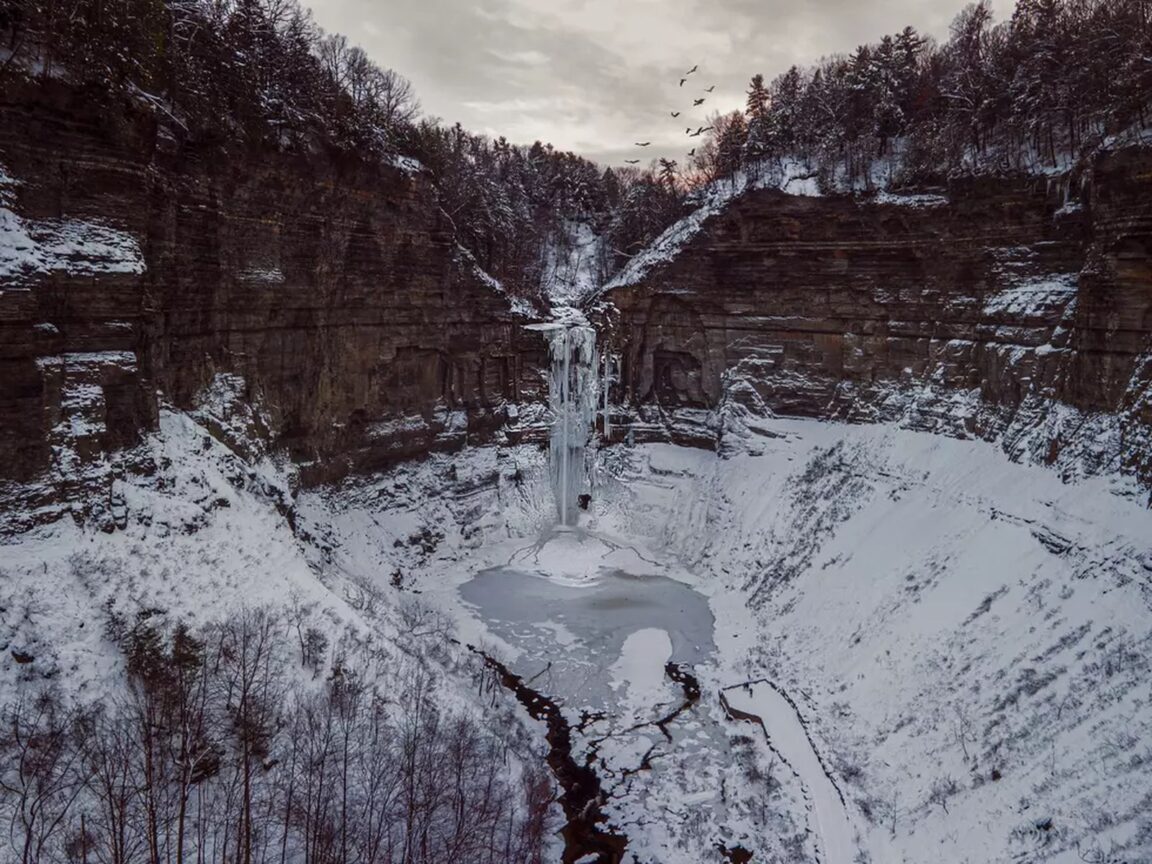
- Signature winter sight: Taughannock Falls, a 215 foot single drop fall near Trumansburg, which builds ice formations in deep winter while water keeps flowing.
- Bag strategy: One bag plus a car boot kit. Layers and boots do the work; the car carries the spares.
- Photo credit: Photo by Lokesh Paduchuri on Unsplash, Unsplash License. The featured image shows Taughannock Falls in winter, frozen in its snow covered gorge in the Finger Lakes.
Why is Finger Lakes winter colder than the map suggests?
Three things combine. First, the baseline is properly cold: a normal January day in Ithaca never gets above freezing. Second, the lakes and the Great Lakes to the north feed snow: cold air crossing relatively warmer water picks up moisture and drops it as lake effect bands that can bury one town and leave the next almost clear, which is why forecasts feel unreliable and road conditions change within a single winery loop. Third, the region’s best winter sights are wet places. Gorge trails, falls viewpoints and lakeside piers add spray, mist and wind to the air temperature, so a still 28 degree afternoon at a tasting room can feel ten degrees colder at the Taughannock Falls overlook.
The practical answer is to pack for the coldest hour of the day, which is the falls viewpoint at dusk, and dress down indoors, where tasting rooms and restaurants are heated for people in jumpers, not parkas. For a colder city comparison, our Quebec City in winter itinerary uses the same logic at even lower temperatures.
What is the layer system for a Finger Lakes winter day?
Base, mid and shell, with no cotton anywhere near your skin. The base is merino or synthetic long underwear, top and bottom, on any day that includes a gorge, a falls or more than an hour outdoors. The mid layer is a fleece plus a packable insulated jacket; together they handle a still viewpoint, and separately they handle a walk and a tasting room. The shell is a waterproof, windproof outer jacket, ideally with a hood, because lake wind and falls spray are both wet. If you own one winter coat that does all of this, wear it in transit and pack the fleece as the adjustable piece.
- Base: Merino long sleeved top, merino leggings, liner socks under wool socks on falls days.
- Mid: 1 fleece, 1 insulated jacket. One of them is always in the car as the spare.
- Shell: Waterproof winter jacket with hood; ski trousers or waterproof over trousers only if you plan long gorge walks in falling snow.
- Legs: 2 pairs of warm trousers, one soft shell or lined; thermal leggings underneath on the coldest days. Jeans are the evening pair only, and even then with leggings below in January.
- Head, hands, neck: Insulated hat, warm gloves plus a liner pair for driving and photography, scarf or gaiter. Falls viewpoints are windy and exposed.
- Evening: 1 clean knit or shirt and the indoor shoe below. Winery dinners in the Finger Lakes are smart casual and warm.
Which boots handle winery roads, gorge paths and waterfall spray?
Waterproof winter boots with deep tread, worn as your main shoe every day. The winter circuit mixes unploughed winery lanes, icy car parks, slushy main streets in Ithaca and Geneva, and viewpoint paths where spray freezes. Add slip on traction aids, such as microspikes or ice grips, and keep them in the car: the Taughannock Gorge Trail stays open in winter and is flat and wide, but the overlook steps close when hazardous and any spray zone path can be sheet ice. Traction aids turn a cautious shuffle into a walk. A second, indoor pair of shoes keeps salt and slush off restaurant floors and gives the boots a night to dry, stuffed with newspaper by a radiator or vent, never on top of a heater.
Socks are merino, four pairs minimum, and the spare pair lives in the car with the spare gloves. Wet feet end a winter day faster than cold air does, and a falls viewpoint in wind will find any gap in the system. Our dedicated cold weather list for what to pack for Quebec City in December goes deeper on boot and sock systems if your trip continues north.
What belongs in the car, not the suitcase?
- Snow tools: Ice scraper and snow brush, kept in the car all winter, plus a small shovel if your lodging has an unploughed drive.
- Traction and spares: The traction aids, spare gloves, spare hat and a spare pair of socks in a dry bag.
- Visibility and power: Torch, phone charging cable, and a power bank. Cold drains batteries fast, especially at viewpoints where the phone is also the camera.
- Fuel and timing: Keep the tank at least half full on wine trail days, build daylight margin into every loop, and tell your lodging if a lake effect band will make you late. Bands are local and fast; waiting an hour is often the right call.
- Windscreen and water: Winter washer fluid topped up, and bottled water and snacks in the car, because a slow, snowy return from a Seneca Lake loop is a normal event, not an emergency.
How do you pack for a winery day that ends at a frozen falls?
Sequence the clothes, not just the stops. Start the day in the full system minus the insulated jacket, with the jacket and traction aids in the car. Tasting rooms run warm, so the fleece alone over a presentable base layer is the right indoor outfit, and the clean knit is saved for dinner. Before the falls stop, add the insulated jacket, hat, warm gloves and traction aids in the car park, and put the phone on battery saver, because cold plus photographs drains it. After the falls, change socks in the car if yours got damp from spray or snow. That small routine, layers up for the viewpoint and straight back down for the room, is the difference between a winter Finger Lakes day that feels crisp and one that feels punishing.
What should you leave out?
Leave fashion boots with smooth soles, cotton socks and hoodies, a thin city coat, and any plan that needs a second large suitcase dragged across an icy car park. Leave heels entirely; January pavements in Ithaca are not the place. Leave a tight, multi winery schedule that assumes summer driving speeds, and leave the idea of gorge trails beyond the maintained winter routes: several state park gorge trails in the region close in winter, and closed means closed, however good the photograph looks. If a warm spell is forecast, drop one mid layer, not the waterproof boot or the traction aids, because spray ice at the falls outlasts a mild week.
Frequently Asked Questions
How much snow does the Finger Lakes get in winter?
A lot by most standards. Ithaca averages 62.9 inches a year on the 1991 to 2020 normals, with December, January and February each averaging roughly 12 to 17 inches, and lake effect bands can add heavy local totals on top of the averages. Pack and drive for snow as a normal condition, not an exception.
Can you visit Taughannock Falls in winter?
Yes. The overlook is open year round and the flat Gorge Trail stays open through winter, while the stone steps to the lower viewing platforms close in hazardous conditions, per the park and Visit Ithaca guidance. The falls drop 215 feet, build ice at the base in deep cold, and usually keep flowing. Wear traction aids and expect spray ice near the viewpoints.
Do wineries stay open in the Finger Lakes in winter?
Many do, especially on the Seneca and Cayuga wine trails, with shorter hours and quieter rooms than in autumn, which many visitors prefer. Check each winery’s own site for your dates, book tastings where offered, and build the driving plan around daylight and weather rather than a fixed count of stops.
What should I wear for a winery dinner in January?
The clean knit or shirt, warm trousers and the indoor shoe from this list, with the winter coat checked at the door. Dress codes are smart casual across the region’s winery restaurants and inn dining rooms; warmth on the walk from the car park matters more than formality inside.
Is a rental car suitable for Finger Lakes winter roads?
Yes with care: choose a car with good tyres, all wheel drive if available, keep the tank half full, carry the car kit in this list, and slow down or pause in lake effect bands. The wine trail roads are ploughed, but lanes, drives and car parks are where the ice and deep slush actually are.
Last updated: 16 November 2026. Temperatures and snowfall are the Northeast Regional Climate Center 1991 to 2020 normals for Ithaca, checked today; check the National Weather Service forecast for your exact dates, as lake effect snow is highly local.