 James Wolfe
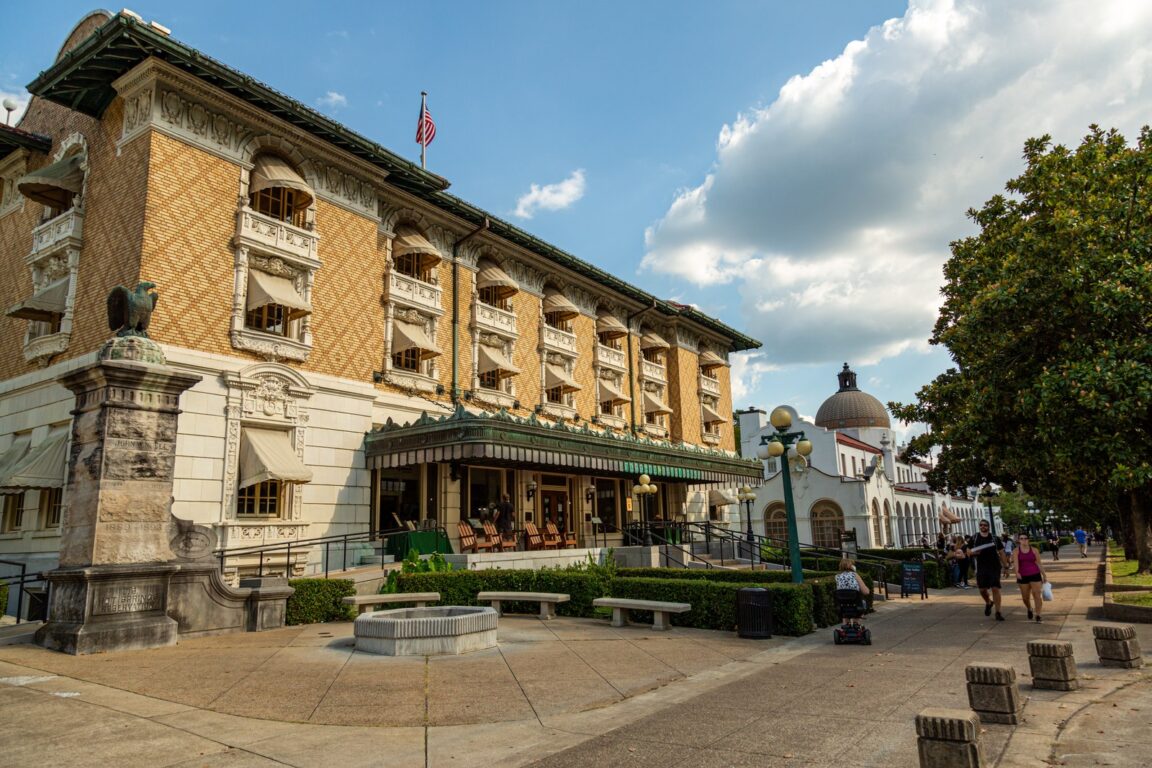
You cannot soak at the Fordyce Bathhouse itself, and knowing that before you arrive is what makes a Hot Springs trip work. The Fordyce, the grandest building on Bathhouse Row in Hot Springs National Park, Arkansas, is now the park visitor center and a free museum, not a working bathhouse. The actual thermal soaks happen a few doors away at the two operating bathhouses on the Row, the Buckstaff and the Quapaw, which pipe the same 143 degree spring water into their tubs and pools. Build the day as a circuit: walk the Fordyce floors first to understand what traditional bathing involved, hike the mountain trails behind the Row while you are fresh, then soak in the afternoon when your legs are ready for it. That order, museum, miles, then mineral water, is the active traveller version of the routine this town was built on.
Quick Facts
- Place: Fordyce Bathhouse, 369 Central Avenue, Bathhouse Row, Hot Springs National Park, Arkansas.
- What it is now: The park visitor center and museum, with a free self guided tour of three floors and the basement. It offers no bathing services.
- Hours: Open every day from 9:00 am to 5:00 pm, except Thanksgiving Day, Christmas Day and New Years Day, per the National Park Service.
- Park entry: Hot Springs National Park has no entrance fee, and the Fordyce museum visit is free.
- The water: 47 thermal springs emerge at an average of 143 degrees Fahrenheit. The National Park Service dates the water to rainfall more than 4,000 years old.
- Where to soak: The Buckstaff Bathhouse and the Quapaw Bathhouse are the two facilities on Bathhouse Row offering full immersion in the thermal water. There are no outdoor soaking opportunities in the park.
- Trails: About 26 miles of hiking trails climb Hot Springs Mountain, North Mountain and West Mountain directly behind downtown, plus the level, half mile Grand Promenade behind the bathhouses.
- Free to take home: The park provides spring water free of charge at public jug fountains around the park and downtown. Bring your own container.
Can you actually soak at the Fordyce Bathhouse?
No, and the National Park Service is direct about it. The Fordyce operated as a bathhouse from 1915 to 1962, closed, stood vacant for more than two decades, and reopened in 1989 as the park visitor center. Today rangers staff the front desk, and visitors take a free self guided tour through rooms that are furnished and exhibited as they were in the bathing era. Nobody gets in a tub here.
That is not a disappointment once you reframe it. The Fordyce is the explanation for everything else on the Row. At about 28,000 square feet it is the largest bathhouse on Bathhouse Row, and its rooms lay out the full traditional cure in sequence: the bath halls with their marble partitions, the cooling rooms, the massage and dressing rooms, the gymnasium with its wooden exercise equipment, and the basement where you can still see the Fordyce Spring itself and the original elevator machinery. Walking it first turns a later soak at a working bathhouse from a pleasant hour into a legible ritual, because you have just seen the machinery, the etiquette and the medical claims that shaped it.
Allow 45 minutes to an hour for the tour. The mens bath hall, with its stained glass ceiling above the De Soto fountain statue, is the visual peak, and the third floor music room and gymnasium are the rooms most visitors rush past and should not. The Fordyce was also the only bathhouse on the Row with a bowling alley, a detail that says a great deal about how long guests once stayed and how seriously the social side of the cure was taken.
Where does the soaking happen on Bathhouse Row?
Two bathhouses on the Row offer visitors the chance to fully submerge in the thermal water, and the park pipes the springs directly into both. The Buckstaff Bathhouse, originally opened in 1912, is the only facility on the Row that has never fully closed since it first started offering baths, and it runs the traditional format: individual tubs and a set sequence of bathing services in a historic interior. The Quapaw Bathhouse offers a different format built around shared thermal pools under its distinctive dome, alongside private baths and spa services. Between them they cover the two ways travellers usually want this water, the period correct solo soak and the social pool soak.
Book or check walk in availability directly with each bathhouse before you build a day around a specific time, because services, hours and prices are set by the operators and change. Go in expecting the water to feel genuinely hot. It leaves the ground at 143 degrees Fahrenheit and is cooled and blended for bathing, but a thermal soak is still a heat load on the body, which is exactly why the pacing advice below matters for anyone combining it with hiking.
One safety note the park itself publishes: Legionella bacteria have been identified in some thermal water samples, and the park identifies inhalation as the route of concern, particularly for people with compromised immune systems or other medical conditions. The park states that at this time the concern does not lie with bathing or with drinking the water, because inhalation is not common with those activities and the high temperature is sufficient to kill bacteria in the drinking supply. Read the park current guidance before you go if that profile applies to you, and treat any steamy, aerosol heavy corner of a facility with the caution the park describes.
What can you do with the water for free?
Plenty, and this is the part of Hot Springs that surprises people most. The park provides spring water free of charge at its jug fountains, and filling a bottle or a jug is a local ritual rather than a tourist novelty. Thermal fountains suitable for filling jugs stand in front of the Libbey Memorial Physical Medicine Center and the park administration building on Reserve Street, with further fountains between the Hale and Maurice bathhouses on the Row, at the Noble Fountain by the south entrance of the Grand Promenade, and outside the park boundary at Hill Wheatley Plaza on Central Avenue. Regulations prohibit selling the park water, but taking it home for drinking is encouraged. The park answer to whether the water is good to drink is an enthusiastic yes, in language carried down from the spa heyday.
You can also touch the water where it surfaces. At the Hot Water Cascade on Arlington Lawn, the largest visible spring in the park, thermal water flows out of the hillside and under the path, and display springs along the Grand Promenade let you feel how hot 143 degree water is by the time it reaches an open pool. Building these stops into a walking day costs nothing and connects the bathhouse story to the geology underneath it: rain that fell thousands of years ago, travelled deep enough to heat, and rose back up along the fault at the base of Hot Springs Mountain fast enough to arrive still hot.
For a wider sense of how North American hot spring towns differ, compare this free, municipal model with Banff in winter, where the Upper Hot Springs sit above a frozen Lake Louise, and with the grand European version in Budapest thermal baths, where Szechenyi, Gellert and Rudas each run a different bathing culture.
Which trails pair best with a soak day?
The trail system starts almost at the bathhouse doors. The Grand Promenade, a level brick walkway about half a mile long running one terrace up the hillside behind Bathhouse Row, is the connector: it links the Row to the trailheads, passes the display springs, and works as a warm up or a cool down stroll in its own right. From it, the Hot Springs Mountain Trail loops the summit above town, the Peak Trail climbs toward the Hot Springs Mountain Tower, and routes over North Mountain reach the Goat Rock overlook and drop into Gulpha Gorge, where a trail connects to the Gulpha Gorge Campground and its creek side sites.
The Sunset Trail is the park long route, the one to choose if a soak day is really a hiking day with a soak at the end, while West Mountain offers shorter loops with downtown views for a lighter morning. With about 26 miles of trail in total, the honest calibration is this: the climbs are short but steep in places, the forest is oak and hickory rather than alpine, and summer heat and humidity are the real difficulty, not distance. Hike in the morning, carry water even though you are inside a city park, and keep the afternoon for the Row.
The Hot Springs Mountain Tower, reached by the summit drive or the Peak Trail, is a separate ticketed attraction rather than a park facility, so check its own hours and prices if the panoramic view over the Ouachita Mountains is on your list. The mountain summit roads keep their own posted hours, which differ from the Fordyce hours, so a sunset plan needs both checked on the day.
How should an active traveller pace two days here?
Day one belongs to the circuit in its classic order. Start at the Fordyce at 9:00 am opening, when the rooms are quiet, and take the full tour including the basement spring. Walk the Grand Promenade end to end, touch the water at the display springs, and fill a bottle at a jug fountain. Late morning, climb: the Hot Springs Mountain loop or the Goat Rock route, finishing back at the Promenade. Lunch downtown, then the soak, at the Buckstaff for the traditional tub sequence or the Quapaw for the pools, booked ahead where the operator asks for it. Heat after exertion is the point of the place, but keep the first soak moderate, hydrate, and do not stack a second long heat session on the same day.
Day two can carry the bigger mileage. Take the Sunset Trail or combine West Mountain loops in the cool of the morning, visit the Gulpha Gorge side of the park, and use the afternoon differently: the second bathhouse, so you have tried both formats, or a return to the Fordyce second floor exhibits on health and access, which reward a slower second look. Fill jugs on the way out of town. Recovery pacing here is simple to state and easy to get wrong: one substantial hike and one substantial soak per day, water inside you as well as around you, and no heroic attempt to hike every trail and test every tub in a single afternoon of Arkansas summer.
Frequently Asked Questions
Is the Fordyce Bathhouse free to visit?
Yes. The Fordyce is the Hot Springs National Park visitor center and museum, the self guided tour is free, and the park itself has no entrance fee. It is open daily from 9:00 am to 5:00 pm except Thanksgiving Day, Christmas Day and New Years Day.
Can you bathe in the thermal water at Hot Springs National Park?
Yes, at the two operating bathhouses on Bathhouse Row, the Buckstaff and the Quapaw, which receive the thermal water piped directly from the springs. There is no outdoor soaking in the park itself, and the Fordyce is a museum only.
How hot is the spring water and where does it come from?
The 47 thermal springs emerge at an average of 143 degrees Fahrenheit. The National Park Service explains the water as rainfall from more than 4,000 years ago that percolated deep into the earth, heated, and rose rapidly back to the surface along fractures at the base of Hot Springs Mountain.
Can you drink the hot spring water?
Yes. The park encourages it and provides the water free at public jug fountains, including jug filling fountains on Reserve Street and at Hill Wheatley Plaza. Bring your own bottle or jug. The park monitors the water to United States drinking water standards, and it also publishes a Legionella advisory that identifies inhalation, not drinking or bathing, as the route of concern.
How much hiking is there if soaking is only part of the trip?
About 26 miles of trails, from the level half mile Grand Promenade behind Bathhouse Row to the long Sunset Trail and the summit routes on Hot Springs Mountain. Trailheads sit minutes from Central Avenue, so a morning hike and an afternoon soak combine without any driving between them.
When did the Fordyce Bathhouse open and close?
It opened on March 1, 1915, was the largest and most opulent bathhouse on the Row at about 28,000 square feet, and became the first on the Row to close, suspending operations on June 30, 1962. After extensive restoration it reopened in 1989 as the park visitor center and museum.