 Elena Vasquez
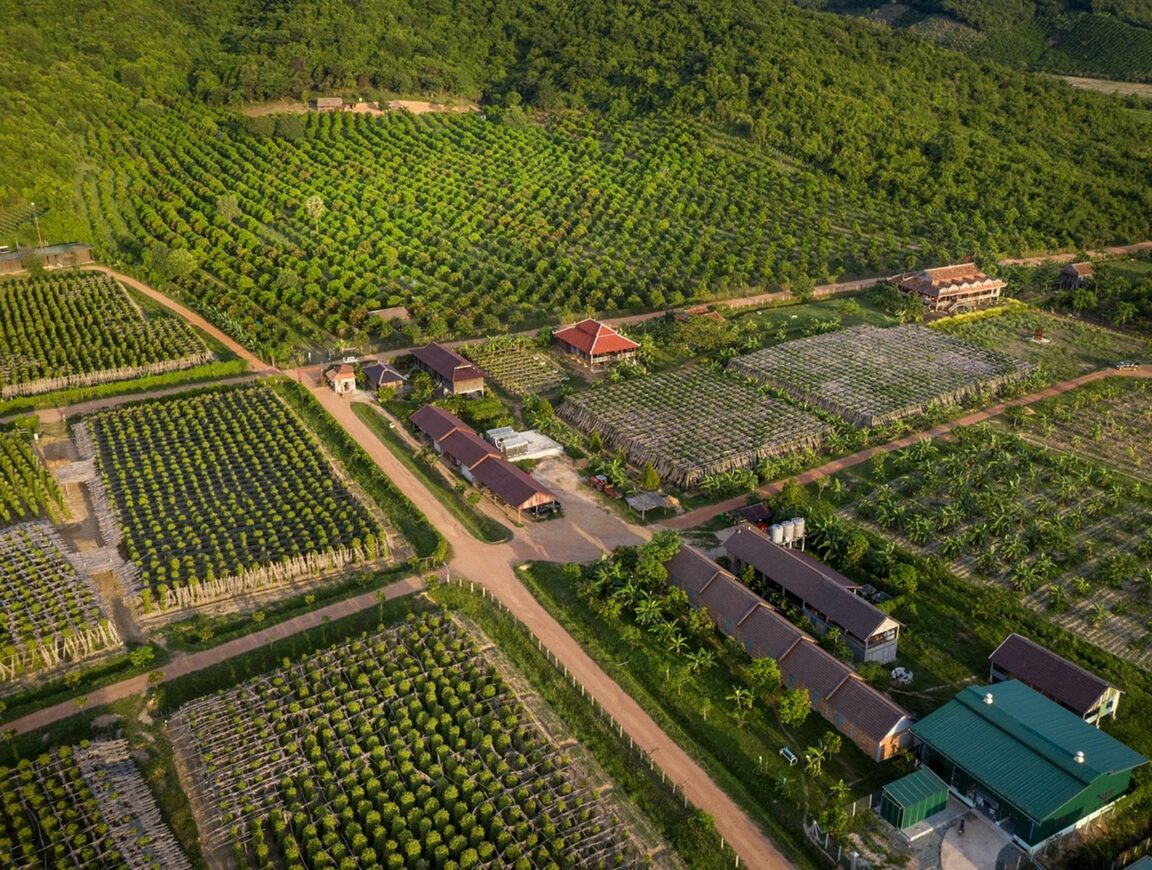
The best way to reach Kampot pepper country is on a bicycle, at dawn, while the roads are still cool. From Kampot town the countryside opens east and south into a flat, rideable landscape of salt fields, village lanes, dirt tracks and pepper plots climbing toward the foothills, and a morning ride strings them together in the order a farm day actually works: salt pans first while the light is low, a pepper plantation tour mid morning before the heat peaks, lunch built around the pepper you have just tasted, then a slow return with a river stop. The anchor farm for most visitors is La Plantation, a certified organic Kampot pepper estate that runs guided tours and tastings daily. This guide sets out how to pace the ride, what the farm visit involves, what it costs on the farm own published prices, and how to fit the salt fields and the river around it without turning a gentle countryside day into an endurance event.
Quick Facts
- Base: Kampot town, southern Cambodia, on the Praek Tuek Chhu River, with Kep and its crab market a short onward ride or drive east.
- The product: Kampot pepper, a protected geographical indication pepper grown in Kampot and Kep provinces, sold as green, black, red and white pepper from the same berries handled at different maturity and processing stages.
- Anchor visit: La Plantation, an organic certified Kampot pepper farm and social agrotourism project, open every day of the year.
- Farm hours: Open daily from 9:00 am to 6:00 pm, last visit at 4:00 pm, per the farm own visitor page, checked today.
- Booking rule: From November to March, book a visiting slot in advance on the farm website. From April to October, no advance booking is needed, just turn up at reception.
- Entrance fee: Self guided entry is USD 2.50 per adult and USD 1.25 per child, and the ticket works as a voucher for its full value at the farm shop, Spice Bar or restaurant. Guided tours with tasting are paid visits, priced on the farm booking page.
- Food on site: The farm restaurant serves breakfast from 7:00 am and lunch to 3:00 pm without reservation, including Kep crab and shrimps with fresh green pepper and a Kampot pepper ice cream. Cooking classes need booking at least 24 hours ahead.
- Ride character: Flat countryside on a mix of paved lanes and red dirt tracks. The effort is heat management, not climbing.
Why cycle to the pepper farms instead of taking a tuk tuk?
Because the countryside between the sights is the sight. A tuk tuk delivers you to a farm gate. A bicycle delivers the whole system the pepper depends on: the irrigation channels, the salt fields near the coast where sea water is led into shallow pans, the village ponds and palm lined tracks, and the gradual change in soil and slope as the land rises toward the hills where the pepper plots sit. Pepper vines grow on posts in neat, shaded rows, and arriving through working farmland makes the farm tour land differently. You have just ridden through the terroir the guide is about to describe.
Cycling also fixes the timing problem. Tour groups and tuk tuks cluster late morning. A rider who leaves Kampot at first light reaches the salt fields in the best light of the day, arrives at a plantation as it opens at 9:00 am, and is tasting pepper while the farm is still quiet. The return ride can be taken slowly, in stages, with a swim or a cold drink by the river, rather than as one hot slog at midday.
Practicalities are simple but should be settled in town before you leave: a bicycle with tyres suited to dirt tracks, a basic repair kit or a rental shop number saved in your phone, a helmet if you use one, at least a litre and a half of water per person, and sun protection you would normally reserve for a beach. Confirm the rental price, deposit and return time with the shop in person, because town rental terms vary and printed rates date quickly. If the dirt tracks are wet after heavy rain, ask locally which farm roads are passable before committing to a loop.
What happens on a pepper farm tour?
At La Plantation, the standard farm tour is a guided walk through the pepper and spice plantation and the fruit garden, with the organic farming methods explained as you go, finishing in a pepper and spice tasting where the differences between green, black, red and white pepper stop being abstract. The same berry explains all four: green pepper is picked unripe and used fresh, black pepper is picked and dried, red pepper is fully ripe fruit dried with its colour kept, and white pepper is ripe fruit soaked so the outer skin can be removed. Tasting them in sequence, on the farm where they grew, is the single most instructive food experience in this corner of Cambodia.
Beyond the standard tour, the farm runs a Secret Tour into the production side, meeting farmers on protected plots during harvest season and watching the sorting and packaging work, and a private two hour Sunset Tour that ends with a tasting, a cocktail and a snack plate at the Spice Bar around 5:00 pm. There is also a tropical garden laid out as a journey through the senses, a collection of rescued traditional Khmer wooden houses reassembled on the property, and the option to ride out toward Secret Lake in a cart pulled by water buffalo. A cooking class, making fish amok, a vegetable curry and mango salad from scratch including fresh coconut milk and curry paste, requires booking at least a day ahead and eats into riding time, so treat it as an alternative afternoon plan rather than an add on.
Money, on the farm own current page, works like this: self guided entry costs USD 2.50 per adult and USD 1.25 per child, and the full ticket value comes back to you as a voucher for the shop, Spice Bar or restaurant, so a self guided visitor who buys pepper or a drink effectively pays nothing extra for entry. Guided tours are paid separately, and the farm asks November to March visitors to book a slot in advance, while April to October visitors can simply arrive. Older travel writing still describes the tours as free, so check the farm page when you book rather than relying on a blog from a previous season.
How do the salt fields and Secret Lake fit the loop?
The salt fields lie on the coastal flats between Kampot and Kep, where shallow pans are flooded with sea water and left to evaporate. In the dry months the pans mirror the sky and workers rake and carry the harvested salt in baskets, a scene that photographs best early and late in the day and that takes ten minutes to understand from the edge of a pan. Riding past them on the way out, rather than detouring at midday, keeps the loop honest and the heat load down.
Secret Lake, the irrigation reservoir in the countryside east of town, is the natural hinge of the ride: a swim stop for some groups, a buffalo cart destination from La Plantation, and a shaded place to pause between the farm and the return leg. Treat the water as local people direct on the day, and treat the lake banks as working farmland, not a beach club. From the lake the lanes run back toward Kampot through villages where the riding is easy and the traffic light, and a rider who timed the farm tour well is back in town by early afternoon.
Kampot pairs naturally with the wider Cambodia circuit. Sort the paperwork side first with the Cambodia e-Arrival app rules that replaced the paper forms, and if Siem Reap is also on the route, plan the temple days with the Angkor Wat sunrise and temple order guide so the two active trips, cycling here and temple walking there, do not land on consecutive dawns.
How should riders pace the day in the heat?
Start at dawn, without negotiation. The first hour of riding, in cool air and low light, is worth two hours at noon. Aim to be at the salt fields early, at the farm for a morning tour, and at lunch, ideally the farm restaurant, which serves until 3:00 pm and cooks the pepper you have just tasted, before the hardest heat. Kep crab and shrimps sauteed with fresh green pepper is the dish the whole ride has been pointing at.
The return is where pacing is won or lost. Ride it in stages of 30 to 40 minutes with shade and water stops, keep the pace conversational, and have a genuine bail out option: a tuk tuk can carry tired riders back from the farm area while one person rides the bicycles, or the whole party can ride back in the tuk tuk and settle the bicycles with the rental shop. Heat illness creeps up through exactly this kind of flat, pleasant, deceptive riding. Headache, nausea or stopping sweating means stop, shade, water and local help, not one more lane to the next village.
Season shapes the ride. The dry months bring firm tracks, working salt pans and the November to March booking rule at the farm, so reserve the slot and expect company. The wetter months bring green countryside, softer tracks, quieter farms and no booking requirement, at the cost of afternoon downpours that can turn dirt roads to mud in minutes. In either season the structure holds: dawn start, farm mid morning, long lunch, staged return, river at the end of the day. Kampot river itself is the recovery session, with swimming spots and kayak rentals upstream of town and sunset boats on the water in the evening, all bookable locally on the day.
Frequently Asked Questions
Is the La Plantation tour free?
Not on the farm current published terms. Self guided entry is USD 2.50 per adult and USD 1.25 per child, returned in full as a voucher for the shop, Spice Bar or restaurant, and guided tours with tasting are paid visits booked through the farm site. Older guides describing free tours are out of date, so check the farm visitor page when you plan.
Do you need to book a pepper farm visit in advance?
From November to March, yes, La Plantation asks visitors to book a visiting slot in advance on its website. From April to October no booking is needed and you can turn up at reception. Cooking classes always need booking, at least 24 hours ahead. The farm is open daily from 9:00 am to 6:00 pm, with the last visit at 4:00 pm.
What is Kampot pepper and why is it protected?
It is pepper grown only in Kampot and Kep provinces in southern Cambodia, protected by a geographical indication that ties the name to that place and its production rules, in the same spirit as other protected origin foods. The quartz rich soils, the sea air and the traditional hand processing are credited for a pepper prized by chefs for aroma and a slow, complex heat. One harvest produces green, black, red and white pepper depending on ripeness and processing.
Can you combine the pepper farms with Kep in one cycling day?
Yes for a fit rider, by riding the salt field road east toward Kep after the farm visit and eating crab with green Kampot pepper at the Kep crab market, but it makes a long, hot day. Most riders are better served by doing Kampot countryside and the farm properly in one day and Kep as its own trip. Decide by heat and fitness, not by map distance.
What should you carry on the ride?
At least a litre and a half of water per person, sun protection, a hat, insect repellent, small cash notes for entry fees and drinks, a phone with the farm and rental shop numbers saved, and a basic repair kit if your rental does not include support. Wear shoes you can walk farm tracks in, and carry a light layer for the air conditioned return if you bail out by car.
When is the best time of year for cycling in Kampot?
The dry season months are the classic choice, with firm tracks, salt production under way and clear mornings, balanced against the farm advance booking rule from November to March. The green season offers quieter farms and no booking requirement, with mud and afternoon rain as the trade off. In every month, dawn is the best hour of the riding day.