 Sofia Rossi
For western Sicily in spring, pack for wind first and sun second: a proper windproof layer for the exposed coast at Trapani and Sciacca, strong sun protection for the white glare of the Saline di Trapani e Paceco salt pans, a small ferry kit for Egadi Islands boats, and one warm layer for evenings that still cool quickly after sunset. Spring on this coast is bright and workable, with the salt pans at their most colourful and migratory birds moving through the reserve in March to May, but it is not yet summer. The bag below is a single carry-on system built around those four conditions, with nothing in it that only works for one afternoon.
Quick Facts
- Base towns: Trapani and Sciacca anchor most western itineraries, with the salt pans, Erice and the Egadi ferries between them
- Wind: The defining spring condition; the coast is exposed, the salt pans are flat and unsheltered, and a windproof layer is essential, not optional
- Sun: Salt pan visits mean reflected glare off white salt and shallow water; hat, sunglasses and sunscreen are working kit
- Reserve: Saline di Trapani e Paceco, established 1995, managed by WWF Italy, about 1,000 hectares, a Ramsar wetland with spring migration in March to May
- Ferries: Trapani is the departure port for Favignana and the Egadi Islands; crossings are open-deck and windy even on calm days
- Evenings: Cool after sunset in spring; one insulated or heavy knit layer closes the day
- Bag: One 40 litre bag plus a daypack that doubles as the ferry and salt pan bag
Why is wind, not heat, the spring problem in the west?
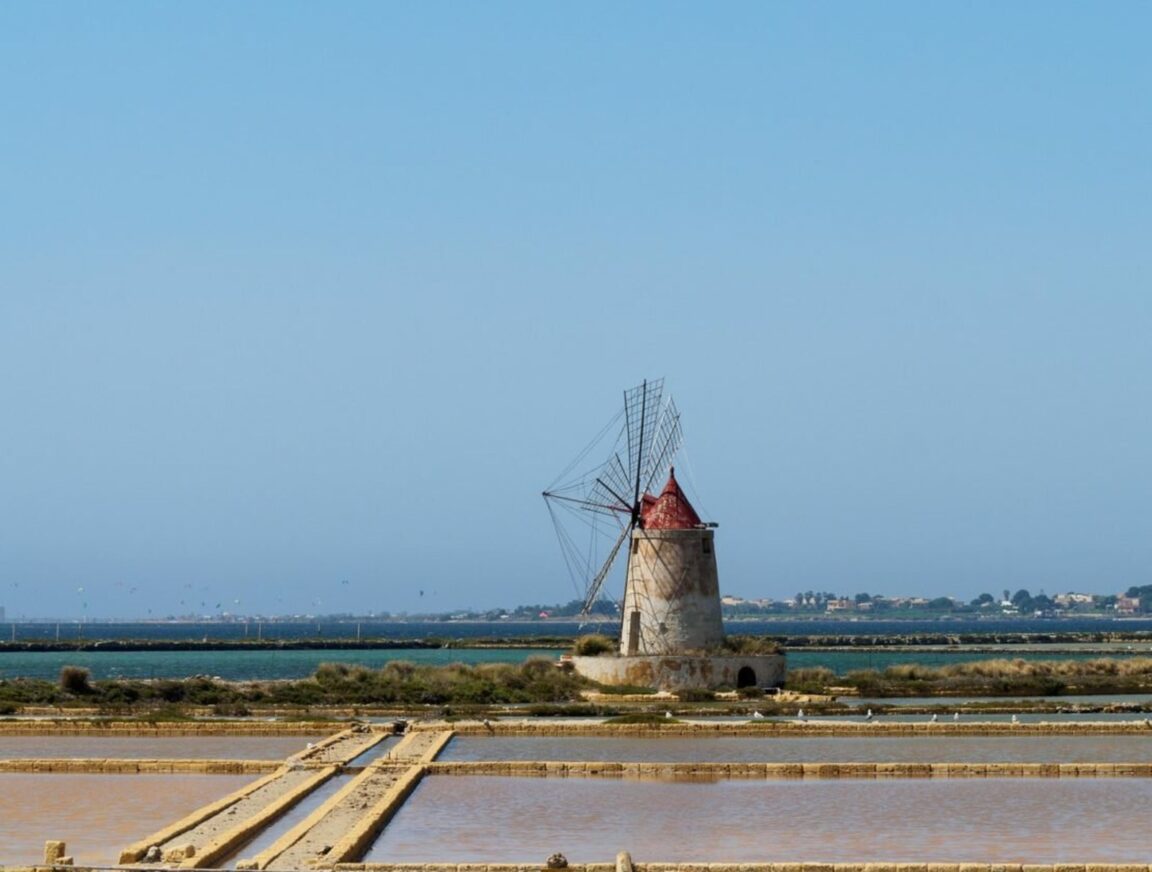
Western Sicily faces Africa across a short stretch of sea, and the coast around Trapani has been shaped by wind for centuries: the salt pans themselves depend on sun and steady wind to evaporate seawater through a chain of shallow basins, and the windmills that dot the reserve were working machines, pumping water between basins and grinding salt. That same wind is the traveller’s main comfort problem in spring. On the flat pan paths, on the Trapani seafront, on the ferry decks to the Egadi Islands and on the hilltop streets of Erice above the port, moving air strips warmth quickly, even under a strong sun.
So the outer layer decision is simple: a windproof jacket, ideally windproof and showerproof in one, worn more often than any other piece in the bag. A fleece alone is not an outer layer here, because wind passes through it. A heavy winter coat is too much. The windproof shell over a light knit is the combination that matches a spring day that starts cool, brightens at midday and turns sharp again by late afternoon at the pans, which is also, not coincidentally, the best light of the day.
What do the salt pans demand from the bag?
The Saline di Trapani e Paceco reserve covers about 1,000 hectares between Trapani and Paceco, was designated in 1995, is managed by WWF Italy, and was listed as a Ramsar wetland of international importance in 2017. In spring the pans are a working landscape and a migration stopover at once: flamingos, avocets, stilts, herons and spoonbills are among the roughly 229 bird species recorded, with spring and autumn the peak migration seasons. Visits are mostly on foot, on flat exposed paths between basins, with the Museo del Sale at Nubia as the indoor anchor.
Pack for glare and exposure. The white salt, pale water and open sky produce reflected light that tires eyes and burns skin faster than a beach day at the same temperature. A brimmed hat that stays on in wind, meaning one with a chin cord or a close fit, sunglasses, and sunscreen reapplied at midday are the core kit, plus a full water bottle, because the reserve paths offer little shade and few services. Footwear is walking shoes with tread: pan paths are flat but can be damp and gritty, and the same shoes handle Sciacca’s ceramic quarter steps and Trapani’s old town stone. Binoculars, if birding is a real aim, earn their weight in spring here more than almost anywhere else in Sicily.
Sciacca, Erice and the two ends of the coast
Sciacca, down the coast toward Agrigento, adds thermal baths, a working fishing port and a ceramics tradition, and its upper town streets climb enough to reward the same treaded shoes. Erice, above Trapani, sits high enough to be several degrees cooler than the port and frequently in cloud when the coast is clear, which is the day the insulated layer and the windproof both leave the bag together. Build the wardrobe so those combinations exist: base top, knit, insulated layer, windproof shell, in any stack the day demands. Two pairs of trousers and one skirt or alternative bottom, three to four tops, and repeat wear cover a week, because spring laundry dries fast indoors even when the wind keeps balconies dramatic.
What belongs in the ferry kit?
Trapani to Favignana is a short crossing, roughly half an hour by fast ferry, but it is an open, windy one, and the Egadi day trip is the day most spring travellers underdress. The ferry kit is a daypack containing the windproof shell, a warm layer, sun kit, water, and a dry pouch for phone and documents against deck spray. Add a small seasickness provision if you know you need one; spring seas on this coast can be choppy on windy days, and the return crossing in the evening is the roughest-feeling leg for many travellers. On Favignana itself, the day runs on foot or by rented bicycle, so the daypack, hat and walking shoes transfer directly, with swim kit only for the hardy: spring sea temperatures suit brief swims for most visitors, not long ones.
For the onward Italian legs many travellers pair with Sicily, the Always Packed guide to Monastero Santa Rosa on the Amalfi Coast and the guide to Bauer Palazzo in Venice show the two classic pairings, and the same windproof-plus-layers bag serves both in spring.
Evenings, dinners and the one warm layer
Spring evenings in Trapani and Sciacca are for the seafront passeggiata and long fish dinners, and both happen outdoors or in lightly heated rooms. One insulated jacket or heavy knit, worn over the day’s top with the dark trousers from the list, is the whole evening system. Nothing formal is required in the west’s port towns; clean, warm and windproof beats smart and cold at an outdoor table in April. Pack sleepwear with sleeves, because old town buildings hold the spring chill at night even when the day felt like early summer.
Frequently asked questions
Is western Sicily warm in spring?
Spring days are bright and mild, and the salt pans and towns are at their best, but the coast is windy and evenings cool quickly. Pack layers and a windproof shell rather than summer clothing alone.
What should I wear at the Trapani salt pans?
Walking shoes with tread, a brimmed hat that stays on in wind, sunglasses and sunscreen, plus a windproof layer. The pans are flat, exposed and highly reflective, with little shade on the paths.
When is bird migration at the Saline di Trapani?
Spring and autumn are the peak seasons, broadly March to May and September to October, with flamingos, avocets, stilts and many other species stopping on the Europe to Africa route.
Do I need a dry bag for the Egadi ferries?
A dry pouch inside the daypack is enough for phone and documents against deck spray. The crossing from Trapani to Favignana is short, but decks are open and windy even on calm days.
Can I swim in western Sicily in spring?
Brief swims suit most visitors; the sea is still cool in spring. Pack swim kit if swimming matters to the trip, but build the bag around wind, sun and layers first.
Last checked 16 November 2026. Reserve facts from WWF Italy and Ramsar listings for the Saline di Trapani e Paceco; ferry times and birding conditions vary by season, so confirm sailing times before an Egadi day trip.
Featured image: Photo by Flo P on Unsplash, Unsplash License.