 Priya Nair
The Kororareka walk in Russell is done properly as a waterfront history walk with one great interior at its heart: take the passenger ferry from Paihia, walk The Strand past the Duke of Marlborough to Pompallier Mission and Printery for a guided tour of the 1842 rammed earth printery, then climb Flagstaff Hill for the harbour view and come back down through Christ Church and the Russell Museum. Pompallier’s own site gives the essentials plainly: the mission was the hub of the French Catholic Mission from 1842, nearly 40,000 books were produced here, and it is the oldest existing industrial building in New Zealand. Allow half a day, and the old port of Kororareka will make complete sense.
Quick Facts
- Where: Russell, Bay of Islands, Northland, New Zealand. Pompallier Mission and Printery stands at 5 The Strand, on the Russell waterfront, a five minute walk from Russell Wharf.
- What it is: A French style rammed earth building of 1842, described by its own site as the oldest existing industrial building in New Zealand, and also the country’s oldest Roman Catholic building and oldest rammed earth building.
- Hours: Listed daily from 10 a.m., with closing in the mid afternoon. Seasonal hours apply, so confirm the day’s hours on the official Pompallier and Heritage New Zealand pages before you cross.
- Tickets: Guided tour and garden entry are sold at the site. This guide does not print a price, because no current official price was published in the sources verified today. Check the official site or ask at the door, and note that Heritage New Zealand members and children have historically received concessions, to be confirmed on the day.
- Contact: Pompallier Mission and Printery, +64 9 403 9015, pompallier.co.nz.
- Getting there: Passenger ferry from Paihia wharf to Russell wharf, then walk. Drivers reach Russell by the car ferry from Opua or the longer road via Whakapara.
- Facts checked: 16 November 2026.
Why does Russell have two names?
Kororareka was the Maori name for this harbour settlement, and it was New Zealand’s first seaport, a rough and famous whaling and trading town of the 1830s whose lawlessness earned it an enduring reputation. Russell, the name that replaced it, came later and more politely. Walking the waterfront with both names in mind is the key to the town, because almost every building on The Strand belongs to one era or the other: the trading port of Kororareka, or the quieter Russell that followed after the capital moved away and the town settled into the gentle, tree lined village you see today.
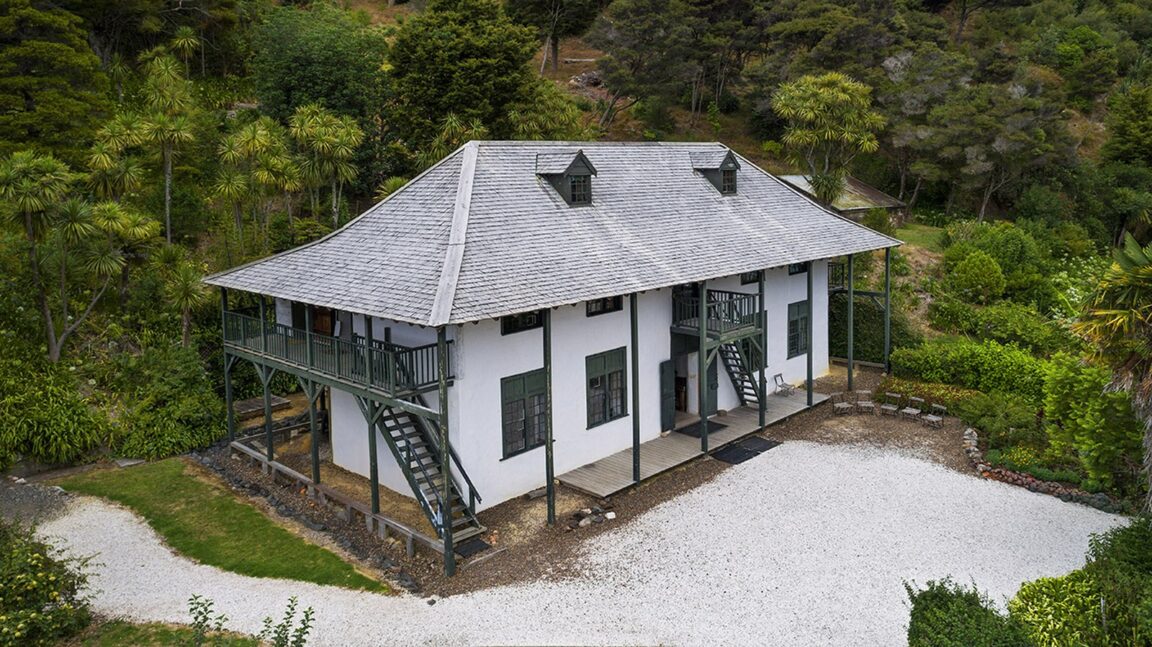
Pompallier belongs to the hinge between those eras. Bishop Jean Baptiste Pompallier, the first Catholic bishop to arrive in New Zealand, bought land here in 1839, and in 1842 the Marist brothers built this printery, tannery and storehouse in the French rammed earth style, using earth from the site itself. From this one building on a turbulent waterfront, the mission translated, printed and bound religious texts in te reo Maori, producing nearly 40,000 books according to the mission’s own account. It is, as its site states, the oldest existing industrial building in the country, and the only survivor of the mission headquarters complex.
What do you actually see inside Pompallier?
The guided tour is the visit. On it, guides walk you through the full, improbable production line of a nineteenth century book: tanning leather for bindings in the tannery, setting and printing pages on the restored Gaveaux press, and binding the finished volumes, all inside a building made of packed earth. The brothers who worked here were printers, tanners and builders at once, operating at the far end of the earth from their French support, and the tour does a fine job of making that isolation tangible. The restored press in action is the centerpiece, and the print run figures, tens of thousands of books from one small waterfront building, recalibrate any assumption that early Russell was only grog and wharves.
Outside, the heritage gardens run down toward the water, and the site includes a French coffee house and a gift shop, the Good Merchant, in the mission’s own description. Garden only entry suits visitors short on time, but the building’s meaning lives in the tour, so treat the gardens as the supplement, not the substitute. Allow one to two hours for the mission itself.
How does Flagstaff Hill complete the walk?
From Pompallier, walk back along The Strand and climb Flagstaff Hill, Te Maiki, at the northern end of the town. The flagstaff here was cut down repeatedly in the 1840s by the Ngapuhi chief Hone Heke, an act of protest that helped ignite the Northern War, and the hill carries that history in its interpretation panels as well as in its view. The view is the reward: the whole Bay of Islands spread out below, Paihia across the water, and the channels the whalers and missionaries used, suddenly legible as a map. The climb is short and steep in places, on paths and road, and it pairs naturally with Christ Church on the way down, the country’s oldest surviving church, whose grounds hold graves from the earliest years of the settlement.
Finish at the Russell Museum, a short walk from the wharf, which covers the town’s maritime and Maori history and holds a celebrated large scale model of Captain Cook’s Endeavour. Museum hours and admission are its own, so check at the door. Together, mission, hill, church and museum form a complete waterfront history walk of about half a day, entirely on foot, with the ferry ride as its bookends. Readers who enjoy living culture presented on its own terms will also like our guide to Rotorua’s Maori culture, further south in the North Island.
How do the Paihia ferry and timing work?
Most visitors sleep in Paihia and day trip to Russell. The passenger ferry crosses in about fifteen minutes and runs through the day, with the last return sailing setting your real deadline, so note it when you land. Ferry fares and timetables are the operator’s to publish and change seasonally, so check the current schedule on the morning of your walk rather than relying on any printed guide, this one included. Drivers have two options: the vehicle ferry between Opua, near Paihia, and Okiato, near Russell, or the full road loop. On a fine day the passenger ferry plus walking is simpler, cheaper in spirit, and better matched to a town whose pleasures are all within a few hundred metres of its wharf.
Start with the first Pompallier tour of the day if you can. Morning light suits the rammed earth walls, the gardens are quiet, and you will have Flagstaff Hill largely to yourself before lunch. Eat on The Strand afterward, where the Duke of Marlborough hotel has stood in various forms since the earliest decades of the port, and take a mid afternoon ferry back. Travellers extending a Northland stay into a national itinerary should read our explainer on New Zealand’s Great Walks booking system before fixing dates, because those tracks sell out on a calendar that waits for no one.
Frequently Asked Questions
What is Pompallier Mission and Printery?
It is the 1842 rammed earth printery, tannery and storehouse of the French Catholic Mission in Russell, described by its own site as the oldest existing industrial building in New Zealand. From 1842 the mission produced nearly 40,000 books here, many in te reo Maori.
How long do you need in Russell?
Half a day covers the ferry crossings, a guided tour of Pompallier, the Flagstaff Hill climb, Christ Church and the Russell Museum at an unhurried pace. A full day allows a waterfront lunch and a slower garden visit.
How do you get from Paihia to Russell?
By passenger ferry from Paihia wharf to Russell wharf, about fifteen minutes, then on foot. Pompallier is a five minute walk along The Strand from the wharf. Check the ferry operator’s current timetable and last sailing on the day.
Is Pompallier suitable for children?
Yes. The working press, the tanning story and the gardens hold children’s attention well, and the whole Russell walk is short, flat along the waterfront, and broken up by the ferry ride and the hill climb.
What does Kororareka mean for the walk?
Kororareka is the original name of the Russell settlement, New Zealand’s first seaport. The waterfront walk reads as the story of that port and the town that replaced it, with Pompallier, Christ Church, the museum and Flagstaff Hill as its chapters.
When is the best time to do the Kororareka walk?
A fine morning, starting with an early ferry and the first mission tour, gives the quietest site and the best light on Flagstaff Hill. The walk is possible in any season, with hours at the mission varying seasonally, so confirm opening times officially before you cross.