 Jonas Lindqvist
Pack one warm layer system, one proper bathhouse kit in a waterproof pouch, and shoes that can handle a wet promenade and an icy trailhead, and a winter trip to Arkansas spa country fits in a single carry on. The trip has three different climates in one day: steamy indoor pools, a cold wind on Bathhouse Row, and damp Ouachita forest trails. This list resolves all three into one bag, with nothing carried twice and nothing left behind for the coldest morning.
Quick Facts
- Destination: Hot Springs and the Ouachita Mountains, Arkansas
- Season covered: Winter, December to February
- Winter range: Lows near 32 degrees Fahrenheit and highs of 52 to 56 degrees, with wind chills that can feel as low as 15 degrees, per the National Park Service
- The water: 47 protected thermal springs emerge at about 143 degrees Fahrenheit and are cooled for bathing
- Park entry: Hot Springs National Park has no entrance fee, and Bathhouse Row public areas are open daily from 5 a.m. to 10 p.m.
- Bag strategy: One carry on plus a personal item, with the bathhouse kit packed as a removable wet pouch
What does winter in Hot Springs actually feel like?
The National Park Service describes Hot Springs winters as mild on paper and sharper in person. Average lows sit near freezing and average highs reach the low to mid 50s Fahrenheit, but wind chill in December, January and February can make it feel as low as 15 degrees, and some ice or snow falls most winters. Spring and fall bring the heaviest rain, yet winter trails still turn slick after rain, and the shaded hollows on Hot Springs Mountain and West Mountain hold cold air long after Central Avenue feels pleasant.
That spread is the whole packing problem. A traveler can leave a hotel in a light jacket, stand in a steam filled bathhouse in a swimsuit an hour later, then climb a forest trail into a cutting wind before lunch. Layers that open, close and dry fast matter more here than one heavy coat. For a cold soaking trip in a very different setting, see how the layering logic compares in our guide to Banff in winter, with hot springs and a frozen Lake Louise.
What belongs in the bathhouse hopping kit?
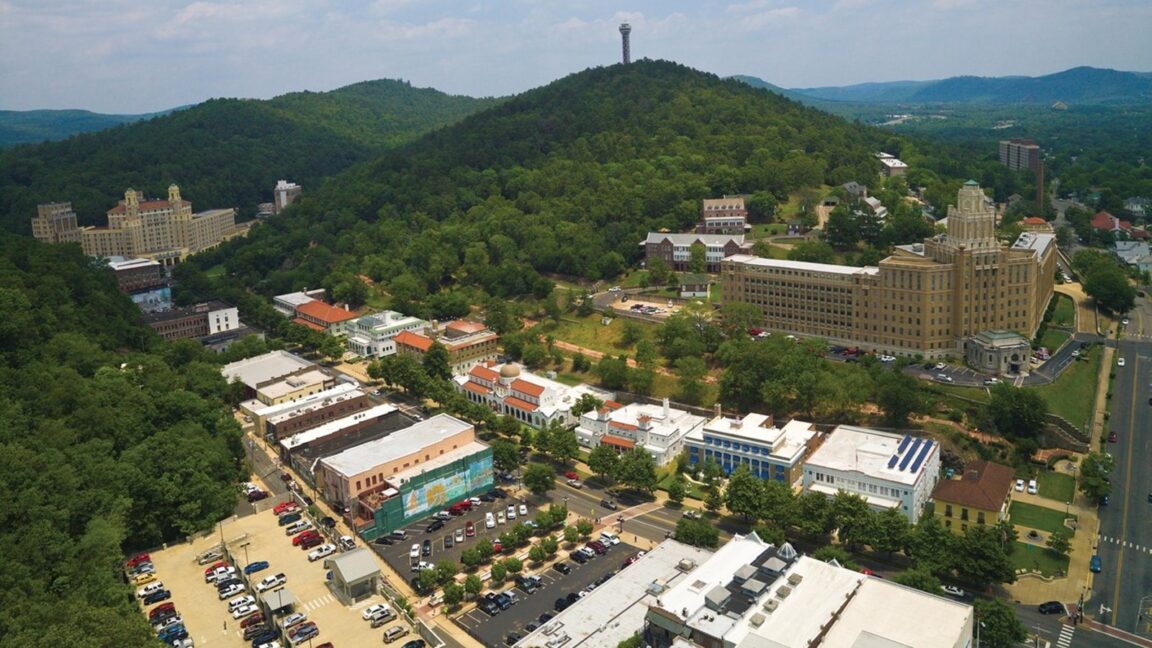
Bathhouse Row holds eight historic bathhouses along Central Avenue. Today the working soak options are the traditional Buckstaff, operating since 1912, and the Quapaw, which offers communal thermal pools. The Fordyce serves as the park visitor center and museum, open 9 a.m. to 5 p.m. A hopping day therefore mixes soaking, walking and museum time, and the kit needs to move cleanly between all three.
What should go in the wet pouch?
- Swimsuit that dries fast: A plain, quick drying suit, because communal pools and traditional baths run on their own house rules and a heavy cotton lined suit stays wet for the next stop.
- Waterproof pouch or dry bag, 5 to 10 liters: It keeps the wet suit away from evening clothes on the walk back and doubles as a laundry separator for the rest of the trip.
- Lightweight microfiber towel: Useful for the promenade benches, the display springs and any stop where a house towel is not provided.
- Flip flops or pool sandals with grip: Wet tile and stone floors are standard in century old bathhouses. Choose a sole with tread, not a smooth hotel slipper.
- Small refillable bottle: Travelers fill jugs and bottles at the public thermal water fountains in town. A one liter bottle covers a trail walk without a separate purchase.
- Zip pouch for glasses, watch and jewelry: Steam, heat and lockers are a poor mix with loose valuables. Everything small goes in one pouch before the first soak.
- Change of warm base layer: Stepping out of 100 degree water into 40 degree air in a damp shirt is the fastest way to get cold. A dry merino or synthetic top in the pouch fixes it.
How should the clothing system be built?
Build the bag around a three layer top system and two bottom options. A merino or synthetic base layer, a fleece or light insulated mid layer, and a waterproof shell jacket handle the full winter range when combined, and each piece works alone on milder afternoons. A single heavy parka, by contrast, is too warm indoors, useless in rain without a shell, and eats half a carry on.
For bottoms, pack one pair of warm everyday trousers and one pair of hiking trousers or leggings that can take mud on the Ouachita trails. Add warm socks in merino wool, two to three pairs, rotated and dried overnight. Sleepwear that doubles as a spare base layer saves space and covers a laundry delay. Small town evenings in Hot Springs are casual: restaurants and hotel bars on and around Central Avenue call for clean, warm and tidy, not formal, so one neat sweater over the base layer system is enough. Leave the separate evening outfit at home.
What shoes cover the promenade and the trails?
Two pairs are enough. The main pair should be waterproof walking shoes or light hiking boots with real tread, broken in before the trip, for the Grand Promenade, the mountain trails and any icy morning. The second pair is the pool sandal from the bathhouse kit, which also serves as hotel footwear. Dress shoes have no job on this trip: every surface that matters, from wet bathhouse tile to the brick promenade, rewards grip over polish. Travelers planning a colder city break as well can compare the footwear logic with our Quebec City in December packing list, where snow changes the answer again.
What extras earn their space on Ouachita trails?
The park holds about 26 miles of trails, and winter is the quietest season on them. Pack a warm hat and gloves, because ridge tops and the Hot Springs Mountain Tower viewpoint sit in the wind even when town feels calm. Add a compact headlamp for short winter days, since public areas close at 10 p.m. but darkness arrives hours earlier and trailheads sit in deep shade. A small daypack that flattens into the carry on carries water, layers and the wet pouch on hike days and works as the personal item on travel days.
Two safety notes shape the small items. The park service warns that weather can change abruptly at any time of year, so the shell jacket travels in the daypack even on a clear morning. Thermal water at the display springs is hot enough to scald, so keep the bottle filling to the designated fountains and keep hands and feet out of the open springs. No outdoor soaking is allowed in the park; soaking happens inside the bathhouses only.
What should stay home?
Skip a bulky bathrobe, because the working bathhouses supply their own wraps and towels for their services. Skip a hair dryer, which every hotel on the Row provides. Skip cotton jeans as the only trouser, because cotton stays cold and wet after rain or a splashy pool deck. Skip a large camera bag: the Fordyce interiors, the promenade and the mountain views reward a phone and one small camera at most, and a heavy bag discourages the trail time that makes a winter visit worthwhile.
Frequently Asked Questions
Do I need to book a bathhouse in advance in winter?
Winter is the quietest season in Hot Springs, and traditional baths at the Buckstaff have historically been walk in. Spa services and massages are the parts worth reserving ahead, especially on weekends and during the Oaklawn racing season, which runs through winter. Check the current house policy before travel, because hours are seasonal and winter schedules are shorter than summer ones.
Can I soak outdoors in the thermal springs?
No. The National Park Service is clear that there are no outdoor soaking opportunities in the park. The open springs and the Hot Water Cascade are for viewing, and the water emerges at about 143 degrees Fahrenheit, hot enough to burn. Soaking happens indoors at the working bathhouses on Bathhouse Row.
How cold does it really get on the trails?
Plan for lows near 32 degrees Fahrenheit and highs in the low to mid 50s, with wind chills that can feel as low as 15 degrees on exposed ground. Shaded trails can hold ice after a freeze. Waterproof footwear with tread, a hat and gloves, and a shell layer cover the realistic worst case without expedition gear.
Is one carry on really enough for a spa and hiking trip?
Yes, if the bathhouse kit lives in one removable wet pouch and the clothing follows a three layer system. The trip needs no formal clothes, no robe and no extra shoes beyond a trail pair and pool sandals. The only bulky item is insulation, and a compressible mid layer solves it.
What is the one item travelers most often forget?
A dry change of base layer for after the soak. The walk from a hot bathhouse into winter air is the coldest moment of the day, and a damp shirt makes it miserable. The spare top belongs in the wet pouch, sealed away from the wet suit on the return trip.
Last updated November 2026. Weather norms, park hours and bathhouse details checked against National Park Service sources on the day of writing.