 Thandiwe Nkosi
Pack for heat first and water second, and a hot season bag for the Mekong edge stays light: breathable layers that dry overnight, real shade for open boats, and one dry set kept sealed against spray and sudden rain. In Can Tho the hot season runs from about March to May, with April the warmest month, and the days are spent between dawn floating markets, exposed river crossings and air conditioned buses. This kit list manages the heat without overpacking for a trip that never needs a warm jacket.
Quick Facts
- Destination: Can Tho and the Mekong Delta edge, southern Vietnam
- Season covered: Hot season, roughly March to May, inside the December to April dry season
- Hot season range: Can Tho averages highs of about 33 to 34 degrees Celsius in March and April, with April means near 28.5 degrees and peaks that can reach 36 to 37 degrees
- Market timing: Cai Rang floating market trades from dawn and winds down by about 8 to 9 a.m., about 6 km from central Can Tho
- Bag strategy: One soft carry on or backpack, with a small dry bag inside for boat mornings
- Sun reality: March is among the sunniest months in Can Tho, with around 281 hours of sun recorded in climate tables
How hot does the Mekong edge get in hot season?
Climate tables for the Can Tho weather station show a clear pattern. The dry season runs from December to April and the rains run from May to November. Inside the dry season, March to May is the hottest stretch of the year: March averages a high near 32.7 degrees Celsius, April near 33.9 degrees, and April and May afternoons can reach 36 to 37 degrees. Humidity is lower than in the wet months, with March the least humid month in Can Tho, but the sun is strong and shade is scarce on the water.
That combination decides the bag. This is not a trip for technical alpine gear or heavy cotton. It is a trip for airflow, shade, fast drying fabric and strict sun discipline in the middle of the day. Travelers combining the delta with entry planning should also read our explainer on Vietnam 90 day e visa rules and entry points before booking boats and buses around an arrival date.
What clothing system beats the heat without overpacking?
Pack four to five tops in linen, rayon or light synthetic blends that breathe and dry overnight in a hotel bathroom. Two bottoms are enough: one pair of loose trousers and one pair of shorts or a second light trouser for market mornings, when boat decks and dock steps can be wet. A long sleeve sun shirt in a pale color is the single hardest working item on the list. It covers arms on open boats, shoulders at temples, and skin on motorbike taxis, and it weighs almost nothing.
Dresses and skirts work well in the delta heat if the fabric dries fast, but boat boarding is a practical test: travelers climb between sampans and larger boats, often over a gunwale, so a hem that allows a full stride matters. Sleep in one of the packed tops rather than carrying dedicated sleepwear. Underwear in synthetic or merino blends, five sets, washed in rotation, replaces a larger cotton set that never quite dries in humid air. One light rain shell, not an insulated jacket, covers late season showers as April tips toward the May rains.
What footwear works on boats and market docks?
One pair of walking sandals with a closed or protected toe and a grippy sole covers almost everything: dawn docks, wet market lanes, canal paths and town evenings. Add one pair of light trainers only if a cycling day in the orchards is planned. Flip flops alone fail on wet boat decks, and heavy hiking boots are pure penalty in this climate. Socks are rarely needed; if carried, two pairs of thin synthetic socks are enough for the trainer days.
What belongs in the boat and market morning kit?
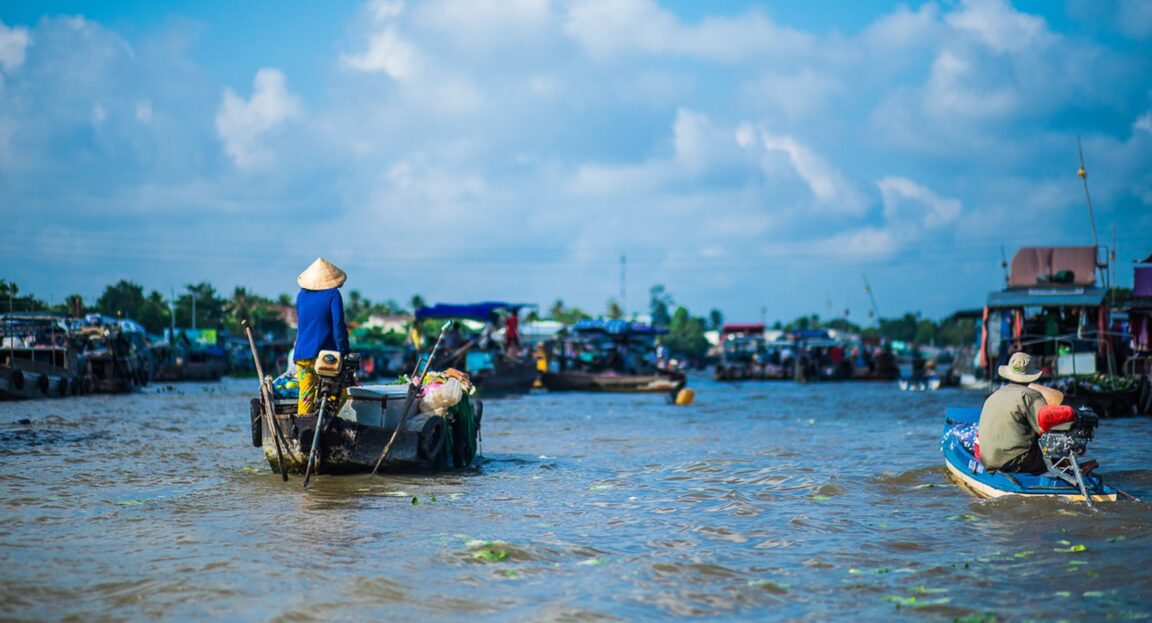
Floating market days start before dawn. Boats leave Ninh Kieu Wharf in central Can Tho for Cai Rang, about 30 minutes away by water, and the wholesale trading is largely done by mid morning. Sellers advertise their goods by tying a sample to a tall bamboo pole on the boat, a system worth knowing before arrival so the market reads as a working wholesale hub rather than a show. The morning kit lives in a 10 to 20 liter dry bag and contains the following.
- Sun hat with a brim and a chin strap: Open water doubles sun exposure and boat wind removes loose hats. A strap is not a style choice here.
- Reef safe sunscreen and lip balm with SPF: Applied before boarding, because there is no shade to retreat to once the boat leaves the wharf.
- One liter refillable bottle: Filled the night before. Dawn departures leave before most shops open, and heat management starts with water already in hand.
- Small dry pouch for phone and cash: Spray, dripping produce and the occasional wake make a sealed pouch essential. Carry small notes for coffee and breakfast bought boat to boat.
- Light scarf or sarong: Shade for shoulders, a cover for temple stops, a towel after spray, and a layer against aggressive bus air conditioning.
- Hand sanitizer and tissues: Market breakfasts are eaten on boats and at dockside stalls. This small pair handles most of it.
- Compact power bank: Dawn photography, translation apps and ride hailing drain batteries in the heat. A charged bank in the dry bag keeps the return trip simple.
How do you manage heat in the middle of the day?
The local rhythm is the strategy: dawn markets, late morning rest, and a second outing toward evening. Pack so that rhythm is easy. An electrolyte sachet or two per day, carried from home or bought in Can Tho pharmacies, replaces the salt and fluid lost on boat mornings far better than water alone. A small folding fan or a battery neck fan is not a gimmick in April; on a still canal at noon it is the difference between coping and wilting. A change of top kept in the day bag matters as much as any gadget, because arriving at lunch soaked through is normal in hot season and a dry shirt resets the whole afternoon.
Base choice helps. Staying near Ninh Kieu Wharf makes the dawn start a short walk instead of a pre dawn taxi, which is the strongest argument for the riverfront over cheaper rooms across town. For the food side of a delta base, our Hanoi food guide covers the northern classics, while the delta table runs to river fish, sour soups and orchard fruit bought at the markets this kit is built for. Travelers continuing upriver can pair this list with our guide to Luang Prabang, the slow Mekong town in Laos, where the same dry bag and sun shirt earn their place again.
What should stay home?
Leave jeans, heavy hoodies and any jacket with insulation. Leave a large hard suitcase: delta travel involves boats, small guesthouses and bus stations where a soft bag that can be carried up a gangplank wins every time. Leave a full size towel, because hotels and homestays provide them and a sarong covers travel gaps. Leave expensive jewelry and a laptop unless work demands them; heat, water and dawn starts punish fragile kit, and this trip rewards traveling light and rinsing clothes nightly.
Frequently Asked Questions
When exactly is hot season on the Mekong edge?
The hottest stretch runs from about March to May, inside and just after the December to April dry season. April is typically the warmest month in Can Tho, with average highs near 34 degrees Celsius and peaks that can reach 36 to 37 degrees. March offers similar heat with slightly lower humidity and the most sunshine.
Do I need a rain jacket in hot season?
Bring a light shell, not a heavy waterproof. March and April are dry season months with little rain, but late April can bring early thunderstorms as the wet season approaches. A packable shell also blocks wind on dawn boat rides and overcooled bus air conditioning.
What time should I leave for Cai Rang floating market?
As early as the boats allow. The market trades from dawn and winds down by about 8 to 9 a.m., and the ride from Ninh Kieu Wharf takes about 30 minutes. Staying overnight in Can Tho rather than day tripping from Ho Chi Minh City is what makes the dawn start realistic.
How many outfits do I actually need for a week?
Four to five tops and two bottoms, washed in rotation, cover a week comfortably in fast drying fabrics. Delta hotels and homestays commonly offer quick laundry, and every item on this list was chosen to dry overnight. Packing a fresh outfit per day is the overpacking this list exists to prevent.
Is a dry bag really necessary for a river trip?
Yes. Spray on open boats, wet docks, dripping produce and sudden showers all threaten phones, cash and a change of clothes. A 10 to 20 liter dry bag inside the main bag protects the essentials on boat mornings and doubles as a laundry bag on land days.
Last updated November 2026. Climate norms checked against Can Tho weather station tables and market timings checked against current delta sources on the day of writing.