 Lucas Meyer
Use Interlaken as a transport hub and a lakeside base, not as the destination itself, and give each valley its own full day: Lauterbrunnen on one day, Grindelwald on another, a lake boat on a third morning, and Harder Kulm only at the edges of the day. Almost every expensive Interlaken mistake comes from ignoring that structure. Travellers try to combine both valleys in a single day, buy the wrong pass before they know which mountains they will actually ride, sail the wrong lake at the wrong hour, or spend the best light of the day in the Harder Kulm funicular queue. This guide names those errors in the order they usually happen, with the train times, pass prices and seasonal dates checked against the operators today, so the fixes land before any money is spent.
Quick Facts
- Base logic: Interlaken sits between Lake Thun and Lake Brienz, with two stations. Interlaken Ost is the hub for Lauterbrunnen, Grindelwald, the Jungfraujoch and Lake Brienz boats. Interlaken West serves Lake Thun boats and mainline trains.
- Valley trains: Interlaken Ost to Lauterbrunnen takes about 20 minutes and Interlaken Ost to Grindelwald about 35 minutes, with departures roughly every 30 minutes on the Berner Oberland Bahn. The train splits at Zweilutschinen, so board the correctly labelled section.
- Harder Kulm: The viewpoint stands at 1,322 metres above Interlaken. The funicular ride takes about 10 minutes from the valley station near Interlaken Ost. Jungfrau Railways lists the Harder Railway ticket from CHF 19 one way, with return fares around CHF 44 at full price in the current season listings.
- Jungfrau Travel Pass: From CHF 165 for the shortest validity in Jungfrau Railways listings, covering 3 to 8 days of trains, buses, boats and mountain railways in the region, including Harder Kulm. Check the exact days and price for your dates before buying.
- Season: Harder Kulm operates roughly from April to late November. Lake boats and mountain railways run reduced or no service outside their seasons, so a winter plan cannot copy a summer one.
- The one rule: One valley per day. Lauterbrunnen and Grindelwald connect via Zweilutschinen, not over the mountain, and combining them halves both.
What is the biggest mistake visitors make with Interlaken?
The biggest mistake is treating Interlaken itself as the sight. The town is a practical, pleasant base with supermarkets, laundries, late trains and hotels at every price, but its streets are not why anyone crosses an ocean. The value of the base is what radiates from Interlaken Ost: two valleys, two lakes and a chain of mountain railways, all within 35 minutes. Travellers who spend a full day shopping on the Hoheweg and riding nothing have paid alpine prices for a shopping street. Travellers who treat the town as a well run dormitory and spend every daylight hour in the valleys or on the lakes get the trip they thought they booked. Plan Interlaken evenings, not Interlaken days.
Why should you never combine Lauterbrunnen and Grindelwald in one day?
Because the geography punishes it. Lauterbrunnen lies about 20 minutes from Interlaken Ost in one direction, Grindelwald about 35 minutes in another, and the two villages connect only back through Zweilutschinen, roughly 20 to 25 minutes apart by train with a change. A combined day therefore burns well over an hour in valley trains before any mountain railway, waterfall or hike has started. Worse, each valley deserves a different rhythm. Lauterbrunnen is a waterfall valley: the walk under Staubbach Falls, the Trummelbach Falls inside the mountain, and the cable car up to Murren and Wengen all reward slow, vertical exploration. Grindelwald is a glacier amphitheatre: First, the Eiger Trail and the gondola network reward an early start and a long mountain day. Splitting the difference produces the classic bad day: a rushed photo in each village, a queue in both, and the best hike in neither. Give each valley its own date on the calendar and protect those dates from add ons.
Which pass should you buy, and when should you buy it?
Buy the pass after the itinerary, never before it. The common error is purchasing the biggest pass at the airport because it feels decisive, then discovering that half its coverage duplicates a Swiss Travel Pass already in hand, or that the stay is too short to ride enough lifts to break even. The working order is this. First, fix the valley days and name the mountain railways you will genuinely ride: Harder Kulm, First, Schynige Platte, Mannlichen, the Jungfraujoch. Second, count the lake boats. Third, compare the Jungfrau Travel Pass, which Jungfrau Railways sells for 3 to 8 consecutive days from CHF 165 at the shortest validity and which includes Harder Kulm and the regional boats, against paying point to point with a Half Fare Card. Travellers riding two or more mountain railways on most days usually win with the regional pass. Travellers taking one big mountain day and spending the rest walking valley floors usually win without it. The Jungfraujoch itself is the trap inside the trap: passes discount or part cover the journey rather than making it free, so read the connecting ticket price for your pass before assuming the summit is included.
What goes wrong with the lake boats?
Three things. First, the lakes are served from different stations: Lake Brienz boats leave from Interlaken Ost, Lake Thun boats from Interlaken West, and confusing the two has stranded many travellers on the wrong side of town at sailing time. Second, boats are seasonal and infrequent compared with trains, so a plan that treats a boat as a casual hop fails the moment a sailing is missed; check the BLS timetable for your exact date and build the day around one named departure. Third, travellers sail at midday, when the light is flat and the decks are fullest. The better play is an early or late sailing paired with a lakeside stop such as Giessbach Falls on Lake Brienz or Spiez and Thun on Lake Thun, using the boat as transport between sights rather than as a floating queue. If a pass is in hand, confirm boats are covered on your sailing, because coverage varies by pass and by season.
When is Harder Kulm a tourist trap, and when is it worth it?
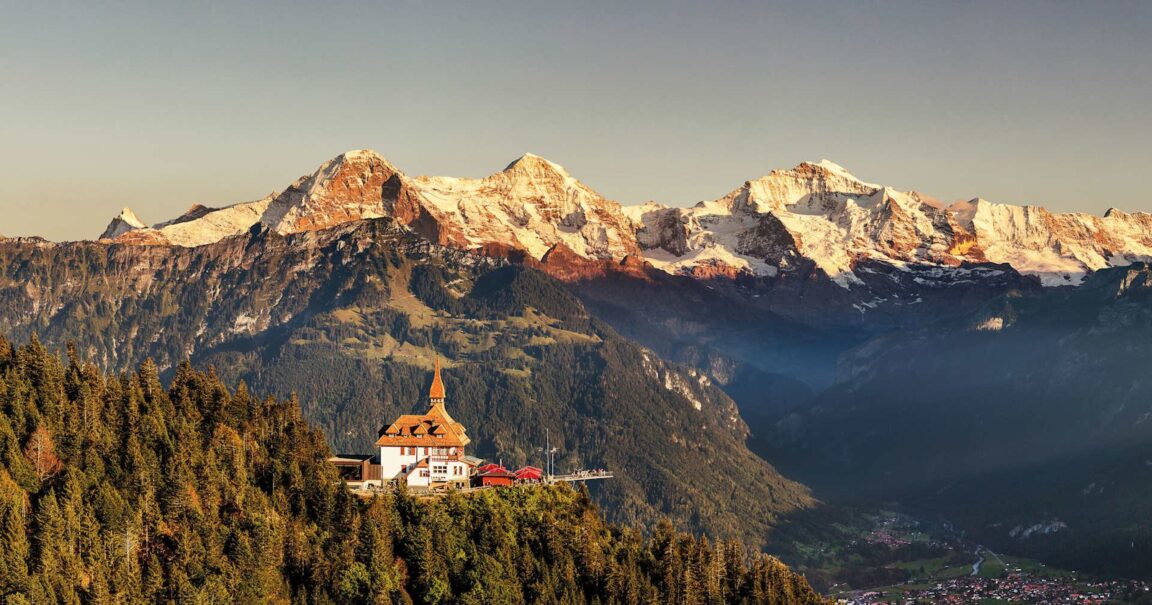
Harder Kulm is a good viewpoint sold at the worst possible hour. The funicular climbs from near Interlaken Ost to 1,322 metres in about 10 minutes, and the Two Lakes Bridge platform looks down on both lakes with the Eiger, Monch and Jungfrau ahead. That is a genuinely fine view. The trap is timing: arriving late morning in high season means the longest queue of the day for a platform that takes 30 to 60 minutes to enjoy, at the exact hours the valleys are at their best. The fixes are simple. Go on the first funicular of the day, or go late for sunset light when the day crowds have left and the restaurant terrace earns its keep. Use a pass that includes it, such as the Jungfrau Travel Pass, rather than paying the full return fare for a short visit. And never let Harder Kulm displace a valley day: it is a one hour edge of day excursion, not a headline. Travellers short on time can also weigh it honestly against Schynige Platte or a lakeside walk, which give more walking for similar effort.
What other Interlaken mistakes cost money?
Several smaller ones recur. Staying near Interlaken West while planning dawn starts from Ost adds a daily cross town transfer; match the hotel to the station your days actually use. Riding to the Jungfraujoch without checking the summit weather wastes the most expensive ticket in the region on a whiteout; the webcams and forecast should decide the day, and flexible travellers swap valley days to suit. Ignoring the train split at Zweilutschinen puts travellers in the wrong valley entirely, so read the destination board on each section of the train before boarding. Finally, driving is usually the slowest option here: parking is limited and priced, while the trains run every 30 minutes and drop you at the lift stations. For more on building a mistakes first checklist for a harbour town day trip, see our guide to mistakes to avoid in Ocracoke village, and for another European base town that rewards slow days over box ticking, see our Kotor travel guide.
Frequently Asked Questions
How many days do you need in Interlaken?
Three full days is the working minimum: one for Lauterbrunnen, one for Grindelwald, and one shared between a lake boat, Harder Kulm and a weather dependent mountain railway. Four days adds a proper Jungfraujoch attempt with a spare day for cloud.
Is the Jungfrau Travel Pass worth it?
It is worth it when you ride mountain railways on most days and use the included boats and Harder Kulm. Jungfrau Railways lists it from CHF 165 for 3 to 8 days of regional travel. It is poor value for a stay built mostly on valley walks and a single lift ride, so price your named rides first.
Can you do Lauterbrunnen and Grindelwald in one day?
You can physically pass through both, at about 20 and 35 minutes from Interlaken Ost, but the combined day costs over an hour in valley trains and halves the time for waterfalls, lifts and hikes in each. It is the single most common Interlaken planning error.
What time should you visit Harder Kulm?
Take the first funicular up or go late in the day for sunset. Avoid the late morning peak, when queues are longest. The ride takes about 10 minutes and most visits last 30 to 60 minutes at the top.
Which station do the lake boats use?
Lake Brienz boats depart at Interlaken Ost and Lake Thun boats at Interlaken West. Check which lake your sailing is on before leaving the hotel, and confirm the seasonal BLS timetable for your date.
Featured image: The Harder Kulm restaurant and Two Lakes Bridge above Interlaken, with the Eiger, Monch and Jungfrau at sunset. Photo by Jungfrau Railways via jungfrau.ch, the official operator website.