 LeVar Thomas
Beyond the beach clubs, Comporta is a working estuary landscape, and it sequences like this: cycle the rice fields in the cool of the morning while storks and herons are feeding, take the Sado estuary by boat at the tide the operator chooses, not the hour you prefer, and end at the Carrasqueira stilt pier in the last light, when the water is up and the wooden walkways glow. Get that order right and the famous version of Comporta, the barefoot beach bars and design shops, becomes the frame rather than the picture. Get it wrong, by arriving at the pier at low tide at noon or booking a boat without asking about tides, and the quieter Comporta can look strangely empty.
Quick Facts
- Where: A village in the municipality of Alcacer do Sal on Portugal’s Alentejo coast, between the Sado Estuary Nature Reserve and the Atlantic, about 120 km south of Lisbon.
- Getting there: Roughly 90 minutes by road from Lisbon. A car or bicycle is essential once you arrive; the sights in this guide are spread along the estuary, not clustered in the village.
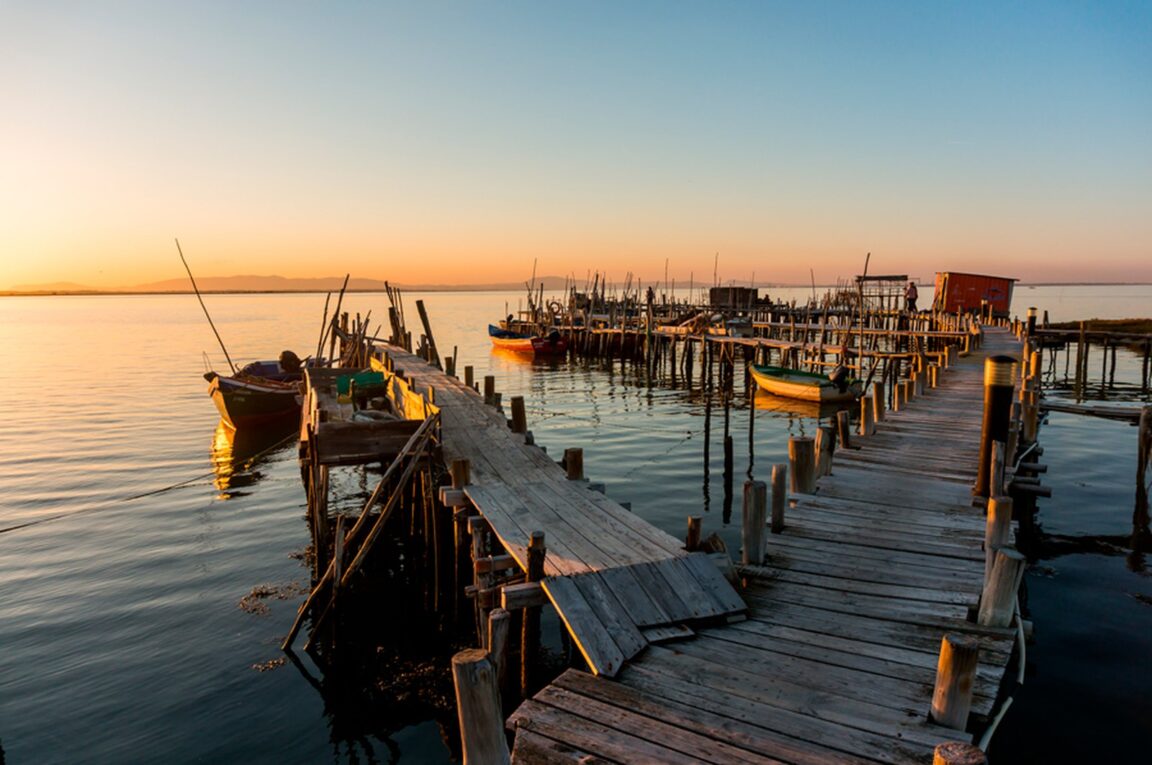
- Signature sight: The Cais Palafitico at Carrasqueira, a fishermen’s pier of wooden walkways on stilts over the Sado mudflats, a short drive south of Comporta village. Entry is free and the pier is open year round.
- Best pier timing: Late afternoon into sunset, ideally as the tide rises. At low tide the boats sit on mud, which is fascinating but very different.
- Wildlife: The Sado estuary holds a resident population of bottlenose dolphins, plus flamingos, storks, herons and egrets across the marshes and rice fields.
- Booking rule: Boat trips on the estuary are tide timed and some operators run only one sailing a day. Book the boat first, then build the day around its departure.
Why do the rice fields deserve the morning?
Comporta exists because of rice. The flat fields that run from the village toward the estuary were laid out across the Herdade da Comporta estate lands, and they still set the rhythm of the place: flooded and mirror bright in spring, deep green through summer, golden as the harvest approaches. Cycling them in the morning is the best introduction to the estuary Comporta that predates the beach clubs. The lanes are flat, the traffic is light, and the birdlife is active early: white storks picking through the shallows, herons and egrets along the channels, and in the right season the pink smudge of flamingos further out on the reserve. The village’s small rice museum tells the farming story for anyone who wants the context before riding, and the estate winery and rice heritage are covered in more depth in our guide to the wider Alentejo region south of Lisbon.
Keep the ride simple and honest. Rent the bike the evening before if you can, carry water, because the lanes have almost no shade, and ride out and back on the quiet roads between Comporta, Carrasqueira and the smaller hamlets rather than attempting a grand loop. Two hours is enough for a first morning. The point is not distance; it is arriving at the rest of the day understanding that the stilt pier, the dolphins and the seafood rice on every menu all come from the same working water you have just crossed.
What is the Carrasqueira stilt pier, and when should you go?
At Carrasqueira, a small fishing village a short drive south of Comporta, the Sado’s muddy banks made ordinary harbour building impossible: at low tide the water simply does not reach dry land. The community’s answer, built up from the 1950s and 1960s and still in daily use, is the Cais Palafitico, a harbour made entirely of irregular wooden walkways carried on stilts out over the mud. The official Herdade da Comporta history describes a port on wooden stakes serving local boats for generations, with zigzagging arms that let fishermen reach their boats with nets and tackle at any state of the tide. Along the walkways stand small fishermen’s huts, each slightly different, and the whole crooked structure is widely described as unique in Europe.
Timing transforms it. Go in the late afternoon, when the returning tide slides under the walkways, the moored boats float again, and sunset turns the estuary copper. Walk the full length slowly, watch how each branch serves a handful of boats, and stay on the boards: this is a workplace, not a set, and some planks and edges demand care, with no fences between you and the water. Entry costs nothing and the pier is open year round, so the only real decision is the hour, and the hour should be the last one of the day. Photographers should arrive well before sunset rather than at it, because the light on the huts and rigging is best while the sun is still above the Atlantic dunes behind you.
How do the Sado dolphin trips actually work?
The Sado is one of the few places in Europe with a resident population of bottlenose dolphins living year round in an estuary, and seeing them is the strongest reason to get on the water here. Boats run from Troia, from Setubal across the estuary, and from the Carrasqueira pier itself, where local operators time sailings to the tide. That last point shapes the whole booking: the channels off Carrasqueira are shallow, so departures follow high water, and at least one long running local operator offers only one sailing a day for exactly that reason. Ask about the tide first and the price second, keep the rest of the day flexible around the answer, and accept the operator’s honesty that dolphins are wild and sightings, while frequent, are never guaranteed.
On the water, a good trip reads the estuary like a map of the whole article: oyster beds and sandbanks, the rice field edges you cycled in the morning, the Arrabida hills closing the northern horizon, and the pier itself seen from its working side. Dress for wind even on a warm day, because the estuary breeze over open water is cooler than the beach, and bring the same patience you would bring to any wildlife watching. Travellers building a longer Portugal trip can pair this coast with our three day Lisbon itinerary, using the capital as the before or after, since Comporta works best with at least two nights of its own.
How many days do you need, and what order should you book things in?
Two nights is the minimum that does the quieter Comporta justice, because the sequence needs a full day: rice fields at dawn, a tide timed boat, the pier at sunset, and a table booked for seafood rice afterwards, with the beach as the flexible element that fills whatever space the tides leave. Three nights adds a second, slower cycle, perhaps a ride toward Carvalhal and Pego, a long beach morning, and a return to the pier in different weather. Book in this order: lodging first, since the best small places are limited; the boat second, as soon as the operator will confirm a tide time; a bicycle third; and dinner reservations last, because Comporta’s most wanted tables fill in season even though the village feels sleepy at noon. Details in this guide were checked against the Herdade da Comporta and destination sources on November 18, 2026; tides, sailings and opening patterns change, so reconfirm the boat and any seasonal venue close to the day.
Frequently Asked Questions
How far is Comporta from Lisbon?
About 120 km, or roughly 90 minutes by road depending on traffic and your exact start point in the capital. There is no useful rail station at Comporta itself, so almost every visitor arrives by car or transfer and keeps the car for the stay.
Is the Carrasqueira stilt pier free to visit?
Yes. The pier is a working fishermen’s harbour that visitors may walk without charge, open year round. Go at rising tide near sunset for the classic view, keep to the walkways, take care on uneven boards, and give working fishermen the right of way.
When is the best time of day for the rice fields?
Early morning, for three reasons: the light is low and the flooded fields mirror the sky, the birds that make the ride memorable are feeding actively, and the flat lanes have no shade once the Alentejo sun is up. Two unhurried hours by bicycle is the right dose for a first visit.
Can you guarantee seeing the Sado dolphins?
No operator can, and you should be wary of any that do. The Sado’s bottlenose dolphins are resident year round, which makes sightings frequent, but they are wild animals moving across a large estuary. Book with a licensed local operator, follow the tide timed sailing, and treat the estuary scenery as the guaranteed part of the trip.
Do you need a car in Comporta?
For this itinerary, yes, or at least a bicycle plus arranged transfers. The village, the rice lanes, Carrasqueira and the Troia ferry and marina are kilometres apart along the estuary, and public transport between them is too thin to sequence a day around.
What should you eat to understand the estuary?
Order the rice. Seafood rice and razor clam rice made with Comporta grown grain, plus estuary dishes such as fried cuttlefish and eel preparations in season, connect the plate directly to the fields and channels you have spent the day crossing.