 Maya Chen
Pack Tenerife in November as three trips in one bag: a warm south coast where AEMET long term averages give 24.8 degrees by day, a wet green north where November is one of the rainiest months, and a high volcano where the cable car climbs to 3,555 metres and daytime temperatures sit near 11 degrees before wind chill. The system that survives all three is layers, not bulk: swim kit and light clothes for the coast, a real waterproof shell and warm mid layer for the north and the mountain, and proper boots, hat and gloves for Teide. Pack those layers in one carry on sized bag and nothing in this guide requires a second case.
Quick Facts
- South coast in November (AEMET normals, Tenerife South airport): Average high 24.8 C, average low 18.2 C, about 2 rain days, sea temperature around 21 to 22 C. Swim kit still earns its place.
- North coast in November (AEMET normals, Tenerife North airport at 632 m): Average high 19.6 C, average low 13.3 C, about 8 rain days and roughly 81 mm of rain in the month, against about 26 mm in the south. A waterproof is not optional in the north.
- High altitude (AEMET Izana observatory, 2,371 m): November average high about 11.1 C and average low about 4.5 C. The gap between the south coast and the high mountain is roughly 14 degrees on the same day, before wind.
- Teide: Summit 3,718 m, the highest point in Spain. Cable car from 2,356 m to La Rambleta at 3,555 m. In November it runs 9am to 5pm, last ascent 4pm, and it closes in strong wind, ice or snow without much notice.
- Summit trail: The final Telesforo Bravo trail from La Rambleta to the crater needs a permit booked on the Tenerife ON platform, separate from the cable car ticket. Park rules for the high trails require long trousers, a warm layer and hiking boots.
- Bag strategy: One carry on sized bag, about 40 litres, built on a layering system. Wear the boots and the heaviest layer on the flight.
- Climate data: AEMET climatological normals (1981 to 2010 series for the airport stations; Izana series as published), checked 17 November 2026. Check the AEMET forecast and the cable car live status in the days before you travel, not the averages.
Why does one island need three wardrobes in November?
Tenerife is a steep island, and November is the month its microclimates pull furthest apart. The trade winds push cloud and rain against the north facing slopes, which is why the north airport records about 81 mm of November rain while the sheltered south records about 26 mm, and why La Laguna and the Anaga mountains can sit in damp cloud while Playa de las Americas is in full sun an hour away. Altitude does the rest. Temperature falls steadily as you climb from the coast through the pine forest to the Las Canadas caldera at over 2,000 metres, and by the upper cable car station you are in a high mountain climate with strong sun, thin air and cold wind on the same afternoon.
The packing mistake is to dress for the postcard. Travellers who pack only for the south coast shiver at the Teide viewpoints in shorts, buy an emergency fleece at resort prices, and skip the north entirely when the rain arrives. Travellers who pack only for the mountain waste half their bag on bulk they wear twice. The answer is a small set of layers that combine: a base that works on the beach path and under a shell, a warm mid layer that works in a northern cafe and at 3,555 metres, and a waterproof shell that works against Atlantic rain and summit wind alike.
What goes in the bag, item by item?
Build the bag in four kits. The coast kit is two swimsuits so one is always dry, a light cover up or shirt for beach clubs and hotel breakfasts, shorts or a skirt, two or three short sleeve tops, sandals, and a packable sun hat. November sea temperatures around 21 to 22 C are swimmable for most people, and south coast afternoons are warm enough that this kit gets used most days of a resort based trip.
The town kit covers the temperature drop after sunset and the cooler north: one pair of long trousers or jeans, one warmer top or light knit, and closed shoes you can walk cobbles in. Evenings in the south fall to about 18 C, and in Santa Cruz, La Laguna or Puerto de la Cruz you will want the layer by day as well as by night. This kit is also your flight outfit base, which saves the bag space it would otherwise take.
The rain kit is a proper waterproof shell jacket with a hood, not a shower resistant fashion layer, plus a compact umbrella if you plan town days in the north. Eight November rain days at the north airport is a monthly average, and northern rain tends to arrive as passing Atlantic fronts: heavy for an hour, gone by lunch. A shell that lives in your daypack handles all of it. Waterproof trousers are overkill for town trips but earn their place if you plan full days hiking in Anaga or the Teno mountains.
The mountain kit is the one people forget. For Teide, pack a warm insulated mid layer or fleece, a knitted hat, gloves, a neck gaiter or scarf, and sturdy hiking boots with grip, worn on the flight to save space. Add sunglasses and high factor sunscreen: at 3,555 metres the sun is fierce even when the air is cold, and the combination of wind burn and sunburn is the classic Teide souvenir. Park rules for the regulated high trails require long trousers, a warm layer and hiking boots, so this kit is not just comfort, it is the condition of being allowed on the summit trail at all.
How do you handle Teide day itself?
Dress at the hotel as if for a winter hike and carry the coast layers, not the other way round. Start in long trousers, base layer, mid layer and boots, with the shell, hat and gloves in the daypack. You will add layers as the cable car climbs and strip them off on the drive back down, which is exactly what a layering system is for. The operator limits time at the upper station to about an hour for standard tickets, longer with a summit permit, and the wind at La Rambleta is the coldest thing most November visitors meet all year.
Respect the altitude as well as the cold. La Rambleta sits at 3,555 metres, high enough for breathlessness and headaches, and the summit trail climbs to 3,718 metres. Walk slowly, drink water, and treat a headache as a reason to descend, not to push on. Children under 3 cannot ride the cable car, and anyone with heart or respiratory conditions should take medical advice before going up. Check the cable car live status on the morning itself: November storms can bring the first snow to the summit and close the cable car in wind, and a closed mountain day is the moment the north coast rain kit and a La Laguna food day save the itinerary. The same layer first thinking drives our Iceland winter packing system and our Patagonia windproof packing guide, both built for trips where one day crosses several climates.
What do people most often overpack or forget?
Overpacked, every time: dressy outfits for resort dinners that a smart town kit already covers, a second pair of fashion shoes, and a full size towel when hotels and beach clubs provide them. Forgotten, every time: the hat and gloves, because they feel absurd while packing in a warm apartment; a European plug adapter and a small power bank for long mountain days; and a dry bag or simple zip pouch that keeps the swim kit, wet from a last morning swim, away from everything else on the flight home.
One more November specific: a light layer for the flight and transfers that doubles as your northern evening layer. Coaches and the cable car visitor centre are air conditioned or cold by turns, and the traveller in a single outfit for a single climate spends the whole trip slightly uncomfortable. Pack the system, wear the heaviest pieces in transit, and one bag genuinely does the whole island.
Frequently asked questions
Can you swim in Tenerife in November?
Yes, especially on the south coast. AEMET averages give south coast highs of 24.8 C in November and sea temperatures around 21 to 22 C. The north coast is cooler and rougher, so choose sheltered beaches and natural pools there and respect local flags and advice.
How cold is Teide in November?
Cold. The AEMET station at Izana, at 2,371 m, averages a November high of about 11.1 C and a low of about 4.5 C, and the upper cable car station is more than 1,100 m higher again. With wind chill it can feel close to freezing. Snow is possible in late autumn.
Do you need hiking boots for Teide?
For the high trails, yes. Park rules require long trousers, a warm layer and hiking boots on the regulated trails, including the Telesforo Bravo summit trail, and staff can turn away walkers in trainers and shorts. For the cable car viewpoints alone, sturdy closed shoes are the sensible minimum.
Do you need a permit to go up Teide?
Only for the final summit trail. The cable car to La Rambleta and its viewpoint trails need no permit, but the Telesforo Bravo trail to the 3,718 m crater requires a permit booked in advance on Tenerife ON, separate from the cable car ticket, and daytime slots for non residents carry a fee.
Is November rainy in Tenerife?
In the north, yes; in the south, barely. AEMET normals record about 81 mm of November rain and about 8 rain days at the north airport, against about 26 mm and about 2 rain days in the south. Pack the waterproof for the north and for mountain days.
Can you do Tenerife in November with carry on only?
Yes, if you layer instead of duplicating. Wear boots and the warm layer on the flight, keep swim kit light, and let one shell serve for northern rain and summit wind. That system fits a standard 40 litre carry on bag.
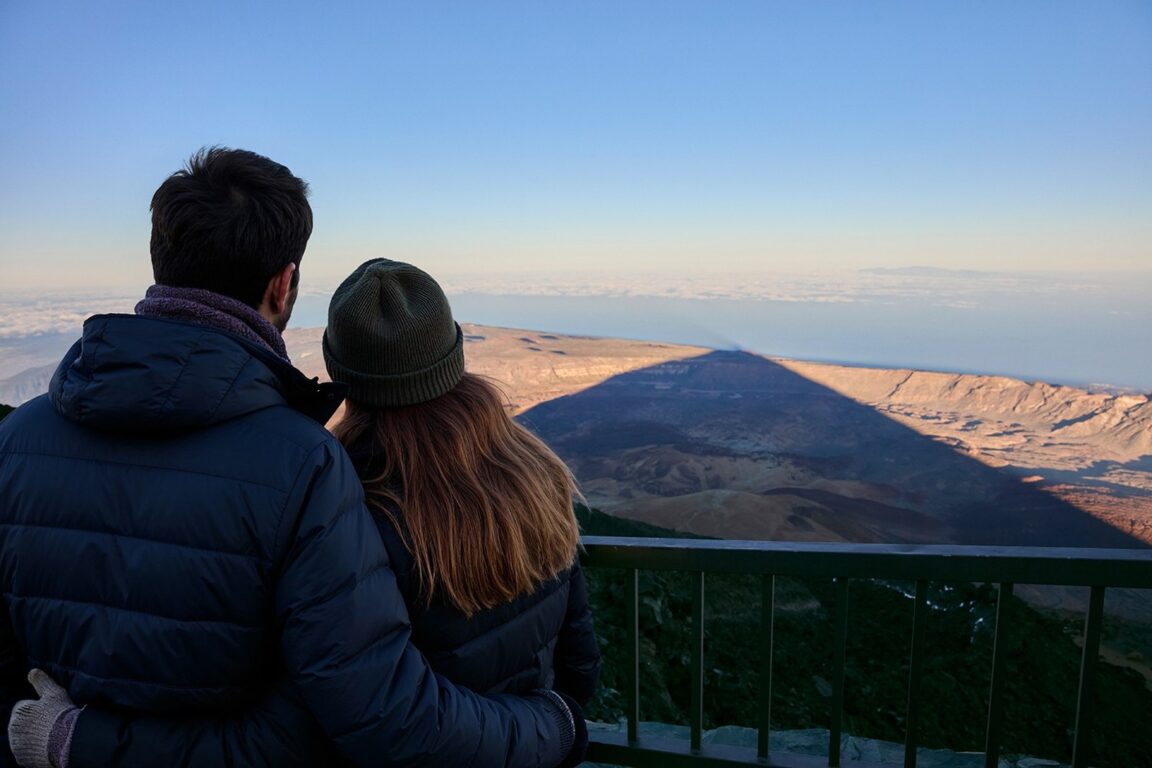
Climate figures are AEMET long term normals checked on 17 November 2026; cable car hours, permit and kit rules from the Volcano Teide operator and Tenerife ON. Forecasts change; check AEMET and the cable car live status before your Teide day. Featured image: visitors in insulated jackets at a Teide viewpoint above the Las Canadas caldera, from the official Volcano Teide website.