 Hana Kim
Pack for Porto in February by building the whole bag around rain: a waterproof shell with a hood, waterproof shoes with grip for wet cobbles, and warm mid layers you can add or remove between a cold cellar, a windy bridge and a heated train to the Douro. February is one of the wettest and coolest months in Porto, so the winning system is not a heavy winter coat. It is a dry outer layer, dry feet and three light insulation options that rotate. Pack that, plus one smarter outfit for dinners, and a carry on is enough for a week.
Quick Facts
- Destination: Porto, Portugal, on the Douro River at the Atlantic coast
- Trip window covered: February, the heart of the rainy season
- Typical conditions: Daytime highs usually in the mid teens Celsius, nights several degrees cooler, with frequent rain and river wind
- Core system: Waterproof hooded shell, waterproof walking shoes, merino or synthetic base layers, one warm mid layer
- Ground conditions: Steep cobbled streets in Ribeira and Baixa that turn slippery when wet
- Key extras: Compact umbrella as backup only, dry bags for electronics, a packable tote for port wine purchases
- Bag strategy: One carry on plus a personal item is realistic if shoes are limited to two pairs total
What Is the Weather in Porto in February, Really?
February in Porto is a late winter month on the Atlantic edge of northern Portugal. Rain is a regular part of the week rather than an occasional event, and showers often arrive in bands: a bright morning, a grey squall off the river in the afternoon, then a clear and chilly evening. Temperatures are mild by northern European standards but feel colder than the numbers suggest because of damp air and wind funnelled along the Douro. Plan for daytime highs in the mid teens Celsius and nights that drop toward the high single digits.
The practical consequence is that warmth is rarely the main problem. Wet is. A traveller who stays dry in a 13 degree shower is comfortable; a traveller in a soaked cotton coat at the same temperature is miserable within the hour. Every choice in this kit list follows from that single fact, and it is also why locals dress in layers with a proper rain shell rather than in one thick winter jacket.
For a wider sense of how a Portugal trip fits together in the cooler months, the 3 Days in Lisbon itinerary shows the same layering logic working further south, where February runs a touch milder but just as changeable.
Which Outer Layer Handles River Rain Systems Best?
The centrepiece of the bag is a waterproof shell jacket with a hood, sealed seams and a fit that allows a fleece or light insulated jacket underneath. Water resistant is not enough for Porto in February: wind driven rain on the Dom Luis I Bridge or along the Ribeira waterfront will find its way through a merely showerproof coating. A shell that reaches mid thigh adds real protection on exposed riverside walks.
Under the shell, pack one warm mid layer, ideally a light insulated jacket or a substantial fleece, and treat the two as a system. On dry, bright days the mid layer alone is often enough for sightseeing. On wet days the shell goes over it. On the coldest mornings, a merino base layer joins them. That three piece stack replaces a bulky winter coat, packs smaller, and adapts to the hour by hour swings that define a February week in Porto.
An umbrella still earns a small place in the bag, but as a backup for short hops between nearby stops, not as the main defence. River gusts make umbrellas unreliable on bridges and miradouros, and a hood keeps both hands free for railings on steep, wet lanes.
What Footwear Survives Wet Cobbles and Steep Lanes?
Porto is a vertical city. The historic centre climbs from the Douro through Ribeira and Baixa in a series of steep lanes, stairways and sloping squares, much of it paved with cobbles and stone setts that become slick in the rain. Footwear is therefore a safety decision as much as a comfort one. Pack waterproof walking shoes or ankle boots with a lugged rubber sole and genuine tread, broken in before the trip.
Limit the bag to two pairs total: the waterproof walkers worn on the plane, and one lighter, smarter pair for evenings if space allows. Smooth soled dress shoes are a poor match for wet stone and can be left at home without regret. A few pairs of merino wool socks complete the system: wool stays warm when damp, resists odour on a week of repeats, and dries overnight on a heated towel rail, which many Porto hotels provide in winter.
Travellers combining Porto with the countryside further south will find the same footwear logic applies in the Alentejo, covered in the Alentejo travel guide, where winter field paths reward grip and waterproofing in equal measure.
How Should the Rest of the Bag Be Built?
With the rain system settled, the rest of the bag is a simple rotation. Pack three to four tops in merino or technical fabrics that layer cleanly, two pairs of trousers in dark colours that hide rain splashes and pair with everything, and one smarter outfit for dinners in Baixa or a tasting menu evening. February crowds are thinner and restaurants are relaxed about dress, but a neat knit and clean shoes carry most evenings.
Use this checklist as the base build:
- Shell: Waterproof hooded jacket with sealed seams
- Insulation: One fleece or light insulated mid layer
- Base layers: Three merino or synthetic tops, one long sleeved for cold mornings
- Bottoms: Two pairs of trousers, quick drying fabric preferred
- Footwear: Waterproof walking shoes with tread, plus one optional smarter pair
- Socks and smalls: Four to five pairs of merino socks, underwear for the trip length or a laundry plan
- Sleep and lounge: Light pyjamas, since hotel heating can run warm
- Dry kit: Two dry bags or zip pouches for phone, charger and documents
- Extras: Compact umbrella, packable tote, reusable water bottle, EU plug adapter (Type F)
Portugal uses Type F plugs and 230 volt power, so travellers from North America need an adapter and should confirm any hair tools are dual voltage. A small power strip or multi port USB charger helps in older buildings where sockets near the bed can be scarce.
What Changes for Cellar Visits and a Douro Day Trip?
The port wine cellars sit across the river in Vila Nova de Gaia, reached by walking the lower deck of the Dom Luis I Bridge or riding the metro one stop. Cellars are working wine stores: interiors are kept cool and slightly humid year round, so the February visitor steps from a mild street into a noticeably chilly, dim hall. Keep the mid layer on for tours, and expect stone floors that reward the same grippy shoes worn for the lanes.
A Douro Valley day trip, usually by train from Sao Bento or Campanha stations toward Pinhao, adds two packing notes. First, the valley can run a few degrees colder than the coast in winter, especially in the morning, so the full shell, mid layer and base layer stack earns its place. Second, trains and station platforms involve waiting in exposed, windy spots: a warm hat and gloves, unnecessary on a mild Porto afternoon, become genuinely useful on a February morning platform. Both items weigh almost nothing and should simply live in the shell pockets for the whole trip.
The layering approach mirrors the one set out in the Morocco winter packing system, where a single bag also has to span cold mornings, mild afternoons and one much colder excursion without growing a second suitcase.
What Should Stay at Home?
Leave the heavy winter parka, which will spend most of a Porto February either too warm indoors or damp at the cuffs. Leave cotton hoodies and jeans as the only trouser option: cotton holds water, dries slowly in hotel rooms and chills quickly in river wind. Leave the third pair of shoes, the full size umbrella and the just in case formal outfit. February Porto rewards a tight, technical bag and punishes bulk, especially on the steep walk from the riverfront to an upper town hotel with a rolling suitcase on wet cobbles.
Also skip packing a swimsuit on speculation. The Atlantic at Foz do Douro is a spectacle in February, with storm surf drawing walkers to the lighthouse breakwaters, but it is a viewing experience in a shell jacket, not a swimming one.
Frequently Asked Questions
Is February a bad time to visit Porto?
No. It is the rainy season, so expectations should be set for wet days, but the city is fully open, queues are short, cellar tours run, and prices for flights and hotels are typically lower than in late spring. With the right shell and shoes, the weather is a manageable condition rather than a trip spoiler.
Do I need a waterproof jacket or is an umbrella enough?
A waterproof jacket is essential. Umbrellas struggle in the wind along the Douro and on the bridges, and they occupy a hand needed for railings on steep lanes. Carry a compact umbrella as a backup for short, sheltered hops only.
How cold do the port cellars feel?
Cellars in Vila Nova de Gaia are kept cool to protect the wine, and they feel noticeably colder than the street in February. Keep a mid layer on during the tour and wear closed shoes with grip for stone floors.
Can I do Porto in February with carry on only?
Yes. The system in this guide, built on one shell, one mid layer and a rotation of quick drying tops, fits a standard carry on with room for a packable tote to bring port wine home in checked luggage on the return if needed.
What adapter does Portugal use?
Portugal uses Type F plugs with 230 volt supply. Visitors from North America and the UK need an adapter, and should check that chargers and appliances are rated for dual voltage.
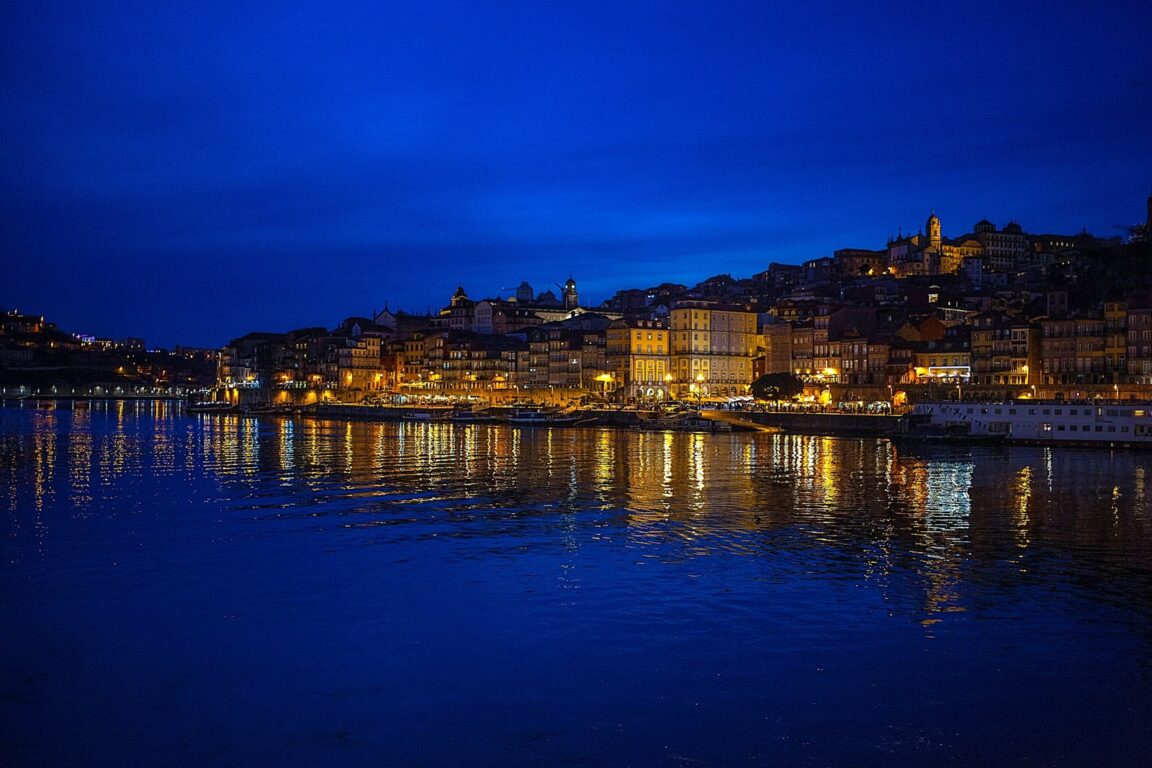
Featured image: Porto and the Ribeira waterfront across the Douro at dusk. Photo by Pier Francesco Grizi via Unsplash, Unsplash License.