 Rafael Santos
Do Ait Benhaddou slowly and in the right order: cross the Ounila River from the new village in the early morning, climb the lanes of the earthen ksar to the granary at the summit before the day trip buses arrive, then use Ouarzazate, 30 kilometres away, as your base for the Ounila Valley and the Kasbah of Telouet. The ksar itself is free to enter and open in daylight, individual restored kasbahs inside charge small fees of around 10 to 20 Moroccan dirhams, and the whole visit rewards two to three unhurried hours rather than the 40 minute photo stop most tours allow.
Quick Facts
- What it is: A fortified earthen village, a ksar, above the Ounila River in Ouarzazate Province, southern Morocco
- UNESCO status: World Heritage Site since 1987, listed as an outstanding example of pre-Saharan earthen architecture
- Entry: No official ticket for the ksar itself; some privately owned kasbahs inside charge about 10 to 20 MAD, and a small bridge contribution may be asked on busy days
- Best hours: Early morning and late afternoon for light, cooler temperatures and fewer tour groups
- Time needed: Two to three hours for the ksar and granary climb; a full day with Telouet and the Ounila Valley
- Distances: About 30 km from Ouarzazate and about 180 km, roughly four hours by road, from Marrakech over the Tizi n’Tichka pass
- Base choice: Sleep in the new village facing the ksar for sunrise and sunset, or in Ouarzazate for more hotels and restaurants
What exactly is a ksar, and why does this one matter?
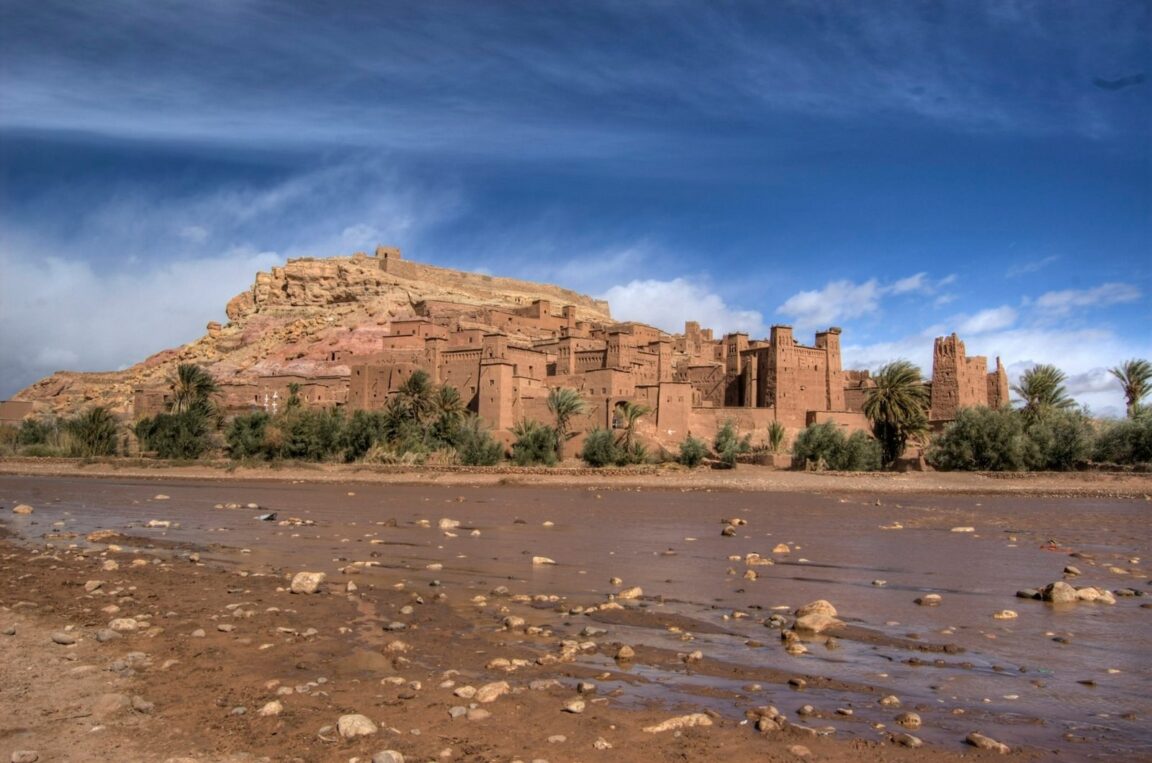
A ksar is a fortified collective village, built to protect families, food stores and trade goods on the caravan routes that once linked the Sahara with Marrakech. Ait Benhaddou is the most complete surviving example in Morocco: a dense stack of rammed earth and mudbrick houses, corner towers and kasbahs, family residences with decorated upper storeys, rising up a hillside to a communal granary, the agadir, at the top. UNESCO inscribed it in 1987, and its silhouette has since stood in for half the ancient world on screen, which is why so many visitors feel they have seen it before they arrive.
The important honesty note is that this is still a living place, not a museum set. A handful of families remain inside the old ksar, most residents now live in the new village across the river, and the buildings are maintained house by house. That is why there is no single ticket office and no fixed gate hours: you are walking through a village, and the small payments described below go to the households whose homes and rooftops you enter.
How do you get the order of the visit right?
Sequence is everything here. Start on the new village side, where the cafes and guesthouses face the ksar across the Ounila River, and take the classic viewpoint photograph first while the light is low and warm. Cross by the footbridge, or by stepping stones when the river is low, and enter the ksar at its base. Then climb steadily: the lanes wind upward past small galleries and carpet sellers, through covered passages, to the granary at the summit. The agadir is the point of the climb, a fortified storehouse with the widest view in the valley, taking in the ksar rooftops, the palm groves along the river and the road running south toward Ouarzazate.
Come down by a different lane if you can, and save any shopping for the descent, when you know how much time you have. Travellers pairing this visit with Morocco’s other great medina should read our guide to Fes and its car-free medina and tanneries, which uses the same early start logic to beat the crowds.
What will it actually cost on the ground?
Budget in small dirham notes and coins, because card payment is rare inside the ksar. Entry to the ksar lanes is free. A small contribution, around 10 MAD, may be collected at the footbridge on busy days. Two or three restored kasbahs inside charge roughly 10 to 20 MAD each, and they are worth it for the painted ceilings and rooftop views. A licensed local guide hired near the bridge typically costs around 100 to 200 MAD for an hour, and a good one transforms the visit, explaining which towers belonged to which families and how the earth walls are replastered after rain. Upper rooms and the granary approach pass sections maintained by individual families, where a modest contribution is standard and goes directly to upkeep.
How does the Telouet pairing work, and where does the High Atlas pass fit?
The classic mistake is to treat Ait Benhaddou as a lone stop on the Marrakech to Ouarzazate highway. The richer route follows the Ounila Valley north from the ksar toward Telouet, on the older caravan road that predates the modern pass highway. The valley is a string of palm oases, red earth villages and crumbling kasbahs, and at its head stands the Kasbah of Telouet, the mountain stronghold of the Glaoui family, whose reception rooms hold some of the finest painted cedar and tilework in southern Morocco despite the decay around them.
The order that works is this: cross the Tizi n’Tichka pass, above 2,200 metres, from Marrakech in the morning, branch into the Ounila Valley for Telouet first while you are fresh, then descend the valley to Ait Benhaddou for the late afternoon light, and sleep either facing the ksar or in Ouarzazate. Reversing that order puts you at the ksar in the harsh midday glare with every day trip bus in the region. Walkers continuing into the High Atlas itself should see our route guide to climbing Mount Toubkal, the two day Atlas trek, which starts from the same mountain system.
Should you sleep at the ksar or in Ouarzazate?
Sleep facing the ksar if photography or atmosphere is the priority. Guesthouses in the new village, and a rare few inside the old village itself, put you on a rooftop terrace at sunrise, when the earthen towers turn gold and you may have the lanes almost to yourself. Sleep in Ouarzazate if you want a larger hotel, a pool, more restaurants and an easier onward start toward the Dades Valley and the desert. Ouarzazate also holds the Taourirt Kasbah and the Atlas film studios, an easy half day that explains why this region became Morocco’s film capital. Either base works; what does not work is the long day trip from Marrakech, eight hours of mountain driving wrapped around a rushed hour at the site.
When is the best time of year to come?
October to April is the comfortable window, with warm days, cool nights and clear light. Spring and autumn are the sweet spots. Summer brings serious heat, with daytime temperatures that can pass 40 degrees Celsius in the valley, so a summer visit must be an early morning or evening one, with the middle of the day spent in shade. Winter days are bright and pleasant, but nights are cold and snow can occasionally slow or briefly close the Tizi n’Tichka pass, so build flex into a winter crossing and carry layers for the pass even when the valley below is in shirtsleeves.
Why does the ksar look so familiar from films?
Because cinema found it early and never left. The earthen skyline has served as an ancient world backdrop for decades of historical epics, biblical stories and fantasy series, and Ouarzazate down the road grew into a studio town, with Atlas Studios running guided tours through surviving sets of temples and palaces. That film fame is a mixed blessing: it funds restoration and brings work to the valley, but it also concentrates visitors into the middle of the day. The fix is simple and entirely in your hands. Arrive before the productions of the tour bus schedule do, or stay until they leave, and the ksar returns to what it actually is, a quiet fortified village above a river, with swallows over the towers and the granary watching the valley as it has for centuries.
Frequently Asked Questions
Is there an entrance fee for Ait Benhaddou?
There is no official ticket for the ksar itself, because it is a living village rather than a gated monument. Expect small charges inside: around 10 MAD at the footbridge on busy days and about 10 to 20 MAD for individual restored kasbahs. Carry small change and confirm any charge before entering a house.
How long does the climb to the granary take?
The lanes from the river to the summit agadir take roughly 20 to 30 minutes at a steady pace, with stops. Allow two to three hours in total for the crossing, the climb, one or two kasbah interiors and the descent.
Can you visit Ait Benhaddou as a day trip from Marrakech?
You can, but it is about four hours each way over the High Atlas pass, so the day is mostly driving. Staying one night at the ksar or in Ouarzazate turns a rushed photo stop into the best evening and morning light of the trip.
What should you wear and carry inside the ksar?
Sturdy shoes with grip, because the lanes are steep, uneven and dusty, plus a hat, water and sun protection. Modest dress is respectful in a living village, and you should always ask before photographing residents.
Is Telouet worth the extra driving?
Yes, if you have the day. The Kasbah of Telouet is partially ruined, but its decorated reception rooms are extraordinary, and the Ounila Valley drive between Telouet and Ait Benhaddou is one of the most scenic secondary roads in southern Morocco.
Photo credit: Ait Benhaddou ksar across the Ounila River. Photo by Markus Wagner on Unsplash, Unsplash License, via the captioned cover credit on Moroccanly.