 Thandiwe Nkosi
Eat Gdansk at its other table by starting where the city itself eats lunch: the bar mleczny, the subsidised milk bar canteen, where pierogi ruskie, soups and compote cost a fraction of a restaurant meal and the ordering system is half the experience. Then work outward in order: a dedicated pierogarnia for oven baked pierogi, a Baltic fish kitchen for herring served three ways, in oil, in cream and as rolmops, and a finish of Goldwasser, the gold flecked liqueur Gdansk has made since the age of amber and grain ships. That sequence, milk bar first and herring last, is the city’s real food circuit.
Quick Facts
- Where: Gdansk, Poland, in and around the Main Town, Granary Island and the Motlawa waterfront.
- The institution: The bar mleczny, or milk bar, a state subsidised canteen tradition serving Polish home cooking at low prices.
- The order system: Read the Polish menu board, order and pay at the till, take your ticket, collect your tray when your number or dish is called, and clear your tray afterwards.
- The benchmark dish: Pierogi ruskie, filled with twarog curd cheese, potato and fried onion.
- The Baltic test: Herring, sledz, served in oil with onion, in cream, and as rolmops, a pickled fillet rolled around onion and gherkin.
- The finish: Goldwasser, Gdansk’s herbal liqueur flecked with real gold flakes, from the city’s distilling tradition.
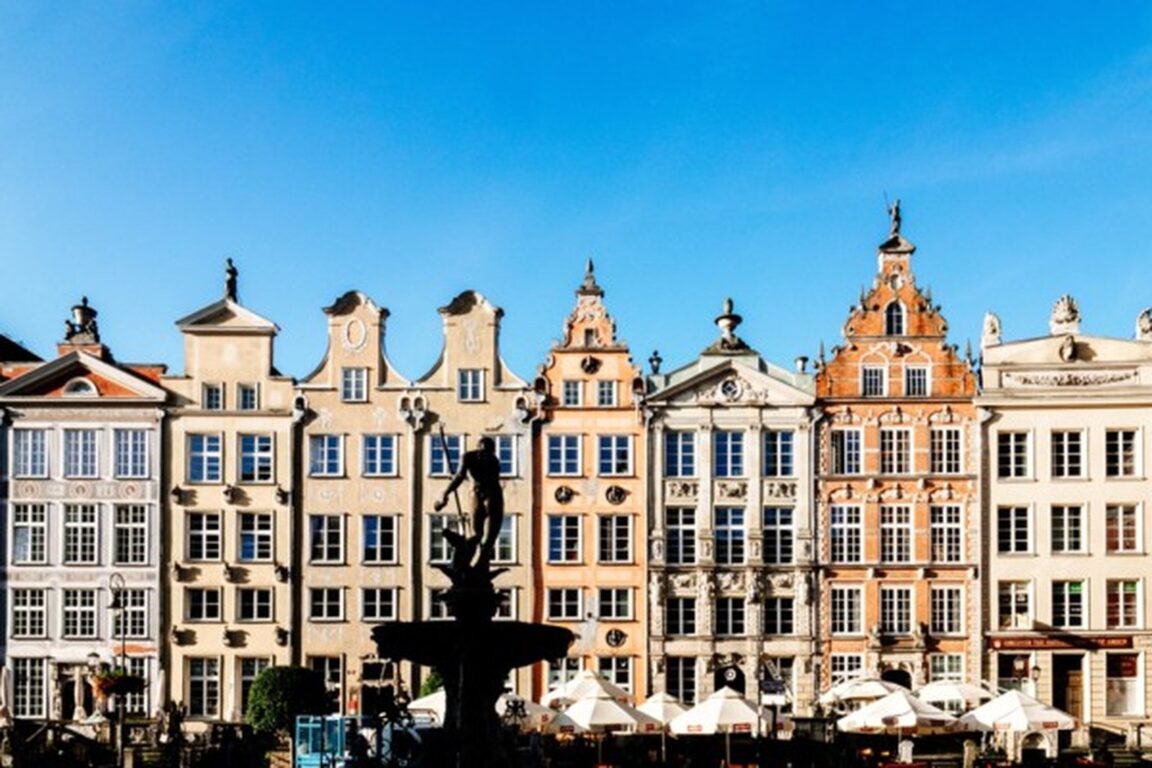
- The setting: Dlugi Targ and the Royal Way, covered as a walk in our Gdansk travel guide.
How does a Gdansk milk bar actually work?
The bar mleczny is a survival from the communist era that Poland never gave up, because the maths still work: the state subsidises the dairy and staple ingredients, and the canteen serves a full home style lunch for the price of a coffee in the Old Town. The name comes from the original meat free, dairy based menus. Today’s milk bars serve the whole Polish home repertoire, but the format has not changed, and the format is what first time visitors need to understand before they walk in.
There is usually no table service and often no English menu. The day’s dishes are listed on a board in Polish behind the counter. You order and pay at the till, receive a ticket or a number, and wait until your dish is called or your number is shown, then collect it on a tray from the hatch. Drinks such as kompot, the stewed fruit drink that is the milk bar’s signature, come from the counter. When you finish, you return your tray to the rack. It is fast, loud at peak hours, and entirely democratic: shipyard workers, students, office staff and visitors all queue at the same hatch.
In Gdansk, a useful central example is Bar Mleczny Stagiewna on Stagiewna Street on Granary Island, a short walk over the footbridge from the Main Town, listing pierogi, bigos, the slow cooked sauerkraut and meat stew, golabki, cabbage rolls, and kopytka, potato dumplings, among its staples. Go at the edge of the lunch rush rather than in the middle of it, have your order ready before you reach the till, and learn the handful of Polish dish names in this article before you go. That small preparation turns a confusing queue into the best value meal in the city.
What should you order first: pierogi ruskie, and how are they made?
Pierogi ruskie are the benchmark because the filling leaves nowhere to hide: twarog, the fresh Polish curd cheese, mashed with potato and fried onion, seasoned hard with salt and pepper, wrapped in a thin wheat dough and boiled, then usually finished with more fried onion and a spoon of sour cream. The name means Ruthenian pierogi, after the historical region the dish came from, and despite generations of jokes it has nothing to do with Russia. A good plate is tender, peppery and rich without being heavy, and it is the plate every Gdansk kitchen is quietly judged by.
At a milk bar, pierogi come boiled and honest. For the second pierogi experience, go to a pierogarnia, a dedicated pierogi restaurant, where the range widens and the cooking changes. Pierogarnia Stary Mlyn on Swietego Ducha Street in the Main Town is known for pierogi from the oven, piecuchy, baked until the dough blisters, alongside the boiled classics and plates such as potato pancakes with barszcz, the clear beetroot soup. Order ruskie first for the comparison, then branch into seasonal and regional fillings, and share plates so the table can range widely without ordering blindly.
Two practical rules apply everywhere. First, pierogi are priced and portioned as a main course in Poland, not a starter, so a full plate plus soup is a complete lunch. Second, the milk bar version and the pierogarnia version are not rivals. One is the weekday original, the other is the craft interpretation, and eating both is the point of the exercise.
Why is herring the Baltic test, and which three ways should you try?
Gdansk was built on Baltic trade, and herring was its working cargo and its working food for centuries. The fish still anchors the local table, and the three preparations form a neat tasting order from cleanest to richest. Start with sledz w oleju, herring in oil with sliced onion, where the quality of the fish itself is completely exposed. Move to rolmops, a pickled fillet rolled around onion and gherkin, sharper and more acidic, the classic drinking snack of the port taverns. Finish with sledz w smietanie, herring in cream, often with apple and onion, which softens the salt and vinegar into something closer to a salad.
Order the three as a shared starter in a fish restaurant on or near the Motlawa waterfront, with rye bread and a small glass of something cold, and you have the Baltic in one course. The Motlawa embankment and Granary Island, where the grain warehouses that made the city rich have been rebuilt as restaurants and hotels, are the natural places to do it. Herring also explains the city’s older food geography: this was a Hanseatic port that exported grain and imported salt fish culture from the whole Baltic world, and its table still shows both directions of trade.
If herring converts you, keep going with the wider Baltic list in season: fried or baked cod and flounder from the day boats, and zander where it appears. But the herring trio remains the test, because a kitchen that handles its sledz properly can be trusted with everything else.
What is the amber finish: Goldwasser and the Gdansk table after dark?
The traditional finish is Goldwasser, the clear herbal liqueur flecked with flakes of 22 carat gold that Gdansk distillers have produced since the sixteenth century, when the city was one of Europe’s richest ports and its merchants wanted a drink that showed it. The gold does nothing for the flavour, which is aniseed, herbs and spice, and everything for the theatre: the flakes swirl when the bottle is turned. Order a single small glass at the end of a herring meal rather than a round of shots, and treat it as a history lesson you can drink.
Goldwasser also ties the meal back to the city’s other famous golden trade, amber. The shops of Mariacka Street, the prettiest lane in the Main Town, sell Baltic amber a few streets from where you will eat, and the whole food circuit, milk bar, pierogi, herring, liqueur, sits inside a fifteen minute walk. For a wider Polish context, pair this circuit with the old town eating in our three days in Krakow itinerary, where the same milk bar tradition runs in parallel.
How should you sequence a full day of eating in Gdansk?
Breakfast lightly, because the day builds. Make the milk bar your lunch, early in its service, and order soup, pierogi ruskie and kompot as the full traditional set. Spend the afternoon walking the Royal Way and the Motlawa to earn the evening. Take the pierogarnia as an early supper or a shared snack stop, tasting the baked pierogi against the morning’s boiled ones. Then give dinner to herring: the trio to start, a Baltic fish main if you have room, and one glass of Goldwasser to close. Nothing on that list needs booking except a popular fish restaurant on a summer weekend, and the most important reservation is simply arriving at the milk bar before the lunch queue peaks.
Frequently Asked Questions
What is a bar mleczny?
A bar mleczny, or milk bar, is a subsidised Polish canteen serving traditional home cooking at low prices. The format dates from the communist era and survives because the value is unbeatable: order at the till, collect your tray when called, and clear it yourself afterwards.
Do I need Polish to order in a milk bar?
No, but a little helps. Menus are usually Polish only boards, so learn the key dish names before you go: pierogi ruskie, bigos, golabki, barszcz and kompot cover the classics. Pointing and smiling also work, and staff in central Gdansk bars are used to visitors.
What are pierogi ruskie filled with?
Twarog curd cheese, mashed potato and fried onion, seasoned with salt and plenty of black pepper. They are boiled and served with more fried onion and sour cream. Despite the name, the dish is Polish and Ruthenian in origin, not Russian.
What are the three classic ways to eat herring in Gdansk?
In oil with onion, which shows the fish at its cleanest; as rolmops, a pickled fillet rolled around onion and gherkin; and in cream, often with apple and onion. Ordering all three as a shared starter is the classic Baltic tasting.
What is Goldwasser?
A clear herbal liqueur made in Gdansk since the sixteenth century, flecked with flakes of real gold. The flavour is aniseed and spice; the gold is pure theatre, a souvenir of the era when Gdansk was one of Europe’s richest trading ports.
How much does a milk bar lunch cost compared with a restaurant?
Far less. Milk bars are subsidised and built for weekday lunches, so a soup, a main plate of pierogi and a kompot typically cost a fraction of the same dishes in a Main Town restaurant. Prices change, so check the board on the day rather than relying on any printed figure.