 Thandiwe Nkosi
Eat Kuching in the order the city itself does: Sarawak laksa first, at breakfast, because the best kopitiam stalls sell out by mid morning; kolo mee second, as the any time bowl, ordered white before red so you taste the original before the sweeter char siu sauce version; and kek lapis, the striped Sarawak layer cake, as the finish and the thing you carry home. Kuching, a UNESCO Creative City of Gastronomy since 2021, runs its food day early and around Carpenter Street, so the whole circuit, laksa, noodles, layer cake, fits into one morning walk from the waterfront.
Quick Facts
- Where: Kuching, capital of Sarawak, Malaysian Borneo, centred on Carpenter Street, Jalan Ban Hock and the old town by the Sarawak River waterfront.
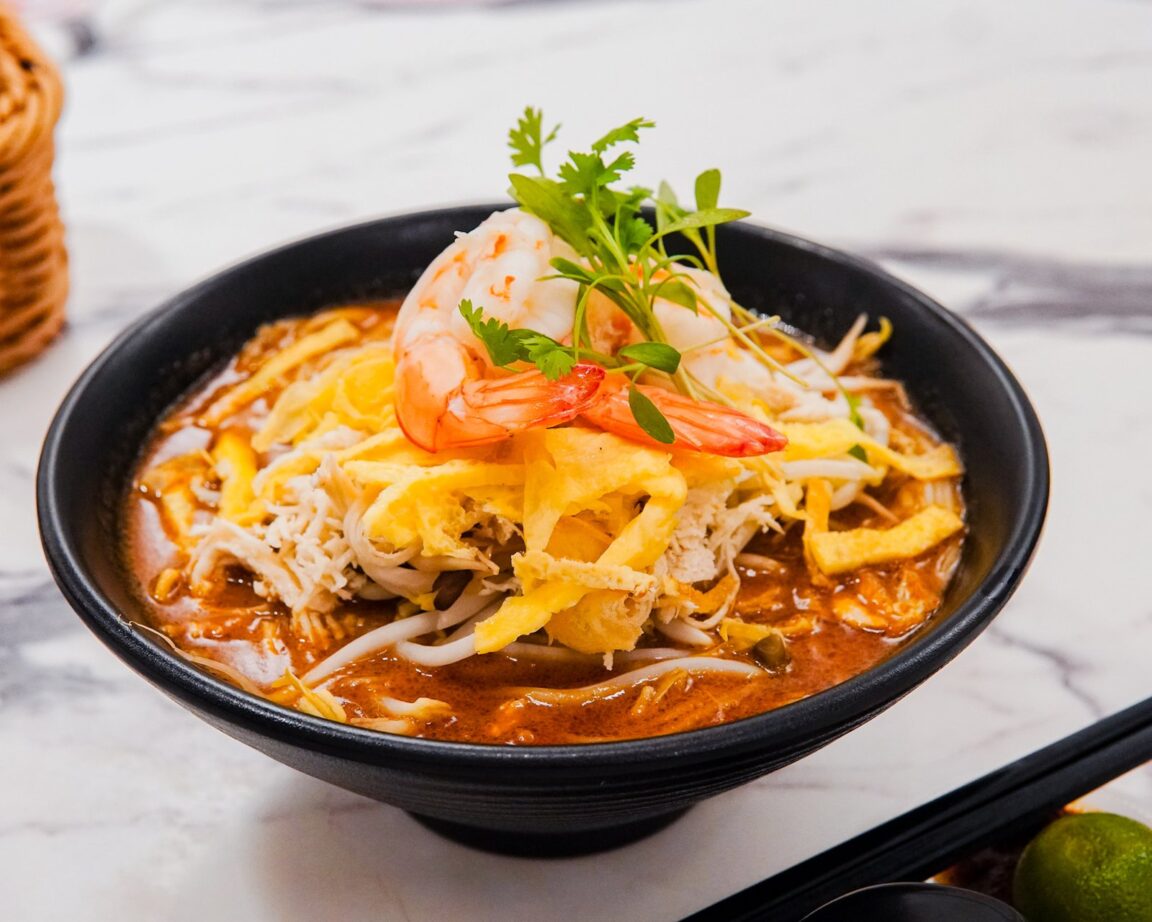
- The first bowl: Sarawak laksa, rice vermicelli in a spiced prawn and coconut broth with shredded chicken, prawns, omelette strips and bean sprouts, served with sambal and lime.
- The second bowl: Kolo mee, springy dry egg noodles tossed in shallot oil with minced pork and char siu, ordered white (original) or red (with char siu sauce).
- The timing rule: Laksa is a breakfast dish. The famous stalls open early and the laksa is often gone by mid morning.
- The finish: Kek lapis, Sarawak layer cake, baked layer by layer in vivid stripes and sold by the loaf and the slice.
- The base: Carpenter Street and the old town lanes, a short walk from the waterfront sights in our Kuching riverfront and orangutan guide.
- Arrival form: International visitors file Malaysia’s digital arrival card, the MDAC, before landing, explained in our Malaysia MDAC entry form guide.
Why is Sarawak laksa not curry laksa?
Because the broth is built differently, and the first spoonful proves it. The Sarawak Tourism Board describes the base as a stock from chicken bones and prawn shells and heads, enriched with laksa paste and finished with coconut milk. Tourism Malaysia’s Sarawak food guide lists the paste’s aromatics: turmeric, lemongrass, galangal and chillies with shrimp paste. The result is spiced, fragrant and only moderately rich, closer to a deeply seasoned prawn broth than to the thick curry laksa of the peninsula or the coconut heavy laksa of Singapore. There is no curry powder hit and no fish cake and cockle garnish. Instead the bowl arrives with rice vermicelli under shredded chicken, peeled prawns, strips of omelette and bean sprouts, with coriander over the top, a halved lime and a spoon of sambal belacan on the side, so you set your own heat and acidity.
The Sarawak Tourism Board also records the dish’s most famous review: Anthony Bourdain called Sarawak laksa the breakfast of the gods, and he returned to Kuching’s Choon Hui Cafe on Jalan Ban Hock for it more than once. Treat that as your ordering instruction. Laksa here is breakfast, eaten in a kopitiam with a strong coffee or teh C, and the day’s supply is finite. The best known stalls, Choon Hui and Chong Choon, both on the Jalan Ban Hock strip, draw queues from early morning, and when the pot is finished, it is finished.
To eat it properly, squeeze the lime in first, stir the sambal through a spoonful at a time rather than all at once, and eat it hot and immediately. The vermicelli softens fast, the sprouts are meant to stay crunchy, and the broth’s balance of prawn, spice and coconut is at its clearest in the first minutes.
What is kolo mee, and should you order it white or red?
Kolo mee is Kuching’s other essential bowl and its everyday one. Tourism Malaysia traces the name to the Cantonese gon lo, meaning dry mix, and the Sarawak Tourism Board describes the method: springy egg noodles, lightly cooked, then tossed in flavourful oil with fried shallots and topped with barbecued pork, minced pork, or in other versions fish or prawns. There is no broth in the bowl. The seasoning is the dish, a light gloss of shallot oil and savoury sauce that coats each strand, with a small bowl of soup and pickled chillies alongside in many shops.
The choice that defines your order is white or red. White kolo mee is the original, dressed only in the shallot oil seasoning, pale and savoury, the version purists defend. Red kolo mee is tossed with the sweet red sauce from the char siu, which stains the noodles pink and adds a caramel sweetness. Order white first, on your first morning, so your palate has the baseline; order red the next day and decide which camp you are in. Kuching people hold strong views on this, and stating yours politely is a reliable way to start a conversation in any kopitiam.
Halal versions exist across the city, made with chicken or beef instead of pork and without lard in the dressing, and Tourism Malaysia lists halal kolo mee cafes among its Kuching recommendations. If that matters to your table, ask before ordering, because the default bowl in a Chinese kopitiam is the pork version.
Where does Carpenter Street fit into the morning?
Carpenter Street is the old town’s working spine, a shophouse street of trades, temples and coffee shops running behind the waterfront, and it is where the food morning strings together. The Lau Ya Keng food court, just past the Harmony Arch on Carpenter Street, puts kolo mee, Sarawak laksa, fish ball soup and pork satay stalls under one roof, which makes it the practical choice for a group that cannot agree on a single bowl. The satay stall opens in the early afternoon, so a late lunch there covers more of the menu than a breakfast visit.
Work the street slowly. Have laksa at one of the Jalan Ban Hock institutions first, while the pots are still full. Walk it off along the waterfront and Main Bazaar, then take kolo mee as the second breakfast Kuching fully approves of, either in a Carpenter Street kopitiam or at Lau Ya Keng. The old town is compact enough that the river, the temples and the next bowl are never more than a few streets apart, which is exactly how the city eats: little and often, on foot, early.
What is kek lapis, and why is it the correct finish?
Kek lapis is Sarawak’s layer cake, and it is edible architecture. Tourism Malaysia describes a batter of butter, eggs, sugar and flour, flavoured and coloured, baked one thin layer at a time, ten to more than twenty layers, then cut and arranged so the cross section shows stripes, chevrons and geometric patterns. It is the festive cake of Sarawak, served at Eid, Chinese New Year, Gawai and weddings, and sold all year by dedicated bakeries in and around the old town and across the river in Kampung Gersik.
As a finish to the food morning it does two jobs. A slice with coffee is the sweet full stop after two savoury bowls, and a boxed loaf is the souvenir that survives the flight home better than any other Kuching food. Buy a mixed box if a bakery offers one, because the flavours, from original spiced to chocolate and pandan styles, vary more than the stripes suggest. Ask for the cake to be wrapped for travel, and carry it in hand luggage rather than checking it into a hot hold.
How should you plan a Kuching food day?
Set an alarm. The entire circuit depends on being at a kopitiam table early, ideally soon after the laksa stalls open, because the dish that defines the city is a morning dish with a hard sell by date. Eat laksa first, kolo mee second, and leave kek lapis shopping for the way back to the waterfront. Keep the afternoon for the museums, the river and the old town streets, and if you are staying a second day, repeat the circuit with the colours reversed: red kolo mee, a different laksa stall, and the layer cake flavour you did not take home the first time.
Frequently Asked Questions
What is the difference between Sarawak laksa and curry laksa?
Sarawak laksa uses a prawn shell and chicken bone stock with a spice paste of lemongrass, galangal, turmeric, chillies and shrimp paste, finished with a moderate amount of coconut milk. It is fragrant and spiced rather than curry thick, and it is served over rice vermicelli with shredded chicken, prawns, omelette strips and bean sprouts, with sambal and lime on the side.
Why do people eat laksa for breakfast in Kuching?
Because that is when it is made. Kopitiam laksa stalls open early, cook a finite pot of broth, and often sell out by mid morning. Anthony Bourdain famously called it the breakfast of the gods, and Kuching has taken him literally ever since.
What does kolo mee mean, and what is in it?
The name comes from the Cantonese gon lo, dry mix. Springy egg noodles are tossed in shallot oil and savoury seasoning and topped with minced pork and slices of barbecued char siu pork. Halal versions swap in chicken or beef.
Should I order kolo mee white or red?
White first. The white version is the original, dressed only in shallot oil seasoning. The red version is tossed with sweet char siu sauce, which colours and sweetens the noodles. Try both on different mornings and pick a side.
Where is the best place to start eating in Kuching?
Start on Jalan Ban Hock, where Choon Hui Cafe and Chong Choon Cafe are the city’s most cited laksa addresses, then walk to Carpenter Street, where the Lau Ya Keng food court by the Harmony Arch serves laksa, kolo mee and more under one roof.
What food should I take home from Kuching?
Kek lapis, the Sarawak layer cake. It is baked layer by layer in coloured stripes, sold by the loaf and slice at bakeries around the old town and in Kampung Gersik across the river, and it travels well in hand luggage when wrapped for the flight.