 Sofia Rossi
A week in Georgia costs roughly $350 to $600 per person at a comfortable mid-range level, excluding international flights, and it can fall well below that for travellers who use Tbilisi’s guesthouses and the marshrutka minibuses that stitch the country together. Georgia remains one of the great value destinations in Europe’s orbit: a handsome capital with inexpensive hotels, mountain villages reached for the price of a coffee in many capitals, and a wine region where the splurge line is a family cellar lunch rather than a tasting menu. This guide prices the standard week, Tbilisi plus Kazbegi plus a Kakheti wine day, line by line, checked on 20 November 2026.
Quick Facts: What a Week in Georgia Costs
- Comfortable mid-range total: about $350 to $600 per person for seven days, excluding international flights
- Budget total: about $180 to $280 per person with guesthouses, marshrutkas and khachapuri economics
- Currency: the Georgian lari (GEL); cards are widely accepted in Tbilisi, cash rules in the mountains
- Tbilisi beds: family guesthouses and small hotels in the Old Town and Mtatsminda undercut international chains by a wide margin
- Kazbegi: a shared marshrutka up the Georgian Military Highway costs a fraction of a private car, and the overnight stay beats the day trip
- Marshrutka maths: intercity minibuses are the cheapest transport in the country and leave when full from hubs such as Didube in Tbilisi
- Splurge line: a Kakheti winery day with a supra feast is the one upgrade most travellers rate worth it
- Prices checked: 20 November 2026, against georgia.travel guidance and current operator and property rates
What does a day in Tbilisi actually cost?
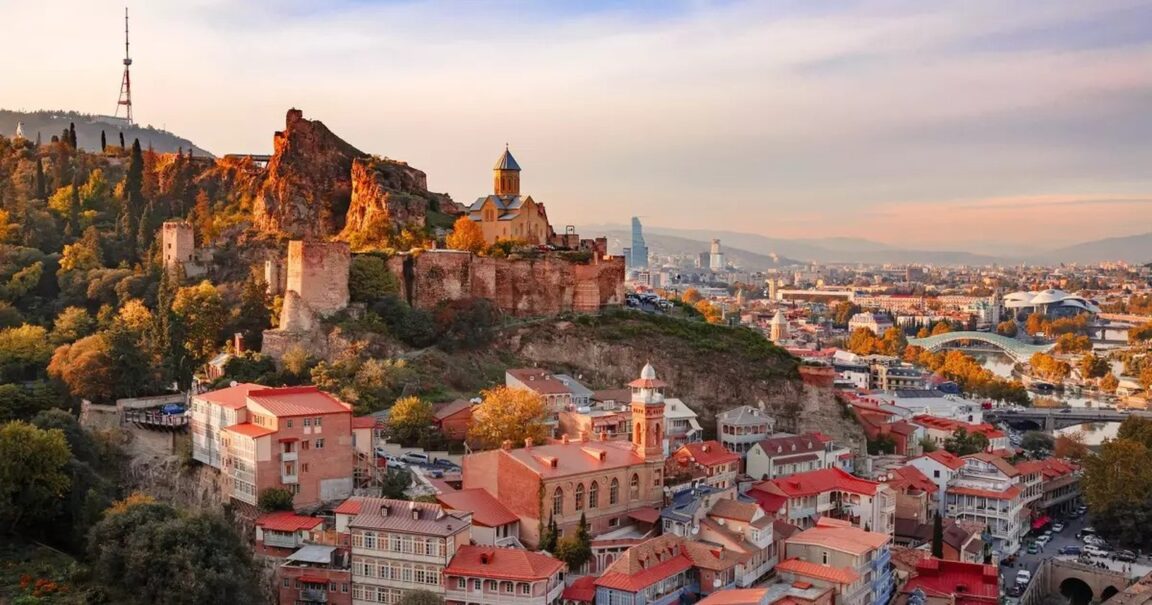
Tbilisi is where the week’s economics are set, and they are friendly. A characterful guesthouse or small hotel room in the Old Town, Sololaki or Mtatsminda generally runs $30 to $60 a night, with smart boutique properties at $70 to $120 and true luxury above that. Eating is the city’s joy and its bargain: a khachapuri and a coffee for a few lari, a full dinner of khinkali, salads, mtsvadi and Georgian wine in a good local restaurant for the price of a modest lunch in Western Europe. The metro and buses cost small change per ride, the cable car up to Narikala Fortress is priced as public transport rather than an attraction, and most of the Old Town’s pleasures, the sulphur bath district of Abanotubani from outside, the leaning clock tower, the Mtkvari river walks, are free. A mid-range couple in Tbilisi, beds and food and city transport included, spends roughly $80 to $130 a day between them before excursions. For where that food budget goes furthest, see our guide to eating in Batumi and on the Black Sea coast, and for the city’s other great ritual, our guide to Tbilisi’s sulphur baths.
Guesthouse or hotel: where should the bed budget go?
Georgia’s guesthouse tradition is the budget traveller’s quiet advantage. Family run houses in Tbilisi and in Stepantsminda below Kazbek often include a breakfast that behaves like a feast, owners who will reorganise your mountain transport over coffee, and rooms that are simple rather than stylish. Hotels buy you predictability: lifts, desks, soundproofing and staff at midnight. The pattern that suits most weeks is guesthouses in the mountains, where the welcome is part of the stay, and a small hotel in Tbilisi, where late arrivals, luggage and early airport runs reward a front desk. In Stepantsminda the price step that matters is not luxury but the view: rooms facing Mount Kazbek and the Gergeti Trinity Church carry the premium, and on a clear morning they earn it.
Kazbegi as a day trip or an overnight: which is better value?
Stepantsminda, the town beneath Mount Kazbek, is about three hours from Tbilisi up the Georgian Military Highway, one of the great road journeys of the Caucasus, past the Zhinvali reservoir, the Ananuri fortress and the Gudauri ski heights. As a day trip it is a long haul: six or more hours of road for a few hours in the mountains, and a real risk that Kazbek, famously shy, stays in cloud for exactly your window. The marshrutka from Tbilisi’s Didube station makes the day trip cheap, and a private car with stops makes it comfortable, but the overnight changes the maths entirely. Stay one night and you get two chances at a clear dawn, time to walk or ride up to Gergeti Trinity Church at 2,170 metres, and an evening in a village that empties of day trippers. Per lari spent, the overnight is the best value decision in the whole Georgian week; the day trip is the false economy.
How does the marshrutka maths work across the country?
The marshrutka, the shared minibus, is Georgia’s real national network. From Didube and the other Tbilisi hubs, marshrutkas leave for Kazbegi, Kakheti’s towns, Kutaisi, Batumi and the regions, generally departing when full rather than to a printed timetable, at fares that undercut every other mode by a wide margin. The trade-offs are comfort, luggage space and certainty: seats are snug, stops are where passengers ask, and the last departure of the day is a fact to learn in the morning, not the evening. The hybrid pattern most travellers settle on is marshrutkas for the straightforward legs, a hired driver for the wine day or a multi stop mountain day, and the overnight train or a domestic hop for Batumi if the week stretches to the coast. None of this needs booking apps or advance planning beyond asking your guesthouse the current departure point and first and last times, which change and which locals always know.
Where is the wine region splurge line, and is it worth crossing?
Kakheti, east of Tbilisi, is Georgia’s wine heartland, the home of qvevri winemaking in clay vessels buried in the earth, a method recognised by UNESCO. A day in Kakheti can be run at almost any budget: marshrutka to Telavi or Sighnaghi and cellar doors on foot at the bottom, a hired driver threading family wineries and the Alaverdi monastery in the middle, and a full supra, the Georgian feast, with a tamada toastmaster and course after course at the top. This is the splurge that earns its place. The difference between a cheap tasting and a family cellar lunch is not snobbery; it is the difference between sampling a product and being received into the culture that made it, and per person it usually costs less than the Tbilisi hotel upgrade travellers buy without thinking. Sighnaghi, the walled hill town facing the Alazani valley and the Greater Caucasus, pairs naturally with the wine day as its overnight, and its guesthouses are among the best value beds in the country.
What does the standard week cost, added up?
Cost the classic week honestly. Four nights in Tbilisi and two in Stepantsminda, or three and two with a Sighnaghi night, at guesthouse to small hotel level. Marshrutkas for Kazbegi and the Kakheti leg, or one hired driver day shared between a couple or a small group for the wine country. Food at local restaurants with one supra as the feast. City transport, the cable car, a sulphur bath session in a private room, and entry to the handful of ticketed sights. At mid-range that lands between $350 and $600 per person for the week, with the swing factors being the Tbilisi hotel tier and how much driving you hire. Drop to full budget mode, dorms or simple guesthouses, marshrutkas everywhere and bakery economics, and $180 to $280 is realistic without missing Kazbegi, Kakheti or a single khachapuri. Georgia’s gift to the budget is that the cheap version of the week is not a lesser version; it is, in the mountains and at the feast table, often the same one.
Frequently asked questions about Georgia trip costs
How much money do I need for a week in Georgia?
Plan on roughly $180 to $280 per person in budget mode, $350 to $600 at a comfortable mid-range level, excluding international flights. The biggest variables are your Tbilisi hotel tier and how much private driving you hire; food, city transport and marshrutkas are inexpensive throughout.
Is Kazbegi better as a day trip or an overnight stay?
Overnight, clearly. The day trip means six or more hours on the Georgian Military Highway for a short mountain window, while one night in Stepantsminda doubles your chance of seeing Mount Kazbek clear and gives you time to reach Gergeti Trinity Church without rushing.
How do marshrutkas work for visitors?
Marshrutkas are shared minibuses that leave from hubs such as Didube in Tbilisi when full. Fares are low and paid in cash, luggage space is limited, and the essential local knowledge is the first and last departure of the day, which your guesthouse or hotel can confirm each morning.
Should I carry cash in Georgia?
Cards work widely in Tbilisi hotels, restaurants and shops, but carry lari in cash for marshrutkas, mountain guesthouses, markets and small villages. ATMs are easy to find in the capital and regional towns, less so in the high villages.
Where is the one splurge worth making in Georgia?
A Kakheti wine day built around a family cellar and a supra feast. It costs less than most hotel upgrades and delivers the experience travellers describe years later: qvevri wine, a tamada leading the toasts, and the Alazani valley below the Caucasus wall.
Prices checked on 20 November 2026 against georgia.travel and current property and operator rates. Lari pricing moves with exchange rates and season, so confirm the figure for your dates when you book.