 Jonas Lindqvist
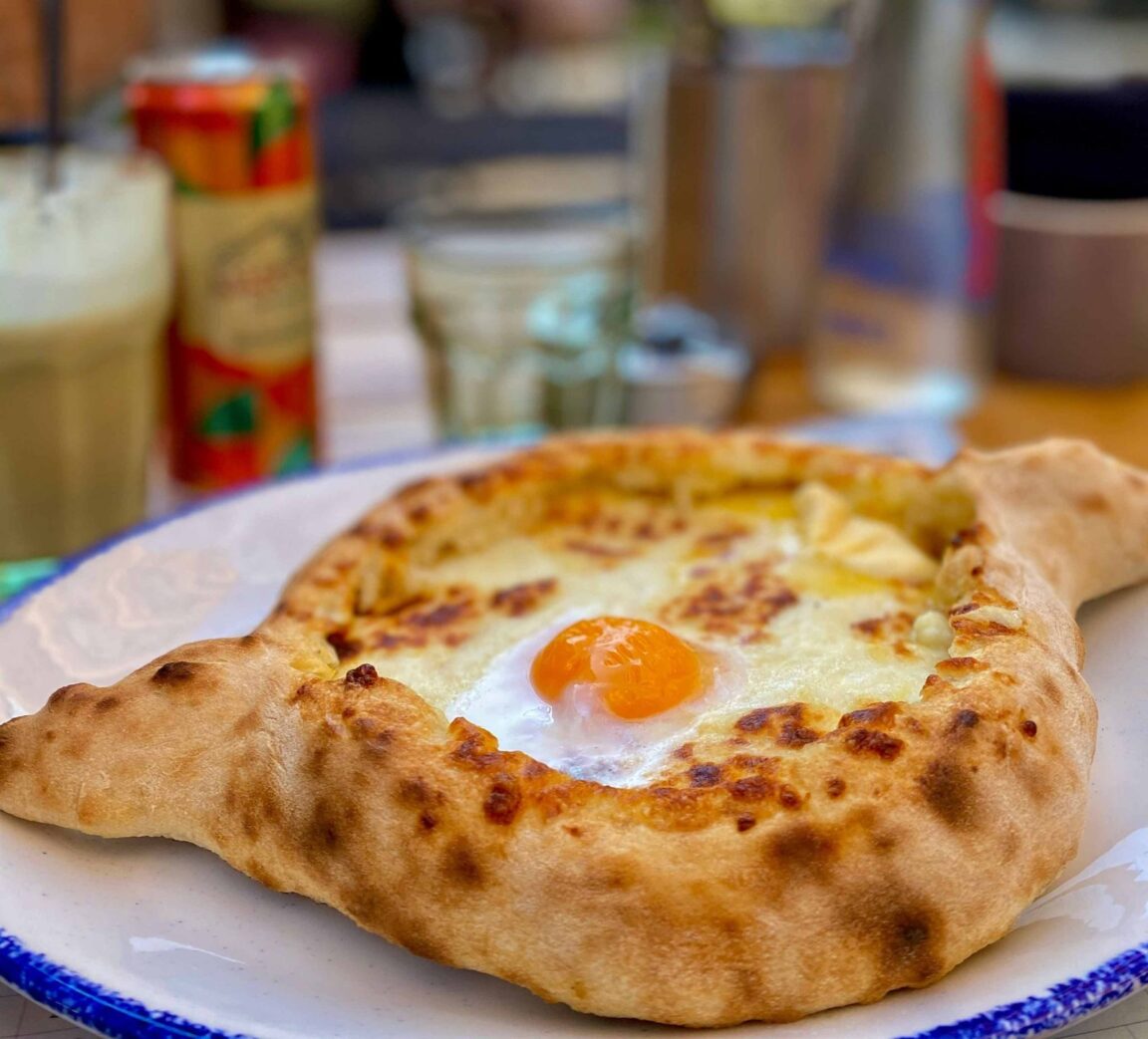
Batumi, the Black Sea capital of Adjara, is the one city in Georgia where a single dish sets the day’s timetable: the Ajarski khachapuri, an open boat of bread holding molten cheese, finished at the table with a raw egg yolk and a knob of butter that you stir in yourself within the first minute, before the cheese cools. Eat the boat at lunch, when the bakeries are in full flow. Keep the afternoon for sinori, the delicate rolled dough baked with fresh curd cheese, and borano, cheese melted into butter. Then end at the fish market, where the Batumi rule is the best in Georgia: choose your fish from the stalls, carry it to the small restaurants beside the market, and eat it cooked to order while the port works around you. Nothing here needs booking ahead except your own restraint at the first table.
Quick Facts
- Where: Batumi, the capital of Adjara, Georgia’s autonomous Black Sea region, close to the Turkish border.
- The signature dish: Ajarski, or Adjaruli, khachapuri, a boat shaped cheese bread finished with a raw egg yolk and butter, stirred together at the table.
- The highland pair: Sinori, thin dough rolls baked with nadughi curd cheese and butter, and borano, cheese melted in butter, eaten with bread or mchadi corn bread.
- The fish market rule: Buy your fish at the Batumi fish market and have it cooked for you at the restaurants next door.
- Book ahead: Nothing on this route. Bakeries, cafes and the fish market are walk in; the skill is ordering the right size of boat.
- Facts checked: 19 November 2026, against the Adjarian food guides linked below. Cafe prices are given as the current ordinary cafe range from those guides and will vary by size and room.
Why does the khachapuri change shape on the Adjara coast?
Khachapuri is cheese bread, and every region of Georgia shapes it differently. The round, sealed Imeruli from Imereti and the cheese topped Megruli are closed pies. The Adjarian version is open, and the Khinkali.com guide to eating in Batumi states the local claim simply: the famous boat shaped bread filled with melted cheese, topped with a raw egg yolk and a piece of butter, comes from Adjara, so Batumi is the place to try it. The boat is not decoration. Its raised, pointed ends hold a filling too liquid for a flat bread, and they become the handles you tear and dip once the centre is stirred.
The tradition carries formal weight in Georgia. The craft of making khachapuri was declared part of the country’s intangible cultural heritage on 22 January 2019, a status the Maspindzeli guide to Adjarian khachapuri records alongside the dish’s working details. In Batumi the boat is also a matter of civic identity, closer to a flag than a snack, which is why the order below starts with it and why the city argues about dough thickness and cheese blends the way other cities argue about football. For the capital’s table as a contrast, our Tbilisi travel guide covers the city where most visitors meet the other khachapuri styles first.
First: how do you eat an Ajarski khachapuri, and when is the egg timed right?
A good Ajarski arrives still moving: the cheese, a blend built on sulguni, the stretchy, brined cheese, with a milder fresh cheese for balance, bubbles gently in the boat, and the yolk and butter land in the centre in the last moment before serving. The timing rule the whole dish turns on is the first minute. Stir at once, while the cheese is at its hottest, working the yolk and butter through the filling with a fork until the centre turns glossy and uniform. Wait too long and the yolk stays raw in patches while the cheese beneath it sets. Stir promptly and the residual heat cooks the yolk into the sauce it is meant to become.
Then eat from the ends inward. Tear off a piece of the crusty pointed end, dip it deep into the stirred centre, and work around the boat, tearing and dipping, until only the base remains, soaked in butter and cheese and, by general agreement in Adjara, the best bite of the dish. Hands are correct for the tearing; a knife and fork are for the stirring and for anyone who wants them, and no one in Batumi will blink either way. One practical warning, repeated by every local guide because every visitor needs it once: a standard boat is a full meal for one adult, and the large sizes are sharing food. Order one boat between two if sinori, borano or a fish lunch is still ahead of you, which, on this article’s order, it is. Ordinary Batumi cafes currently charge roughly 15 to 20 lari for a small to large boat, per the Maspindzeli guide, with grand sizes and smart rooms above that range.
Choosing the room matters more than chasing a ranking. Bakeries and small cafes where the boats are shaped and baked to order, with the bakers visible and the room smelling of yeast and browning cheese, beat seafront terraces where the dough may be made ahead. If the khachapuri arrives suspiciously fast and uniformly pale, you are eating the second kind. The first kind takes its few minutes and arrives blistered at the edges.
Second: what are sinori and borano, and why do they belong to the hills?
Adjara is a coastal strip backed by green mountains, and its second table comes down from the highland villages, where summer dairy, cheese, curds and clarified butter, is the wealth a family carries into winter. Sinori is the refined end of that dairy craft: very thin sheets of dough are rolled into tubes, cut, arranged upright in a dish and baked under a soaking of nadughi, the soft fresh curd cheese, with butter and sometimes matsoni yogurt, until the rolls drink in the liquid and soften into something between a pasta bake and a savoury pudding. The Khinkali.com Batumi guide describes it the same way, thin dough rolled up and baked with a creamy fresh cheese called nadughi and butter. It is rich but quiet, the dish Batumi families order when the boat has already happened.
Borano is its blunt, glorious partner: cheese melted directly in butter until the two become one bubbling mass, eaten hot, scooped with bread or with mchadi, the dense corn bread of the region. Where the boat is theatre, borano is farmhouse logic, the fastest possible way to turn good cheese and good butter into lunch. Order the pair together in a traditional Adjarian room if you find them, sinori first for its delicacy, borano after, and expect the table to go quiet. Both dishes explain why Adjarian cooking tastes different from the walnut and spice led table of eastern Georgia: this is a dairy cuisine, Ottoman inflected at the coast and mountain plain in the hills, and Batumi is where the two meet.
Last: how does the fish market lunch actually work?
Save the market for the second lunch of the trip, or for dinner on a day when the boat happened early. Batumi’s fish market, by the port, sells the Black Sea catch in the form visitors dream about and rarely find so simply arranged: stalls of whole fish, priced and sold by the stallholders, and small restaurants beside the market that will cook what you bring them. The Khinkali.com guide states the rule in one line: at the Batumi fish market you can choose your fish and have it cooked for you nearby. That is the whole system. There is no menu to decode and no booking to make.
Work it in this order. Walk the stalls first and look at what the sea actually delivered: mullet and horse mackerel are the everyday Black Sea staples, with turbot the prize fish in its season, and anchovies, hamsi, the small fish of the winter coast. Ask what came in that morning, because a good stallholder will tell you plainly, and choose whole fish that look bright and smell of the sea and nothing else. Agree the price at the stall. Then carry your fish to one of the adjoining restaurants, agree how it will be cooked, grilled whole is the Batumi default and the right first order, and settle the cooking arrangement there. A simple green salad, bread and a glass of Georgian white are all the support the plate needs.
The pleasure of the system is its honesty. You have seen your lunch whole, you know what it cost at the stall, and the cooking happens metres from where the boats work. It is also the natural counterweight to a day of cheese and butter: Adjara’s coast and Adjara’s hills on the same trip, in the order the city itself eats them. If the mountains call after the coast, our Stepantsminda in season guide covers Georgia’s other great landscape table, under Kazbek.
Frequently Asked Questions
How do you eat Ajarski khachapuri correctly?
Stir the raw yolk and butter through the molten cheese immediately, while the filling is at its hottest, until the centre turns glossy. Then tear off pieces of the crusty boat ends and dip them into the centre, working inward until only the butter soaked base is left.
Is one khachapuri enough for two people?
A standard boat is a full meal for one adult, and large sizes are made to share. If you also plan to eat sinori, borano or a fish market lunch the same day, share one boat between two at lunch and keep room for the rest of the Adjarian table.
What is sinori?
Sinori is an Adjarian highland dish of thin dough rolled into tubes, cut and baked with nadughi, a soft fresh curd cheese, and butter, until the rolls absorb the liquid and soften. It is delicate and rich at once, and it is the dish locals order after the famous boat.
How does the Batumi fish market restaurant system work?
You buy whole fish from the market stalls, agreeing the price there, then take it to one of the small restaurants beside the market, which cook it for you, usually grilled whole. Ask at the stalls what came in that morning and build the meal around the freshest catch.
What does an Ajarski khachapuri cost in Batumi?
Ordinary Batumi cafes currently charge roughly 15 to 20 lari for a small to large boat, according to the Adjarian khachapuri guide linked in this article, with giant sizes and upmarket rooms costing more. Prices change, so treat that range as a planning guide and check the menu on the day.
Featured image: An Ajarski khachapuri in Batumi style, the boat shaped cheese bread with its egg yolk in the centre, ready to be stirred. Photo by Mike Swigunski on Unsplash, Unsplash License, via a captioned hosted copy on TourRadar.