 Jonas Lindqvist
Accra eats in a strict and delicious order, and the visitors who eat well here are the ones who follow it: waakye in the morning, when the rice and beans are fresh from the pot and the best sellers still have wele and eggs left, a slow market graze around Makola in the middle of the day, and banku with whole grilled tilapia after dark, finished with kelewele and chichinga skewers on the Osu night run. Get the order wrong and you will still eat, but you will miss the dishes at the moment the city itself eats them. Almost nothing on this route takes a booking. What it takes is timing, small cash, and the confidence to point, ask what is fresh, and eat where the queue is longest.
Quick Facts
- Where: Accra, the capital of Ghana, on the Gulf of Guinea coast of West Africa.
- The order: Waakye for breakfast and late morning, Makola Market snacks at midday, banku and grilled tilapia in the evening, then the Osu Night Market run.
- Waakye: Rice and beans cooked with sorghum leaves, which give the dish its russet colour, served with shito, gari, spaghetti, egg and your choice of protein.
- Banku and tilapia: Fermented corn and cassava dough with whole grilled tilapia, hot pepper sauce and onion, eaten with the right hand.
- Book ahead: Almost nothing. Chop bars and stalls are walk in. The planning that matters is arriving before the waakye sells out.
- Facts checked: 19 November 2026, against the Accra food guides linked below. Prices move with fish size and how much you add to the plate, so they are described in bands, not figures.
What is a chop bar, and why does Accra eat in one?
A chop bar is Accra’s local restaurant in its purest form: a shed or a small open room, plastic chairs, a short list of dishes, and a cook who has often been making one of them for decades. The All About Accra guide to Ghanaian food puts it plainly: chop bars are frequently the cheapest and the best food in the city, and the way to choose one is to look for the queue. That is not a tourist tip. It is how the city itself chooses, because a busy stall turns its food over fast, and fast turnover is the whole freshness calculation for street and chop bar eating.
The menu logic is starch, stew, heat and fish. A smooth, sustaining starch, banku, kenkey, fufu or rice, carries a peppery soup or stew, and shito, the dark, oily black pepper sauce made with dried fish and prawns, sits on the side of nearly everything, ready to raise the heat. Learn that grammar on the first morning and every menu in Accra becomes readable, from a Labone waakye basin to a late night grill on Oxford Street. For the wider city around the meals, our 2 days in Accra itinerary sets out the neighbourhoods in walking order.
First: how do you order waakye so nothing good has run out?
Waakye, pronounced roughly wah chay, is rice and beans cooked together with dried sorghum leaves, which stain the grains a deep reddish brown. It began in northern Ghana and became, in Accra, the great breakfast institution: sellers set up early, the queue forms before the office day starts, and the best known pots sell through by early afternoon. AFAR’s Accra food guide calls Auntie Muni Waakye the stall with the most reliable street cred, the seller credited with helping to popularise waakye as an Accra staple, and it is the name locals give first when you ask where to start.
Ordering is an act of assembly, and the plate is built in layers. Start with the rice and beans themselves, served traditionally on a leaf or in a bowl. Then add from the seller’s line of sides: shito, always; gari, the toasted cassava flakes that add crunch; a tangle of spaghetti, a Ghanaian waakye fixture that surprises every first timer and then makes complete sense; a boiled or fried egg; fried plantain if it is going; and a protein, stewed meat, fried fish or wele, the chewy cow skin that regulars ask for by name and that disappears first. Avocado joins the plate in its season. Take the full assembly once, early in the trip, because waakye is a dish you calibrate: on the second visit you will know your own ratio of shito to gari, and that calibration is the real souvenir.
Two timing rules govern the whole stop. Go in the morning, when the pot is fresh and the line moves with office workers who order without hesitation. And do not save waakye for a late lunch on a day when the seller is famous: when the rice is gone, it is gone, and the correct response is to come back tomorrow at nine, not to hunt a lesser pot across town.
Midday: what should you graze on around Makola Market?
Makola, Accra’s vast central market, is the right midday move because it lets you snack in small units while the heat peaks. The market blocks sell everything from smoked fish and spices to textiles, and the food edges of it run on portable, single hand food: roasted plantain with groundnuts, bofrot, the puffed fried dough balls sold warm from trays, fresh coconut cut open to drink, and small bags of kelewele to carry. Graze rather than feast here. The point of the Makola stop in the day’s order is range, not volume: three or four small tastes, bought from the sellers with crowds around them, teach you more about Accra’s palate than one large sit down lunch.
Behaviour in the market is simple and matters. Keep small notes ready, because stall food is a cash economy. Ask before photographing a seller or her stall, and accept a no without argument. Keep your bag in front of you in the densest lanes, and step aside from the flow when you stop to eat, because the lanes are working routes for porters carrying loads on their heads. Bought this way, a Makola hour is the cheapest food education in the city, and it sets up the evening: you will arrive at the tilapia grill already knowing what shito tastes like at three different heat levels.
Evening: why is banku and tilapia the plate Accra saves for dark?
Banku is a smooth mound of fermented corn and cassava dough, cooked and stirred until it holds a soft, elastic shine, with a gentle sour tang from the fermentation. It is served, in the pairing Accra treats as definitive, with a whole tilapia grilled over charcoal, a fresh pepper sauce of tomato, onion and chilli ground to order, and sliced raw onion on the side. AFAR describes the fish the same way the grills do: tilapia, the city’s favourite fish, spiced and then grilled, with banku and hot pepper as its proper company, and it names street stalls where the fish is grilled in front of you as the favourite spots. Choose your fish from the ice before it goes on the grill, agree the price at that moment, because the price follows the size of the fish, and then wait. Grilling to order is the quality guarantee.
Eat it the local way. Banku and tilapia is eaten with the right hand: pinch off a piece of banku, press a thumb hollow into it, scoop pepper sauce and a flake of fish, and eat in one motion. Cutlery will be found for you if you ask, but the hand method is not a performance for visitors. It is how the dish’s ratios work, a little dough, a little fish, a lot of pepper, repeated until the plate makes sense. Wash your hands before and after; every grill and chop bar provides for exactly that. This is an evening dish in Accra’s rhythm, unhurried, often eaten outdoors, and it belongs after dark in the same way waakye belongs to the morning.
Last: how does the Osu Night Market run work?
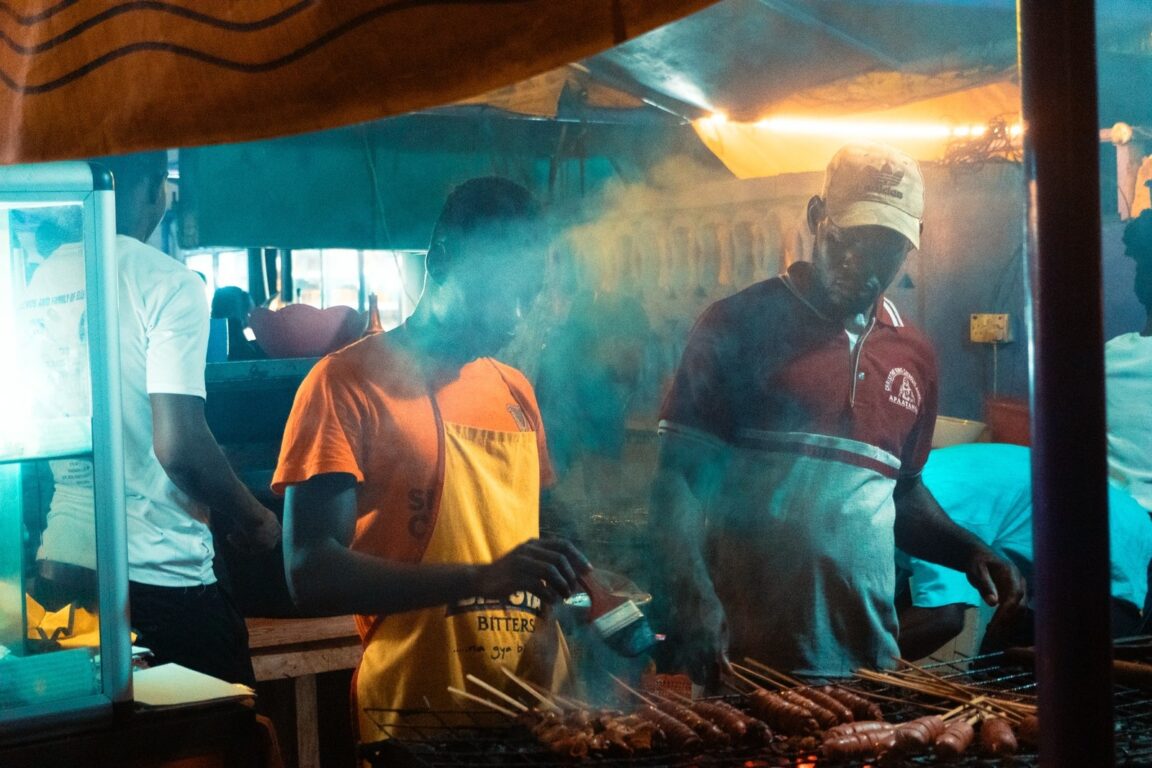
Finish in Osu, Accra’s eating and going out district, where Oxford Street carries the evening. As the shops close, the grills come out: kelewele, ripe plantain cubed, spiced with ginger and chilli and fried until the edges caramelise, served hot in paper with groundnuts; chichinga, Accra’s suya style skewers of beef or chicken dusted with spiced groundnut powder and grilled over charcoal in clouds of smoke; grilled tilapia for anyone who skipped the banku stop; and roasted corn and coconut sellers working the corners. AFAR sends its readers to the Osu Night Market for exactly this, Ghana’s street food staples prepared under the market lights, with kenkey and fried seafood among the midnight options.
Run it as a walk, not a seating. One skewer here, a bag of kelewele there, a cold drink from a kiosk, and the length of the street as your menu. The stalls trade from the early evening until well past midnight, and the later it gets, the more the crowd is Accra itself, finishing its own day. If the coast calls the next morning, pair this food day with our Elmina and Cape Coast guide for the castle coast west of the city, and eat the waakye first. In Accra, breakfast is the appointment everything else is built around.
Frequently Asked Questions
What time should you eat waakye in Accra?
In the morning. Waakye sellers set up early, queues form before the working day, and well known sellers such as Auntie Muni commonly sell through by early afternoon. A first plate between eight and eleven gives you the full line of sides, including wele and eggs, before they run out.
What is shito, and how hot is it?
Shito is Ghana’s dark black pepper sauce, made with dried fish, prawns, onions, ginger and chillies cooked down in oil. It is hot, deep and savoury rather than sharp. It arrives on the side of waakye, kenkey and rice dishes, so you control the dose: start with a teaspoon, mix it through a corner of the plate, and build from there.
Do you need to book chop bars or stalls in advance?
No. Chop bars, waakye sellers and night market stalls are walk in, and almost nothing in this article’s route takes a reservation. The planning that matters is timing and cash: small cedi notes for stalls and markets, and mornings kept free for the waakye run.
How do you eat banku and tilapia?
With your right hand. Pinch off a piece of the banku, press a hollow into it with your thumb, scoop up pepper sauce and a flake of grilled tilapia, and eat it in one bite. Choose your fish from the ice and agree its price before grilling, because the price follows the size of the fish.
What should a first timer order at the Osu Night Market?
Chichinga skewers and kelewele. The skewers give you Accra’s spiced groundnut grill flavour in its purest form, and kelewele, spiced fried plantain eaten hot with groundnuts, is the sweet heat counterpoint. Walk the stalls and order in small units rather than sitting down to one large plate.
Featured image: A night grill in Osu, Accra, skewers cooking over charcoal in the smoke of a street food stall. Photo by Seyiram Kweku on Unsplash, Unsplash License, via a captioned hosted copy on AFAR.