 Priya Nair
You do not need a car at Lake Bled, and for most visitors the lake works better without one. Everything that matters sits inside a compact circuit: a flat lakeside path of about 6 kilometres, pletna boat landings on the southern and western shores, a castle path climbing from the northern shore, viewpoint trails above the western end, and a shuttle system that covers the one sight that sits outside walking range, Vintgar Gorge. The sequence below runs a full car-free day in the order that avoids backtracking: boat to the island in the morning, the viewpoint climb late morning, the castle in the afternoon, and Vintgar first thing on a second morning when its timed slots are quietest.
Quick Facts
- Lake circuit: About 6 km of mostly flat, paved lakeside path, walkable in 75 to 90 minutes without stops.
- Pletna boat: Hand-rowed wooden boats to Bled Island, around 20 euros return per adult at recent published fares, paid in cash to the oarsman, with roughly 40 minutes allowed on the island.
- Rowing boat hire: Self-row boats by the hour from landings on the eastern and southern shores, cheaper than two pletna fares for a pair.
- Bled Island: Church, bell tower and Provost’s House covered by one island ticket, around 12 euros for adults at recent published prices, with 99 stone steps from the landing to the church.
- Bled Castle: Reached on foot by a steep marked path from the northern shore, no car or bus needed from the town centre.
- Best viewpoint: Mala Osojnica, about 45 minutes of steep climbing above the western shore, above the lower Ojstrica bench viewpoint.
- Vintgar Gorge: About 4 km from Bled, reached by the official Vintgar shuttle from Bled’s central parking and bus area in season, with timed entry tickets booked ahead.
- Free summer shuttle: The Bled Bus runs free seasonal routes around the lake and up to the castle parking area, daily in July and August.
How does the pletna boat system actually work?
The pletna is Bled’s defining piece of transport: a flat-bottomed wooden boat with a striped canopy, rowed standing up by a pletnar, a trade passed through a small number of local families for generations. Boats leave from several landings, principally Mlino on the southern shore and the landing below the town centre, and they depart when they have enough passengers rather than to a strict timetable. The crossing takes about 15 to 20 minutes each way. Fares at recent published levels sit around 20 euros return for adults and half that for children, and the detail that catches people out is payment: cash, handed to the oarsman, so arrive at the landing with notes in your pocket rather than assuming a card reader.
On the island, the boat’s waiting time frames your visit. You typically get around 40 minutes, which is enough if you spend it in the right order: climb the 99 steps, ring the wishing bell in the Church of the Mother of God on the Lake, look into the Provost’s House exhibition, and skip a long cafe stop. The island ticket is separate from the boat fare and covers the church, the bell tower and the Provost’s House. If 40 structured minutes sounds like a constraint rather than a plan, that is exactly the case for hiring your own boat instead.
When does rowing yourself beat the pletna?
Do the maths as a pair or a group and the hire boat usually wins. Rowing boats rent by the hour from landings along the eastern shore near the lido and at Mlino, at recent published rates of roughly 25 to 30 euros for the boat for an hour. Two pletna returns cost around 40 euros for the same two people, on the boatman’s schedule. One hired boat costs less, leaves when you are ready, and lets you linger on the island or circle it slowly before landing. The honest caveats: the row across takes 20 to 30 minutes each way at an easy pace, you land at the designated hire-boat point rather than the pletna jetty, and on a windy afternoon the return row is a genuine workout. Solo travellers save nothing by hiring and should take the pletna. Groups of three or four save the most and get the best day out of it. Slovenia’s other famous waters make a useful contrast: the Venetian port town covered in our guide to Piran, Slovenia is also best done entirely on foot once you arrive.
What is the castle path, and when should you climb it?
Bled Castle sits on a cliff about 130 metres above the northern shore, and the path up is part of the visit rather than a chore before it. Marked trails climb from the lakeside road below the castle rock, steep and stepped in places, taking roughly 15 to 20 minutes from shore to gate. Go in the afternoon for two reasons. First, the castle terraces face the island and the western shore, and the light across the lake improves as the day goes on. Second, the castle is the natural final stop of a clockwise day: island in the morning, lunch in town, viewpoint or swim early afternoon, castle last, then the short walk down into town for dinner.
Inside the walls, prioritise the terrace views, the castle museum’s account of the lake’s settlement, and the printing workshop and wine cellar if they are running demonstrations on your day. Castle entry is a paid ticket bought at the gate. In peak summer the free Bled Bus lakeside route stops at the central parking area below the castle and continues up to it, which helps anyone who wants the castle without the climb, but the path is short enough that most walkers should simply walk.
How hard is the Mala Osojnica climb, really?
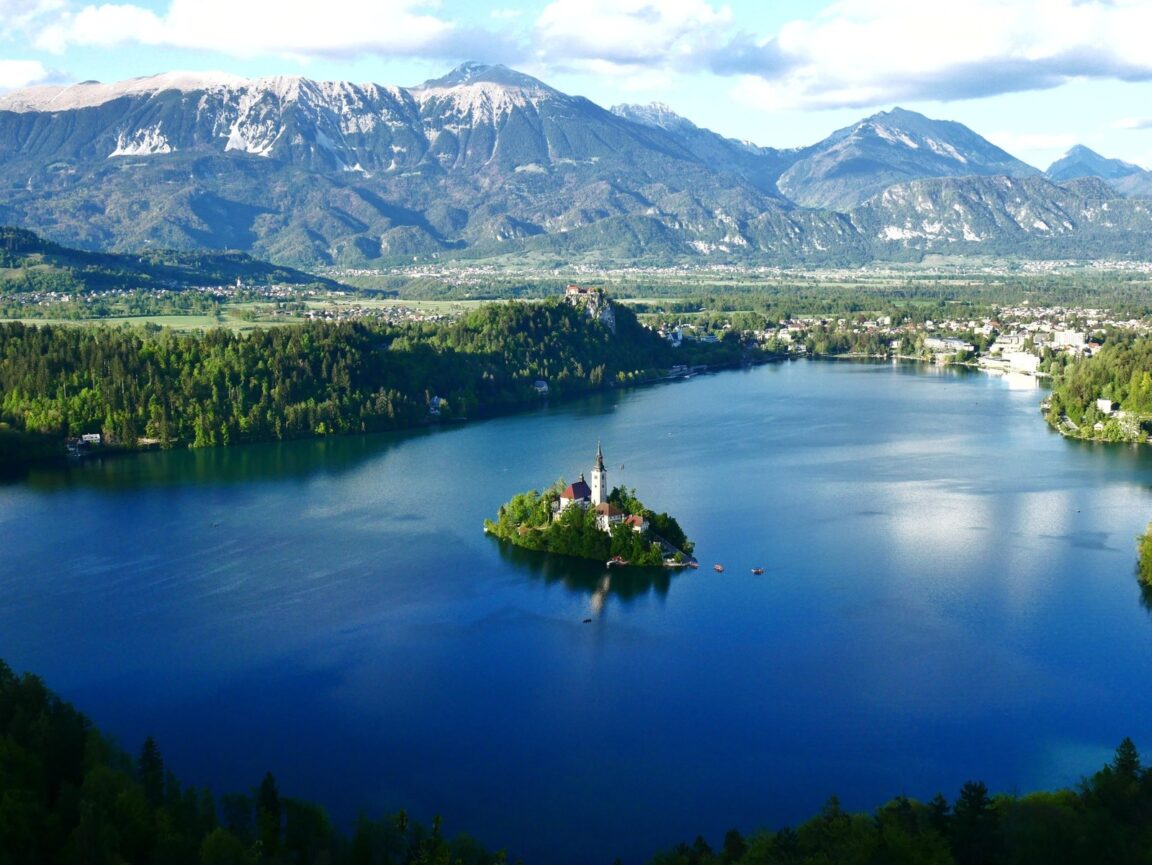
Mala Osojnica is the viewpoint in the postcard, and it earns it with a steep forest climb. The trail starts from the western shore near Zaka, where the lakeside path passes the rowing centre and the campsite end of the lake. Ojstrica comes first, about 20 minutes up, with a bench and the classic framed view of the island with the castle behind it. Many people stop there and are happy. Mala Osojnica continues above it for another 15 to 25 minutes on a steeper, rooty path with metal steps near the top, standing higher and wider, with the island, castle, lake and the Karavanke ridge in a single frame.
Allow about 45 minutes up in total, an hour and a half for the round trip with time at the top, and wear shoes with grip rather than sandals: the path is polished and slippery after rain. Go early for the clearest air and the emptiest summit, or in the last hour of light in summer. There is very little parking at the western shore, which is precisely why this guide is car-free: walk the lakeside path from town, about 30 minutes, or use the summer Bled Bus lakeside route. Walkers building up to longer trail days will find the same start-early logic in our Kumano Kodo walking guide.
How do you reach Vintgar Gorge without a car?
Vintgar is the one Bled sight where walking the whole way is a poor plan: the gorge entrance sits about 4 km north of town, and the walk there uses roads with no real footpath. The official system solves it cleanly. In season, the Vintgar shuttle runs from Bled, departing the main bus station area roughly every hour, timed to the gorge’s opening hours, with the last outbound shuttle about an hour before closing and returns running after closing time. Entry itself is by timed ticket, booked ahead online in peak season, and the gorge operates a one-way walking route of about 1.6 km on boardwalks and bridges above the Radovna river, with a return leg on marked trails on the other side.
The season matters. Vintgar closes in winter, typically reopening in spring and running through autumn, and the shuttle is a seasonal service tied to that opening. Outside the shuttle season, the realistic car-free options are a taxi from Bled or a bicycle, not a hopeful walk along the road. Book the earliest entry slot of the day in summer: the boardwalks are narrow, passing is limited, and the gorge is at its best in the first hour, with low light in the canyon and no queue behind you. Allow three to four hours door to door from Bled, including the shuttle, the one-way gorge walk and the return trail.
What does a car-free Bled day look like, in order?
Start with the lake path at dawn if you can: the circuit is flat, the water is still, and the island sits in early light with nobody on it. Take a pletna from Mlino or the town landing mid-morning, spend your 40 minutes on the island in the order above, and row or ride back before the midday landings get busy. Climb Ojstrica and Mala Osojnica late morning from Zaka, then swim at the castle bathing area or the lido in the early afternoon. Walk the castle path up in the later afternoon, come down into town for the original Bled cream cake, and put Vintgar at the start of the next morning on the first shuttle and the first entry slot. Every step of that sequence is walkable or shuttle-served, and none of it involves looking for a parking space, which in July and August is the single worst use of a Bled hour.
Frequently Asked Questions
Can you visit Lake Bled entirely without a car?
Yes. The lake path, pletna boats, castle path and viewpoint trails are all on foot, the free summer Bled Bus loops the lake and the castle, and the Vintgar shuttle covers the gorge. Intercity buses from Ljubljana reach Bled in about an hour and a quarter, so the whole trip works without driving.
How much does the pletna boat cost?
Recent published fares are around 20 euros return per adult and around 10 euros for children, paid in cash directly to the oarsman. The Bled Island ticket is separate, at around 12 euros for adults, and covers the church, bell tower and Provost’s House.
Is it cheaper to rent a rowing boat at Bled?
For two or more people, usually yes. Hire boats cost roughly 25 to 30 euros per boat per hour at recent published rates, against around 20 euros per person for the pletna, and you set your own timing. Solo travellers save money on the pletna.
How long does the Mala Osojnica climb take?
About 45 minutes up from the western shore, passing the lower Ojstrica viewpoint at around 20 minutes, and about an hour and a half for the full round trip with time at the summit. The upper section is steep, with metal steps near the top.
How do you get to Vintgar Gorge from Bled without a car?
Take the official Vintgar shuttle from Bled’s main bus station area in season, which runs roughly hourly and is timed to the gorge’s opening hours. Entry is by timed ticket booked ahead. The gorge is closed in winter and the shuttle only runs while it is open.
When is the Bled Bus free shuttle running?
The Bled Bus is a free seasonal service, running daily in July and August on routes around the lake, through nearby villages and toward Pokljuka, with an additional summer link to Radovljica. Outside high summer, the lakeside sights remain walkable and Vintgar keeps its own shuttle in season. Check current routes and hours on Bled’s official tourism site before you travel, and Vintgar’s opening dates on the official Vintgar Gorge site.
Prices checked November 2026 against published operator and destination sources. Fares at Bled change by season, so confirm the pletna, island and shuttle details before you travel.