 Hana Kim
Miavana is worth its rate only if the things money cannot easily buy elsewhere are the things you actually want: a private island in a protected archipelago, 13 villas on a whole island, helicopter only access and a reef, forest and lemur programme run from your own villa. On the official 2026 rates page the lead in price is $3,700 per person per night for a one bedroom villa, plus $300 per person per night in access fees and conservation levies, with helicopter transfers charged on top. That maths, set out plainly below, is the honest starting point. Two corrections matter before anything else. Miavana sits on Nosy Ankao off the north east coast of Madagascar, not off the Nosy Be coast, and the current official villa count is 13, not the 14 still quoted by many older reviews.
Quick Facts
- Where: Nosy Ankao, the largest of five islands in an archipelago off the north east coast of Madagascar
- Access: Helicopter only, about 30 minutes from Diego Suarez (Antsiranana) or about 1 hour from Nosy Be
- Villas: 13 in total on the current official rates page: 7 one bedroom, 4 two bedroom and 2 three bedroom
- 2026 rate: $3,700 per person per night based on minimum occupancy, plus $300 per person per night access fees and conservation levies
- Helicopter transfers: $800 per seat each way from Diego Suarez, $1,200 per seat each way from Nosy Be, minimum 2 adults, extra to the rate
- Included: All meals, selected premium wines and spirits, private butler service, laundry, scuba diving around the island, snorkelling, guided lemur and forest walks, boat cruises and most water sports
- Exclusive use: $140,000 per night for the whole island, up to 42 guests, on the official 2026 rates page
- Best season logic: The lodge is open year round; the dry, calmer sea months in the north are roughly April to November
Where exactly is Miavana, and why does the coast matter?
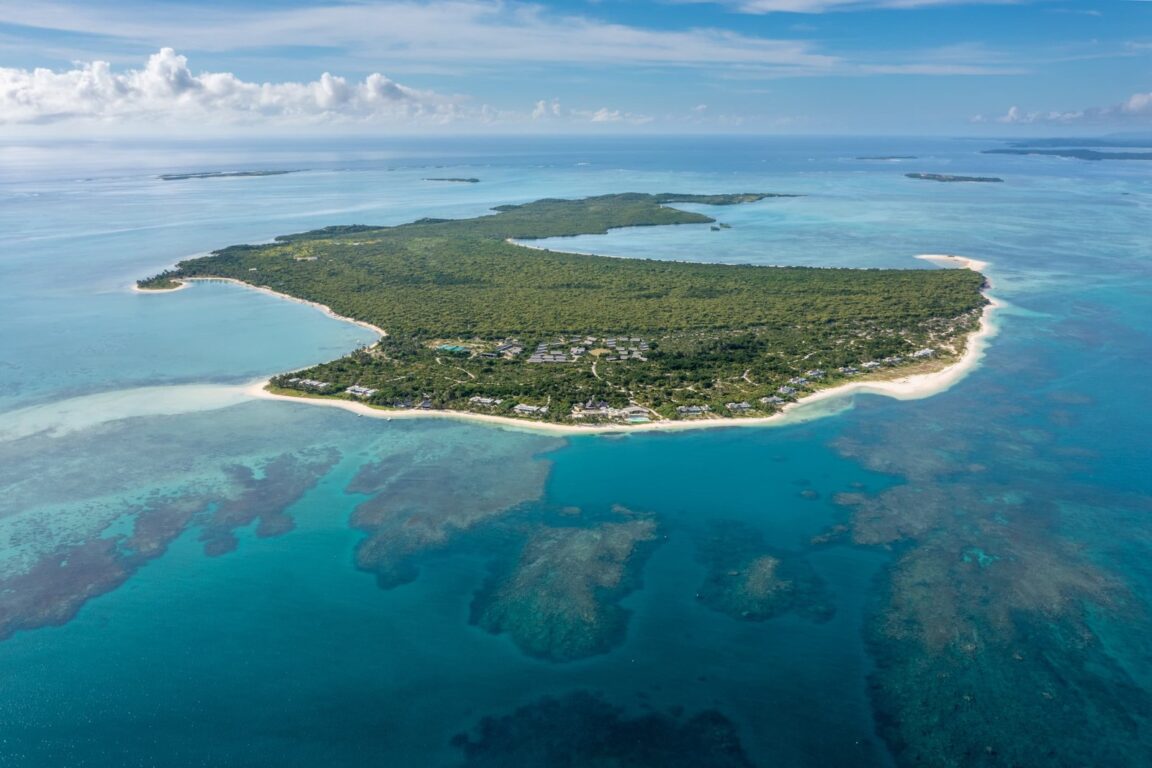
Miavana by Time + Tide occupies Nosy Ankao, the largest island in a five island archipelago off Madagascar’s remote north east coast. That geography explains almost everything about the stay. The reef protected lagoon, the turtle nesting beaches and the mainland day trips to the forests and tsingy country near Diego Suarez all belong to the north east, a long domestic flight and a helicopter hop away from the capital, Antananarivo. Travellers who picture the better known Nosy Be resort area on the north west coast are picturing the wrong sea. Nosy Be is simply one of the two helicopter departure points, and at about an hour in the air it is the longer and more expensive of the two.
The island itself was restored before it was built on. The lodge’s own account describes four years of work, more than 100,000 indigenous trees planted and construction using natural and recycled materials. The result is a low, spread out settlement along the beach: the villas, a central piazza with an infinity pool, dining areas, a wine cellar and a bar, and a lot of protected forest and sand in between. Nothing about the layout is dense, and that spaciousness is a large part of what the rate buys.
Madagascar entry formalities are a separate job from booking the lodge, and they reward early attention. Our guide to the Madagascar eVisa for an Antananarivo arrival sets out the arrival sequence most international guests will follow before the domestic flight north.
How do the helicopter transfers actually work?
There is no boat schedule and no road. Every guest arrives and leaves by helicopter, from Diego Suarez airport in about 30 minutes or from Nosy Be airport in about 1 hour, and the transfers are excluded from the nightly rate. On the official 2026 rates page the seat prices are $800 per adult or child each way between Diego Suarez and Miavana, and $1,200 per seat each way between Nosy Be and Miavana, with a minimum of two adults. A couple routing through Diego Suarez should therefore budget $3,200 for return helicopter seats on top of the villa rate, and a couple routing through Nosy Be should budget $4,800. Helicopter adventures beyond the transfer, such as flights to mainland reserves, are costed individually.
The practical consequence is that Diego Suarez is the default gateway for most itineraries. It keeps the helicopter bill lower, halves the flying time and pairs naturally with mainland excursions to Amber Mountain and the Ankarana area. Nosy Be makes sense mainly when the wider trip already includes the north west, or when flight schedules make it the smoother connection. Either way, the helicopter seat is booked per person, not per aircraft, unless a private charter is quoted separately.
What are the villas like, room by room?
The format is villa only. There are no hotel rooms, no suites in a main building and no shared corridors. The official rates page lists 13 villas: seven one bedroom villas sleeping 2 adults plus up to 2 children under 18, four two bedroom villas sleeping 4 adults plus up to 2 children, and two three bedroom villas sleeping 6 adults plus up to 2 children. Property descriptions put the one bedroom villas at about 450 square metres, the two bedroom villas at about 650 square metres and the three bedroom villas at about 1,000 square metres, each with a private pool, a deck stepping toward the beach, indoor and outdoor living space, a kitchenette and a personal bar, an electric buggy per villa and a private butler.
That scale changes the rhythm of a stay. Breakfast does not require a restaurant, a swim does not require a shared pool and a family group does not need to book adjoining anything. The one bedroom villa is the couple’s product and the one the headline rate belongs to. The two and three bedroom villas work on the same per person maths at higher minimum occupancies, so a multigenerational group should price the whole villa, not the headline figure, before comparing Miavana with a mainland lodge plus a beach extension. Children aged 2 to 13 are listed at no charge on the 2026 rates page when sharing under the stated conditions, with 14 to 17 year olds at $1,850 per night, which materially changes the family calculation and is worth confirming in writing at booking.
What does a stay really cost once everything is added?
Worked on the official 2026 figures, a couple in a one bedroom villa pays $7,400 per night for the villa rate at minimum occupancy, plus $600 per night in access fees and conservation levies, a combined $8,000 per night before transfers. Add return helicopter seats through Diego Suarez at $3,200 for two and a five night stay totals about $43,200 before international and domestic flights, visas, deep sea fishing, spa treatments beyond the included 20 minute welcome treatment, reserve wines and gratuities. The same five nights routed through Nosy Be add about $1,600 more in helicopter seats. Exclusive use of the whole island is listed at $140,000 per night for up to 42 guests, plus the per person levies.
Set against that, the inclusion list is genuinely broad: all meals, selected premium wines and champagnes and top shelf spirits, butler service, laundry, scuba diving around Miavana including a discover scuba or refresher lesson, snorkelling, boat cruises, island cultural visits, shore based and half day fishing, surf ski, water skiing, stand up paddle boarding, wakeboarding, introductory kite surfing lessons, daily group yoga and quad and bicycle use. The honest comparison is therefore not room only rates at a conventional island resort. It is closer to a private island charter with a full activity programme included, which is exactly how the lodge prices it.
For a benchmark from the same ultra luxury coastal tier in the region, see how Amanoi on Vietnam’s Nui Chua coast structures its villa privacy and inclusions. The two properties solve the same problem, seclusion at scale, in very different seas.
What fills the days: reef, forest and lemurs?
The marine programme is the centre of most stays. The surrounding reefs support guided scuba diving, snorkelling, boat cruises and seasonal whale and turtle encounters, and the lodge’s setting inside a protected archipelago is the reason the diving is positioned as a headline activity rather than an add on. On land, guided lemur walks and forest walks run on the island, where a resident crowned lemur population is part of the conservation story, and helicopter or boat supported excursions reach mainland habitats for travellers who want the fuller Madagascar wildlife picture alongside the beach.
That pairing, island reef plus mainland forest, is the strongest argument for Miavana over a pure beach island elsewhere in the Indian Ocean. A stay can hold a morning dive, an afternoon forest walk and a lemur excursion without a transfer day in between, because the lodge treats the mainland as part of its own activity map. Travellers whose priority is big game safari should not buy Miavana for that purpose. Travellers whose priority is Madagascar’s endemic wildlife, lemurs, chameleons, baobab and tsingy country, paired with a serious reef, are buying exactly the right island.
Which season should you choose?
Miavana is open year round and the 2026 rate is listed as year round, so season is a conditions decision, not a price decision. The north of Madagascar is driest and the sea calmest roughly from April to November, which is the window most divers and sailors would pick first. The wetter months bring greener forest, warmer water and a higher chance of weather affecting helicopter schedules and sea excursions. Turtle nesting and hatching, tern colonies on neighbouring islets and whale season each have their own calendars, so a traveller coming for one specific natural event should ask the lodge to match dates to that event before fixing flights.
Because the rate does not drop in the wetter season, there is little financial reason to accept the weather risk unless the wildlife calendar demands it. The festive season offer published by the lodge, seven nights including a complimentary night and complimentary helicopter seats on qualifying stays, is the clearest published exception to the standard maths and is worth checking for December travel.
Frequently asked questions
How many villas does Miavana have?
The current official rates page lists 13 villas: 7 one bedroom, 4 two bedroom and 2 three bedroom, with exclusive use sold for up to 42 guests. Older reviews quoting 14 villas predate the current listing.
Is the helicopter transfer included in the rate?
No. Helicopter transfers are listed as an exclusion. Seats cost $800 each way per person from Diego Suarez and $1,200 each way per person from Nosy Be on the official 2026 rates page, with a minimum of two adults.
What is included in the nightly rate?
Accommodation, all meals, selected premium wines and spirits, private butler service, laundry, scuba diving around the island, snorkelling, boat cruises, guided lemur and forest walks, most water sports, a 20 minute welcome spa treatment and use of an electric buggy per villa.
Can children stay at Miavana?
Yes. Villas accept children under the stated occupancy limits, and the 2026 rates page lists children aged 2 to 13 at no charge and under 2s at no charge, with 14 to 17 year olds at $1,850 per night. Confirm the conditions for your villa type when booking.
Is Miavana worth it compared with Nosy Be resorts?
Only if privacy, a protected reef and the lemur pairing are the point. Nosy Be hotels cost a fraction of the rate and are far easier to reach. Miavana’s premium buys a whole private island, 13 villas and an included activity programme, which is a different product, not a more expensive version of the same one.
Photo credit: Aerial view of Nosy Ankao and the Miavana villas, Miavana by Time + Tide, from the property’s own official website (miavana.com). Image: Miavana by Time + Tide, official website image, used with credit.