 Sofia Rossi
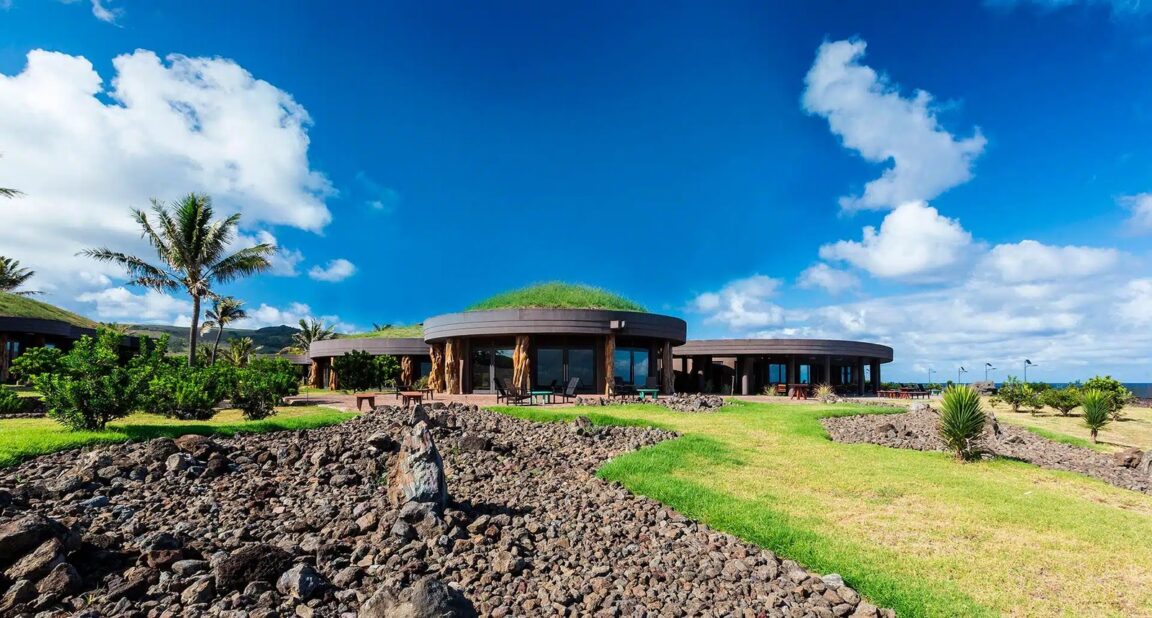
Nayara Hangaroa is the full service base on Easter Island, and the honest way to judge it is by its programmes, not its pool. The lodge sits on the Hanga Roa waterfront less than a kilometre from Mataveri Airport, with 75 rooms built low into the grass in the image of the Orongo ceremonial village, and it sells four ways to stay, from room and breakfast to a fully private guided programme. Because almost every archaeological site on Rapa Nui now requires a certified guide and a national park ticket, the excursion inclusive programmes are the real product here. Travellers who will use two guided outings a day get strong value from the Full Experience programme. Independent travellers who want one anchor excursion and their own car days should price the Discover programme first, and everyone should remember the island’s hard rule: there is no way here except a five hour flight, so the hotel is only ever one part of a deliberately planned trip.
Quick Facts: Nayara Hangaroa at a Glance
- Where: On the main waterfront of Hanga Roa, Easter Island, Rapa Nui, Chile, walking distance from the town centre
- Airport: Less than 1 kilometre from Mataveri Airport. All programmes include return airport transfers
- Rooms: 75 rooms in two types. Kainga rooms at 49 square metres, and Maunga suites at 74 square metres on two levels
- Design: Low, grass roofed forms inspired by the Orongo ceremonial village, built with cypress logs, clay and volcanic stone
- Programmes: Four. Dream, Discover, Full Experience and Full Private, differing by meals and guided excursions included
- Excursions: Guided half day outings of about three hours, including the Rano Raraku quarry and Ahu Tongariki
- Access: Flight only. LATAM flies from Santiago in about five to five and a half hours
- Park ticket: Rapa Nui National Park ticket required for the sites, about 100 US dollars for foreign adults in 2026, valid 10 days
- Facilities: Pool terrace, Manavai Spa with sauna, restaurant and bar, town shuttle
- Checked: November 19, 2026, against the hotel’s own site at nayarahangaroa.com and its published fact sheet
What Is the Lodge Actually Like on the Ground?
Hangaroa was designed to disappear into its site rather than announce itself, and from the waterfront that works. The buildings are long, low and round ended, roofed in grass, their shapes modelled on the stone houses of Orongo, the ceremonial village on the rim of Rano Kau where the birdman competition was held each spring. Inside, the materials do the decorating: cypress logs, clay plaster and volcanic stone, with floor to ceiling glass opening rooms towards the sea and the gardens. The grounds run down towards the rocky shore at the edge of Hanga Roa, so the town’s cafes, dive shops and the harbour are a walk, not a transfer, and the sunset gathering point at Ahu Tahai is within easy reach along the coast.
The public spaces follow the same register. There is a pool terrace for the middle of the day, the Manavai Spa with a sauna for after excursion limbs, and dining built around the programme you have bought, from breakfast only up to full a la carte board. This is a lodge in the Chilean expedition hotel tradition, closer in spirit to a Patagonian all inclusive than to a beach resort, and it is at its best when the day’s second excursion matters more to you than a long lunch. Travellers comparing expedition bases in Chile can set it beside our review of Awasi Patagonia, which runs a similar guide led model at the other end of the country.
Kainga or Maunga: Which Room Should You Book?
There are only two decisions to make, which keeps things simple. The Kainga rooms, the large majority of the 75, are 49 square metres with an open plan the hotel likens to the width of the ocean: a king bed or two twins plus a locally built sofa bed, a bathroom with both shower and a clay tub, a music system, minibar, wifi and a private terrace. They suit couples and solo travellers, and the choice within the category is outlook, with rooms nearer the front taking the ocean view and garden rooms sitting further back among the planting.
The 10 Maunga suites are the family answer at 74 square metres, built on two levels with a king bed plus two sofa beds and a separate living room, a shower and bathtub, and a private outdoor terrace with ocean views. For two adults travelling together, the Maunga premium buys space rather than luxury, and the Kainga is usually the smarter spend. For a family or a group of three or four sharing, the suite’s second level and living room change the maths, and the per person cost of the inclusive programmes below starts to look much more reasonable.
Which Programme Is Worth It: Dream, Discover, Full Experience or Full Private?
This is the decision that decides whether Nayara Hangaroa is worth its rate for you, because the room is the same in all four. Every programme includes the return airport transfer. Dream is room and breakfast, aimed at travellers who will organise their own days, with a naturalist guide on hand at the hotel to help shape an itinerary. Discover adds one meal a day, lunch or dinner, and one half day guided excursion for every night of stay. Full Experience includes all three meals a la carte and excursions at the rate of one full day outing or two half day outings for every night. Full Private wraps the same full board around a private guide who is exclusively yours, with the day’s shape set entirely by you.
Now set that against the island’s rules. Most archaeological sites outside Hanga Roa can only be visited with a certified guide, and the hotel’s excursions are the simplest compliant way to see them, in groups led by its own guides. A first time visitor staying three or four nights wants, at minimum, the Rano Raraku and Tongariki outing, an Orongo and Rano Kau outing, and a coast of platforms and Anakena beach, which is three to four half day excursions. On Discover, a four night stay includes four half days, which covers that list neatly with meals partly handled. On Full Experience the same stay includes the equivalent of eight half days, which suits travellers who want mornings and afternoons both programmed, or who are adding diving, hiking and horse riding around the archaeology. Dream only wins if you have a specific independent plan, a rental car booked, and private guides arranged for the guided only sites, because the park ticket alone does not get you into them.
What Do the Excursions Cover?
The signature outing, Tarai Moai, runs about three hours in the afternoon and pairs the two sites every visitor has pictured. Rano Raraku is the quarry where almost all moai were carved, with 397 statues in various stages of completion still on the slopes, and Ahu Tongariki is the great restored platform nearby, 220 metres long with 15 moai standing, the largest ceremonial platform on the island. Other regular outings cover the Orongo ceremonial village and the Rano Kau crater, the platform coast, and the island’s museum and town sites, each about three hours and graded by difficulty, with the excursion desk confirming departures on the ground.
Two planning points matter. First, your park ticket allows only one visit each to Rano Raraku and Orongo in its 10 day validity, so do not burn the quarry on a rushed first afternoon if light and energy argue for a dedicated morning later in the stay. Second, the guided format means sunrise at Tongariki, the island’s classic photograph, is a matter of which excursions are running during your dates, so ask the hotel before you book if that specific outing is a priority. For travellers used to island lodges where the guiding is the holiday, the model will feel familiar from places like North Island in the Seychelles, though Hangaroa runs it at group excursion scale rather than one guide per villa.
How Do You Get There, and What Paperwork Does the Island Require?
Slowly, and by air only. LATAM is the sole airline with regular flights, from Santiago to Mataveri Airport in roughly five to five and a half hours over open Pacific, and the hotel meets arrivals for the short transfer of less than a kilometre. There is no ferry and no alternative airport, so a missed connection in Santiago is a lost day, and building a buffer night on the mainland before a long haul home is plain common sense.
Chile also treats Rapa Nui as a special territory. Before you fly you must complete the online single entry form, show a return ticket, and show a booking with accommodation registered with SERNATUR, the national tourism service, which a booking at Nayara Hangaroa satisfies. Stays are capped at 30 days. Separately, every visitor needs the Rapa Nui National Park ticket for the archaeological sites: priced at about 100 US dollars for foreign adults following an October 2025 rise, valid for 10 days, bought online or in Hanga Roa, and carried with your passport. Confirm the current price on the official park sales site before you travel, because the fee has moved before and the hotel programmes do not remove the need to hold it.
Which Season Suits Hangaroa Best?
Rapa Nui is subtropical and maritime, so the seasons turn on wind, water and crowds more than on heat. The warmest, busiest months run from December to March, peaking with the Tapati Rapa Nui festival in February, when the town fills for around two weeks of cultural competition and celebration and rooms across the island are at their scarcest and priciest. That is the season to book Hangaroa furthest ahead, and the Full Private programme earns its keep when group excursions are fullest. The cooler months from June to September bring lower rates, emptier sites and greyer, wetter spells between fine days, which suits travellers who care about the archaeology more than the pool. Shoulder months, April, May, October and November, are the balanced play: warm enough sea, working excursion schedules and a town breathing normally.
Who Should Book Nayara Hangaroa, and Who Should Not?
Book it if this is a once in a lifetime Rapa Nui trip of three to five nights, you want the island’s essential sites covered by good guides without assembling them yourself, and you value a quiet, design led base you can walk into town from. The Discover programme is the value sweet spot for most first visits, and Full Experience suits travellers who genuinely want both halves of every day programmed. Book a Maunga suite if you are a family sharing, a Kainga if you are not.
Look elsewhere if your trip is built around independence and a rental car, because you will pay for excursions you do not use on the upper programmes and duplicate guiding you have arranged yourself. Look elsewhere, too, if you want a small guesthouse relationship with Hanga Roa at a fraction of the price, because the town has family run places that do that well. Hangaroa’s rate buys scale, guiding depth and certainty on an island where certainty is the scarce commodity. Judged on those terms, and on the right programme, it earns it.
Frequently Asked Questions
How far is Nayara Hangaroa from the airport?
Less than 1 kilometre from Mataveri Airport, a few minutes by road. All four programmes include return transfers, and the hotel is also walking distance from the centre of Hanga Roa, the island’s only town.
What is the difference between the Kainga rooms and Maunga suites?
Kainga rooms are 49 square metres with a king or twin beds plus a sofa bed, a shower and clay tub, and a private terrace. Maunga suites are 74 square metres on two levels with a king bed, two sofa beds and a separate living room, suiting families and groups sharing.
Are excursions included at Nayara Hangaroa?
It depends on the programme. Dream is room and breakfast only. Discover includes one half day excursion per night of stay. Full Experience includes one full day or two half day excursions per night. Full Private adds a private guide. Airport transfers are included in all four.
Do I still need a Rapa Nui National Park ticket if I stay at Hangaroa?
Yes. The park ticket is separate from the hotel programmes and is required for the archaeological sites. It was priced at about 100 US dollars for foreign adults in 2026, is valid for 10 days, and allows one visit each to Rano Raraku and Orongo.
How do you get to Easter Island?
By air only. LATAM flies from Santiago, Chile, to Mataveri Airport in about five to five and a half hours. Before flying you must complete the online entry form and show a return ticket and a booking with registered accommodation, and stays are limited to 30 days.
When is the best time to stay?
December to March is warmest and busiest, with the Tapati festival in February. June to September is cooler, quieter and cheaper. April, May, October and November balance weather, availability and price for most first time visits.
Sources checked November 19, 2026: Nayara Hangaroa official site, nayarahangaroa.com, stay, explore and contact pages and the hotel fact sheet, for rooms, programmes, excursions and transfers, and Rapa Nui National Park ticket and island entry information. The hotel publishes no static rate card, so no room rate is quoted here. Confirm programme inclusions and the park ticket price when you book.