 Jordan Ellis
The best time to visit New River Gorge depends on which version of the gorge you want. Come on the third Saturday of October and you get Bridge Day, West Virginia’s largest one-day festival, peak fall colour and the final weekend of Gauley rafting season stacked into a single weekend. Come in late spring or summer and you get the New River at its warmest and most forgiving, long hiking days and a quieter Fayetteville. Come in September, before the festival crowds arrive, and you get the Gauley releases with thinner midweek crowds. There is no entrance fee at any time of year, so the real costs of timing are crowds, water levels and how much of the park you want in a single trip. This guide weighs the windows against each other so you can pick the one that matches your trip.
Quick Facts
- Bridge Day: Held on the third Saturday of October each year, when the New River Gorge Bridge closes to traffic and opens to pedestrians.
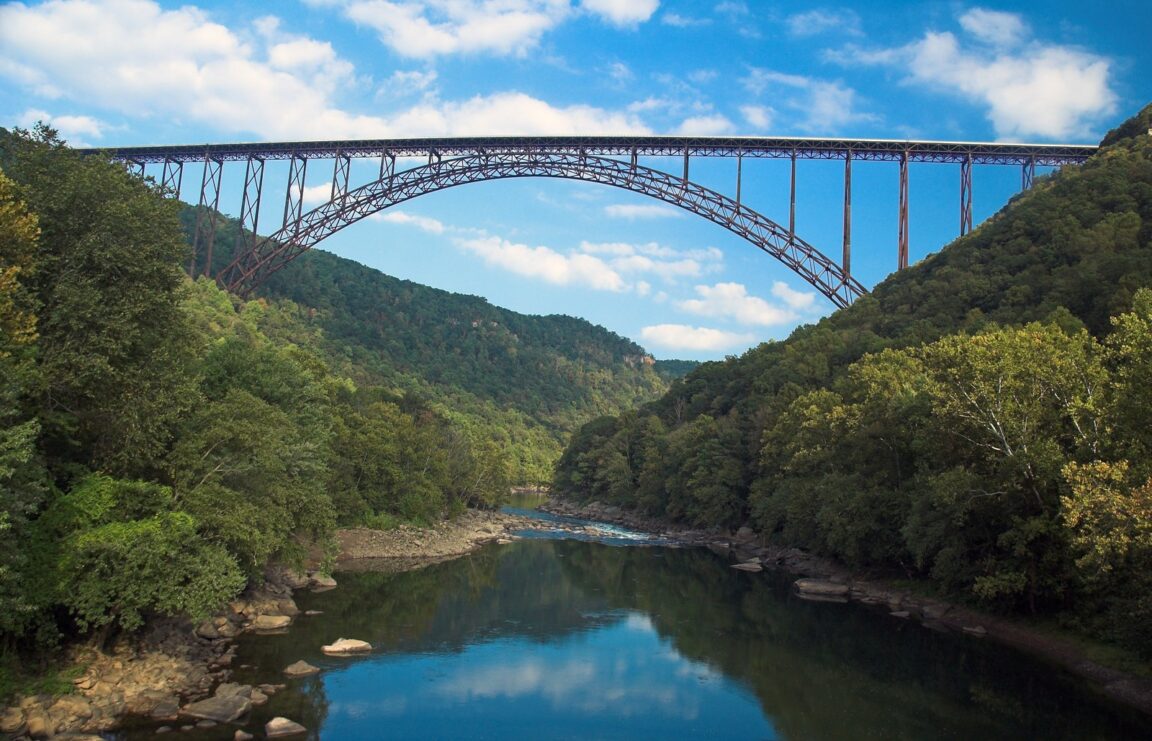
- The bridge: 3,030 feet long and 876 feet above the New River, the longest single-span steel arch bridge in the western hemisphere, according to the National Park Service.
- Gauley season: The Gauley River’s main season runs from early September through mid-October, built around scheduled fall releases from Summersville Dam.
- New River season: Commercial trips on the New River run from April through October, from mild upper sections to Class III to V rapids in the Lower Gorge.
- Entrance fee: None. The National Park Service confirms no entrance pass is required for New River Gorge National Park and Preserve.
- Base town: Fayetteville, just south of the bridge on US Route 19, holds the densest cluster of outfitters, restaurants and lodging near Canyon Rim Visitor Center.
- Fall colour: Colour builds through October and is usually near its best around the Bridge Day weekend, though the exact peak shifts with weather each year.
Why does Bridge Day dominate the calendar?
Bridge Day commemorates the October 1977 completion of the New River Gorge Bridge, and the National Park Service describes it as West Virginia’s largest one-day festival. It is the only day of the year when you can walk on top of the bridge, which is otherwise a US Route 19 highway with no pedestrian access. Tens of thousands of visitors walk the span, watch BASE jumpers leap 876 feet toward the river and watch rappellers descend from the catwalk beneath the deck. The park service notes the practical rules clearly: pets, bicycles, carts and strollers are not permitted on the bridge during the event, and coolers, packages and large packs are barred for security reasons.
The trade-off is scale. Fayetteville fills, parking near Canyon Rim goes early, and the whole north end of the park runs at festival tempo. If Bridge Day is your reason for coming, treat it as the centrepiece of a longer stay rather than a day trip: arrive a day or two before, walk the bridge on Saturday, and keep Sunday for the Fayette Station Road drive down to the river or the Long Point Trail, which the park service recommends for bridge views from a rocky outcropping. Our drive through the gorge, from the bridge walk to the old road down to the river, shows how those pieces fit together once the festival crowds thin.
How do the Gauley releases shape September and October?
The Gauley River is the park’s serious whitewater. The National Park Service puts its main season from early September through mid-October and describes it as a river for the whitewater enthusiast, with steep and technical rapids. That season exists because of Summersville Dam: the US Army Corps of Engineers draws Summersville Lake down toward its winter level each fall, and Gauley Season traditionally begins the first weekend after Labor Day and runs for six weekends of scheduled releases. The final release weekend lines up with Bridge Day, which is why mid-October is the single busiest whitewater window of the year in this part of West Virginia.
September is the connoisseur’s version of the same water. The releases run, the river is at full Gauley force, but Fayetteville has not yet hit festival pitch and midweek departures are easier to book. If rafting is the point of the trip and Bridge Day is not, aim for the second or third release weekend in September. If you want both, accept the October crowds as the price of the combination and book lodging and raft seats well ahead. Full details on seasons and licensed outfitters are on the park’s commercial whitewater page.
What does spring offer that fall does not?
Spring flips the equation. Commercial New River trips restart in April, rain and snowmelt push natural flows up, and the Lower Gorge’s Class III to V rapids run big on rain-fed water rather than dam releases. The gorge greens up, waterfalls on side creeks run at their strongest, and the climbing rock that makes the gorge famous in the eastern United States dries out between spring showers. What spring does not offer is predictability: water levels swing with the weather, mornings are cold, and the Gauley is generally not in its scheduled-release season, with trips only sometimes available outside the fall window, as the park service notes.
For hikers and climbers rather than rafters, late April into May is arguably the park’s best value window. Trails are quiet, Fayetteville prices sit below their October peak, and the park’s widely spread districts, from Canyon Rim in the north to Grandview and Sandstone Falls further south, can be covered without festival traffic in between. The honest caveat is that a spring trip is a bet on weather in a way that a September Gauley trip, powered by a dam schedule, is not.
Is summer a good time, or just the default?
Summer is when the New River itself is at its most approachable. The park service notes that the upper river offers milder water, with Class I to III rapids suited to canoeing and family rafting, while the Lower Gorge keeps its bigger rapids. Warm water, swimming holes, long evenings in Fayetteville and every outfitter running a full schedule make June through August the easiest months for a mixed group that wants some rafting, some hiking and some downtime. The costs are heat and humidity in the gorge, afternoon thunderstorms and the busiest trailhead parking of the year at popular spots near the bridge.
Summer is also the season to explore beyond the bridge corridor. The park protects a long river corridor rather than a single viewpoint, and districts such as Thurmond, the near-ghost railroad town on the river, and the wide sheet of Sandstone Falls in the south see a fraction of Canyon Rim’s traffic. A summer base in Fayetteville still works for all of it, provided you start drives early and treat the bridge overlooks as a morning or evening stop rather than a midday one.
What about winter, the season nobody picks?
Winter is the gorge stripped back. Rafting outfitters wind down after October, many Fayetteville businesses cut hours, and cold, short days limit what a trip can hold. In exchange you get the emptiest trails of the year, bare trees that open up views the leafy seasons hide, and the bridge in mist, which the park service itself flags as a common autumn and winter mood at the gorge. Winter suits a return visitor with a specific purpose, such as photography, climbing on dry cold rock between fronts, or a quiet weekend in a cabin, better than it suits a first trip built around the river.
So when should you actually go?
Match the window to the headline activity. For the full spectacle, Bridge Day weekend in October combines the festival, fall colour and the last Gauley releases, and it is worth doing once despite the crowds. For rafting above everything, choose a September Gauley weekend. For a balanced first trip of hiking, milder rafting and lower prices, choose late spring. For families and mixed groups, choose summer and plan around the heat. Whichever window you pick, start with the park’s own Bridge Day page and fees page when you lock dates, and if West Virginia’s river country pulls you further north afterwards, our Harpers Ferry history and culture story covers the state’s other great river town, where the Potomac and Shenandoah meet.
Fees, seasons and event rules checked against the National Park Service on November 20, 2026. Bridge Day is hosted by the Bridge Day Commission and the Fayette County Chamber of Commerce; confirm event details for your year before travelling.