 Kwame Mensah
Pack for the Druk Path as a camping trek that starts in a warm valley and sleeps high from the first night: your operator and guide crew carry the tents, food and cooking kit, while your own bag holds every layer you wear, a sleeping system rated for frost, and the small kit that keeps altitude from ruining the walk. The route runs from Paro to Thimphu in 4 nights and 5 days, tops out at 4,200 metres, and camps between roughly 3,400 and 4,100 metres, so the bag that matters is not the big duffel the crew handles. It is the daypack and the sleep layers inside the duffel, packed for a 1,000 metre climb on day one and a long descent at the end.
Quick Facts
- Route: Druk Path Trek, Paro to Thimphu, western Bhutan
- Duration: 4 nights, 5 days, per the Bhutan Tourism Corporation Limited trek page checked on November 20, 2026
- Maximum altitude: 4,200 metres, per the same official operator page
- Best seasons: Mid March to mid June, and October and November, per Bhutan Tourism Corporation Limited
- Difficulty: Moderate, per Bhutan Tourism Corporation Limited
- Guide rule: Trekking in Bhutan runs through a licensed operator with a licensed trekking guide, and visitors travel with a guide throughout
- Sustainable Development Fee: USD 100 per person per night for most international visitors, the halved rate on the USD 200 statutory fee, with the 50 percent waiver extended to December 31, 2029 per the Department of Tourism announcement of November 1, 2026 on bhutan.travel
- Visa fee: A separate one off USD 40 per person
- Prices and facts checked: November 20, 2026, against Bhutan Tourism Corporation Limited and the Department of Tourism at bhutan.travel
What does the crew carry, and what stays yours?
The split is the whole packing decision, so settle it before choosing a bag. On a Bhutan trek booked through a licensed operator, the trek crew provides and carries the shared camping system: tents, sleeping mats in most standard packages, kitchen and dining kit, food, and the crew to cook and set camp. Pack animals or porters move that shared kit and, on most standard arrangements, your main duffel between camps, which is why the duffel should be soft sided, lockable and easy to load rather than a rigid suitcase. Confirm the exact split with your operator before departure, because sleeping bag inclusion and duffel weight limits vary by package, and anything not confirmed as provided should be treated as yours to bring.
What never transfers to the crew is everything you need during the walking day and everything that touches your body at night. Your daypack carries water, the day layer, rain shell, sun protection, snacks and personal medication, because the duffel may not be reachable between breakfast and camp. Your sleep system, meaning the sleeping bag or rented equivalent, a liner and your night layers, is personal kit even when the bag itself is supplied: check its temperature rating against camps that sit between about 3,400 and 4,100 metres, where frost is a realistic night condition in the main seasons. The Bhutan Tourism Corporation Limited Druk Path page sets the frame for those numbers: 4 nights and 5 days, a maximum altitude of 4,200 metres, and daily stages that include a climb to Jele Dzong at 3,400 metres on day one and a pass at 4,180 metres on the way to Jimilang Tsho.
How should the altitude layers be built?
Build three layers that can be worn together at the high camps and stripped down one by one in the valleys. The base is a merino or synthetic top and bottom set that manages sweat on the climbs and doubles as sleepwear, which saves a second set. The mid layer is insulation: a fleece plus a lightweight insulated jacket, because a single heavy coat is too warm to walk in and not flexible at camp, while the fleece alone is not enough for a still evening at 4,000 metres. The outer layer is a waterproof and windproof shell jacket, with waterproof trousers worth their space in the shoulder seasons when afternoon weather moves in on the ridge.
Legs need the same logic. One pair of walking trousers for the trail, one warm layer for camp, and long base layer bottoms that turn the walking trousers into a warm system on the coldest mornings. Add a warm hat, sun hat, gloves in two weights, and a neck gaiter that covers ears and face when the wind crosses the passes. Feet decide comfort more than anything else: broken in waterproof boots with ankle support, two or three pairs of merino trekking socks rotated daily, and light camp shoes so the boots can dry and your feet can recover. Readers who have packed for other high routes will recognise the system from our Inca Trail packing guide, where the same base, insulation and shell logic applies at similar sleeping altitudes.
What belongs in the daypack each morning?
Pack the daypack as if the weather at the pass, not the weather at breakfast, is the forecast. Two litres of water capacity is the practical floor, with purification backup if your operator does not supply treated water at lunch stops, a point to confirm in advance. The rain shell and one insulation layer ride in the pack every day regardless of a clear start, along with sun cream, sunglasses, a headlamp with spare batteries, personal medication, and any altitude medication prescribed by your own doctor before the trip. Trekking poles earn their place twice on this route: on the steep first day climb out of Paro and again on the final descent toward Thimphu, which drops roughly 1,700 metres from the high camps to the capital valley on the standard itinerary.
Keep documents and money on your person, not in the duffel. Bhutan trips are prepaid in structure: the visa is arranged in advance, and the Sustainable Development Fee is paid as part of that process. The Department of Tourism at bhutan.travel announced on November 1, 2026 that the existing 50 percent waiver on the USD 200 Sustainable Development Fee for visitors from countries other than India is extended until December 31, 2029, holding the effective rate at USD 100 per person per day, with a separate one off visa fee of USD 40. That fee is not a packing item, but it is a reason to carry payment confirmations and your visa clearance in the daypack rather than buried in luggage that travels separately during the trek.
How does the Paro to Thimphu transfer change the bag plan?
The trek is one way, which is the detail that catches people out. You start above Paro, near the National Museum at Ta Dzong, and you finish in Thimphu, so anything left behind in a Paro hotel is a backtracking problem, not a convenience. Pack in two parts from the start: the trek duffel that the crew moves camp to camp, and a small transfer bag or the same duffel organised so that clean clothes for Thimphu sit at the bottom, untouched, until the last camp. Reserve one full clean outfit, including shoes you can wear in town, for the end of the trek, and keep toiletries split the same way, with a small wash kit for the trail and the rest waiting in the clean section.
The altitude profile argues for one more piece of planning: a night or two in Paro or Thimphu before the trek, at valley altitude, rather than walking straight off the flight. Paro sits at roughly 2,200 metres and the first camp is around 3,400 metres, so the gentlest version of this trek still gains altitude fast. The layer system above is also the acclimatisation system: the walker who can add and remove layers without stopping the group walks at a steadier pace, and steady pacing is the simplest altitude discipline there is. The same principle, applied to a longer and higher route, is set out in our Kilimanjaro packing guide.
What should be left out?
Leave out anything that duplicates crew kit: no tent, no stove, no cooking gear, no camp chair. Leave out cotton for walking layers, because it stays cold when wet at altitude, and leave out a heavy camera kit unless photography is the point of the trip, because the first day climb is the wrong place to discover that a lens collection weighs more than the water. A compact power bank matters more than extra gadgets, since charging on a camping trek is limited, and a dry bag or strong liner inside the duffel matters more than a rain cover outside it, because camp kit gets loaded and unloaded in whatever weather the day ends with. Pack one paperback or an e reader loaded in advance, a small repair kit of tape and cord, and blister care you have tested before, and the bag is complete.
Frequently Asked Questions
How many days is the Druk Path Trek?
The standard Bhutan Tourism Corporation Limited itinerary is 4 nights and 5 days from Paro to Thimphu, rated moderate, with a maximum altitude of 4,200 metres. Some operators add a day for a slower pace or a rest at the lakes, which is worth considering if you have not slept at altitude before.
What is the best time of year for the Druk Path?
Bhutan Tourism Corporation Limited lists mid March to mid June, and October and November, as the best seasons. Those windows balance clear views against cold nights, and even inside them the high camps are cold after dark, which is why the sleep system matters as much as the walking layers.
Do I need my own tent and cooking equipment?
No. On a licensed Bhutan trek the operator crew provides and carries the shared camping and cooking kit, and moves the main duffels between camps on standard arrangements. Confirm sleeping bag inclusion and duffel weight limits with your operator, and bring your own liner and personal layers regardless.
How much is the Sustainable Development Fee in 2026?
USD 100 per person per night for most international visitors. That is the USD 200 statutory fee with a 50 percent waiver, which the Department of Tourism announced on November 1, 2026 is extended until December 31, 2029. A separate one off visa fee of USD 40 applies, and Indian nationals pay a different rate in ngultrum or rupees.
Can the Druk Path be walked independently?
No. Bhutan requires visitors to travel with a licensed guide, and trekking is arranged through a licensed operator with a licensed trekking guide. Your operator also arranges the visa process and the trek logistics, which is why the provided versus personal kit split should be confirmed with them in writing before you pack.
How fit do I need to be?
The trek is rated moderate, but the altitude does the real work: the first day climbs about 1,000 metres to Jele Dzong and camps sit between roughly 3,400 and 4,100 metres. Regular hill walking in the boots you will wear, plus a spare day in the valley before starting, is the honest preparation.
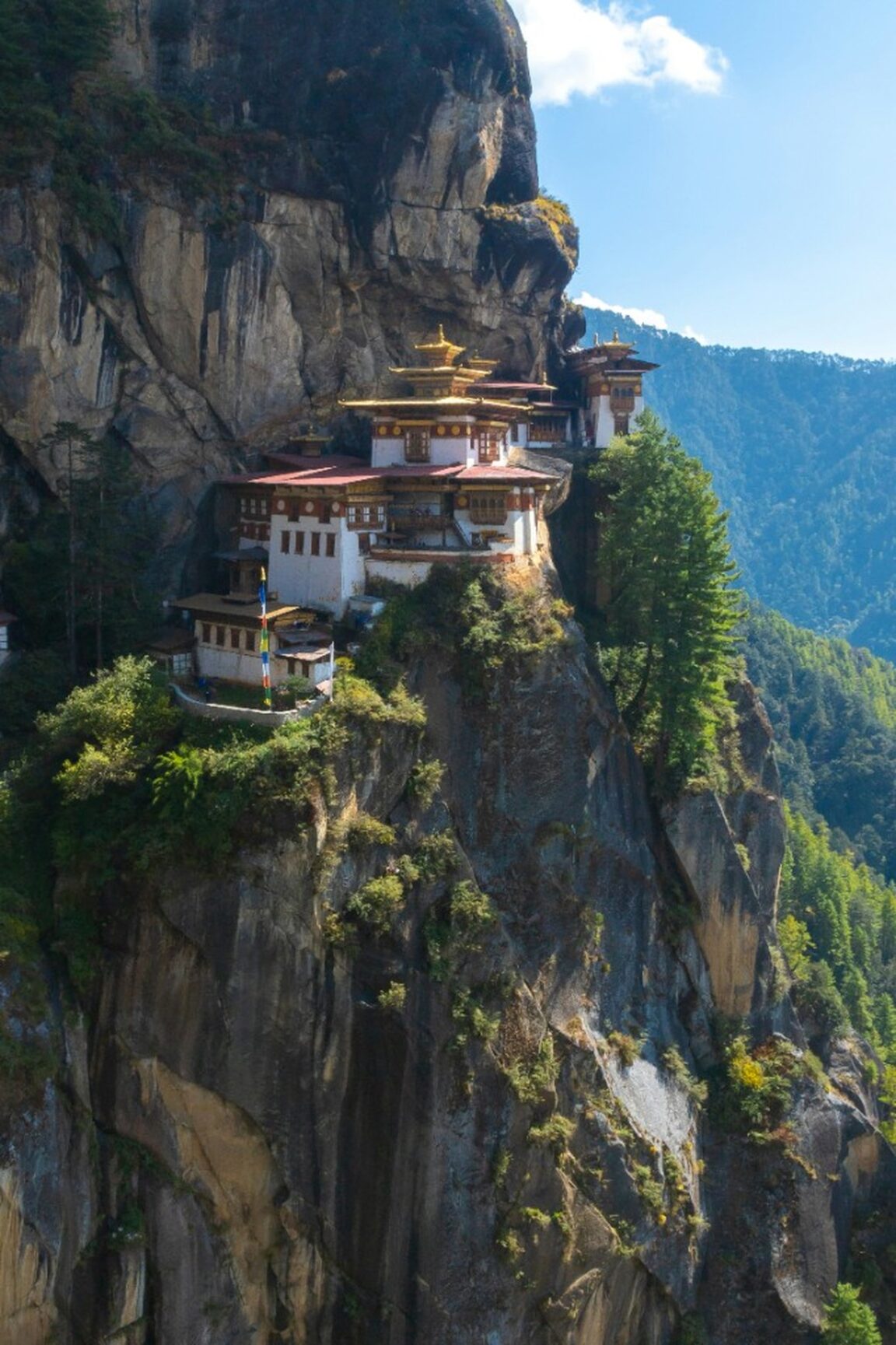
Featured image: Paro Taktsang, the Tiger’s Nest Monastery, above the Paro Valley where the Druk Path begins. Photo by Ugyen Tenzin on Unsplash, Unsplash License, used with credit.