 Rafael Santos
Yes, for the traveller it suits, Palacio Nazarenas is worth its rate: an all suite Belmond hotel of just 55 suites in a former convent built over Inca foundations, two blocks from Cusco’s Plaza de Armas, where every suite is oxygen enriched to soften the city’s 3,400 metre altitude, butler service comes as standard, and the heated outdoor pool was the first built in Cusco. Published starting rates sit around US$900 a night and climb steeply by suite class and season, so the honest question is not whether it is luxurious, but whether you will use the altitude help, the pool and the courtyards enough to justify choosing it over its larger sister hotel next door.
Quick Facts
- What it is: Palacio Nazarenas, A Belmond Hotel, Cusco: 55 suites, all suites, in a former palace and convent on Plazoleta Nazarenas
- Position: Plazoleta Nazarenas 223, about two blocks uphill from the Plaza de Armas, across the square from the Museum of Pre-Columbian Art
- Altitude help: Every suite has an oxygen enrichment system; Belmond states it lowers the relative altitude by about 900 metres
- Standouts: Seven courtyards, original Inca stonework and colonial frescoes, the first outdoor heated pool in Cusco, Hypnoze Spa, Senzo restaurant
- Suite range: Junior Suites up to the 130 square metre Palacio Suite; Studio Suites run about 40 to 60 square metres
- Rates: Published starting rates from around US$900 per night, rising past US$4,000 for the Palacio Suite in published listings checked in November 2026; always confirm live rates on belmond.com for your dates
What is the building, and why does the history matter here?
Palacio Nazarenas stands on Inca foundations on a small, quiet square behind Cusco’s main plaza. The site layered a conquistador era mansion over Inca stonework, then served for more than two centuries as a convent, and the restoration kept the evidence visible: original Inca walls run through the property, stone arches and frescoed ceilings survive in the public rooms, and the suites are arranged around seven courtyards, each with its own planting and mood. That layering is the hotel’s real luxury. Many grand Cusco hotels show you colonial history; this one lets you sleep inside the join between the Inca city and the Spanish one, with the Museum of Pre-Columbian Art directly across the Plazoleta underlining the point.
It sits about two blocks from the Plaza de Armas, close enough to walk to the cathedral and the main restaurants in minutes, far enough up the hill toward San Blas to feel hushed. The airport drive is roughly 15 to 20 minutes depending on traffic. Travellers building a full Sacred Valley sequence around a Cusco stay should read our guide to the Sacred Valley, Pisac and Ollantaytambo, because the smart altitude order, valley first and Cusco second, changes how much help you need from the hotel.
Does the oxygen system actually make a difference?
It is the feature guests talk about most, and Belmond quantifies it plainly: the in suite oxygen enrichment lowers the relative altitude by about 900 metres, promoting better sleep and faster adjustment. At Cusco’s real altitude of about 3,400 metres, that is the difference between a broken first night and a functional first morning for many visitors, especially those who fly straight in from sea level. It does not replace the standard discipline: take the first day gently, hydrate, eat lightly, go easy on alcohol, and consider starting the trip lower, in the Sacred Valley, before sleeping in Cusco at all. But as a built in layer on top of that discipline, available in every suite rather than as a paid extra, the oxygen system is a genuine functional advantage, not a gimmick, and it is the single strongest argument for this hotel over rivals.
Which suite should you actually book?
Work up from the floor plan, not the photographs. The Junior Suites are the entry class, handsome and historic, with a sitting area and dining table, but compact by this hotel’s standards; they suit short stays and travellers who will be out sightseeing all day. The Studio Suites, about 40 to 60 square metres, are the value sweet spot: a real living area, a marble bathroom with underfloor heating, and in some cases a balcony or patio, without the signature suite price jump. City View Studio Suites, about 42 to 55 square metres, trade courtyard quiet for balconies looking over San Blas and southern Cusco. Inca Studio Suites put original Inca stonework inside the room itself, the pick for history led travellers.
Above those, the One Bedroom Suites, about 57 to 68 square metres in the historic colonial wing, split bedroom and lounge properly and work best for families and longer stays. The signature pair, the Nazarenas Suite at 69 square metres with Plazoleta views and the Palacio Suite at 130 square metres with a courtyard terrace, are celebration bookings. Every suite shares the same core kit: butler service, a large marble bathroom, heated floors, and the oxygen system, so money buys space, view and position rather than a different standard of care.
What are the pool, spa and restaurant like?
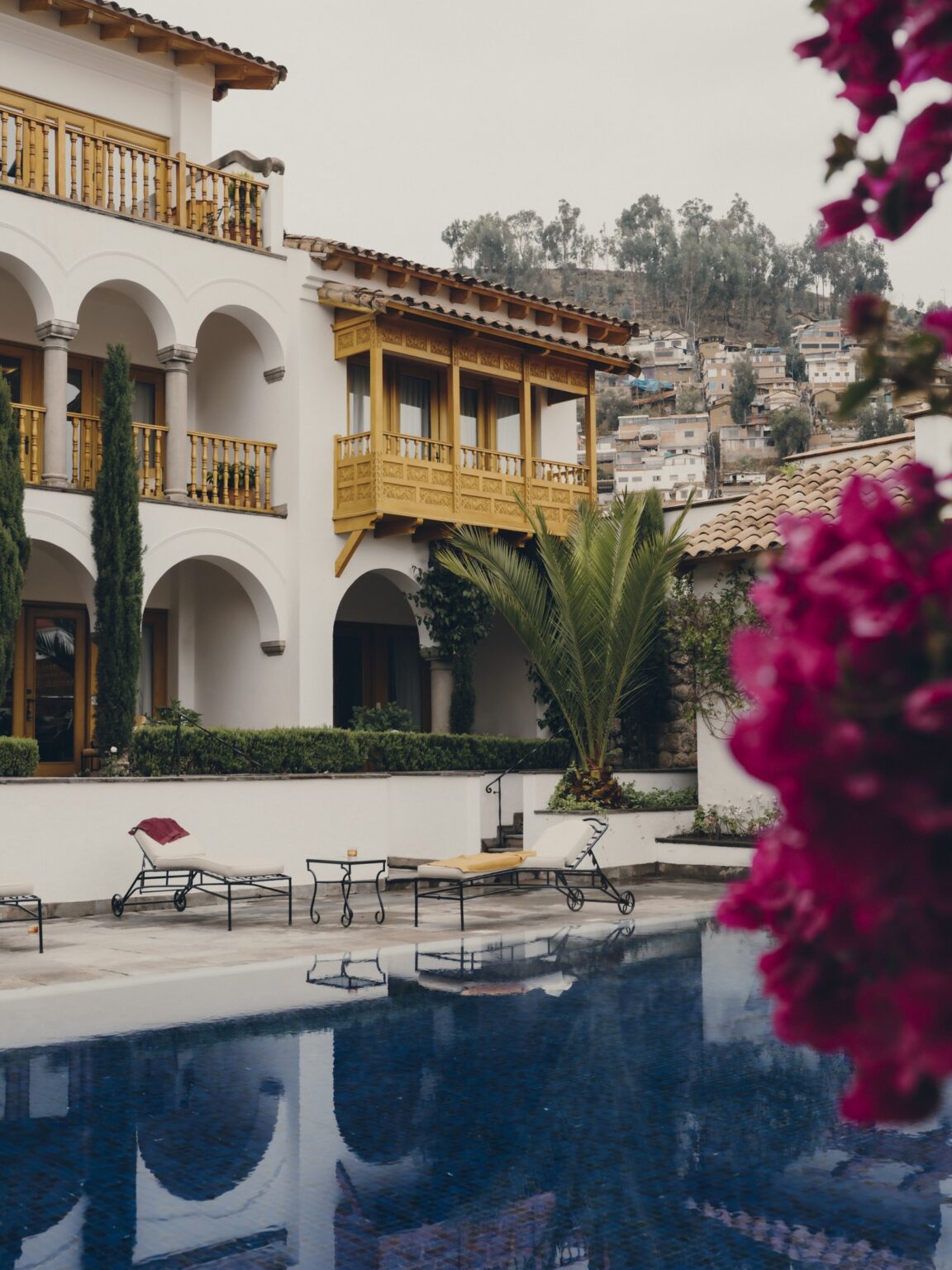
The heated outdoor pool occupies a cloistered terrace and holds a piece of Cusco history: it was the first outdoor pool built in the city, and on a cold Andean morning, with steam rising off warm water inside colonial walls, it remains the hotel’s most photogenic hour. The Hypnoze Spa works in vaulted stone rooms with treatments built around Andean ingredients, a sensible booking for an arrival afternoon when heavy sightseeing is unwise anyway. Senzo, the hotel restaurant, cooks Peruvian and Andean produce, much of it from regional farmers, in a calm dining room that suits a first night dinner in house while you acclimatise. Breakfast, taken slowly, is part of the ritual here; nobody at this altitude should rush it.
How does it compare with Hotel Monasterio next door?
Belmond runs both, and the choice is a matter of temperament. Monasterio, a few steps away, is the larger, grander flagship, a former monastery with a gilded chapel and a busier, more monumental feel. Palacio Nazarenas is the intimate sibling: 55 suites against Monasterio’s much larger room count, contemporary comforts laid over the convent bones, the pool, and a quieter courtyard rhythm. First time visitors who want the full historic spectacle often pick Monasterio; travellers who prioritise sleep, space per guest and the oxygen system pick Nazarenas. Either way, the onward journey usually runs through the valley, and our comparison of PeruRail and Inca Rail trains to Machu Picchu is the practical next read.
When is it worth it, and when is it not?
It is worth it for a first two or three nights at altitude, for honeymoon and milestone trips, for travellers who know altitude hits them hard, and for anyone who will actually use the pool, spa and courtyards rather than treating the hotel as a crash pad. Rates peak with Cusco’s dry season demand, roughly May to September, and around major festivals, and soften in the wetter months, when the courtyards are greener and the city quieter. It is harder to justify on a one night transit stop, where you pay the full rate for a few hours of sleep, or for travellers spending every daylight hour on treks and tours, whose money works harder in the valley. Book the Studio class as the default, the Inca Studio for the stonework, and the signature suites only when the trip itself is the occasion.
Frequently Asked Questions
How many suites does Palacio Nazarenas have?
Fifty five, and every room is a suite. They spread around seven courtyards in the main building and the historic colonial wing, in classes from Junior Suites to the two signature suites.
Is the oxygen really included in every suite?
Yes. Belmond lists the oxygen enrichment system across all suite classes and states that it lowers the relative altitude by about 900 metres. It supports, but does not replace, normal altitude discipline on arrival.
How far is the hotel from the Plaza de Armas?
About two blocks, a few minutes on foot, on the quieter Plazoleta Nazarenas, with the Museum of Pre-Columbian Art across the square and the San Blas artisan quarter uphill behind it.
Does Palacio Nazarenas have a pool?
Yes, a heated outdoor pool on a cloistered terrace, notable as the first outdoor pool built in Cusco. There is also the Hypnoze Spa and the Senzo restaurant on site.
What is the best room for most travellers?
A Studio Suite. It delivers the space, marble bathroom, heated floors, butler service and oxygen system that define the hotel, at a clear step below signature suite pricing. Choose an Inca Studio Suite if original Inca stonework in the room is the draw.
Photo credit: The heated pool courtyard at Palacio Nazarenas, Cusco. Photo from Palacio Nazarenas, A Belmond Hotel, official website (belmond.com), used with credit.