 Thandiwe Nkosi
The Sacred Valley of the Incas is the Urubamba River valley that runs north west from Cusco between Pisac and Ollantaytambo, and the single best decision a Peru traveller can make is to sleep in it for two or three nights instead of crossing it on a one day tour bus from Cusco. The valley floor, at roughly 2,800 to 3,000 metres, sits several hundred metres lower than Cusco at about 3,400 metres, so nights here are kinder at the start of a trip. It holds two of the great Inca sites, the terraced citadel of Pisac and the fortress town of Ollantaytambo, plus the circular terraces of Moray and the salt pans of Maras, and it ends at the station most trains to Machu Picchu leave from. This guide explains the valley as a stay: the ticket that covers it, the altitude pacing, and the order to do things in.
Quick Facts
- Location: Urubamba, also called Vilcanota, River valley in the Cusco region of Peru, between Pisac and Ollantaytambo
- Valley floor altitude: About 2,800 to 3,000 metres. Ollantaytambo is about 2,792 metres, Pisac town about 2,972 metres, Cusco about 3,400 metres
- Higher outliers: Chinchero about 3,762 metres and Moray about 3,500 metres, both above Cusco, so visit them after acclimatising
- The ticket: Boleto Turistico del Cusco, run by COSITUC. Partial Circuit III costs S/70 for foreign visitors, valid 2 days, covering Pisac, Ollantaytambo, Chinchero and Moray. The Integral ticket costs S/130, valid 10 days, covering 16 sites
- Not on the ticket: The Maras salt pans, which charge a separate community entry in cash, and Machu Picchu, which has its own ticket system
- Main bases: Ollantaytambo for the train and atmosphere, Urubamba for countryside lodges, Pisac for a smaller, quieter stay
- Train hub: Ollantaytambo station, about 1 hour 45 minutes by train to Aguas Calientes for Machu Picchu
- Best season: The dry season, roughly May to September, for clear days and firm paths. The rainy season, roughly November to March, is greener and quieter
Why does staying in the valley beat the day tour?
The standard Sacred Valley day tour from Cusco is a feat of compression: Pisac, a buffet lunch in Urubamba, Ollantaytambo and Chinchero in a single long day, arriving at each site in the same midday convoy as every other bus. Staying in the valley inverts all of that. Evenings in Ollantaytambo, once the day trippers have left for Cusco or boarded the train, are quiet and lamplit, with the fortress terraces darkening above the town. Early mornings are quieter still, and a resident can be inside the Pisac or Ollantaytambo gates at opening time, hours ahead of the convoys.
The altitude argument is just as strong. Flying from Lima, at sea level, into Cusco at about 3,400 metres is one of the sharpest altitude jumps in mainstream travel. Descending immediately to sleep at about 2,800 metres in the valley, then day tripping back up, is the classic mitigation, and it is built into the geography: Cusco airport to Urubamba is roughly an hour and a half by road, and to Ollantaytambo a little longer. Our explainer of the Salkantay Trek lodge route makes the same point for walkers: in this region, the order in which you sleep high and low is a health decision, not an itinerary detail.
What is Pisac, and how should you visit it?
Pisac, about 33 kilometres from Cusco at the eastern, Cusco end of the valley, has two halves. The modern town, at about 2,972 metres, is known for its market, which fills the main square and is at its largest and liveliest on Sundays, with Tuesday and Thursday also traditional market days. Above the town, spread along a high ridge, is Inca Pisac: one of the largest Inca sites in the valley, a complex of agricultural terraces curving around the mountainside, ceremonial buildings in fine fitted stonework, watchtowers, residential quarters and a hillside honeycombed with the holes of an ancient cemetery.
The rewarding way to visit is to take a taxi to the upper entrance and walk down through the site to the town, a descent of about one and a half to two hours with stops, passing from the ceremonial centre through the terraces rather than climbing up and retracing your steps. Go early. Tour groups reach Pisac from mid morning, and the terraces in early light, with the valley below, are a different place. Entry is only through the Boleto Turistico: there is no single site ticket, so the ticket decision, explained below, has to be made before the first gate.
What makes Ollantaytambo different from every other site?
Ollantaytambo, about 60 kilometres from Cusco at the western, lower end of the valley at about 2,792 metres, is the best preserved living Inca town in Peru. That phrase is literal. The town below the fortress still follows its Inca street plan, a grid of narrow stone walled lanes, with water channels running beside them, and many houses stand on Inca foundations in continuous use. It was also a fortress and royal estate, and the scene in 1537 of Manco Inca’s victory over a Spanish force, one of the very few Inca victories of the conquest period, before he withdrew further into the mountains.
The archaeological site climbs the hillside in a steep staircase of massive terraces to the unfinished Temple of the Sun, whose Wall of the Six Monoliths is built from enormous pink granite blocks hauled from the Cachicata quarry across the valley, a feat of logistics visitors can still read in the landscape, with abandoned stones along the route. Allow two hours for the fortress alone, and go first thing or late in the afternoon to avoid the late morning peak, when tour groups pass through on their way to the station. Across the town, the Pinkuylluna storehouses climb the opposite hillside on a free, steep path of about 30 to 45 minutes, and give the best view back over the town and fortress. In the evening, Ollantaytambo repays its overnight guests: small restaurants around the square, the river audible, and the early train the next morning caught without a dawn transfer from Cusco.
How does the Boleto Turistico work?
Most Cusco region sites do not sell individual entry. Pisac, Ollantaytambo, Chinchero and Moray are covered by the Boleto Turistico del Cusco, administered by COSITUC, and a traveller must hold the right version at the first gate. As listed on COSITUC’s official tariff and checked again in October 2026 reporting, the Partial Circuit III ticket for foreign visitors costs S/70 and is valid for 2 days, covering exactly those four Sacred Valley sites. The Integral, or general, ticket costs S/130, is valid for 10 days, and covers 16 sites across the valley, Cusco city and the South Valley, including Sacsayhuaman above Cusco.
The arithmetic is simple. A traveller doing only the valley in two days, who has already seen or will skip the Cusco sites, saves money with Circuit III. Anyone spending three or more days across Cusco and the valley will almost always find the Integral ticket better value, and it removes the two day clock that can rush a valley stay. Buy either at the COSITUC office on Avenida El Sol in Cusco or at the first covered site, carry the physical ticket and your passport, and note the two common exclusions: the Maras salt pans charge their own separate community entry, payable in cash, and Machu Picchu is an entirely separate ticket, booked through the official Peruvian platform well ahead in season.
What about Moray, Maras and Chinchero?
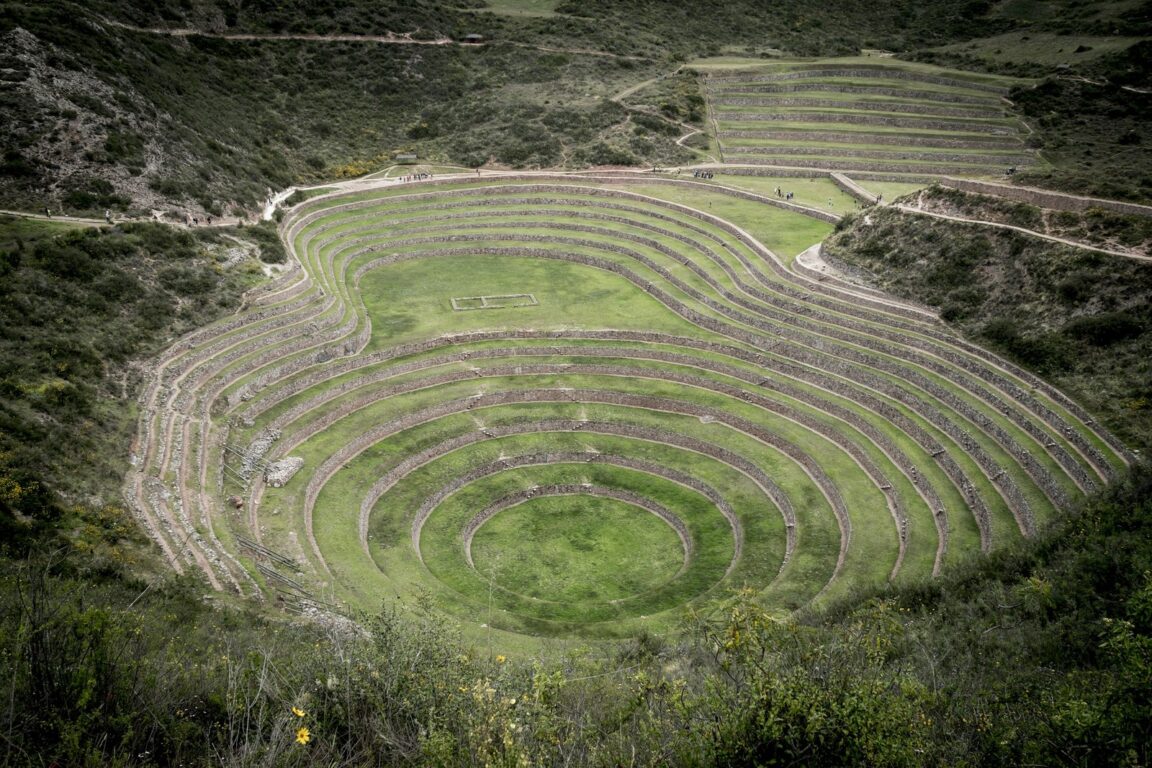
The classic half day from the valley floor pairs Moray and Maras, which sit close together on the plateau above Urubamba. Moray is a set of vast concentric circular terraces sunk into natural hollows, like green amphitheatres. The leading interpretation is agricultural experimentation: the temperature difference between the top and bottom rings is significant, creating stacked microclimates in which the Incas could test crops from different altitudes. Visitors view the circles from the rim paths; walking down into the main circle is no longer permitted. Maras, a short drive away, is the opposite kind of spectacle: thousands of small salt pans terraced down a hillside, fed by a salty spring and worked by local families as they have been since before the Incas. It has its own cash entry, is not on the boleto, and is now viewed from paths along the edge rather than by walking among the pans.
Chinchero, on the high plateau on the road between Cusco and the valley at about 3,762 metres, combines Inca terraces and foundations, a colonial church built on an Inca palace base, weaving cooperatives demonstrating natural dyes, and a strong Sunday market. Its altitude, higher than Cusco itself, is the reason to schedule it late in a valley stay, on the way back to Cusco, rather than as a first day stop. Travellers who like a high town taken slowly, with ruins and weaving in the same afternoon, will find a useful comparison in our three day guide to Antigua in Guatemala, another colonial and indigenous crossroads that punishes rushing.
How should you pace the altitude?
Treat the numbers as the itinerary. Sleep the first two or three nights at valley altitude, about 2,800 to 2,900 metres in Ollantaytambo or Urubamba. Keep the first day gentle: the town, the lower terraces, an early night. Add Pisac, whose upper site reaches roughly 3,400 metres, on the second day, and Moray and Chinchero, at 3,500 and 3,762 metres, last. Drink water steadily, eat lightly and go easy on alcohol for the first 48 hours, and build the Machu Picchu day, which drops to about 2,430 metres at the site itself, wherever it fits logistically, since it is a descent, not a climb. Anyone who develops worsening headache, nausea or breathlessness at rest should descend and seek medical advice rather than pushing on to a higher site: in the Sacred Valley, descending is always available within the hour, which is one more reason to base here.
Frequently Asked Questions
How many days do you need in the Sacred Valley?
Two full days covers Pisac, Ollantaytambo, Moray and Maras at a civilised pace. Three nights is better: it allows an unhurried Ollantaytambo evening, a market morning, and proper altitude pacing before Machu Picchu or Cusco.
Which Boleto Turistico should you buy?
For the valley alone, the Partial Circuit III ticket at S/70 for foreign visitors, valid 2 days, covers Pisac, Ollantaytambo, Chinchero and Moray. If Cusco city and South Valley sites are also on the plan, the Integral ticket at S/130, valid 10 days for 16 sites, is usually better value. Prices follow the COSITUC tariff, so confirm them shortly before travel.
Is the Sacred Valley lower than Cusco?
Yes, on the valley floor. Ollantaytambo is about 2,792 metres and Pisac town about 2,972 metres, against about 3,400 metres in Cusco, which is why sleeping in the valley helps acclimatisation. Chinchero and Moray, on the plateau, are higher than Cusco, so visit them later in the stay.
Are the Maras salt pans included in the tourist ticket?
No. The Salineras de Maras are run by the local community and charge a separate entry, paid in cash on site. Moray, nearby, is on the boleto. The pairing of the two is the classic Sacred Valley half day.
Where do trains to Machu Picchu leave from?
Most services leave from Ollantaytambo station, at the western end of the valley, taking about 1 hour 45 minutes to Aguas Calientes. Some services also run from Cusco area stations and from Urubamba. Machu Picchu entry is a separate ticket from the boleto and should be booked well ahead in season.
When is the best time to visit the Sacred Valley?
The dry season, roughly May to September, brings clear days, the best mountain views and firm paths, and the largest crowds. The rainy season, roughly November to March, is greener, quieter and muddier. Shoulder months such as April and October balance the two.