 River Callahan
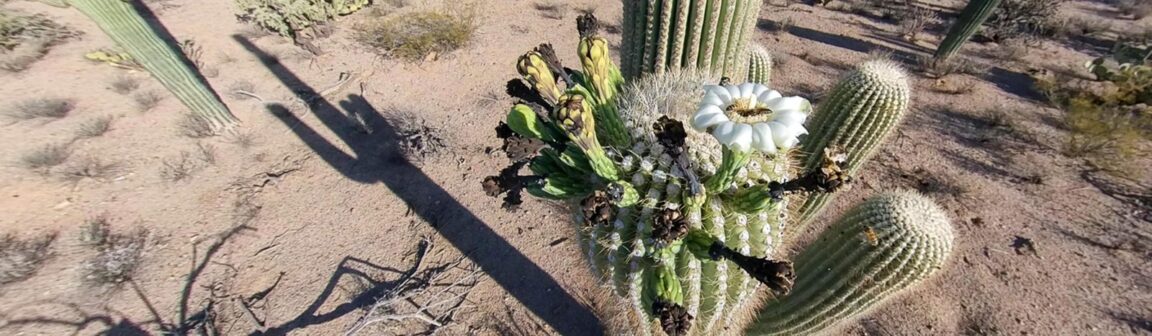
Saguaro bloom season is short, early and split across a city: the white flowers open at night from the last two weeks of April, peak in the last week of May into the first week of June, and each individual blossom lasts about a day, so the winning plan is dawn starts in both districts of Saguaro National Park rather than a single midday visit. The Tucson Mountain District in the west holds the densest saguaro forest and the Valley View Overlook for golden hour, while the Rincon Mountain District in the east adds higher ground and a sky island backdrop. One 7 day pass covers both, and they sit about 30 miles apart with Tucson in between.
Quick Facts
- Park: Saguaro National Park, Tucson, Arizona, in two districts: Tucson Mountain District (West) and Rincon Mountain District (East), about 30 miles and 45 to 60 minutes apart.
- Bloom window: Saguaro flowering begins around the last two weeks of April; peak flowering runs from the last week of May through the first week of June, per the National Park Service Saguaro Flower Power study. Fruit ripens deep red in late June and early July.
- One flower: Each blossom opens overnight, is fully open before sunrise and closes by the following afternoon, living roughly 24 hours. Saguaros first flower at about 35 years of age.
- Entrance pass: Standard Pass $15 to $25 per vehicle, valid 7 days and covering both districts; Saguaro Annual Pass $45. The park is cashless, credit and debit only.
- Golden hour walk: Valley View Overlook Nature Trail in the west district, an easy 0.8 mile round trip from the Bajada Loop Drive, looking west over Avra Valley.
- Visitor centers: Red Hills Visitor Center serves the west district; Rincon Mountain Visitor Center and a fee kiosk serve the east district.
- Facts checked: 20 November 2026, against the National Park Service pages for Saguaro at nps.gov.
When exactly do the saguaros bloom, and why does timing beat location?
The National Park Service tracked saguaro flowering in the park from 2017 to 2023, and its findings give planners a usable calendar. Flowering is triggered as days lengthen and temperatures rise. It begins around the last two weeks of April, reaches its peak during the last week of May through the first week of June, and then gives way to fruit that ripens to a deep red in late June and early July. The park’s own flowers guide adds the wider frame: the greatest number of cactus species in bloom is likely in the first week of May, with the saguaro itself often at peak toward the end of May, and spring wildflowers in a good year are often best in mid to late March.
The daily clock matters as much as the calendar. Saguaro flowers open after sunset and are fully open before sunrise, then begin closing by the following afternoon. A visitor who arrives at noon in peak week can stand in a forest of closed buds and conclude the season was oversold. A visitor on the trail at first light sees open white flowers at the crowns and arm tips, with bees working them in the cool of the morning. Plan bloom viewing for the first hours of the day, and treat any flowers still open at a late afternoon overlook as a bonus rather than the plan. Bloom also moves directionally across each plant, from east to west and then counterclockwise, a detail that rewards a second morning in the park over a single rushed one.
East or west: how do the two districts actually differ?
Saguaro National Park wraps around Tucson, a city of about a million residents sitting just under 2,400 feet above sea level, about 60 miles north of the border with Mexico and about 100 miles south of Phoenix. The two districts are roughly 30 miles apart, a 45 to 60 minute drive, and there is no road through the park joining them. Choosing between them, or sequencing both, is the main structural decision of a bloom trip.
The Tucson Mountain District, the west district, is the classic postcard: large stands of saguaro forming a dense saguaro forest, the Red Hills Visitor Center, and the unpaved Bajada Loop Drive threading through the cactus stands. It is the stronger district for pure bloom density and for short walks among mature, multi armed saguaros. The Rincon Mountain District, the east district, pairs its cactus forest with a genuine sky island, the Rincon Mountains rising behind the desert floor, with wildlife that includes bears, cougars and the elusive coati, and a different, higher feel on its loop drive and trails. Neither district is a substitute for the other. With a 7 day pass covering both, the sensible bloom itinerary gives the west a dawn and a golden hour, and the east a full morning, rather than trying to compress both into one hot afternoon. For how reservation and pass systems now differ park by park, see our roundup of US national park reservations in 2026; Saguaro, usefully, has no timed entry booking to fight for.
What does a good west district bloom morning look like?
Start at the Red Hills Visitor Center for current conditions and the day’s ranger advice, then drive the Bajada Loop while the light is still low and the flowers are open. Walk short trails early, before heat builds on the desert floor, and keep the longer exposed walks for the first two hours. By late morning, shift to shade, the visitor center exhibits and a Tucson lunch, and save exposed viewpoints for the end of the day. That rhythm, dawn effort and evening light with a midday retreat, is the pattern that makes late May in the Sonoran Desert enjoyable instead of punishing, and it mirrors the approach in our seasonal guide to Joshua Tree in winter, where the desert day is also won at its edges.
Why is Valley View Overlook the golden hour choice?
The Valley View Overlook Nature Trail is an easy 0.8 mile round trip in the west district, starting from the Valley View Trailhead on the Bajada Loop Drive, about 1.3 miles from the turn off from Kinney Road. The trail was built by the Civilian Conservation Corps in the 1930s, and parking sits along the left side of the dirt loop road; if the spaces are full, the park asks visitors not to park illegally. There are no restrooms at the trailhead, so the visitor center or the Sus Picnic Area near the start of the loop are the practical stops.
The payoff faces the right way for the end of the day. From the overlook, the view runs west across Avra Valley, with Signal Hill visible as a small dark mound and the jagged ridge of Picacho Peak to the north. In bloom season that westward view means saguaros in the foreground lit warm and low, long shadows across the bajada, and, on mornings after a flowering night, a reason to return at dawn when the new day’s blossoms are open. Golden hour here is about landscape and light rather than open flowers, since most blossoms have closed by afternoon, and setting that expectation honestly makes the walk better, not worse. Go for the valley, the silhouettes and the colour on the Tucson Mountains, and let the dawn walk carry the flower viewing.
What will the bloom trip cost, and how should the days be sequenced?
The park maths are simple. A Standard Pass costs $15 to $25 depending on how you enter, covers one private vehicle and its passengers, and is valid for 7 days across both districts. Motorcycles are admitted under the same pass structure, individuals on foot or bicycle aged 16 and over need their own pass, and children 15 and under are free. The Saguaro Annual Pass at $45 suits repeat visitors, and America the Beautiful passes are accepted. Payment is by credit or debit only, at the Red Hills Visitor Center in the west and at the Rincon Mountain Visitor Center and fee kiosk in the east. There is no additional reservation fee and no timed entry system to book.
Sequence the trip around heat and bloom, in this order. First, pick dates inside the peak window, the last week of May into the first week of June, accepting that the exact peak shifts a little each year with winter rain and spring temperatures. Second, base in Tucson itself, since the city sits between the districts and the 45 to 60 minute cross town drive is part of every two district day. Third, front load the west district’s dense forest at dawn on day one, take the east district as a longer morning on day two, and keep one spare dawn in hand: if the first morning is windy or the flowers are a day behind the forecast, the spare morning is what saves the trip. Finally, build the midday hours around Tucson’s museums, food and shade rather than exposed trails, and carry more water than seems reasonable for short walks, because late May heat on the desert floor is the season’s real price of admission.
Frequently Asked Questions
What is the single best week for saguaro bloom?
The National Park Service flowering study puts peak flowering in the last week of May through the first week of June, with flowering beginning around the last two weeks of April. Aim for that peak window, plan dawn starts, and keep a spare morning in the itinerary in case the local peak shifts by a few days.
What time of day are saguaro flowers open?
Individual flowers open overnight, are fully open before sunrise and close by the following afternoon, living about 24 hours in total. Early morning, from first light through the first hours of the day, is the reliable viewing window. By midday in peak season most blossoms on a plant will have closed.
Which district is better for seeing the bloom?
The west Tucson Mountain District has the densest saguaro forest and the Valley View Overlook, making it the stronger choice if only one district fits. The east Rincon Mountain District adds higher ground, a sky island setting and its own cactus forest. One pass covers both for 7 days, and they are about 30 miles apart, so most bloom trips should see both.
How much does Saguaro National Park cost?
A Standard Pass is $15 to $25, valid for 7 days in both districts, with a vehicle pass covering the driver and all passengers. The Saguaro Annual Pass is $45, America the Beautiful passes are accepted, and children 15 and under are free. The park does not accept cash, so bring a credit or debit card.
Can the Valley View Overlook be done at sunrise instead of golden hour?
Yes, and in bloom season sunrise is arguably the better flower viewing choice, because blossoms are open in the early morning. The overlook faces west over Avra Valley, so the evening visit wins for light across the valley and saguaro silhouettes, while the morning visit wins for open flowers. The trail is an easy 0.8 mile round trip, so doing it twice, once at each end of the day, is realistic.
What if the trip falls in late June instead of May?
The flower peak will likely have passed, but the season has a second act: saguaro fruit ripens to a deep red in late June and early July, a spectacle with its own long cultural history in the park, including the traditional Tohono Oodham harvest. Expect hotter conditions, keep walks to dawn and dusk, and check at the visitor centers for current conditions and any ranger led programs.
Facts verified 20 November 2026 against the National Park Service Saguaro pages at nps.gov, including fees and passes, the Saguaro Flower Power flowering study, the park flowers guide and the Valley View Overlook trail page. Bloom timing varies each year with weather, so check park updates close to travel.