 Elena Vasquez
Two weeks in Sri Lanka costs roughly $900 to $1,400 per person on a comfortable mid-range budget, excluding international flights, and the two decisions that move that total most are how you cross the hill country and whether you hire a private driver for the Cultural Triangle. Ride the trains, use a driver only for the Sigiriya and Dambulla days, and sleep in family run guesthouses, and a fortnight lands near the bottom of that range. Keep a driver for the whole circuit and choose boutique hotels, and the same route passes $2,500 per person quickly. This guide breaks the trip into its real cost lines, checked on 20 November 2026, so you can see exactly where the money goes before you book anything.
Quick Facts: What Two Weeks in Sri Lanka Costs
- Comfortable mid-range total: about $900 to $1,400 per person for 14 days, excluding international flights
- Budget total: about $550 to $750 per person using guesthouses, trains and local buses
- Boutique total: $2,500 per person and up, driven by hotel choice and a full time private driver
- Private driver: the single biggest variable, typically quoted per day for car, fuel and driver
- Trains: the cheapest scenic transport in the country, with reserved seats on the Kandy to Ella line booked through Sri Lanka Railways
- Heritage costs: Sigiriya, Polonnaruwa and Anuradhapura each charge a separate foreign visitor ticket, and the maths rewards planning the Triangle in one block
- Beach split: the south and west coasts peak from December to March, the east coast around Trincomalee and Arugam Bay peaks from May to September
- Prices checked: 20 November 2026, against Sri Lanka Railways, the Department of Archaeology ticketing and operator rates
What does a realistic day in Sri Lanka actually cost?
Start with the daily baseline, because every itinerary decision sits on top of it. A clean, well reviewed guesthouse double room with breakfast in towns like Sigiriya, Kandy or Ella generally runs $25 to $50 a night, and a solid mid-range hotel with a pool runs $60 to $120. Eating well is inexpensive by any standard: a rice and curry lunch in a local restaurant costs a few dollars, a seafood dinner on the south coast in a traveller facing restaurant costs $10 to $20, and a three dollar breakfast of hoppers and tea is easy to find everywhere. Local buses cost cents rather than dollars, a short tuk tuk ride in a town costs $1 to $3, and a litre of bottled water is under a dollar. Put together, a couple travelling mid-range, before long distance transport and site tickets, spends roughly $70 to $110 a day between them. The travellers who blow their Sri Lanka budget almost never do it on food or beds. They do it on transport, which is why the next two sections matter more than any hotel choice.
Trains or a private driver: which one should carry your budget?
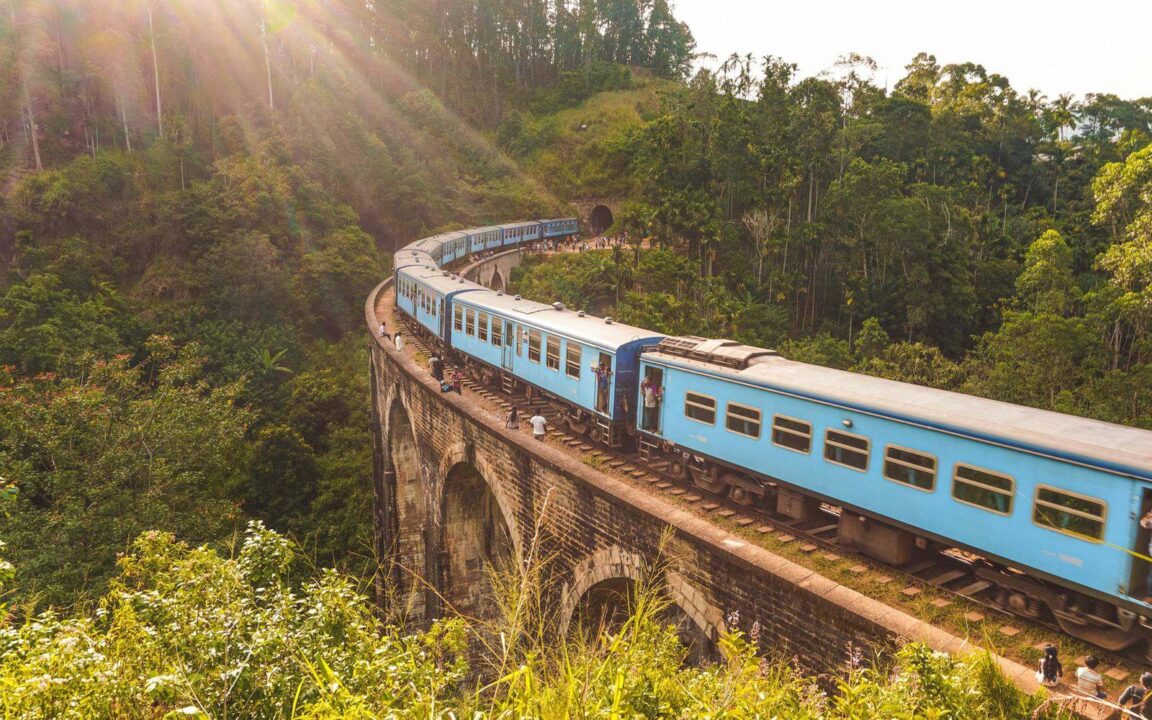
Sri Lanka runs one of the great scenic rail networks in Asia, and it is priced like public transport rather than an attraction. The hill country line from Kandy through Nanu Oya, Haputale and Ella to Badulla crosses the Nine Arch Bridge at Demodara and climbs through tea estates for seven hours at a pace that suits the scenery. Reserved seats are sold through Sri Lanka Railways and its official booking channels, and even first class observation car seats cost a small fraction of a day of private driving. Colombo to Kandy by train takes about two and a half to three hours and avoids the worst of the capital’s traffic entirely. For the south coast, the line from Colombo Fort to Galle and Matara runs beside the ocean for long stretches and is similarly inexpensive.
A private driver with a car, quoted per day including fuel and the driver’s own food and lodging, is the standard way to cover the Cultural Triangle, where the sights are spread out and the rail network does not reach. Hiring one for three or four Triangle days, then switching to trains for the hills and the coast, is the hybrid pattern that keeps most two week budgets intact. Hiring one for all fourteen days roughly doubles the transport line and removes the train journeys that many travellers later name as the highlight of the trip. The honest trade-off is comfort and door to door ease against cost and experience: the driver wins on the days with three scattered sights and heavy luggage, and the train wins everywhere the railway actually goes. For more on reading rail classes before you book, see our guide to how railway classes and reserved seats work in South Asia, and for the pass-versus-tickets question in another heritage heavy country, our Jordan Pass maths works through the same decision in a different currency.
How much do the Cultural Triangle sites add up to?
The ancient cities charge foreign visitors per site, and the tickets are priced in a way that punishes drifting. Sigiriya, the rock fortress that anchors most itineraries, is the single most expensive ticket on the circuit. Polonnaruwa and Anuradhapura each carry their own substantial foreign visitor fees, Dambulla’s cave temple costs less, and smaller sites such as Pidurangala Rock, which faces Sigiriya and gives the classic view of it, cost very little. There is no single pass that makes the maths disappear, so the saving comes from sequencing: base in or near Sigiriya village for two or three nights, group Dambulla with the drive in or out, and give Polonnaruwa a full day rather than paying its ticket for a rushed two hours. Travellers on the tightest budgets sometimes choose two of the three big ticket cities and spend the saved day in the hills instead. That is a legitimate choice, but make it deliberately, on paper, rather than at a ticket desk.
What does the classic two week route cost, leg by leg?
The route most first timers follow runs Colombo or Negombo for a landing night, then the Cultural Triangle, Kandy, the hill country by train to Ella, a safari stop at Yala or Udawalawe, and the south coast beaches before returning to Colombo. Costed at mid-range, the landing night and Triangle block, with three days of private driving and the big site tickets, is the most expensive stretch per day of the whole trip. Kandy itself is cheap to sleep and eat in, and the train days that follow are the cheapest of the fortnight while also being the most scenic. A half day jeep safari at Udawalawe or Yala, priced per jeep and split between passengers, adds a noticeable but one off line; filling the jeep is the easiest saving in the whole budget. The beach days at the end are where daily spending falls again, unless whale watching trips, surf lessons or a boutique villa pull it back up. Across the fourteen days the pattern is consistent: an expensive first week in the Triangle, a cheap and glorious middle in the hills, and a beach finish whose cost is almost entirely up to you.
Which coast should your beach days use, and what does the season change?
Sri Lanka has two monsoons, and they hit opposite coasts. From December to March the south and west coasts, including Galle, Mirissa, Weligama and Bentota, get their calm seas and dry weather, while the east coast is wet. From May to September the pattern flips, and Trincomalee, Nilaveli and Arugam Bay on the east coast have their season while the south west is rough. Booking the wrong coast does not just risk rain; in shoulder weeks it also means paying peak prices for a beach you cannot swim from. Prices follow the same split, so an east coast trip in July often finds better value in guesthouses than a south coast trip in January, when the best rooms in Galle Fort and Mirissa book out early and price accordingly. Build the route around the season first and the bargain second, and the beach line of the budget mostly takes care of itself.
Where can you save without shrinking the trip?
Four savings repeat across every well run Sri Lanka budget. First, use the driver surgically: Triangle days only, and let trains do the long scenic legs. Second, sleep in the strong layer of family guesthouses, which in Sri Lanka frequently outscore mid-range hotels on food and welcome at half the price. Third, eat one local meal a day; rice and curry lunches and hopper breakfasts are both the cheapest and, for many travellers, the best food of the trip. Fourth, treat the safari jeep, the whale watching boat and any private boat trips as shared costs to fill, not solo luxuries. None of these touches the experiences people travel to Sri Lanka for. What does shrink the trip is cutting the hill country train or rushing the Triangle, and those are the last places a sensible budget should look.
Frequently asked questions about Sri Lanka trip costs
How much money should I bring for two weeks in Sri Lanka?
Budget roughly $550 to $750 per person at guesthouse level, $900 to $1,400 mid-range, and $2,500 or more for boutique hotels with a full time driver, excluding international flights. Card payment is common in hotels and larger restaurants, but carry cash in rupees for trains bought locally, tuk tuks, small eateries and site tickets.
Is a private driver in Sri Lanka worth the money?
For the Cultural Triangle, yes: the sights are scattered, the days are hot, and a driver turns three awkward journeys into one smooth loop. For the hill country and the south coast, the trains are cheaper, scenic and part of the experience, so hiring a driver for the whole fortnight usually buys convenience at the cost of the trip’s best journeys.
Do I need to book the Kandy to Ella train in advance?
Reserved seats on the hill country line sell out in peak season, especially the observation car and first class, so book through Sri Lanka Railways or its official agents as early as reservations open for your date. Unreserved second and third class carriages exist, but you may stand for the most scenic sections in busy weeks.
What is the most expensive part of a Sri Lanka trip?
For most travellers it is the combination of a private driver and the Cultural Triangle’s foreign visitor tickets in the first week. International flights aside, those two lines together can exceed everything spent on food for the entire fortnight.
When is the cheapest time to visit Sri Lanka?
Shoulder weeks at the edges of each coast’s season, such as late April or October into November, often bring lower room rates, but the weather risk rises and the two monsoons overlap. Pick your coast by season first, then hunt for value inside that window rather than travelling in the wettest weeks to save on rooms.
Prices and fares checked on 20 November 2026 against Sri Lanka Railways, official site ticketing and current operator rates. Transport quotes vary by vehicle, season and route, so confirm the exact figure for your dates before you commit.