 Wei Chen
Pack for Alaska in summer as two trips sharing one bag: a cruise, where the enemies are glacier wind on deck and one smart evening, and a land tour, where the enemies are rain, mosquitoes and a temperature range the National Park Service puts at 30 to 80 degrees Fahrenheit in the summer months. The split bag solves both. One soft duffel or case holds a cruise half, deck layers and a single repeatable smart outfit, and a land half, a real rain shell, a warm mid layer and the mosquito kit, with the crossover items, walking shoes and the waterproof shell, worn or carried every day. Build the bag around Denali’s numbers and the Inside Passage will feel easy.
Quick Facts
- The range: The National Park Service gear list for Denali tells summer visitors to be prepared for 30 to 80 degrees F, minus 1 to 27 degrees C.
- Denali averages: Park headquarters records put June at a 65 degree F average high and 41 low, July at 66 high and 45 low, and August at 61 high and 41 low.
- The wet season: Summer is Denali’s wettest season, 8.55 inches of precipitation across the summer months in the park’s climate records.
- Mosquitoes: Bad from May to early August per the Park Service, with the biting season lasting about a month longer in wetter areas such as Wonder Lake. Repellent and a head net are on its official gear list.
- The system: Two packing cubes or two halves of one bag, cruise and land, with shell, shoes and warm layer shared between them.
- Checked: Temperatures and insect season verified against nps.gov on 20 November 2026.
Why does one Alaska bag have to work twice?
Because the classic Alaska summer itinerary is two holidays bolted together: seven days on a ship through the Inside Passage, then days on land, by rail, coach and foot, in the interior. The two halves impose opposite demands. On the ship you stand still in moving air, on deck for glacier viewing, in the rain shadow of fjords, and then sit down to dinner in a warm dining room where the line asks for smart dress on its formal or dressy nights. On land you walk in weather that the Park Service describes with unusual honesty: its official Denali gear checklist says to prepare for 30 to 80 degrees F in summer, a 50 degree spread that no single outfit survives. Pack two wardrobes and you will haul a dead half through every hotel change. Pack the split bag below and each half stays small because the expensive, bulky crossover kit, the shell, the insulation and the shoes, is shared.
What goes in the cruise half?
Deck kit first. Glacier viewing is a stationary, windy, often drizzly hour or two, and the cold comes from wind over water, not from the air temperature on the forecast. Pack a windproof and waterproof shell that fits over your land mid layer, a warm hat, thin gloves and a neck gaiter, and you will stay on deck while the ship turns in front of the ice, which is when the calving happens. Under it, cruise days need less than people pack: two pairs of trousers that work ashore and at a casual dinner, three tops, and layers for the ship’s air conditioning, which runs cold against the summer outside. The formal night question resolves simply. Ships have softened their dress codes into dressy or elegant nights, and one smart outfit, worn twice with different accessories, a dark trouser or skirt, a proper shirt or blouse, a jacket or wrap that packs flat, answers it. Nobody is keeping score across the week, and the expedition half of your trip will not forgive you the suit bag. Finish the cruise half with swim kit only if your ship’s pools and hot tubs are genuinely on your plan, and binoculars, which earn their weight every single day in Alaska, on deck and on land alike.
What goes in the land half?
Weatherproofing and insect defence, built on the Park Service’s own list. Its gear checklist for Denali puts insect repellent and a head net on the summer list, noting that mosquitoes are usually bad from May to early August and that the biting season lasts another month in wetter parts of the park, around Wonder Lake. A head net weighs almost nothing and is the difference between a tundra stop you enjoy and one you endure. Rain is the second certainty: the park’s climate records make summer its wettest season, and headquarters averages show July, the warmest month, is also among the wettest, with an average high of 66 degrees F and a low of 45. So the land half carries the real rain shell, again, it is the shared one, waterproof over trousers if you will hike, a fleece or light insulated jacket for 40 degree mornings, and walking shoes or light boots with tread, broken in, that double as your shore excursion shoes on the cruise. Add a sleep layer that works at the cool end of the range: the same Park Service list suggests overnight protection to 20 degrees F for summer camping trips, and while hotel travellers need nothing like that, a warm base layer turns a chilly lodge evening and a 5am wildlife start into non events. Sun protection closes the half: at Alaska’s summer latitudes the daylight is long, the sun stays up late, and an eye mask for sleeping in bright rooms is the smallest high value item in the bag.
How does the split actually pack?
One bag, two cubes, one shared layer system carried outside both. The cruise cube holds the smart outfit, the extra tops and the dressier trousers. The land cube holds base layers, hiking trousers, the mosquito kit and the warm sleep layer. Between them, not in either, sit the items both halves use daily: the shell, the mid layer, the walking shoes on your feet, hat, gloves and binoculars in your daypack. The daypack is the real Alaska bag, because it is what you carry onto every excursion, every train and every park bus: shell, insulation, head net, repellent, water, binoculars and camera, in that order of importance. The same discipline that makes our Azores in autumn packing system work, shell and warm layer never in the hold, applies here with mosquitoes added. And if your trip starts with the northern lights of packing problems, cold, wet and dark, our Iceland in winter packing guide is the sterner cousin of this system.
What do Alaska travellers pack wrong?
Three mistakes repeat every summer. The first is dressing for the brochure: shorts and light jackets for a destination whose park headquarters averages a 41 degree F low in June, and whose own gear list warns of 30 degree summer days. The second is a heavy expedition wardrobe for the cruise half, where the true demands are wind on deck and one smart dinner. The third is skipping the insect kit because the trip is mostly a ship. The land days are the trip’s peak, the tundra, the park road, the riverbanks, and they fall exactly inside the May to early August mosquito peak the Park Service warns about. Buy the head net. It costs less than the coffee you will drink while wearing it.
Frequently Asked Questions
How cold does Alaska get in summer?
Plan on the National Park Service range for Denali: 30 to 80 degrees F across the summer months. At park headquarters, long term averages give June a high of 65 and a low of 41 degrees F, July a high of 66 and a low of 45, and August a high of 61 and a low of 41. Glacier viewing on deck feels colder than any of those numbers because of wind over cold water.
Do I need a formal outfit for an Alaska cruise?
You need one smart outfit, not a formal wardrobe. Cruise lines frame their dressiest evenings as dressy or elegant nights, and a single dark, packable outfit worn twice with different accessories satisfies them. The split bag works precisely because that outfit lives in the cruise cube and never competes with the land kit.
Are mosquitoes really that bad in Alaska?
In the interior in early summer, yes. The National Park Service gear list for Denali says mosquitoes are usually bad from May to early August, and that the biting season runs about a month longer in wetter areas such as Wonder Lake. Pack repellent and a head net; both weigh almost nothing.
What shoes should I pack for a cruise and land Alaska trip?
One pair of broken in walking shoes or light boots with real tread, worn for shore excursions, park trails and travel days, plus one smarter flat shoe for the ship’s dressy evenings if your smart outfit needs it. Two pairs total. Leave heels and smooth soled shoes at home; decks and tundra both punish them.
Should my rain gear be in my daypack or my main bag?
Your daypack, every day, in both halves of the trip. Summer is Denali’s wettest season in the park’s climate records, and Inside Passage weather changes by the hour. The shell and mid layer are the shared core of the split bag, and they only work if they are on you, not in a hotel room.
Can I do Alaska in summer with carry on only?
Yes, if the bag is soft, the smart outfit is single and repeatable, and you wear your boots and mid layer to travel. The binding constraint is bulk, not weight: shell, insulation and shoes are the volume. Travellers adding fishing gear, camera bodies or camping kit should check the second bag and keep the daypack system unchanged.
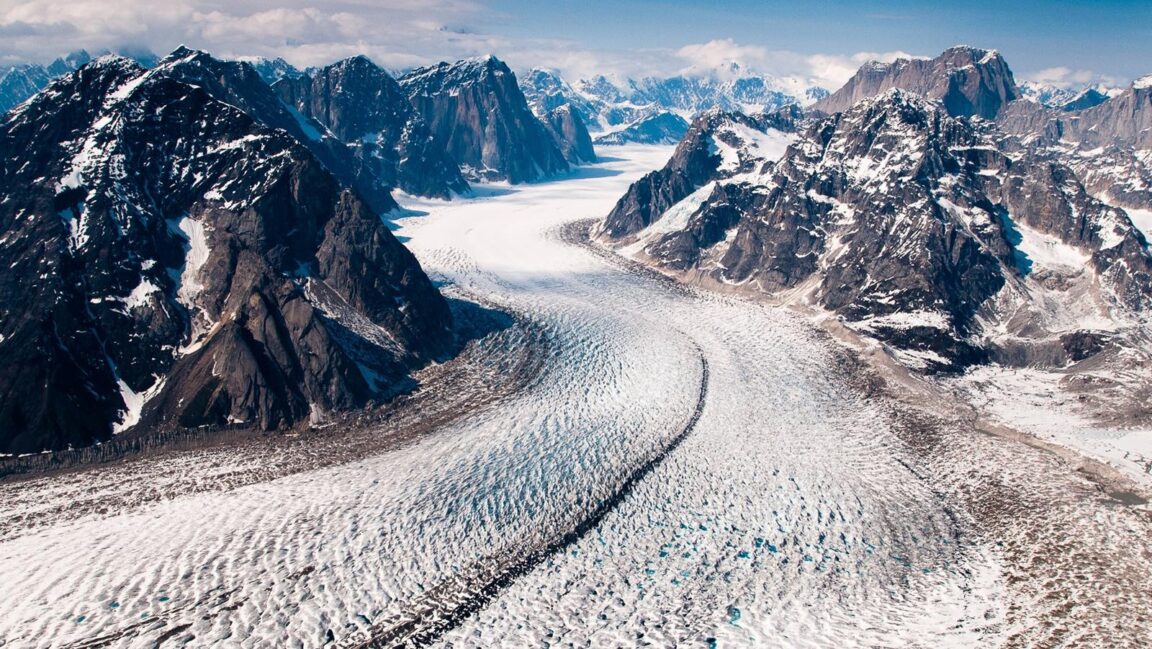
Featured image: A glacier winding between the peaks of the Alaska Range in Denali National Park, the landscape the land half of the split bag is packed for. Photo: National Park Service, via nps.gov, used with credit.