 Sofia Rossi
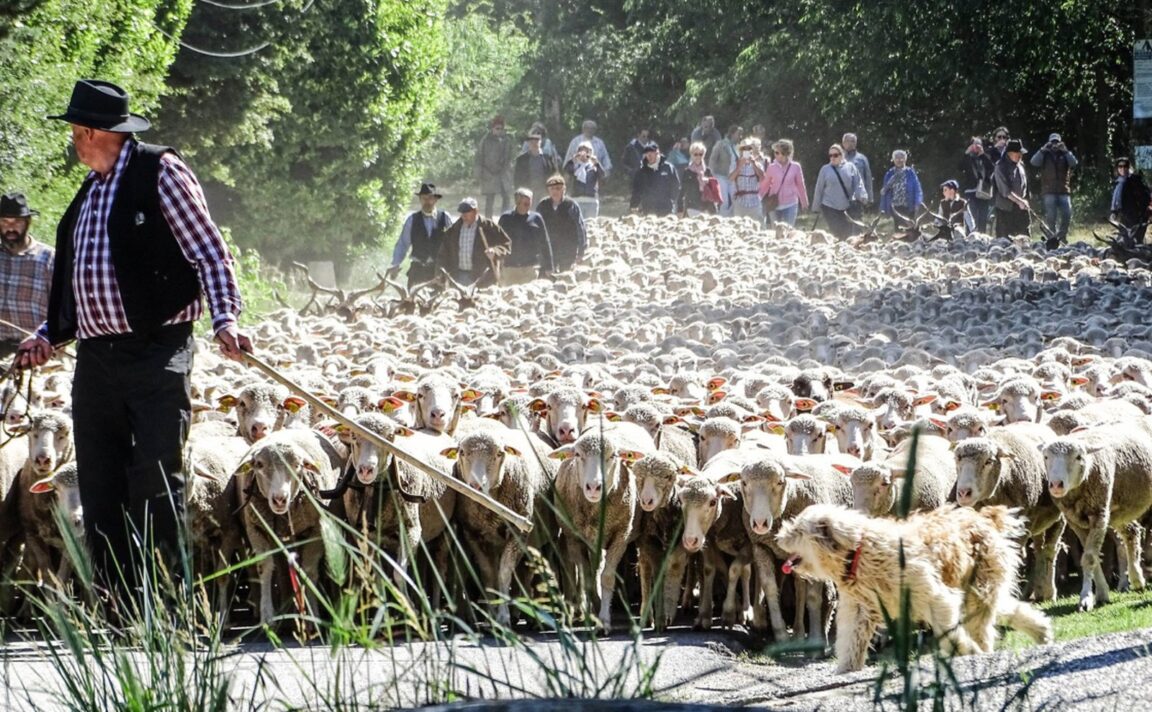
It is not a parade that imitates a migration; it is a migration that a town learned to celebrate: on Pentecost Monday, more than 3,000 sheep, with goats, donkeys, shepherds in traditional dress and working sheepdogs, circle the ring boulevard of Saint-Remy-de-Provence twice in the late morning, on their seasonal way from the lowland pastures of the Crau toward summer grazing in the high country. The Fete de la Transhumance is free, it fills the town, and the whole skill of attending it is knowing where to stand, when to arrive, and how to stay out of the flock way.
Quick Facts
- Where: The ring boulevard around the old centre of Saint-Remy-de-Provence, in the Alpilles, southern France
- When: Pentecost Monday (Whit Monday) each spring; the 2026 edition falls on Monday, May 25, 2026, with the herd reaching the centre around 10:30am
- The flock: More than 3,000 sheep, plus goats, donkeys, shepherds and sheepdogs, circling the town twice
- Cost: Free to watch from the public boulevard
- Arrival rule: Be parked outside the centre and in position by 10am at the latest
- Around the main event: A large brocante market and sheepdog demonstrations on the same day
What is transhumance, and why does a whole town stop for it?
Transhumance is the seasonal driving of livestock along traditional routes between lowland winter pasture and mountain summer pasture. In Provence the pattern ran for centuries: flocks wintered on the stony plain of the Crau, then walked north and up in late spring, following drove roads called drailles, to graze the high Alps through the heat, and walked back down in autumn. UNESCO inscribes transhumance, the seasonal driving of livestock along migratory routes in the Mediterranean and the Alps, as living cultural heritage, and Provence is one of its heartlands.
The honest complication is transport. Most modern flocks now travel by truck, and the great walks survive as festivals that keep the skills, the costumes, the dogs and the route knowledge alive. Saint-Remy revived its fete in the 1980s, and it has grown into one of the most famous in France. That does not make it a performance in the dismissive sense. The shepherds are working shepherds, the dogs are working dogs, and the flock behaviour you watch, the bunching, the flowing, the sudden rivers of wool around a corner, is the real behaviour of a real herd on the move. Think of it as a ritual with hooves.
What actually happens on the morning of the fete?
The day builds in layers. The brocante, a large secondhand and antiques market, spreads through the town from the morning, and the crowds arrive with it. The herd reaches the centre at roughly 10:30 to 11am, announced and cheered, and then makes its circuit of the boulevard that rings the old town, not once but twice, led by shepherds, dogs, horses and donkeys. Thousands of sheep pass a fixed point, packed close, moving faster than walkers expect, with goats mixed through the flow. Sheepdog trials and demonstrations run outside the centre during the day, showing the same skills at working distance rather than parade distance.
There is also a religious root under the festivity. Across the Alpilles, the pastoral calendar is stitched into the church year: blessings of lambs and herds, shepherds masses and Pentecost itself, the feast the fete is pinned to. The Saint-Remy event sits on Whit Monday because that is when the spring move belonged, and the town keeps the date rather than moving it to a convenient weekend. If you are building a Provence trip around it, that fixed Monday is the anchor: check the Pentecost date for your year first, because it moves with Easter.
Where should a visitor stand to watch without blocking the flock?
Stand on the pavement behind the crowd line on the ring boulevard, never in the roadway, and choose the wider northern stretches of the boulevard where there is more room to watch without being pressed against the route. The rules are simple and absolute. The boulevard is the flock road for the duration of both circuits. Do not step into the street for a photograph, do not cross between groups of animals, do not reach out to touch sheep, and keep dogs on a short lead well back, because a pet lunging at the kerb can turn a flowing herd. Children belong on shoulders or at the front of the pavement with an adult hand on them, not sitting on the kerb with legs in the gutter.
Position is a timing decision as much as a place decision. Arrive by 9am to park and walk in, and be settled along the boulevard by 10am, before the herd arrives, because the pavements fill completely and latecomers end up watching over four rows of heads. Cafe terraces on the ring fill earliest of all. If a terrace seat matters to you, it is a breakfast booking problem, not a sheep problem: sit down early, order properly, and stay put through both circuits.
How do you get there, park, and get out again?
Do not plan to park in the old centre on fete day; the centre is restricted precisely so the flocks can pass. Use the peripheral car parks and walk in, allowing the extra minutes without resentment, because every visitor in town is doing the same walk. Saint-Remy is a small town that receives a festival crowd many times its size, so the walk in is part of the event. Leave the same way, slowly, and let the centre empty before you aim a car at it.
If you are touring Provence by rail and road, Saint-Remy works as a day trip from Avignon or Arles, but on transhumance Monday the day trip logic inverts: you want to be based as close as possible the night before, in Saint-Remy itself or a nearby Alpilles village, so the morning is a walk and not a traffic queue. Our Ghent travel guide makes the parallel point for festival Flanders: for a one day event that swallows a small historic centre, sleeping inside the ring the night before is worth more than any viewing tip.
What else fills the day once the sheep have passed?
Give the brocante its hour. It is one of the pleasures of the day, strong on Provencal linen, pottery, tools and the kind of farmhouse objects that suit the occasion. Then use the afternoon the way Saint-Remy deserves on any visit: the old centre lanes, the Wednesday market if your stay extends, and Glanum, the Roman site at the edge of town, once the festival crowd thins. Travellers pairing the fete with a wider southern circuit often continue to Spain; our guide to where to stay in Granada is the natural next read for that route.
Eat with the festival, not against it. Local restaurants run transhumance menus built on lamb, and the spit roasts and long lunches after the second circuit are as much a part of the day as the herd itself. Book lunch ahead if you can; the whole town has the same idea at the same hour.
How should you behave around the shepherds and dogs?
Treat the shepherds as professionals at work, because they are. Photograph from your spot, do not call to the dogs, do not offer food to any animal, and do not follow the flock once it leaves the boulevard; the animals go on to rest and load, and that part of the day is not a show. The traditional dress, the black hats, the checked shirts, the staffs, is working dress with a history, not costume hired for the morning, and the men and women wearing it have usually walked flocks since childhood. A thank you as they pass costs nothing and is noticed.
Frequently Asked Questions
When is the Fete de la Transhumance in Saint-Remy-de-Provence?
It is held every year on Pentecost Monday, Whit Monday, in late May or early June depending on Easter. The 2026 edition falls on Monday, May 25, 2026, with the herd reaching the town centre at around 10:30am. Always confirm the date for your year before booking, because the feast moves.
How many sheep take part, and how long does the passage last?
More than 3,000 sheep take part, with goats, donkeys, shepherds and sheepdogs, and the flock circles the ring boulevard twice. A fixed viewing point sees a long, dense flow of animals on each circuit rather than a short procession.
Is the festival free?
Yes. Watching from the public boulevard is free. Your costs are parking, food, and whatever the brocante market persuades you to carry home.
Where is the best place to stand?
On the pavement of the ring boulevard, ideally on its wider northern stretches where viewing room is greatest, in position by 10am. Never stand in the roadway, and never step into the street while the flock is passing.
Can I bring children and a dog?
Children are welcome and love it; keep them on the pavement, on shoulders or held at the front of the crowd. Dogs are better left out of the crowd entirely; if one must come, keep it on a short lead well back from the kerb, away from the working sheepdogs and the flock.
Is the transhumance a real migration or a show?
Both, honestly held together. The seasonal movement it celebrates is real and UNESCO listed, most working flocks now move by truck, and the Saint-Remy fete, revived in the 1980s, keeps the walking tradition, the shepherds skills and the dogs work visible in public once a year.