 LeVar Thomas
Denali punishes one assumption above all others: that the park works like other national parks, with a road you drive and viewpoints you stop at. It has exactly one road, the 92 mile Denali Park Road, and in summer private vehicles may use only its first 15 miles, as far as Savage River. Everything beyond is bus country, and at present the road itself is closed at Mile 43, at the East Fork, because of the Pretty Rocks landslide, so even the buses turn around there while a bridge is built across the moving ground. The Road Lottery that once let a few private cars drive the full road each September is suspended for the foreseeable future. A good three day Denali trip is therefore built backwards from the buses: book the transit bus first, treat any single bus day as a sample rather than a guarantee, use the free first 15 miles well, and time Teklanika Campground, whose campers are the one private vehicle exception, with your eyes open.
Quick Facts
- The road: One road, 92 miles from the park entrance to Kantishna, paved only for the first 15 miles.
- The private car limit: Mile 15, Savage River, in the summer season, roughly 20 May to mid September. Beyond Savage River, travel is by bus.
- The closure: The road is closed at Mile 43, East Fork, because of the Pretty Rocks landslide. Buses turn around there; Eielson, Wonder Lake and Kantishna are beyond the closure until the bridge project restores access.
- The lottery: The September Road Lottery is suspended for the foreseeable future, per the National Park Service. Do not plan around it.
- The right bus: Green transit buses are non-narrated, cheaper and hop on, hop off for hikers. Tan tour buses are narrated and do not pick up hikers.
- Booking: Bus and campground reservations run through ReserveDenali, and reservations for a given summer can be made as early as 1 December of the year before.
- The exception: Teklanika Campground, at Mile 29, is reached by private vehicle, and its campers use the Tek Pass for bus travel west of Savage River during their stay.
Why is betting the trip on one bus day the first mistake?
A single bus day compresses every variable Denali is famous for into one draw. Weather is the obvious one: veteran bus drivers in the park say only about one day in three offers a glimpse of the mountain, a figure the National Park Service itself repeats on its photography guidance. Wildlife is the second variable: the buses stop whenever there is a chance to see animals, and a great day and a quiet day can run on the same road a day apart. The third variable is the road’s own arithmetic. With the closure at Mile 43, the full transit run to East Fork and back takes about four and a half hours if you stay aboard, and that is before you get off to walk, which is the main reason to choose a transit bus in the first place.
Three days gives the mountain and the wildlife three separate chances, and it lets the days specialise: one long transit day deep into the park, one day working the entrance area and the Savage River trails that your own car can reach, and one flexible day that repeats whichever half rewarded you. Travellers staying at the park’s remote lodges face the same road logic from the other end, as the Camp Denali park lodge guide shows: in Denali, the road is the itinerary, and everything else is commentary.
What does the Mile 15 private car limit actually leave you?
More than the disappointed assume, provided it is planned as its own day rather than a failed attempt at the whole park. The first 15 miles are paved, need no permit beyond the park entrance fee, and climb from spruce forest into open country where the Alaska Range fills the windscreen. Mile 9 is the first point where the road rises high enough, at the right angle, for a possible view of Denali itself. Savage River, at the turnaround, offers the Savage River Loop, an easy two mile walk along the water at exactly the point where the road hands over to the buses, plus picnic sites and the trailheads of the entrance area within a short drive.
The limits are real, though. Parking at Savage River and Mountain Vista is extremely limited, with no room for large vehicles, which is why the park runs a free Savage River Shuttle in summer and recommends it. Go early, or take the shuttle and keep the car for the entrance area trails. What the first 15 miles will not give you is the tundra heart of the park, the high passes and the river bars where most wildlife viewing happens. That country starts where your car stops, which is the entire point of the system: the restriction, in place in various forms for decades, is what keeps the road’s wildlife calm enough to watch. The park explains the design on its official transit bus page and its understanding Denali overview.
Transit bus or tour bus, and when should you book?
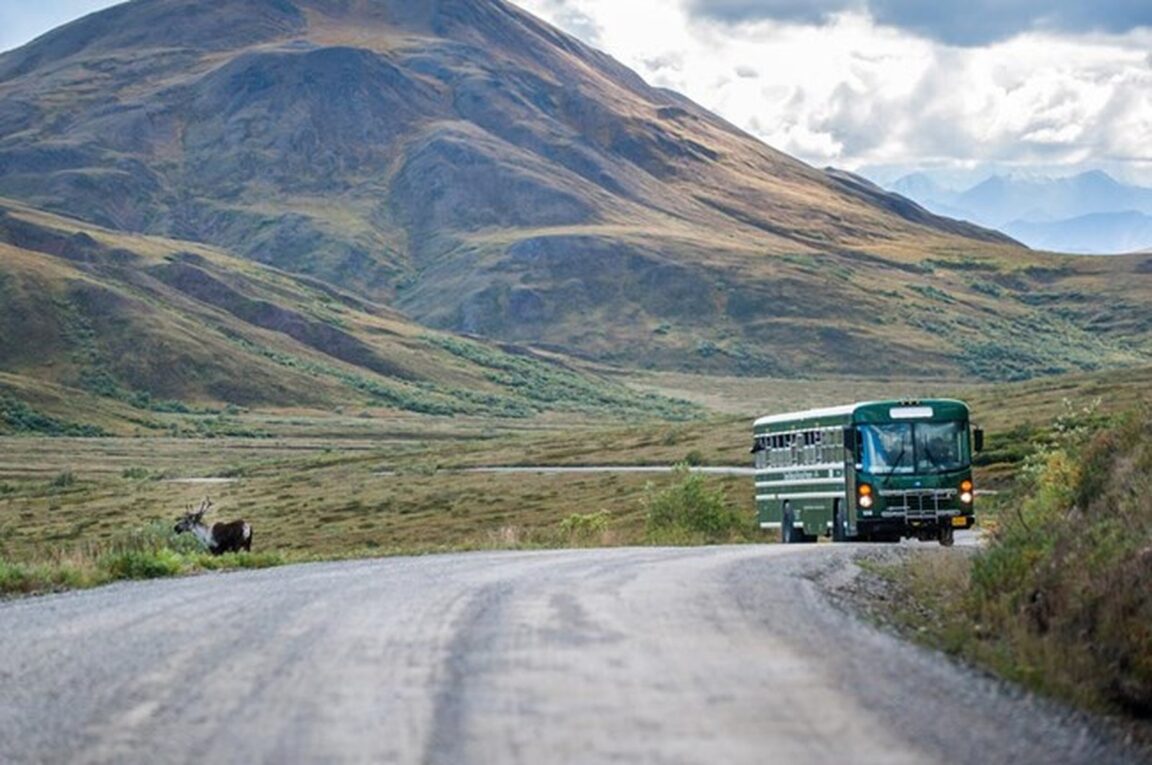
The two bus fleets look similar and behave oppositely. Transit buses are painted green, are non-narrated, and are built for independence: you may get off at any point along the road, walk, and flag down a later transit bus, with reboarding on a seat available basis that can mean a wait of anything from five minutes to an hour or more. Drivers give basic park and safety information, help spot wildlife and make restroom stops, but there is no formal talk. Tour buses are tan, narrated, and run as a sealed experience: they will not stop to pick up hikers, so a traveller who steps off a tour bus to walk has misunderstood the product. For a three day trip built around walking, the transit bus is the default choice, and the tour bus is the choice for a traveller who wants the story told and the walking done for them.
Book the bus before the lodge, and book it early. Reservations for a summer open as early as 1 December of the previous year through the concessioner, and the best departure times on peak dates go first. Children aged 15 and under ride transit buses free but still need a reserved ticket, and Alaska law’s car seat rules apply on board, with parents supplying the seat, a detail families miss until the depot. One more closure era adjustment: with buses turning at East Fork, Mile 43, the destination names and trip lengths on older guides, which run to Eielson at Mile 66 or Wonder Lake at Mile 85, describe a road that is not currently open. Plan to the turnaround that exists. The same check the current conditions habit protects travellers in other single road parks, as the White Sands mistakes to avoid guide argues for desert driving.
How does Teklanika timing fit a three day trip?
Teklanika Campground, at Mile 29, is the structural exception that rewards campers and confuses everyone else. Its guests drive their own vehicle to Mile 29, well beyond the Savage River limit, because the campground sits inside the restricted section. Once there, the Tek Pass, priced the same as a camper bus ticket and available only to Teklanika campers, covers bus travel west of Savage River for the stay, so the campground works as a forward base: sleep at Mile 29, and the bus days start fourteen miles deeper into the park than everyone else’s.
The timing mistake is to treat Teklanika as a one night hack on the way through. A campground stay deep in the park earns its keep across consecutive nights, because the drive in and out consumes the margins of a short stay and the pass is built for campers who stay put and ride. Pair it with the three day rhythm rather than against it: entrance area and Savage River first, Teklanika nights in the middle with bus days from the campground, and no flight or long highway drive scheduled hard against the morning you drive out. Campers at Riley Creek and Savage River campgrounds, by contrast, are not eligible for camper bus tickets at all, because they can drive or ride the free shuttle to their sites. Read the campground name on your reservation as carefully as the bus destination.
Frequently Asked Questions
How far can I drive my own car in Denali?
Fifteen miles in summer, to Savage River, on the paved section, with no permit beyond the entrance fee. Beyond Mile 15 the road is buses only, apart from permit holders and Teklanika Campground guests driving to their campground at Mile 29.
Is the Denali Road Lottery still running?
No. The National Park Service lists the Road Lottery as suspended for the foreseeable future, because the road is closed at Mile 43 by the Pretty Rocks landslide. Any guide still describing a spring application window is out of date.
How far do the buses go at the moment?
To East Fork, Mile 43, the current turnaround, with the round trip taking about four and a half hours if you stay aboard. Eielson, Wonder Lake and Kantishna lie beyond the closure until the bridge project restores through access.
What is the difference between transit and tour buses?
Transit buses are green, non-narrated and hop on, hop off: get off anywhere, walk, and flag a later bus on a seat available basis. Tour buses are tan and narrated, run as a fixed experience, and do not pick up hikers.
When do Denali bus reservations open?
Reservations for a given summer can be made as early as 1 December of the year before, through ReserveDenali. Book the bus before finalising lodging, and remember children 15 and under ride free but still need a reserved ticket.
What is the Tek Pass?
A pass available only to Teklanika Campground campers, priced the same as a camper bus ticket, covering bus travel west of Savage River during their stay. Campers at Riley Creek and Savage River are not eligible for camper bus tickets.
Photo: A green Denali transit bus on the Denali Park Road in Alaska, stopped on the tundra road with a caribou beside the road and the Alaska Range foothills behind. Credit: Kent Miller, National Park Service, via nps.gov.