 Elena Vasquez
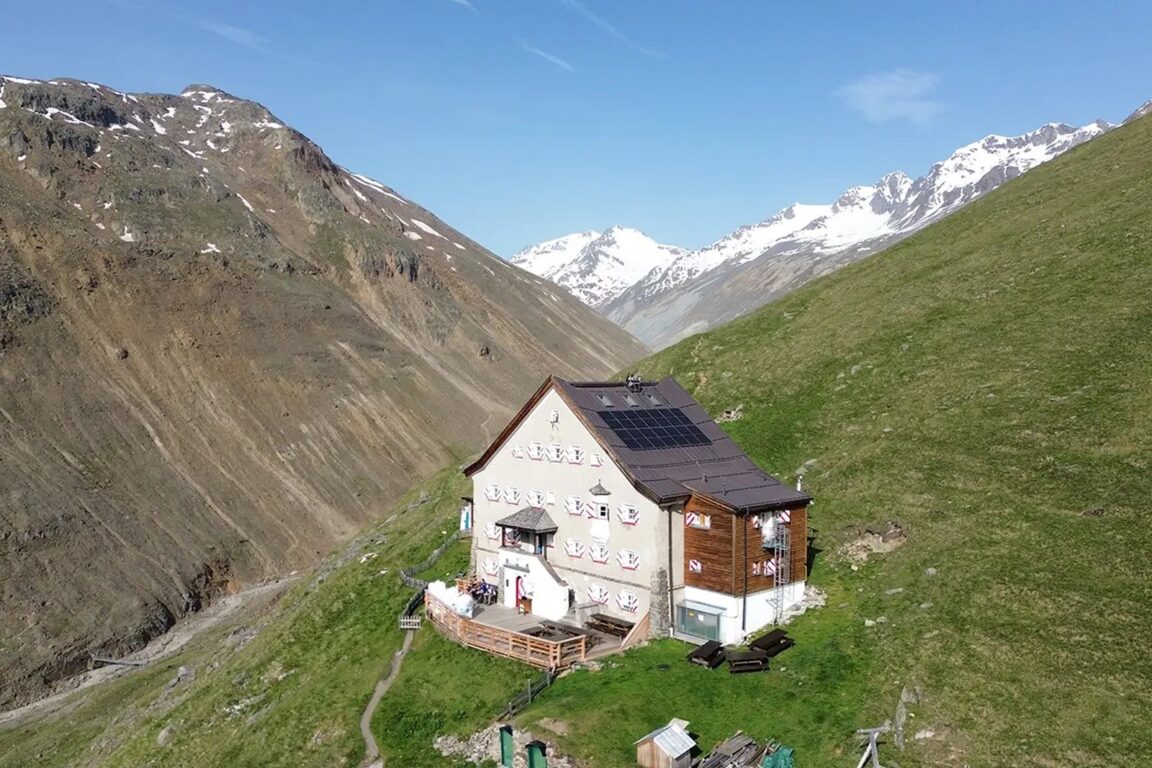
Pack for a hut to hut trek in the Alps by building the bag around what the refuges already provide, and the whole system drops to about seven kilos: huts supply the bed, the blankets, the evening meal and the drying room, so the walker carries only clothes, a sleep sheet, hut shoes and the day kit. The Hochjoch Hospiz in the Otztal Alps, an Alpine Association hut at 2,413 metres pictured above, states the rule that shapes the entire list in its official hut rules: a hut sleeping bag, the lightweight liner, is mandatory for all sleeping areas, while mountain boots never enter the bedrooms. Build the pack from those two facts outward and nothing in it is wasted.
Quick Facts
- The weight target: About seven kilos base weight, achievable because huts provide beds, blankets, pillows, cooked meals and drinks
- The non negotiable: A hut sleeping bag, meaning a lightweight sleeping bag liner or sleep sheet, mandatory in Alpine Association huts; the Hochjoch Hospiz rules state it plainly and sell them at the hut
- What stays in the boot room: Mountain boots are barred from bedrooms; hut shoes or slippers are required kit, per the same official hut rules
- The hut rhythm: The Hochjoch Hospiz is closed from 22:00 to 06:00, the standard quiet hours pattern across club huts, so headlamps and earplugs earn their grams
- The wardrobe logic: One set worn, one set carried, nothing washed mid week except socks and underwear rinsed in a sink
- Facts checked: November 23, 2026, against the official Hochjoch Hospiz hut rules and Alpine club hut practice
Why does the seven kilo ceiling work on a hut trek and nowhere else?
Because the hut is the other half of your kit, permanently stationed on the mountain. A tent trekker carries shelter, insulation, a stove and days of food. A hut walker carries none of it. The refuge provides a bunk or a bed in a shared dormitory, blankets and a pillow, a cooked evening meal and breakfast, and usually a drying room where wet kit steams overnight beside the stove. What remains genuinely personal is small: the clothes system, the sleep sheet, wash kit, and the safety and navigation basics for the day stages. Seven kilos is not a stunt target in that system, it is simply what is left when every duplicated gram is removed. The discipline is resisting the just in case items the hut already covers: no sleeping bag, because blankets are provided and a full bag is both heavy and, in many huts, unwelcome in the dormitory; no camp towel the size of a bath sheet; no second pair of boots; no food beyond the day snacks, because dinner and breakfast are the hut business model and wardens earn their living from the kitchen.
What is the sleep sheet rule, exactly?
Every sleeper brings a lightweight liner, called a hut sleeping bag or Huttenschlafsack, and sleeps inside it on the hut mattress, under the hut blankets. The Hochjoch Hospiz rules, published by the hut and its owning Berlin section of the German Alpine Club, put it as rule six: for the sake of the environment and other people, the use of a hut sleeping bag is mandatory for all sleeping areas, and liners can be purchased at the hut. The logic is laundry arithmetic. Blankets and mattresses serve hundreds of sleepers a season and cannot be washed nightly; the liner is the washable layer between you and both. Silk liners pack smallest and lightest, cotton and microfibre versions cost less and feel more like a sheet. Whichever you choose, it replaces a sleeping bag entirely in summer hut season. Add a small pillowcase if your liner lacks an attached pillow sleeve, and treat the pair as your bed, made fresh at every hut.
Which clothes survive a week of being worn twice?
A three layer system in duplicate, no more. Worn: boots, trekking socks, underwear, a merino or synthetic base layer top, hiking trousers or shorts, and the day layers for the weather. Carried: one full change of base layer, socks and underwear, a warm mid layer such as a light fleece or insulated jacket, and waterproof jacket and overtrousers that double as wind protection on passes. Merino earns its place here because it tolerates repeat wear without the smell that ends a dormitory friendship, and because a base layer rinsed in a sink dries overnight in the drying room rotation. The wardrobe you never wash is the outer system: trousers worn all week, mid layer worn most evenings, waterproofs worn only when the weather insists. Hut clothes are part of the same economy: a lightweight set of shoes for the hut, required in practice because boots stay in the boot room, and something clean enough to sit at the communal table in. Many walkers use their hut shoes, a pair of light sandals or hut slippers, as both shower shoes and evening shoes, one item doing three jobs.
What goes in the bunk kit besides the liner?
The small bag that lives at the head of the bunk: headlamp, because hut quiet hours run from 22:00 and the dormitory lights go out whether or not you are ready; earplugs, because dormitories hold snorers, early risers and school groups in equal measure; a phone charging cable, with the expectation that sockets are few and shared; and any medication, kept on your person rather than in the pack in the boot room. The Hochjoch rules add two more dormitory laws worth packing for: no cooking or eating in the dormitories, and no open flames, so snacks live in the pack outside and the evening belongs to the dining room. Sign the hut book on arrival, the rules ask for a mobile number with the entry, because mountain rescue uses it if you fail to arrive at the next hut. That single habit, repeated nightly, is the hut system safety net, and it costs no weight at all.
How much food and water should the pack actually hold?
One day worth, never more. Breakfast and dinner come from the hut kitchen, and most huts sell a packed lunch or fill a flask if you ask the night before. Carry the day stage water, typically one to one and a half litres between refills at huts and mountain streams where local guidance allows, plus compact energy: nuts, dried fruit, bars and the emergency ration that stays at the bottom of the pack all week. The food weight that disappears by day three in a tent trek simply never enters a hut pack, which is the second reason the seven kilo ceiling holds. Cash belongs in the same calculation. Many high huts are card shy or connection shy, so carry notes and coins for beds, meals and the drying room extras, in a waterproof pouch with your alpine club membership card. Membership matters financially: the alpine clubs of Austria, Germany, Switzerland, Italy and France run the hut networks jointly in practice, and reciprocal rights mean one club card earns member rates at the others huts, a saving that compounds nightly across a week.
What does a finished seven kilo pack list look like?
Pack and liner system first: a 30 to 35 litre pack, the sleep sheet and pillowcase, hut shoes. Clothing second: the worn set, one carried change, mid layer, waterproof shell set, warm hat and gloves for passes, sun hat and sunglasses for glaciers and snowfields. Kit third: headlamp, earplugs, wash bag with a microfibre towel, sunscreen, blister care and personal medication, map and phone with offline routes, a lightweight power bank, water capacity and the day food pouch. Documents last: cash, club card, booking confirmations for each hut, because popular stages sell out and a reservation is a promise the hut book then checks. Weigh it before you leave, not at the first pass. If it is over target, the excess is almost always clothing, and the fix is subtraction, not a bigger pack. For the transport end of an Alpine week, the car free rail and cable car system around Interlaken and the Jungfrau villages shows how little luggage the region expects you to move, and the four seasons logic in the Joshua Tree gateway guide makes a useful desert contrast: there the car carries the weight, here your shoulders do.
Frequently Asked Questions
Do I need a sleeping bag for Alpine huts?
No. Huts provide blankets and pillows. What is mandatory is a hut sleeping bag, a lightweight liner or sleep sheet, as the official Hochjoch Hospiz hut rules state for all sleeping areas.
How heavy should a hut to hut pack be?
Around seven kilos base weight is realistic, because the hut supplies the bed, blankets, meals and drying room. The pack holds clothes, the liner, hut shoes and day kit only.
Can I wear my boots inside the hut?
Not in the bedrooms. The Hochjoch Hospiz rules bar mountain and ski boots from sleeping areas, which is why hut shoes or slippers are essential kit on every hut trek.
What are hut quiet hours?
The Hochjoch Hospiz is closed from 22:00 to 06:00, the standard pattern across Alpine club huts. Pack a headlamp and earplugs for dormitory life inside those hours.
Do huts take cards?
Not reliably at altitude. Carry cash for beds and meals, plus your alpine club membership card, which earns member rates across the partner club hut networks.
How much food should I carry?
One day at a time. Huts serve breakfast and dinner and can usually provide a packed lunch on request, so the pack carries day snacks, water and an emergency ration only.