 Lucas Meyer
A month of business travel fits in one carry on bag if, and only if, the laundry cycle is designed before a single garment is chosen. That is the whole system. Pack for seven days, wash on a seven day rhythm, and let a three trouser rotation carry the month while shirts, knit layers and underwear cycle through hotel laundry, a wash and fold service or a bathroom sink. Travellers who start with the clothes and hope the washing works out end up checking a bag by week two. Travellers who start with the wash day never do.
Quick Facts
The core rule: Pack a seven day wardrobe, not a thirty day one, and repeat it four times.
The trouser rotation: Three pairs, one worn in transit, two packed, each resting at least a day between wears.
The laundry cycle: One full wash every seven days, planned around the hotel or neighbourhood service on day one of each stay.
The shoe decision: One pair only, worn in transit, chosen to work with every trouser and both formal and smart casual settings.
The fabric rule: Merino and technical blends for anything washed in a sink, wrinkle resistant wool blends for trousers and jackets.
The wrinkle maths: Every garment must survive being worn, hung overnight and worn again without ironing, or it does not travel.
The bag: A single carry on sized case or travel pack, plus a slim personal item for laptop and documents.
Why does the laundry cycle come before the wardrobe?
Because the wash day is the only fixed point in a month on the road, and everything else hangs off it. A seven day cycle means you need seven days of shirts and underlayers, three trousers that rotate underneath them, and one jacket that tops the whole set. Wash everything on day seven, and the wardrobe resets to full. Miss the wash day and the system degrades gracefully rather than collapsing, because the trouser rotation and the merino layers can stretch to nine or ten days at a push. That margin is deliberate. Build it in at the planning stage and a delayed train, a closed launderette or a hotel that returns laundry late becomes an inconvenience instead of a crisis.
Choose the wash method city by city, and decide it before you arrive. Hotel laundry is the expensive, effortless option: bags collected from the room, items returned pressed, and a bill that needs an expense policy tolerant of it. A neighbourhood wash and fold service is usually the value option in any city where you stay three nights or more, typically returned within a day or two, and worth locating on the map before the wash day arrives. Sink washing is the fallback that keeps the system alive anywhere: merino tops and underwear washed in the evening, rolled in a towel, and hung to dry overnight. Our one bag system for a month of European trains applies the same cycle logic to rail travel, where the wash stops are stations and small towns rather than hotels.
How does the three trouser rotation actually work?
Trousers are the heaviest, bulkiest tailored items in the bag, and they are also the items that need washing least often if they are rested properly. Three pairs solve the month. Wear one pair on travel days. Pack two. Rotate daily so no pair is worn on consecutive days, because a full day of rest on a hanger is what releases creases and odour from wool blend cloth. Choose three pairs that all work with the same shoes and the same jacket: navy, charcoal and a mid grey or deep olive, in a wrinkle resistant wool blend with a little stretch, cut identically so every shirt and layer sits the same way over each pair.
The maths is what makes it a system rather than a hope. Three trousers rotating across thirty days means each pair is worn about ten times, with rest days between wears and one proper clean at the mid point of the trip if the laundry cycle allows a trouser press. Spot clean as you go. Hang trousers by the waistband or folded over a hanger bar the moment you take them off, never over a chair. If one pair is damaged or stained beyond spot cleaning, the rotation drops to two and still functions, which is exactly the redundancy a month long trip needs.
Which fabrics survive a month of hotel pressing and sink washing?
Divide the wardrobe by how it will be cleaned, and buy accordingly. Anything destined for the sink must be merino wool or a merino blend, or a quality synthetic designed for travel: these wash in minutes, resist odour across two wears, and dry overnight in a hotel bathroom. That means underwear, socks, base layer tops and at least two of your shirts or knit tops. Anything destined for hotel laundry or a wash and fold service can be a wrinkle resistant cotton or wool blend, because someone else and a proper machine are doing the work, but it still has to survive heat and pressing without shining or shrinking, so test wash every new garment at home before it earns a place on a month long trip.
Shirts are the visible layer, so give them numbers. Five tops is the working count for a seven day cycle: a mix of formal shirts and smarter knit tops that all sit correctly under the one jacket and over all three trousers. Two of the five should be sink washable merino or technical pieces, because they are your insurance when the laundry schedule slips. The jacket itself is never washed on the road. It is steamed in a hot shower bathroom, rested on its travel day hanger, and spot cleaned only. Choose it in a crease resistant cloth with patch or soft structure, because a hard tailored shoulder suffers most in a packed bag.
Heat is the hidden variable, and it is why the same system needs a seasonal edit. Our Singapore work trip packing guide works through the tropical version, where the wash cycle shortens and breathable fabrics replace wool. Apply the same thinking in reverse for a winter month: the cycle stays seven days, but one heavier knit replaces one shirt and the jacket choice carries the warmth.
Why only one pair of shoes?
Shoes are where one bag systems go to die. A second pair of dress shoes consumes roughly the space of two days of clothing, adds the single heaviest item after the laptop, and solves a problem that mostly does not exist. The one pair rule is strict: wear your shoes in transit, pack none. Choose a pair that covers the full range of the trip, a clean, dark, minimal shoe that reads formal with trousers and a jacket and relaxed without them, on a sole you can genuinely walk miles in, because business travel days include stations, airports and unfamiliar pavements.
The rule survives because of what supports it. Shoes rest on the trouser rotation’s off days in the sense that matters: they are aired nightly, stuffed with the day’s clean socks or a shoe bag to hold shape, and never worn wet two days running because the itinerary, not the wardrobe, should be planned so the heaviest walking day is not the day after a soaking. If the trip includes running or gym work, that is a clothing decision, not a shoe exception: pack light trainers only if they double as your walking shoe, or accept hotel gym and bodyweight sessions in the one pair’s rest hours. A month is a long time to carry a just in case pair for a handful of workouts.
How do you handle wrinkles without an ironing routine?
With prevention, because cure time does not exist on a working trip. Pack by rolling knit items and folding tailored items along their existing creases, with the jacket folded once, inside out, shoulders tucked, and placed on top of the bag where nothing compresses it. Unpack within an hour of reaching the room, every time, and hang trousers, shirts and the jacket immediately. The bathroom steam routine, trousers and shirts hung near a hot shower with the door closed for fifteen minutes, releases most packing creases from wool blends and merino. What remains is handled by the rotation: nothing is worn the morning after it was packed, because a night on a hanger does half the work an iron would.
Judge every candidate garment by the wrinkle maths before it travels. If a shirt needs ironing after every wash to look professional, it costs you either hotel pressing fees across four wash cycles or twenty minutes of your morning four times a week, and either price is too high. Replace it with a wrinkle resistant equivalent that passes the home test: wash it, hang it, wear it the next day without touching an iron. A wardrobe where every single piece passes that test is what makes the one bag month feel easy by week three instead of threadbare.
Frequently Asked Questions
How many clothes do I actually need for a month of business travel in one bag?
A seven day wardrobe repeated four times: three trousers, five tops, one jacket, seven sets of underwear and socks, and one set of sleep and exercise layers, all built around a weekly wash.
What if a hotel has no laundry service and there is no launderette nearby?
The sink washable core of the wardrobe carries you. Merino and technical underwear, socks and two tops wash in the sink and dry overnight, which stretches the full wardrobe to ten days while you find a wash and fold option.
Can I really manage with one pair of shoes for a month?
Yes, if the pair is chosen for range rather than for one outfit: dark, minimal, formal enough for the jacket and trousers, comfortable enough for full walking days, aired nightly and kept dry.
How do I keep a suit jacket presentable without pressing?
Choose crease resistant, softly structured cloth, pack it last and unpack it first, steam it in the bathroom, rest it between wears and spot clean only. A jacket treated that way survives a month of regular wear.
What is the best day to schedule the weekly wash?
The first full day in any stay of three nights or more, so the laundry returns with margin before you move on. Never schedule the wash for the night before a travel day.
Does this system work for women and men equally?
Yes. The cycle, the three bottom rotation and the one shoe rule are gender neutral. The equivalents are three trousers or skirts in matching tones, five tops that all work over them, and one jacket or structured layer.
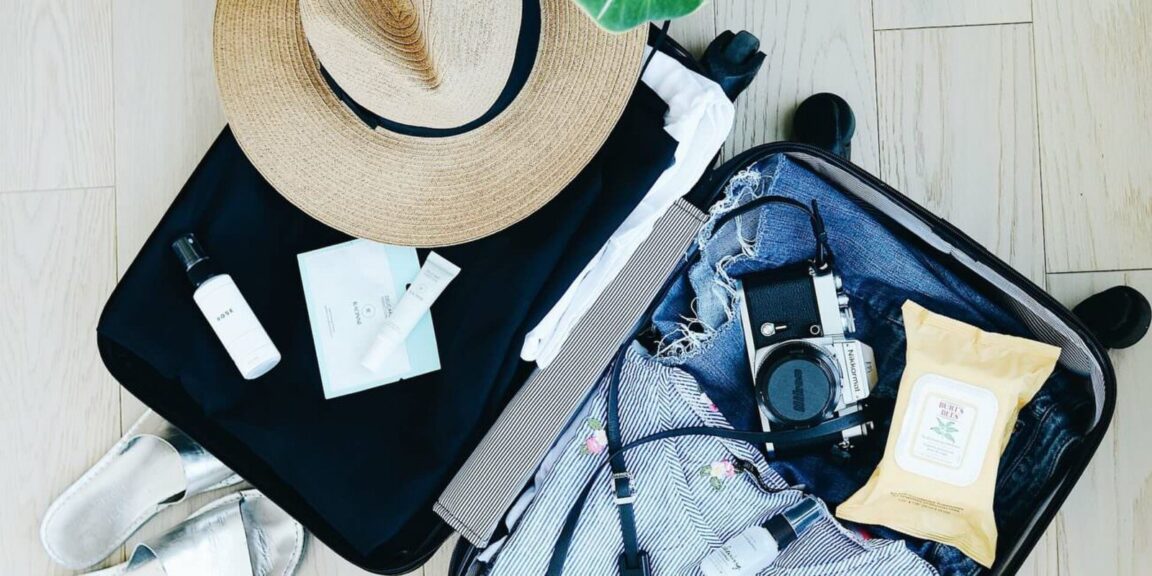
Photo: An open carry on suitcase packed flat with folded clothing, the one bag system in a single frame. Credit: Marissa Grootes, via Unsplash (Unsplash License).